Virginia is turning workforce development into an economic development advantage with innovative training pipelines.

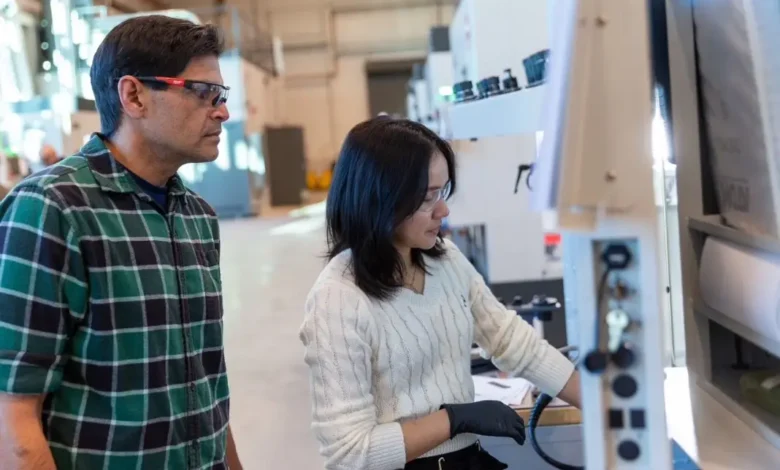
In the rolling hills of Danville, Virginia, more than 200 miles from the nearest coastline, a revolution in industrial manufacturing is quietly unfolding. While the city lacks the salt air and tidal currents of a traditional naval hub, it has emerged as a critical engine for the United States’ maritime defense capacity. This phenomenon is not accidental; it is the result of a deliberate, two-decade strategy to transform rural infrastructure into a specialized manufacturing pipeline. By aligning educational programming with the precise, high-stakes requirements of the U.S. Navy and the broader defense industrial base, Virginia has established a scalable model for meeting the nation’s most demanding workforce needs.
The Strategic Evolution of Danville’s Industrial Base
The foundation of this transformation began over 20 years ago when regional leaders recognized that attracting advanced manufacturing required more than just land and tax incentives; it required a ready-made workforce. The establishment of the Institute for Advanced Learning and Research (IALR) served as the catalyst for this shift. Over time, the IALR evolved from a research facility into a vital hub for human capital development.
The most prominent manifestation of this evolution is the Accelerated Training in Defense Manufacturing (ATDM) program. Designed to address the severe shortage of skilled labor required for nuclear-powered submarine construction and other naval defense assets, the ATDM program represents a radical departure from traditional degree-based education. It is a hyper-focused, 16-week intensive curriculum that crams over 600 hours of specialized instruction into a condensed timeline.
The primary objective of the ATDM is to reduce the "time to talent." According to IALR President Telly Tucker, the efficiency of this model is unprecedented. "Companies have told us we’ve saved them as much as two years in training," Tucker noted. By the time students graduate, they are not merely novices with theoretical knowledge; they are certified practitioners capable of contributing to defense projects on their first day on the job.
Chronology of a Workforce Pipeline
The trajectory of Virginia’s workforce development can be mapped through several distinct phases:
- Early 2000s: The region initiates the long-term infrastructure investment phase, focusing on vocational readiness to transition the local economy from traditional manufacturing to advanced, high-tech sectors.
- 2019-2020: As national security priorities shift toward the Indo-Pacific, the Department of Defense identifies a critical shortfall in the maritime industrial base, specifically in skilled trades like welding, machining, and pipefitting.
- 2021: The ATDM pilot program launches at the IALR, supported by federal funding and private sector partnerships to standardize training for the Submarine Industrial Base (SIB).
- 2023: The AUKUS partnership is formalized, further intensifying the demand for a massive, highly specialized workforce, triggering an expansion of the Hampton Roads Maritime Training System (HRMTS).
- 2024 and Beyond: The state transitions from pilot-phase testing to a full-scale recruitment model aimed at matriculating 1,000 students annually through the ATDM, with plans to scale regional output to 10,000 workers per year across all maritime programs.
The Hampton Roads Nexus: Connecting the Dots
If Danville is the forge where the talent is tempered, the Hampton Roads region is the anvil where the nation’s defense assets are shaped. The Hampton Roads Workforce Council (HRWC) acts as the central nervous system for this massive undertaking. Under the leadership of President and CEO Shawn Avery, the Council manages the Hampton Roads Maritime Training System, which serves as a bridge between regional training providers and major industrial employers like Newport News Shipbuilding (NNS).
Avery refers to Hampton Roads as "the nation’s military metro," a title backed by the highest concentration of shipbuilding and ship repair infrastructure in the United States. The HRWC’s strategy involves a collaborative approach that brings together Tidewater Community College, Virginia Peninsula Community College, and Paul D. Camp Community College to provide a tiered system of credit and non-credit maritime training.
The results of this collaboration are measurable. Five years ago, the region struggled to meet even 50 percent of the demand for certified welders. Today, the concerted investment in training infrastructure has enabled the region to reach a 1:1 ratio, ensuring there is at least one qualified professional for every open welding position. This success is not limited to welding; it extends to the precise fields of electrical installation, pipefitting, and advanced CNC machining.
Implications of the AUKUS Partnership
The geopolitical backdrop of these workforce initiatives is defined by the AUKUS trilateral security partnership between the United States, Australia, and the United Kingdom. As the three nations coordinate on nuclear-powered submarine technology and the integration of defense supply chains, the pressure on Virginia’s industrial base has reached a new peak.
The agreement includes the sale of five Virginia-class submarines to the Royal Australian Navy, a massive undertaking that requires the U.S. shipbuilding industry to operate at maximum capacity. Newport News Shipbuilding, the largest industrial employer in Virginia, has stepped into a leadership role within the AUKUS Workforce Alliance. This international consortium, which includes three Australian universities, is designed to ensure that the human infrastructure keeps pace with the technological demands of the agreement.
The inclusion of the College of William & Mary in Williamsburg as the U.S. academic home for the partnership signals that this is not merely a blue-collar manufacturing effort. It is a multi-disciplinary challenge that requires expertise in international law, nuclear engineering, supply chain logistics, and high-level project management.
Analysis: Economic Stability Through Security
The economic implications of Virginia’s strategy are profound. By tying workforce development directly to the defense sector, the state has created a "recession-resistant" economic model. Defense spending is generally decoupled from traditional market volatility, and the long-term nature of submarine manufacturing—which spans decades—provides a stable tax base and consistent employment opportunities for the region’s residents.
However, the model is not without challenges. The sheer volume of labor required to meet the 10,000-worker annual target necessitates constant recruitment and retention efforts. The industry must compete with private sector manufacturing, high-tech firms, and the civilian construction sector, all of which are vying for the same demographic of skilled workers.
Furthermore, the integration of federal, state, and academic stakeholders requires a delicate balance. The reliance on federal funding through the Submarine Industrial Base Program Office means that the sustainability of these programs is linked to federal budget priorities. Yet, by embedding these programs into the fabric of local community colleges and regional research institutes, Virginia has ensured that the infrastructure remains viable even if federal priorities shift in the future.
Looking Toward the Future
As the United States faces increasing competition on the global stage, the ability to manufacture, maintain, and repair complex defense systems has become a primary indicator of national power. Virginia’s experience demonstrates that the bottleneck for such capability is rarely the lack of raw materials or capital; it is the human component.
The transformation of the Commonwealth from a traditional agrarian and manufacturing economy to a high-tech defense powerhouse has redefined what it means to be a "skilled worker." Whether it is a student at the IALR learning to weld specialized alloys or an engineer at Newport News managing the integration of a submarine’s propulsion system, the focus remains on the same goal: excellence in execution.
By institutionalizing this training pipeline, Virginia has turned its geographic and economic constraints into a competitive advantage. The state is no longer just building ships; it is building a resilient industrial ecosystem capable of supporting the most sophisticated defense missions in the world. As the nation looks toward the next generation of maritime security, the classrooms and workshops of Danville and Hampton Roads are poised to provide the intellectual and technical backbone of that future. The model established in the Commonwealth is now being looked at by policy makers across the country as a blueprint for how to bridge the gap between academic education and the urgent, complex demands of modern national security.