The Agentic Era Demands Continuous Post-Training: NVIDIA’s New Compute Pattern for Unprecedented AI Intelligence

The pursuit of truly intelligent artificial intelligence is entering a new, dynamic phase, moving beyond static models to adaptive agents that learn and evolve in real-time. This paradigm shift, dubbed the "agentic era," places unprecedented importance on a crucial, yet often overlooked, stage of AI development: continuous post-training. This evolving process, unlike the traditional one-time refinement, is becoming the central workload and primary driver of "intelligence per dollar," a metric that redefines the economic viability of advanced AI. NVIDIA, a leader in AI infrastructure, is at the forefront of this transformation, detailing how its latest platforms are engineered to support this relentless cycle of learning and adaptation.
At its core, agentic AI mirrors the dedication of elite professional athletes. Just as athletes don’t rest on their laurels after a victory, instead meticulously analyzing opponents and refining their techniques, agentic AI models are designed for perpetual improvement. They are not merely tasked with providing an answer; instead, they are given a goal and must continuously adapt to shifting environments, unexpected edge cases, and evolving toolsets. This stands in stark contrast to generative models, which respond to a single prompt. Agentic models, by their nature, must plan, strategically employ various tools, and possess the resilience to recover from unforeseen challenges encountered during their operation.
This inherent need for continuous adaptation makes the post-training phase – the critical period where models are refined after their initial broad data ingestion – no longer a mere final polish. Instead, it has transformed into an ongoing, iterative process. The environments in which these agents operate are in constant flux. The tools an agent relies on can change weekly, and real-world deployments frequently reveal edge cases that no testing dataset could have anticipated. Each new deployment also introduces its own unique codebase, operational policies, and specific environmental parameters, all of which necessitate ongoing model adjustments.
The consequence of this continuous learning loop is a significant shift in computational demands. Post-training runs are no longer isolated events but are fed back from production systems as new problems emerge. The overall compute footprint expands not due to the size of any single training run, but because these runs are perpetual. This introduces a novel compute pattern for post-training, positioning it as the linchpin of the agentic era and the primary determinant of AI intelligence relative to cost. The ultimate goal is to maximize this "intelligence per dollar" by optimizing the output of every computational cycle within the continuous learning framework.
Agentic Post-Training: Building True Intelligence
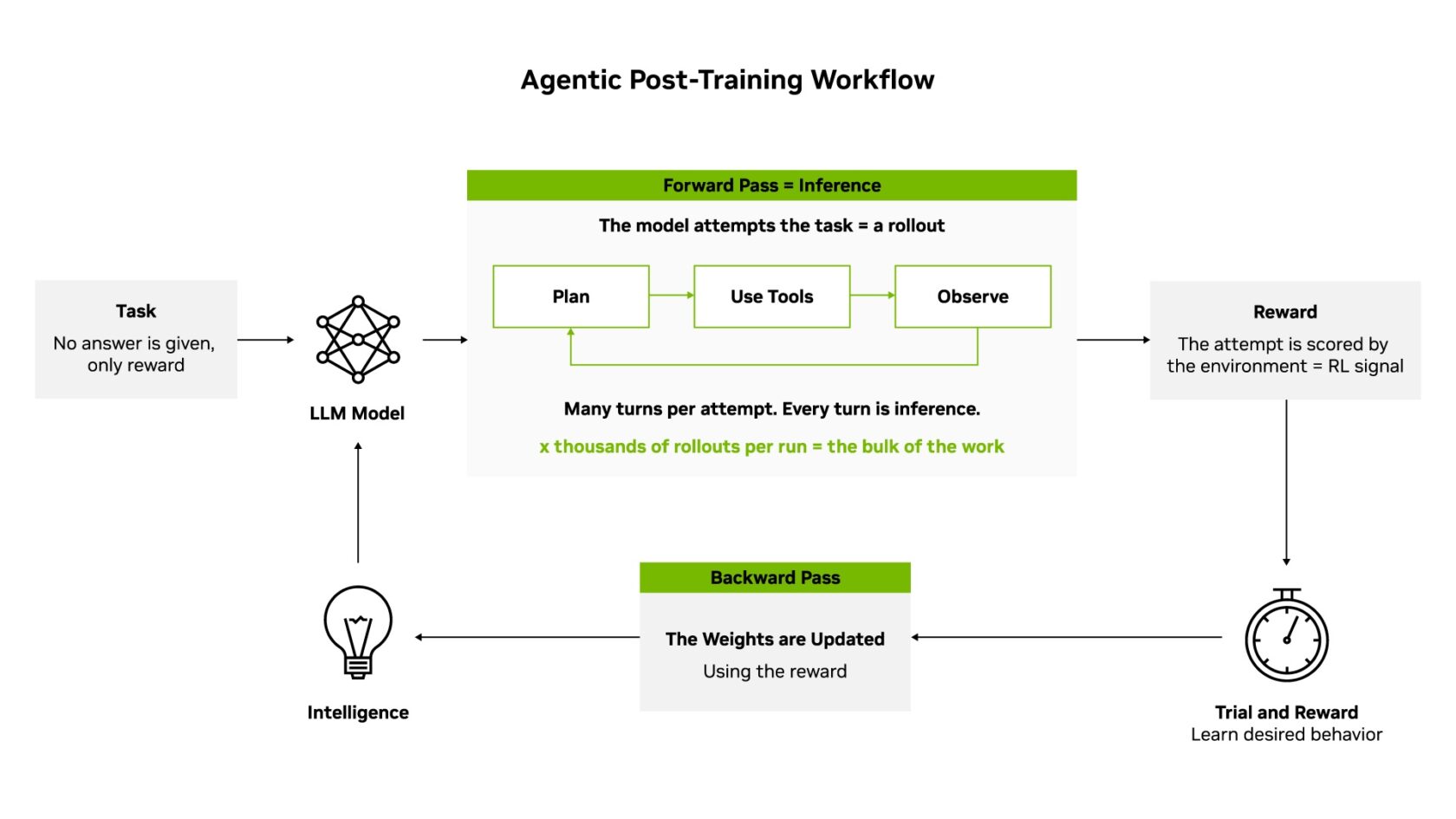
The distinction between pre-training and post-training is fundamental to understanding the development of agentic AI. During pre-training, a model learns to predict the next token in a sequence, a process that imbues it with fluency and a broad understanding of language and data. However, this fluency does not equate to true intelligence. Intelligence, in the context of agentic AI, is cultivated during post-training. This is where models acquire the ability to perform complex tasks such as writing code, planning multi-step operations, effectively utilizing external tools like search engines, and, crucially, recovering gracefully from errors and setbacks. Inference, the subsequent stage, is when the trained model is deployed to perform its job, with its operational cost typically measured in cost per token.
Since there’s no single "answer key" to memorize, agentic models learn through reinforcement learning (RL) techniques. When presented with a task, the model generates an attempt – the forward pass, mirroring the work it will perform in production. This attempt is then scored, and the insights gained are used to update the model’s weights – the backward pass. This iterative cycle, repeated millions of times, is what progressively builds the model’s intelligence.
Each step in this RL process is computationally intensive. Orchestrating this loop at scale presents a significant engineering challenge: thousands of simulated environments must generate "rollouts" (attempts) in parallel, rewards must be meticulously verified, and updated weights must be efficiently fed back into the training process, ensuring that accelerators are fully utilized. NVIDIA’s NeMo open libraries are instrumental in addressing these complexities. NeMo Gym provides a robust framework for creating training environments, while NeMo RL offers distributed post-training capabilities, transforming what was once bespoke research code into a repeatable, scalable infrastructure.
Intelligence per Dollar: The Synergy of Cost and Capability
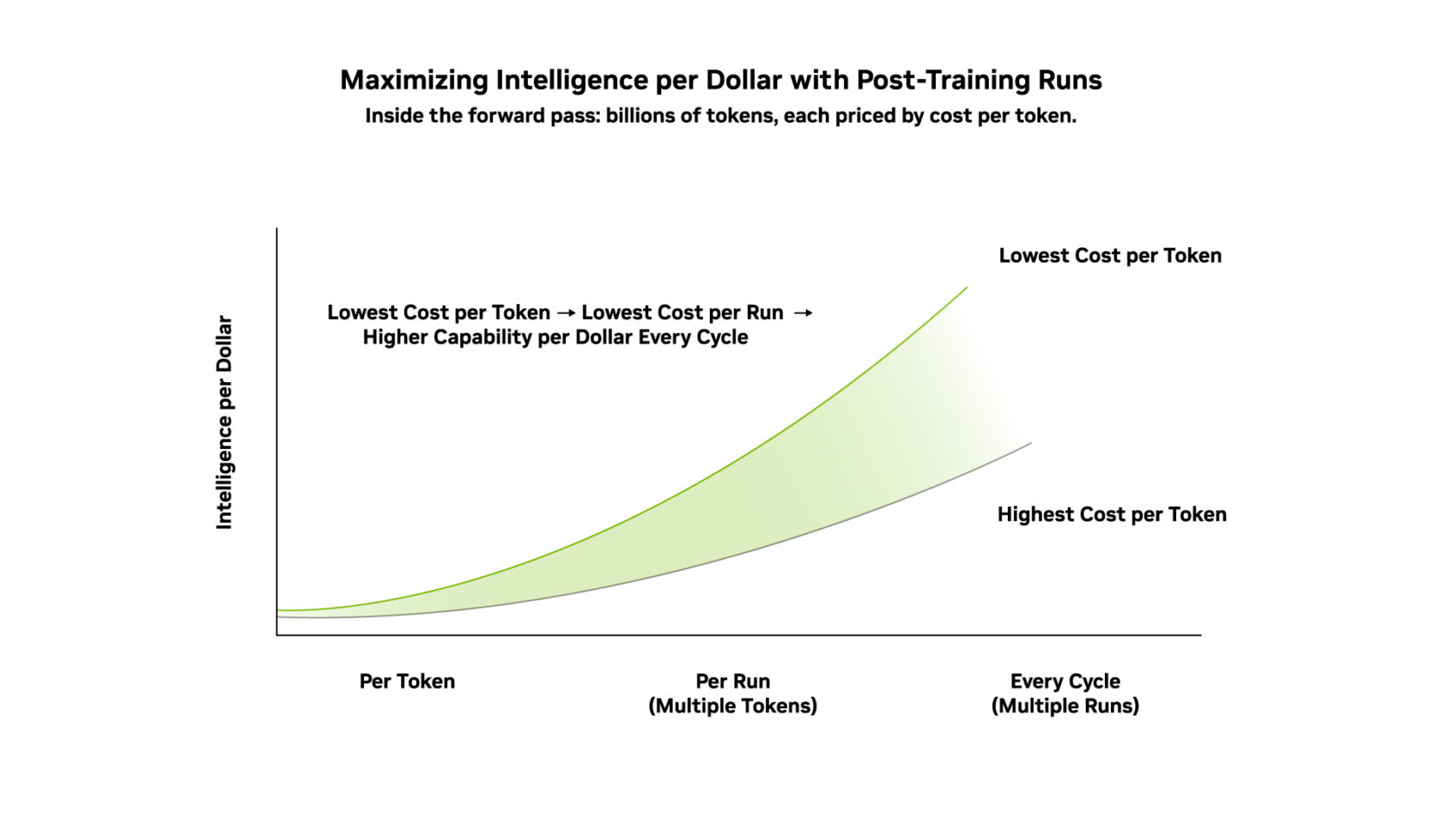
The relationship between cost per token and intelligence per dollar is not one of competition but of symbiotic enhancement. Inference, where models deliver their services, can be viewed as the revenue-generating engine of an AI system. Post-training, however, acts as the multiplier, significantly amplifying the value of every token served. The more capable and intelligent a model becomes through effective post-training, the higher the value proposition of each unit of output it generates.
Cost per token is a critical metric for the "inference factory," representing the all-in cost of delivering a specific volume of tokens, such as one million. Intelligence per dollar, conversely, operates at a higher strategic level, addressing the question of the cost associated with building and maintaining a model that is valuable enough to serve, especially as its operating environment evolves.
AI infrastructure that successfully reduces the cost per token simultaneously lowers the expense of every incremental gain in model intelligence achieved during post-training. Conversely, each enhancement in a model’s intelligence directly increases the value derived from every token it processes. In essence, cost per token measures operational efficiency, while intelligence per dollar assesses the return on investment in model intelligence.
The Nemotron 3 Ultra and the Power of Continuous Post-Training
NVIDIA’s recent unveiling of Nemotron 3 Ultra, an open-weight, 550-billion-parameter Mixture-of-Experts (MoE) model, exemplifies the practical application of these principles. This model not only offers verifiable benchmarks but also comes with a fully disclosed post-training recipe executed on the NeMo RL framework. Its performance on SWE-bench, a standard real-world coding benchmark, is particularly noteworthy. Nemotron 3 Ultra achieved a score of 71.7%, demonstrating its ability to produce working fixes for approximately seven out of every ten real software bugs sourced from open-source projects. Each fix was rigorously verified against the project’s own test suites, underscoring the model’s practical problem-solving capabilities.

The NVIDIA Blackwell platform plays a pivotal role in making the continuous post-training demanded by the agentic era economically feasible. By lowering the cost per training run, Blackwell enables the frequent iterations required for sophisticated AI agents. The intelligence gained through this continuous process is then realized across every token processed during inference.
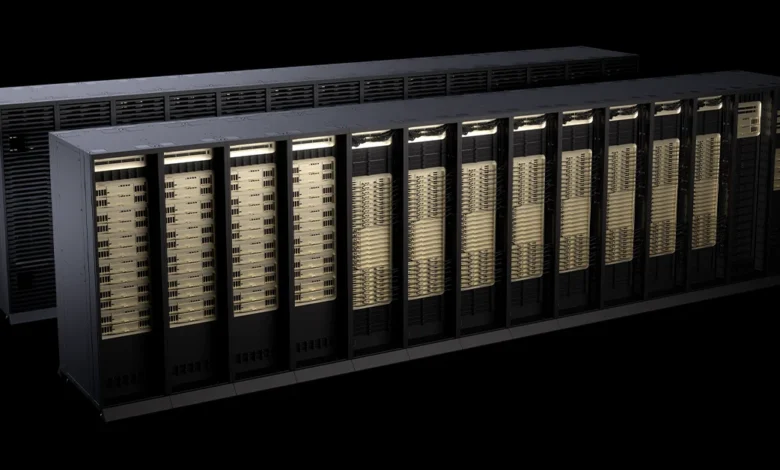
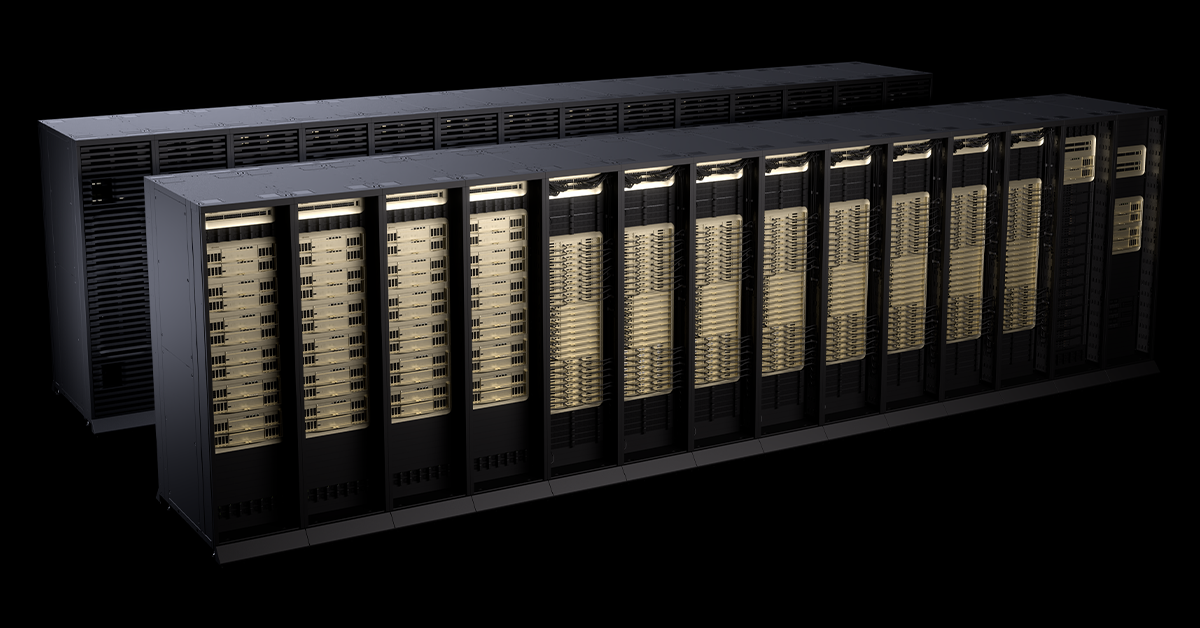
Further extending this trajectory is the NVIDIA Vera Rubin platform. Designed from the ground up to maximize intelligence per dollar for agentic post-training workloads, Vera Rubin trains the largest models using significantly fewer GPUs compared to previous generations, reportedly one-fourth the number required by the Blackwell generation. This efficiency is achieved through a focus on increasing the number of rollouts per run, expanding the parallelization of environments, and sustaining the relentless cycle of post-training that defines the agentic era.
Real-World Applications: Post-Training Workflows in Action
Several prominent organizations are already leveraging NVIDIA’s platforms and methodologies to implement advanced post-training workflows.
Prime Intellect’s Lab is at the forefront, continuously post-training frontier open models on NVIDIA Blackwell. They utilize NVIDIA Dynamo for inference orchestration and plan to scale their reinforcement learning environments with Vera Rubin. This strategic move aims to generate a greater volume of rollouts per run and significantly accelerate the iteration loop between training and inference, ultimately maximizing intelligence per dollar for their business clients. Prime Intellect has further optimized its sandbox infrastructure to integrate with NVIDIA Vera CPUs, achieving low-latency and energy-efficient reinforcement learning. Their comparative analysis of realistic RL sandbox workloads against alternative x86 architectures revealed that Vera CPUs deliver, on average, a 30% greater throughput per CPU.
Perplexity, a well-known AI research company, employs a sophisticated asynchronous post-training stack for RL that spans hundreds of NVIDIA GPUs. Their system features an RDMA-based weight transfer engine capable of synchronizing trillion-parameter models between training and inference compute nodes in under two seconds. The resulting post-trained Qwen3 235B models are then efficiently served on NVIDIA GB200 NVL72 systems, showcasing a seamless integration of training and deployment pipelines.
Together AI offers post-training as a comprehensive service, encompassing supervised fine-tuning, reinforcement learning, and direct preference optimization. Delivered through a feature-rich API and SDK, their platform supports the full spectrum of post-training capabilities on their AI Native Cloud. Having already optimized their operations on NVIDIA’s platform and specialized kernel libraries, Together AI is now poised to leverage the capabilities of the Vera Rubin platform to further enhance their service offerings.
The implications of this relentless focus on continuous post-training are profound. As AI agents become more sophisticated and integrated into diverse operational environments, their ability to adapt and learn will be the defining factor in their success. The economic viability of these advanced AI systems hinges on maximizing the intelligence gained per unit of computational resource invested. NVIDIA’s commitment to developing specialized hardware and software platforms like Blackwell and Vera Rubin directly addresses this imperative, paving the way for an era where AI systems are not static tools but dynamic, continuously improving partners. The ongoing advancements in platforms like Vera Rubin, with their emphasis on end-to-end optimization for AI factories, signal a future where intelligence per dollar is not just a theoretical metric but a tangible outcome of sophisticated, perpetual learning.