The Unseen Vulnerability: How Weather Data Manipulation Threatens Global Industries and National Security

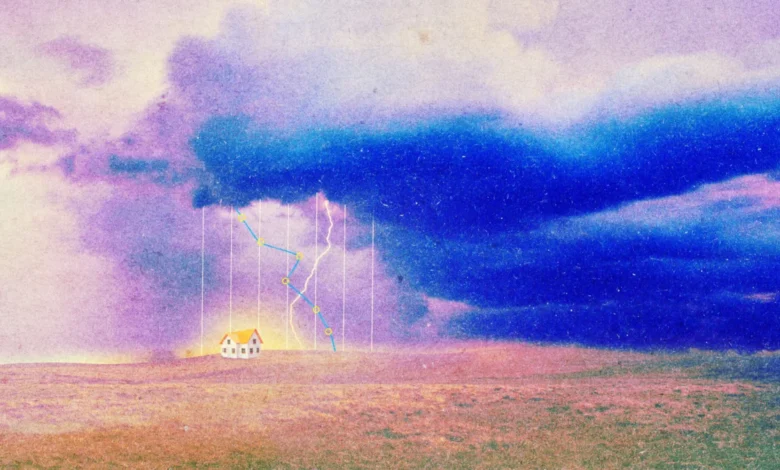
Every morning, across the globe, a critical constant underpins the strategic decisions of airline dispatchers, grid operators, and farmers: the weather forecast. While often a fleeting glance for the average person, these predictions wield immense influence, impacting multi-billion dollar industries, safeguarding livelihoods, and even directly affecting human lives. Farmers meticulously calibrate planting schedules, fertilizer applications, irrigation investments, and livestock grazing patterns based on anticipated weather. Power utilities leverage forecasts to determine optimal locations for solar and wind farms and to dynamically price wholesale electricity. Forecasters provide vital warnings of extreme weather events, triggering essential emergency response protocols. More recently, weather predictions have become a cornerstone for the burgeoning field of prediction markets, where individuals wager on the likelihood of diverse real-world occurrences, including meteorological phenomena.
However, a confluence of factors – the potent financial incentives to manipulate weather data for an edge in these prediction markets and a global embrace of data-driven AI for weather forecasting – is beginning to erode the bedrock of forecast accuracy. While these emerging risks may appear manageable today, experts within the field are sounding the alarm, foreseeing scenarios where these vulnerabilities could escalate into systemic crises with far-reaching consequences.
The foundation of accurate weather prediction rests upon the meticulous collection of current atmospheric conditions. This vital data is sourced from a diverse array of instruments, including weather stations strategically located at airports, utility infrastructure sites, and transportation hubs. Traditional operational forecasting systems, such as the widely utilized Weather Research and Forecasting (WRF) model and the European Centre for Medium-Range Weather Forecasts (ECMWF) Integrated Forecasting System, integrate these real-time observations with sophisticated numerical approximations to project future weather patterns.
Occasionally, weather stations encounter operational challenges, ranging from equipment malfunctions to scheduled upgrades. These anomalies are typically identified and rectified through a multi-layered quality control process. Real-time monitoring allows for immediate checks and corrections, while retroactive analysis can flag discrepancies after the fact. Furthermore, established forecasting methodologies incorporate a crucial safeguard known as data assimilation. This process involves a rigorous comparison of each incoming measurement against the physical model’s predictions of what should be occurring, as well as against data from adjacent weather stations. Collectively, these established mechanisms have historically ensured the reliability of weather observations and the robustness of resultant predictions.
The Paris Airport Incident: A Case Study in Emerging Threats
Earlier this year, a widely reported incident at Paris Charles de Gaulle Airport (CDG) cast a stark spotlight on the growing vulnerability of weather data. News outlets detailed how the airport’s weather station allegedly recorded anomalous temperature spikes on April 6 and April 15, 2026. Investigations by French authorities suggest that the tampering may have involved a portable heat source, such as a hairdryer or lighter. This manipulation reportedly resulted in substantial payouts for online prediction market participants who had wagered on the temperature reaching 22°C (71.6°F) on days when the actual average temperature hovered around 18°C (64.4°F). One individual reportedly profited to the tune of $20,000.
Fortunately, in this particular instance, the manipulation of a single station was detected. Members of a French climate advocacy group, through their routine monitoring, serendipitously identified the irregularities and brought them to the attention of the authorities. This event, while seemingly isolated, serves as a potent illustration of the potential for malicious actors to exploit the system for financial gain.
Escalating Risks: From Individual Fraud to National Security
However, the CDG Airport case represents the lower end of the spectrum of potential threats. The question arises: what if robust human monitoring systems are absent? What if the manipulation is more sophisticated, involving remote alteration of readings from multiple stations simultaneously? By subtly nudging the data from numerous sensors, each individual change might appear plausible in isolation, thus evading current quality control protocols that are often time-intensive, requiring hours or even days for thorough data and metadata checks. This creates a critical temporal gap, as weather forecasts must be disseminated on a strict schedule, irrespective of the ongoing data validation processes.
The accelerating integration of artificial intelligence (AI) into weather forecasting amplifies these concerns. AI-driven models, often termed "data-driven models," exhibit an even greater reliance on the accuracy and integrity of observational data. Researchers at institutions like the ECMWF are exploring the possibility of generating high-quality forecasts directly from raw observational data, potentially bypassing the assimilation step that currently acts as a crucial quality filter. This advancement, while promising enhanced accuracy, efficiency, and speed, also introduces a new set of risks by diminishing human oversight. Other research initiatives are pushing the boundaries further, combining geospatial data, including weather station readings, with advanced AI techniques like large language models and agentic AI. The objective is to enable real-time, autonomous decision-making during extreme weather events, such as severe storms.
The implications of such sophisticated AI systems, devoid of human intervention in critical data processing stages, are profound. At the most basic level, individual speculators like those in the CDG Airport incident can exploit the system for personal profit. A more concerning scenario involves coordinated groups of traders attempting to subtly bias forecasts of renewable energy output, thereby manipulating wholesale electricity prices to their advantage and leaving other market participants with significant financial losses.
The most alarming potential threat, however, lies at the far end of the risk spectrum: state-sponsored actors or saboteurs could manipulate one or multiple weather stations to either trigger false early warning systems or, conversely, suppress critical alerts during genuine emergencies. Such actions could have devastating consequences, ranging from misallocated resources during disaster preparedness to the complete compromise of public safety infrastructure. The progression of risk is clear: from financial fraud to compromised disaster response and, ultimately, to a direct threat to national security.
Fortifying the System: A Three-Pronged Defense Strategy
As long as financial or other incentives exist to manipulate observational data, adversaries will persistently seek new avenues for exploitation. It is incumbent upon the scientific and operational communities to remain vigilant and proactive in anticipating and counteracting these evolving threats. A robust defense strategy must encompass a multi-faceted approach:
1. Enhanced Station Monitoring and Real-Time Anomaly Detection
The integrity of weather data begins at the source: the weather station. Data quality control measures must be comprehensive, encompassing robust station security protocols, sophisticated anomaly detection and correction algorithms, and crucially, sustained human oversight. Weather stations require continuous monitoring to act as a deterrent against tampering. Furthermore, data homogenization methods, which are essential for cleaning and standardizing historical weather records, must be accelerated. The ultimate goal is to achieve real-time detection of anomalies, a capability that will become increasingly indispensable as agentic AI systems increasingly rely on this data for immediate decision-making. Human oversight remains paramount; it is the human element that can flag questionable data and model outputs, as demonstrated by the swift identification of the CDG Airport manipulation.
2. Securing the Data Pipeline for AI Robustness
The protection of observational data must extend throughout the entire AI pipeline. Advanced techniques such as AI explainability and adversarial robustness tools are vital. Explainability methods can illuminate the underlying data and the decision-making processes of AI models, helping to identify data-related or model-specific issues. Adversarial robustness techniques aim to make AI systems more resilient to deliberate attacks, ensuring that they can maintain accurate performance even when confronted with manipulated inputs. By bolstering these data defense mechanisms, we can create a more secure and reliable foundation for AI-driven weather forecasting.
3. Establishing End-to-End Accountability and Transparency
The journey of observational data is complex, involving numerous stakeholders. From the operators responsible for maintaining the weather stations to the national weather services that curate and archive the records, and finally to the forecasting centers that transform raw data into actionable predictions, each entity plays a critical role. No single organization can guarantee data integrity in isolation. A system of continuous accountability must be established, where any anomaly detected at any stage of the data chain is promptly communicated to all relevant parties, creating a transparent and interconnected flow of information from the point of observation to the end-users of the forecast. This unbroken chain of communication is essential for swift and effective remediation of any identified issues.
A Wake-Up Call for a Critical Infrastructure
The incident at Paris Charles de Gaulle Airport, while fortunate in its detection, should serve as a critical wake-up call for all stakeholders involved in weather forecasting and its myriad applications. As the reliance on observational weather data continues to grow, so too does the imperative to adapt to an ever-evolving landscape of threats. This necessitates a proactive approach to safeguarding our data and our models, which includes strengthening existing oversight and accountability structures and fostering enhanced coordination and collaboration among key international partners. The reliability of weather forecasts is not merely a matter of scientific accuracy; it is intrinsically linked to economic stability, public safety, and national security in an increasingly interconnected and weather-dependent world. The time to act is now, before the subtle nudges of manipulated data become a disruptive storm.