The High Cost of Oversight: How a Small Budget Error Transformed Into a Lasting Lesson in Client Transparency and PPC Management

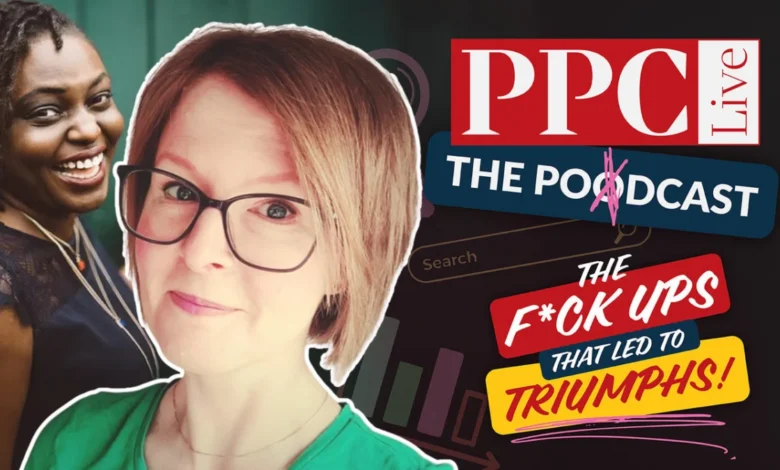
During a recent episode of "PPC Live the Podcast," Heather Robinson, a seasoned Google Ads specialist and freelance digital marketer, shared a cautionary tale that resonates across the global advertising industry. The incident, which involved a Meta (formerly Facebook) advertising campaign, saw a modest intended spend of £50 balloon into a debt of more than £1,000 due to a single administrative error. The narrative serves as a stark reminder of the financial risks inherent in digital advertising platforms and the critical importance of human oversight in an increasingly automated field. The story, while centered on a technical mistake, ultimately highlights how professional integrity and transparent communication can salvage—and even strengthen—long-term client relationships.
The Anatomy of an Overspend: From £50 to £1,000
The error occurred during the setup of a short-term promotional campaign on Meta’s advertising platform. Robinson intended to set a "lifetime budget" of £50 to cover a specific weekend promotion. However, in the process of navigating the Meta Ads Manager interface, the budget was inadvertently set as a "daily budget" of £50. Because the campaign was not revisited immediately following its launch, it continued to draw funds from the client’s account at the daily rate for three consecutive weeks.
The discrepancy was only discovered 21 days later, while Robinson was conducting a routine audit in preparation for a scheduled client meeting. By that time, the total spend had surpassed £1,000—twenty times the original allocation. This type of error, often referred to in the industry as "budget bleeding," is a common pitfall in digital marketing, where a single toggle or dropdown menu selection can have significant financial consequences.
The Chronology of a Campaign Failure
To understand how such an error persists for three weeks, it is necessary to examine the timeline of the campaign’s lifecycle:
- Phase One: The Setup. Amidst a heavy workload, the campaign was configured. The specialist, relying on years of experience, moved quickly through the setup process. The "daily budget" vs. "lifetime budget" setting is a notorious friction point in Meta’s UI, where the default setting often defaults to daily spend.
- Phase Two: The Launch. The campaign went live on a Friday, intended to capture weekend traffic. No immediate red flags were raised because the initial spend matched the intended weekend budget.
- Phase Three: The "Set and Forget" Trap. Following the weekend, the campaign remained active. In a busy agency or freelance environment, smaller campaigns can sometimes fall through the cracks if they are not part of a larger, high-priority account structure.
- Phase Four: The Discovery. Three weeks later, during a pre-meeting review, the cumulative spend was identified. The realization that a £50 project had consumed £1,050 created an immediate professional crisis.
The Psychological Component: The Danger of Routine
Robinson noted that the mistake was not born from a lack of technical proficiency. On the contrary, it was a byproduct of "complacency." In the field of Pay-Per-Click (PPC) advertising, specialists often perform the same sequences of tasks thousands of times. This repetition can lead to "expert blindness," where the brain skips over familiar settings, assuming they are correct.
Psychological studies on workplace errors suggest that highly experienced professionals are often more susceptible to routine-based mistakes than novices because they operate on "autopilot." In Robinson’s case, the absence of a "second pair of eyes"—a common challenge for independent freelancers—meant there was no safety net to catch the manual entry error before it impacted the client’s bottom line.
Crisis Management: Honesty as a Retention Strategy
The most significant takeaway from the incident was not the error itself, but Robinson’s response to it. Faced with the choice of attempting to deflect blame toward Meta’s interface or offering a refund quietly, she chose radical transparency. She addressed the overspend directly during a face-to-face meeting with the client, taking full personal responsibility for the oversight.
The immediate reaction from the client was one of dissatisfaction; an unplanned £1,000 expense is a significant blow to most small-to-medium enterprise (SME) budgets. However, Robinson’s refusal to make excuses and her commitment to establishing new safeguards resonated with the client. Today, nearly a decade after the incident, that same client remains on her roster. This outcome suggests that in the professional services industry, trust is not built on a foundation of perfection, but on how a professional handles the inevitable moments of failure.
The Shift Toward Systematic Safeguards
In the wake of the £1,000 error, Robinson fundamentally restructured her workflow. The experience led to the implementation of mandatory, structured launch checklists for every campaign, regardless of size or complexity.

Industry experts increasingly advocate for this "Checklist Manifesto" approach—a concept popularized by Dr. Atul Gawande in the medical field—to reduce human error in technical environments. A standard PPC launch checklist now typically includes:
- Budget Verification: Double-checking daily vs. lifetime settings and decimal point placement.
- End-Date Confirmation: Ensuring campaigns have a hard stop date to prevent indefinite spending.
- Targeting Audit: Reviewing location and demographic settings to ensure ads aren’t reaching irrelevant audiences.
- Conversion Tracking Test: Confirming that the "Thank You" page or event trigger is firing correctly.
Robinson also highlighted the role of Artificial Intelligence (AI) in this new workflow. While she remains skeptical of allowing AI to have full autonomy over campaign decisions, she utilizes it as a "second opinion" tool to scan for anomalies and analyze search term reports, providing a layer of data-driven oversight that human eyes might miss.
Broader Industry Implications: The Conversion Tracking Crisis
Beyond individual manual errors, Robinson pointed to a more systemic issue currently plaguing the digital marketing industry: incorrect conversion tracking. This problem has been exacerbated by the industry-wide migration from Universal Analytics to Google Analytics 4 (GA4).
According to Robinson, many businesses are unknowingly optimizing their campaigns based on flawed data. She cited an example of an e-commerce client that spent a full year optimizing for "site search" (users using the search bar) rather than "purchases." Because the machine learning algorithms were fed the wrong success signals, the campaign’s performance stagnated.
Data from various marketing audits suggests that up to 50% of small business ad accounts have significant tracking errors. When tracking is broken, the AI powering modern Google and Meta ads learns the wrong behaviors, leading to a "garbage in, garbage out" cycle that can waste thousands of dollars in ad spend—far more than a simple £1,000 budget error.
The Role of AI: Assistant, Not Pilot
The podcast episode also delved into the evolving role of AI in advertising. Robinson’s stance represents a growing middle ground in the industry. She warned against the "lazy" use of AI, such as accepting Google’s auto-generated ad copy without review, which often results in repetitive, bland, or even nonsensical messaging.
However, she acknowledged that AI is indispensable for handling the "heavy lifting" of data analysis. By using AI to identify patterns in search terms or to flag sudden spikes in cost-per-click (CPC), marketers can focus on higher-level strategy and client communication. The consensus among top-tier PPC professionals is that AI should be viewed as a powerful co-pilot, but the human "pilot" must always keep their hands near the controls.
Conclusion: Lessons for the Modern Marketer
The story of the £50 campaign that cost £1,000 serves as a microcosm of the risks and rewards of the modern digital economy. It highlights a critical paradox: as advertising platforms become more sophisticated and automated, the need for disciplined, manual "checks and balances" becomes more vital, not less.
For freelancers and agencies, the implications are clear. Technical expertise is the baseline, but the "soft skills" of accountability and transparency are what ensure business longevity. Robinson’s experience proves that a mistake, while costly in the short term, can be transformed into a powerful tool for building client loyalty if handled with integrity.
As the PPC landscape continues to shift toward "black box" automation and AI-driven optimization, the human element—characterized by the ability to say "I made a mistake and here is how I will fix it"—remains the most valuable asset a marketer can offer. The path to expertise is paved with errors, provided those errors lead to better systems, clearer communication, and a relentless commitment to protecting the client’s investment.