How a Sixth-Grade Teacher and a Door-to-Door Job Built a Billion-Dollar Pest Control Empire


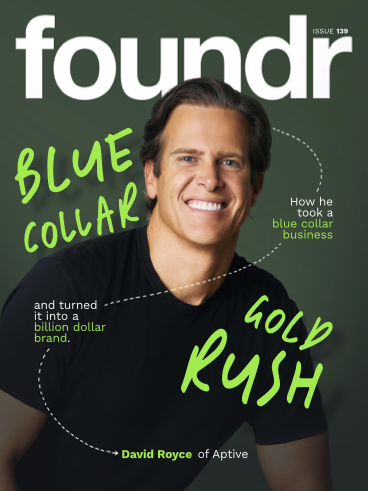
David Royce has a theory about success: it’s not about the industry you pick, the degree you have, or whether the opportunity looks good on paper. It’s about whether you’re willing to do the thing nobody else wants to do, for long enough to become the best at it. This principle has been the bedrock of Royce’s entrepreneurial journey, leading him from a challenging academic past to the helm of Aptive, the third-largest residential pest control service in North America, a company that has achieved over $500 million in annual revenue.
Royce’s path was far from a straight line to success. He spent four college summers selling door-to-door before ever considering entrepreneurship. This foundational experience in sales, particularly in an industry many with finance degrees would overlook, ultimately paved the way for multiple high-value exits and the establishment of a dominant force in the pest control market. His story, as shared in an interview with Foundr CEO Nathan Chan, offers a compelling look at resilience, strategic thinking, and the unconventional routes to building significant wealth.
The Early Struggles and the Spark of Potential
Royce’s academic journey was initially marked by difficulty. He struggled with focus in traditional classroom settings, leading him to believe he wasn’t academically gifted. "I struggled in school because I couldn’t focus unless I cared deeply," Royce explained. "And when you’re a kid, you don’t say, ‘I might have undiagnosed ADHD.’ You say, ‘I guess I’m not smart.’" This self-perception began to shift in the sixth grade, thanks to the intervention of a teacher, Mrs. Luft. "She really saw me. She believed in me before I believed in myself," Royce recalled. This pivotal support fueled a newfound dedication to his studies, leading to improved grades. It wasn’t until adulthood that Royce was diagnosed with ADHD. He now views it as a "double-edged sword," a challenge in unengaging environments but a "superpower" in areas that capture his intense focus and passion, such as sales and entrepreneurship.
The transition from academic struggles to a burgeoning entrepreneurial spirit began during his college summers. Royce stumbled into pest control sales almost by accident. A friend’s claim of earning $25,000 in a single summer was a powerful incentive. Royce drove to Sacramento, but his initial foray into door-to-door sales was far from successful. "I was horrible at first. Didn’t sell anything the entire first week. Commission only, so I made nothing," he admitted. Facing the prospect of returning home without any earnings after five days of zero sales, Royce made a crucial decision. Instead of giving up, he invested in himself. "That weekend he didn’t call home. He went to a bookstore, bought half a dozen sales books, and put 90 minutes of study on the calendar every day."
This commitment to learning and relentless practice paid off. By the end of that summer, Royce had transformed his performance. "By the end of that summer I was the top sales rookie in the entire company out of 200 reps," he stated. His takeaway from this experience encapsulates his core philosophy: "Not because I was special. Because I was too stubborn to go home and admit I failed. Persistence is genius in disguise." This dedication to mastering a challenging skill, even in the face of initial failure, became a defining characteristic of his approach to business.

Building the Foundation: Sales Acumen and Strategic Shifts
Royce’s success in sales wasn’t just about persistence; it was about developing a codified system of effective techniques. He distilled his winning strategies into three core pillars that formed the foundation of his training programs:
- Option Closes vs. Yes-or-No Questions: This technique involves presenting choices that both lead to a desired outcome. For example, "We’ll be in your area tomorrow at three or five, which works better?" effectively guides the customer towards a commitment without giving them an easy out.
- RAC (Resolve the Doubt, Lay Down an Ace, Close Again): This method addresses customer objections systematically. It involves acknowledging and resolving their concerns, presenting a compelling benefit or piece of information they hadn’t considered, and then re-engaging them for a close.
- Body Language: Royce emphasized the critical role of non-verbal communication in sales. He famously told his reps, "Your body sells before your mouth does. I used to tell reps, you’re not losing because your script is bad. You’re losing because your face is saying please don’t hurt me." This highlights the importance of projecting confidence and professionalism.
While excelling in sales, Royce was on a traditional career trajectory, planning to pursue investment banking. His finance degree seemed a perfect fit for the high-stakes world of mergers and acquisitions. However, a pivotal conversation with his boss changed his perspective entirely. When Royce asked for a letter of recommendation for investment banking positions, his boss posed a provocative question: "Why would you go work 80 to 100 hour weeks for someone else when you could start your own pest control company?"
This question struck a chord, though Royce’s initial reaction was one of apprehension. "I’d never considered the idea. And this is embarrassing, but my first thought was literally, pest control doesn’t sound impressive," he confessed. He perceived success as requiring a more conventional, high-profile image, a notion he had grappled with even as a teenager. At fifteen, after being let go from a pizza parlor, he found employment at McDonald’s, a job he considered "embarrassing" at the time. It was at McDonald’s, however, that he learned the value of standardized procedures and best practices, lessons that would prove invaluable later in his career.
The opportunity presented by his boss was significant. The boss had recently sold his own pest control startup to Terminix for $10 million after just four years and was offering Royce a similar blueprint for success. Royce had accumulated approximately $300,000 from his summer sales endeavors, capital initially earmarked for an MBA. He recognized the disparity between his preconceived notions of success and the tangible opportunity before him. "I swallowed my ego and chose the opportunity instead of the image," Royce stated, marking a decisive shift in his entrepreneurial path.
Navigating the Pitfalls: Cash Flow and Early Setbacks
Royce’s entrepreneurial journey was not without its significant challenges. His first year operating a pest control business in Los Angeles brought him perilously close to bankruptcy, not due to a lack of customers, but because of an unforeseen cash flow crisis. The business model required paying sales commissions in advance of the revenue being collected, creating a timing mismatch.
"Year one I learned you can be killing it and dying at the same time," Royce explained. His company experienced explosive growth, far exceeding his projections. He had anticipated between 4,000 to 5,000 new customers, but the actual number reached 7,500 – a remarkable feat unprecedented for a single branch in the industry at that time. This rapid expansion, while a testament to his sales prowess, placed immense strain on his cash reserves.
"The business model required me to pay my salespeople’s commissions in advance of the revenue coming in. A timing issue with cash flow," Royce detailed. The situation became so dire that he had to approach sales leaders and request an extension on paying their bonuses, offering them an additional 10% interest on the outstanding amounts. Fortunately, his sales team, having experienced a highly successful summer, was willing to accommodate. This near-catastrophe provided Royce with a crucial lesson: "Revenues are vanity. Profits are sanity. But cash flow is reality." This experience fundamentally reshaped his approach to funding growth, establishing a robust financial framework that would be replicated across his subsequent ventures.
The Art of the Exit and Building a Recurring Empire
Royce’s ability to navigate financial challenges and build a scalable business led to a remarkable string of successes. He sold three companies prior to Aptive, all to the same strategic buyer. A key element of these transactions was Royce’s insistence on retaining his core team. This was made possible by structuring the deals as "asset deals."
"Each time, I sold just the customers and the technicians servicing them," Royce explained. "That was all the strategic buyers wanted anyway. They had their own brand, their own back office. They needed streams of recurring revenue." By carving out his leadership team, operations managers, and salesforce from the sale, Royce ensured continuity and preserved the talent that had driven his success. "That was the golden goose," he stated. With the capital from these sales, he would then launch his next company, often in new territories, with the same core team and improved financial backing, all without diluting equity through outside investors. "No investors. No equity dilution. Same family, bigger stage," he summarized.
This strategy allowed Aptive to grow at an exceptional rate, seven to ten times faster than many of its over 20,000 competitors in North America. Royce attributed this accelerated growth to three primary factors:
- A Superior Sales Program: Aptive’s sales training was meticulously designed and scaled into a robust machine capable of supporting over 3,000 individuals. This program consistently outperformed competitors, with reps switching to Aptive reportedly producing 70% more in a summer than at their previous employers.
- Enhanced Service Features: Drawing from his extensive door-to-door experience—having knocked on over 60,000 doors—Royce gained deep insights into homeowner needs and pain points. This knowledge informed the development of additional service features that addressed these specific concerns.
- Early Adoption of Technology: Aptive invested early in software solutions to boost efficiency and introduce gamification into the business, a novel approach for a "blue-collar" company seventeen years ago. The development of a sales app that hosted nationwide tournaments significantly improved productivity, with gains of up to 30% on tournament days.
The Unassuming Power of Blue-Collar Industries
Royce’s success highlights a significant, often overlooked, segment of the American economy: blue-collar industries. While not as glamorous as tech or finance, these sectors often offer substantial profit margins and a unique set of opportunities. The Wall Street Journal has referred to owners in these fields as the "stealthy wealthy." Data indicates that among the top 0.1% of income earners in the U.S., approximately 43% derive their wealth from what are commonly perceived as "boring blue-collar industries."
Several factors contribute to this trend:

- Recurring Revenue Models: Many essential services, like pest control, are characterized by recurring revenue streams, providing stability and predictable income.
- Aging Workforce and Succession Gaps: A large wave of Baby Boomer business owners in these sectors are approaching retirement, but many lack a clear succession plan. This creates a significant market for acquisition and consolidation.
- Resilience to Economic Downturns: Services like pest control are often considered essential, meaning demand remains relatively stable even during economic recessions. As Royce aptly put it, "Recessions come and go. But bugs don’t read The Wall Street Journal."
- Limited Impact of AI on Core Services: While AI is transforming many industries, its ability to perform the physical tasks required in many blue-collar jobs remains limited. AI cannot, for instance, physically inspect a roof, treat termites within walls, or unclog a toilet. This ensures a sustained demand for human labor in these fields.
Cultivating Culture and Empowering Employees
Aptive’s corporate culture has garnered significant attention, characterized by unique perks like an NCAA basketball court at headquarters, a golf simulator, and extravagant retreats to locations like Egypt and Thailand, alongside activities such as skydiving and shark diving. Royce’s philosophy on culture was heavily influenced by Tony Hsieh’s book, "Delivering Happiness." He learned that intentional design, rather than mere "vibes," is crucial for building a strong and cohesive company culture, especially when operating across dispersed locations.
However, Royce acknowledges that while these perks create a memorable environment, the true engine of Aptive’s success and its primary draw for top talent was its exceptional training program, which empowered employees to achieve higher sales figures than at competing firms.
Perhaps the most impactful aspect of Aptive’s culture was Royce’s decision to distribute 25% of the company’s equity to its employees. This move was driven by a desire to align their financial interests with the company’s success and ensure they shared in the rewards of any future sale. With Aptive generating over $500 million in annual revenue and the industry typically selling for one to three times revenue, this equity distribution represented a nine-digit sum.
The impact of this decision was profound. Many employees received six- or seven-digit payouts, enabling them to pay off mortgages and student loans, or purchase significant assets for their families, such as new cars for parents. Royce reflected on the emotional weight of these outcomes: "I’ll never forget the calls… And I remember hanging up thinking, that was worth it. Turns out ownership is a far better retention tool than ping-pong tables."
The Challenge of Letting Go and Strategic Adjustments
After a decade as CEO, Royce made the deliberate decision to step down from his leadership role at Aptive, appointing a protégé who had risen through the ranks of his organization. This transition was a testament to his belief in building a company, not just a dependency. "When you replace yourself, you realize very quickly whether you built a company or a dependency," Royce observed. The most significant challenge was not structural but psychological: resisting the urge to intervene when he saw things done differently or less efficiently. He learned the critical leadership skill of allowing others to succeed, even if their methods varied from his own. "I had to stop being the hero and start being the architect," he stated.
A subsequent attempt to scale Aptive through the integration of seasoned executives from larger corporations presented another learning opportunity, albeit a costly one. The company hired a CFO with extensive experience at a billion-dollar tech firm, expecting a similar level of operational expertise. However, the executive’s accustomed reliance on a large support staff proved to be a mismatch for Aptive’s leaner operational structure. This led to miscalculations in expense management and, crucially, a failure to meet financial forecasts during a process to sell a portion of Aptive.
"We had initial offers from half a dozen buyers valuing the company between $1 and $1.6 billion," Royce recalled. However, as the company missed its financial targets, buyer interest waned, and ultimately, all potential buyers withdrew from the deal. This experience yielded several critical lessons: the importance of "trust but verify," the imperative of consistently meeting forecasts, especially during a sale process, and the understanding that not every sale process results in a transaction. Royce views these setbacks not as failures, but as valuable learning opportunities that can inform future strategies.
The Enduring Philosophy: The Climb and the Legacy
Reflecting on his twenty-year entrepreneurial journey across four companies, Royce offers a final perspective on success. He suggests that success is a continually evolving target. "The right answer is, just a little more," he stated, referencing the human tendency to always seek greater achievements. For Royce, entrepreneurship is less about the ultimate financial exit or achieving absolute financial freedom, and more about the personal growth, expertise, discipline, and character forged along the way. "If you don’t enjoy the climb, the summit is going to disappoint you," he advised.
His most profound passion lies in developing people. Quoting Gandhi, Royce emphasized that true leadership is measured by the ability to cultivate other leaders. His desired legacy is not solely tied to the valuation of his companies, but to the impact he has had on the individuals he has mentored and empowered. "If there’s a legacy I care about, it’s not the valuation. It’s the leaders we helped build along the way."
David Royce’s story—from a child who doubted his own intelligence, to a door-to-door salesman too tenacious to quit, to the founder of a billion-dollar enterprise in an industry many overlook—serves as a powerful reminder that the most significant opportunities are often found in unexpected places, demanding unwavering commitment and a willingness to embrace the unconventional.