NVIDIA Showcases Transformative AI Advancements in Graphics, Simulation, and Creative Tools at SIGGRAPH 2026

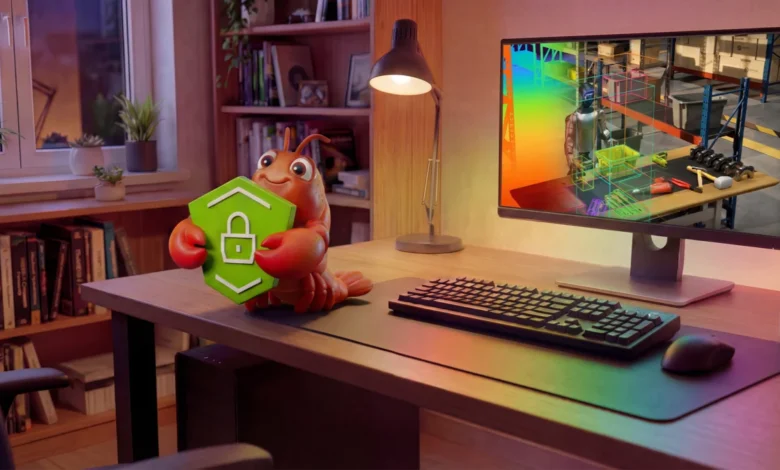
The annual SIGGRAPH conference, a premier event for computer graphics and interactive techniques, is currently underway in Los Angeles, running through Thursday, July 23rd. This year’s gathering is highlighting a significant paradigm shift in how digital worlds are conceived and interacted with, driven by cutting-edge graphics research, neural rendering, advanced simulation, and artificial intelligence. NVIDIA, a key player in this technological evolution, is at the forefront, demonstrating how its innovations are empowering both human creators and artificial intelligence systems to understand and generate complex visual realities.
A central highlight of NVIDIA’s presence at SIGGRAPH is its keynote address, scheduled for today, July 20th, at 3:45 p.m. PT. The session features prominent NVIDIA AI research and engineering leaders, including Neil Ashton, Edward Liu, and Ming-Yu Liu. They are delving into the intricate details of neural rendering techniques, the development of sophisticated world models, and the application of simulation methodologies in building AI systems that are themselves capable of creation. This focus underscores NVIDIA’s commitment to advancing the capabilities of AI beyond mere analysis to active generation and understanding of visual and physical environments.
The conference is serving as a crucial platform for NVIDIA and its partners to unveil a series of groundbreaking advancements. These innovations are poised to redefine creative workflows, enhance simulation fidelity, and democratize access to powerful AI tools.
AI Agents Revolutionize Creative Toolsets for Millions
A pivotal development showcased at SIGGRAPH is the expansion of creative applications through the Model Context Protocol (MCP). This protocol facilitates the integration of AI agents directly into established creative software, allowing them to operate within the very environments where scenes, shots, timelines, assets, and edits are brought to life. Crucially, this integration maintains human creators at the helm, ensuring that final creative decisions remain firmly in their hands.
For over two decades, NVIDIA technologies have been instrumental in accelerating the digital content creation (DCC) pipeline. From GPU-accelerated viewports and CUDA-powered effects to NVIDIA RTX PRO ray tracing, AI denoising, neural rendering, and real-time simulation, these advancements have empowered artists, studios, and developers to build the world’s most immersive games, films, television shows, and advertising content. MCP represents the next evolutionary leap, moving beyond mere acceleration to imbue applications with agentic capabilities.
From Acceleration to Action: Empowering Creators with Intelligent Assistants
The integration of MCP into creative tools signifies a profound shift from simply making processes faster to making them more intelligent and responsive. With MCP-connected applications, artists and technical directors can now delegate a range of complex and often time-consuming tasks to AI agents. This includes inspecting scenes for missing textures, identifying inconsistencies in color management, generating various export variants, creating playblasts for daily reviews, or validating shots against predefined pipeline rules. This empowers creative professionals to focus on higher-level artistic direction and problem-solving, while AI agents handle the intricate details.
The same robust NVIDIA platform that has driven advancements in viewports, rendering, simulation, and AI effects is now being leveraged to power local AI agents, model inference, and multi-application workflows. These capabilities are being delivered through systems specifically engineered for professional creators, such as NVIDIA RTX PRO workstations and DGX Spark and DGX Station systems. By bringing accelerated AI performance closer to the artist, developer, and studio pipeline, running models and agents locally enhances responsiveness, reduces reliance on external cloud services, and crucially, ensures that sensitive creative data remains within secure, controlled environments.
The NVIDIA Agent Toolkit is also playing a vital role in this ecosystem, offering comprehensive support for MCP integration. This includes an MCP client for seamless connection to remote MCP servers and an MCP server for publishing tools and functionalities to any MCP client, fostering a connected and collaborative AI development environment.
The Creative Ecosystem Embraces Agentic Readiness
Across the entire creative technology landscape, leading applications and platforms are actively exposing MCP connections or implementing MCP-ready workflows. This strategic move grants AI agents a more grounded and contextualized understanding of real-world production environments.
-
Adobe is significantly expanding its creative agent capabilities across its Firefly, Express, and Creative Cloud suites. The AI Assistant experiences powered by these agents allow creators to articulate their desired outcomes using natural language, while the assistant orchestrates complex, multi-step workflows. Furthermore, Adobe is extending its professional creative tools to third-party AI platforms via the Adobe Connector, broadening creative possibilities wherever users work. For developers, the Adobe Express Developer MCP Server provides the necessary tools for AI coding assistants to build Adobe Express add-ons, leveraging official documentation and robust APIs.
-
Affinity by Canva has introduced an AI Connector for Claude that utilizes MCP to bring natural-language automation directly into Affinity applications. Designers can now instruct Claude to manage repetitive production tasks, such as renaming layers and artboards, resizing and reformatting assets for diverse channels, applying bulk edits, optimizing vector paths, and preparing files for final delivery. Beyond individual task automation, Claude can also assist users in building reusable scripts and custom features tailored to their specific workflows, thereby reducing production overhead and freeing up creative professionals to dedicate more time to design innovation.
-
Blender, the widely adopted open-source 3D creation suite, is offering a lightweight MCP server through Blender Lab. This provides a natural-language interface to Blender’s extensive Python API, documentation, and complex scene setups. For independent artists and studios, Blender serves as a compelling example of how open creative tools can become accessible to AI agents without compromising the core creative workflow or control.
-
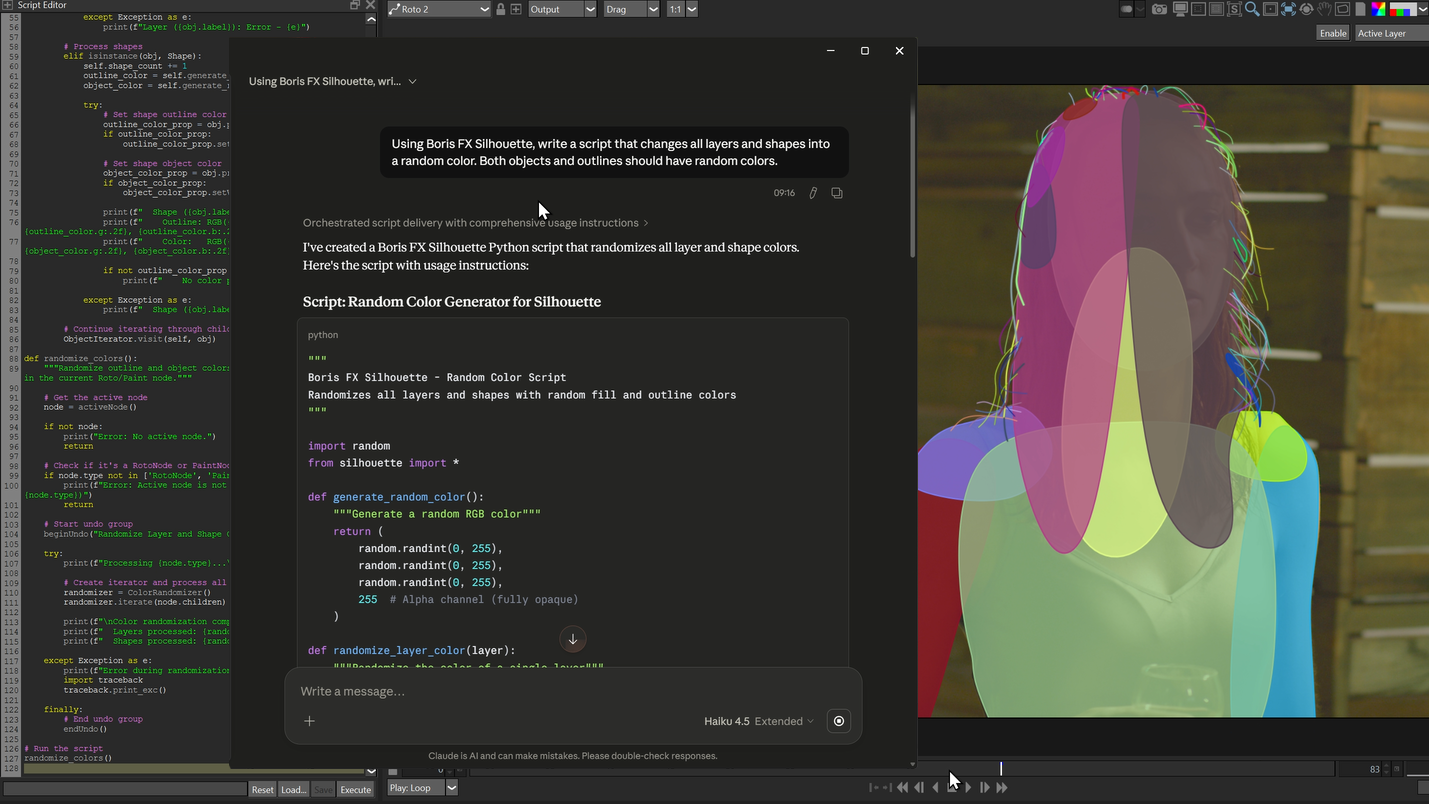
Boris FX Silhouette has integrated an MCP server, enabling AI assistants to work directly within projects. Leveraging Silhouette’s FX Scripting API as first-class MCP tools, assistants can inspect projects, construct node trees, edit shapes and keyframes, and render frames. A newly implemented preferences panel simplifies the setup process by facilitating MCP package installation, generating ready-to-use client configurations, and testing connections. The system supports both interactive online mode for real-time collaboration and headless offline mode for automation, batch processing, and large-scale workflows.
-
Foundry Griptape offers native MCP support, providing AI orchestration specifically designed for professional VFX pipelines. This integration allows studios to securely manage multiple AI models and agents while maintaining essential traceability and creative oversight. By integrating with tools like Blender and Foundry Nuke, Griptape automates repetitive production tasks such as cleanup, matte painting, and quality control, all while ensuring that artists retain ultimate control over the creative process.
-
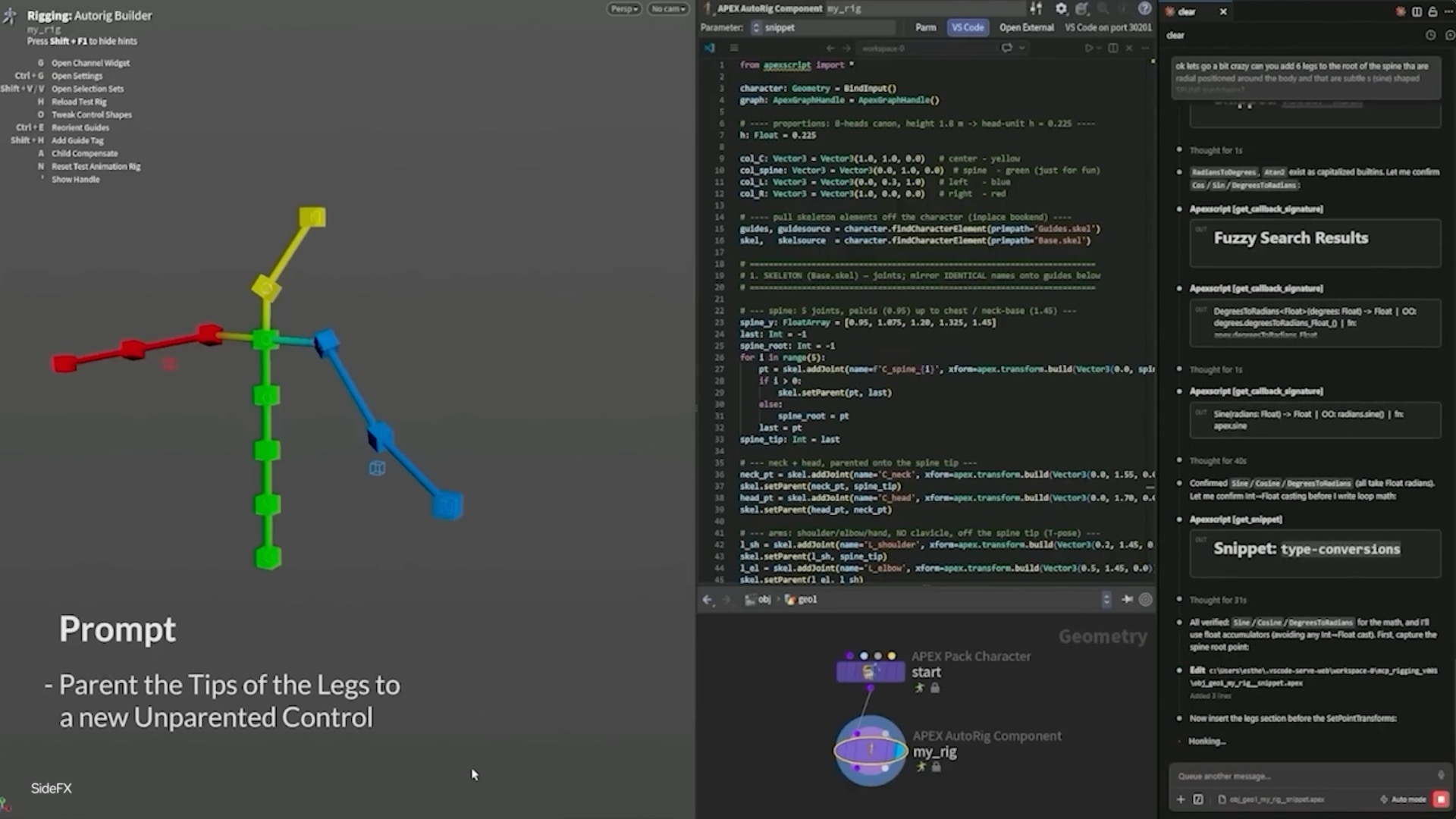
SideFX is incorporating MCP support into Houdini 22 through its new APEX Script workflow. AI assistants gain access to a curated collection of APEX Script syntax, functions, documentation, and examples, empowering artists to generate and refine code for procedural character rigs. While SideFX’s initial implementation focuses on APEX Script and character rigging, community-developed MCP servers are expanding the ways agents can interact with Houdini, promising even greater flexibility and power.
-
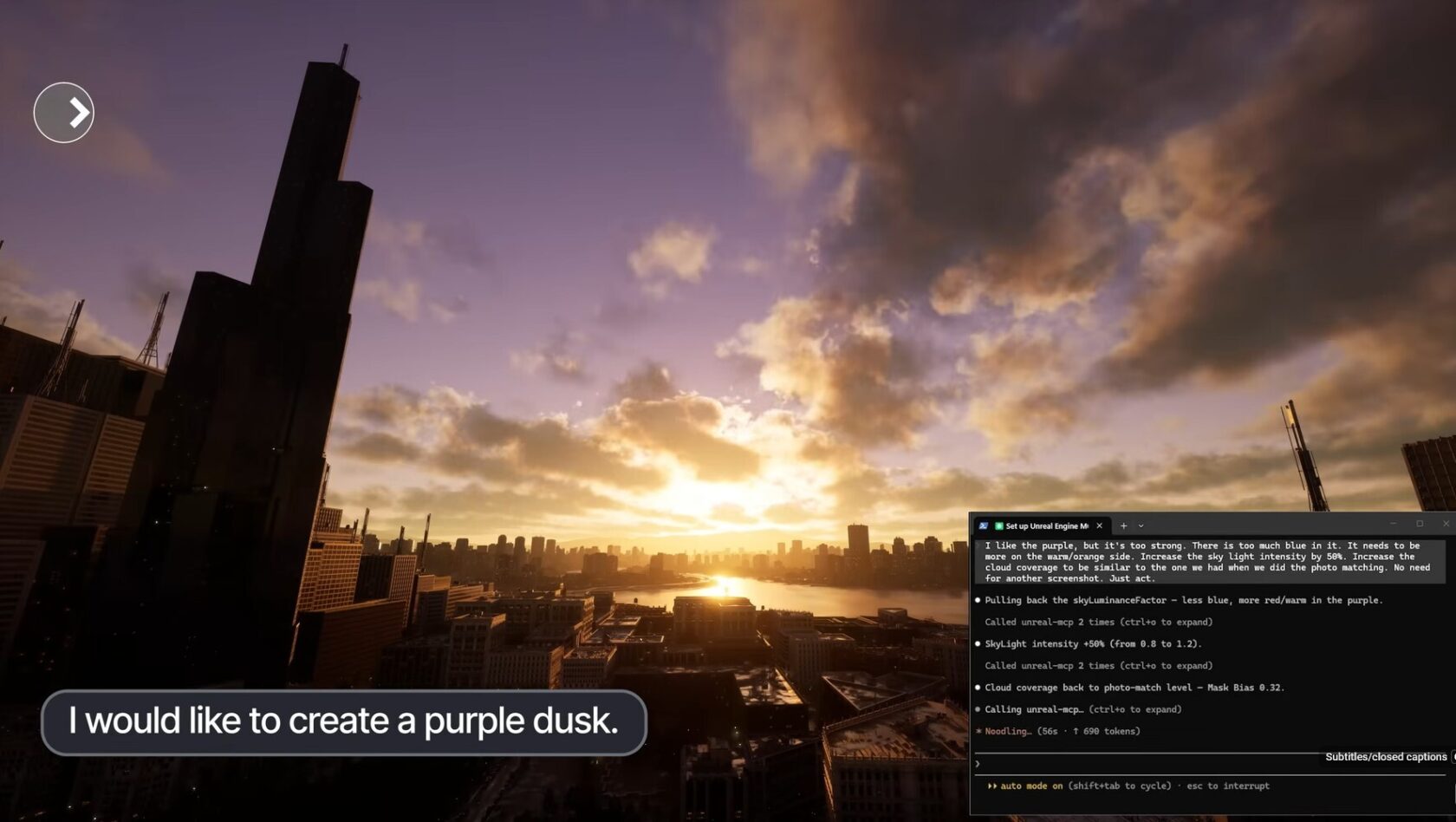
Unreal Engine has recently announced the capability to connect AI clients to Unreal Editor via MCP. This enables AI-driven workflows that can interact with editor functionalities through a standardized protocol. For game developers, virtual production teams, and real-time artists, this opens up unprecedented possibilities for AI assistants that can reason over complex scenes, assets, and project states, driving efficiency and innovation.
NVIDIA AI for Media Enhances Newsrooms’ Ability to Detect Synthetic Video
In an era where video is the primary medium for conveying global news and events, maintaining public trust in visual information is paramount. NVIDIA announced at SIGGRAPH the Synthetic Video Detector NVIDIA NIM microservice, a crucial component of the NVIDIA AI for Media platform. This service is designed to introduce an AI-assisted detection signal into editorial and media workflows, helping news organizations combat the rising threat of synthetic or manipulated video content.
The NIM microservice operates by analyzing video frame by frame to generate a classification score indicating the likelihood of synthetic content. Editorial teams can then utilize this score to prioritize clips for review, flag or quarantine questionable footage, or escalate it for more in-depth forensic analysis. This tool is not intended to replace existing verification practices but rather to augment them, providing a vital signal for time-sensitive decision-making in fast-paced news environments. By assisting teams in moving quickly while upholding rigorous editorial standards, the Synthetic Video Detector plays a critical role in safeguarding public trust.
A significant advantage of the Synthetic Video Detector is its resilience to common post-production processes. It remains effective even after video undergoes compression, resizing, cropping, and re-encoding – steps that are standard in newsroom and social media workflows. NVIDIA’s internal testing has demonstrated impressive accuracy rates, reaching up to 92% on uncompressed video, 87% with 15% compression, and 82% with 50% compression. Furthermore, the NIM microservice exhibits remarkable efficiency, capable of processing 1080p video in as little as 22 milliseconds on NVIDIA RTX systems and approximately 30 milliseconds on NVIDIA L40 GPUs.
Deploying Detection Where Video Resides
The flexibility of the NIM microservice allows organizations to deploy it closer to the sources of sensitive video content, whether that’s in on-premises data centers, edge computing environments, hybrid setups, or even approved air-gapped systems. This adaptability ensures that teams can maintain strict control over their video data, access, and operational processes.
Early partner adoption is already demonstrating the impact of the Synthetic Video Detector, transitioning it from a research capability to an integral part of media infrastructure. Wowza, a prominent provider of streaming solutions, is embedding the microservice within its Wowza Video Intelligence Framework. This integration brings real-time synthetic video detection directly into livestreaming workflows, which are currently deployed in over 35,000 locations across more than 170 countries. This broad reach is critical, as many organizations most vulnerable to synthetic media risks, including broadcasters, government agencies, financial institutions, and critical infrastructure operators, operate under stringent data residency, security, and operational control requirements. By pairing the Synthetic Video Detector with existing video infrastructure, Wowza is enabling AI-assisted verification to occur closer to ingest and streaming operations, allowing teams to flag questionable video in real time while keeping sensitive footage securely within their own environments.
NVIDIA Cosmos 3 Edge Brings Frontier World Models to Edge GPUs for Local Physical AI
Physical AI systems, essential for applications ranging from robotics to autonomous vehicles, fundamentally rely on world models to perceive, reason about, and predict their physical surroundings. The complexity and unpredictability of the real world present significant challenges for these systems. Whether it’s a robot navigating a bustling warehouse or a network of cameras monitoring a factory floor, physical AI needs to understand the present moment, anticipate future events, and respond with sufficient speed to effect meaningful change. Historically, delivering advanced AI capabilities at the edge has often necessitated a trade-off between model sophistication and deployment efficiency.
NVIDIA Cosmos 3 Edge, now openly available, aims to eliminate this compromise. This 4-billion-parameter omnimodel has been meticulously optimized for memory-efficient deployment and high throughput across a range of NVIDIA platforms, including NVIDIA Jetson, NVIDIA RTX PRO, and NVIDIA DGX systems, as well as GeForce RTX GPUs. Building upon the foundation of NVIDIA Cosmos 3, this compact world foundation model possesses the remarkable ability to understand and generate text, images, video, ambient sound, and actions. Its sophisticated mixture-of-transformers architecture enables physically grounded, real-time vision analytics and on-device robot action.
Cosmos 3 Edge represents a significant advancement in delivering frontier physical AI at the edge. It has achieved the top ranking on the VANTAGE-Bench for vision analytics success within its parameter class and facilitates state-of-the-art robot learning through post-training capabilities.
On-Device Physical AI Across Robotics, Autonomous Vehicles, and Smart Infrastructure
Developers can leverage NVIDIA Cosmos 3 Edge to build highly specialized world action models by post-training it on proprietary robot and sensor data using the NVIDIA DGX Station deskside AI supercomputer. These specialized models can then be deployed onto NVIDIA Jetson Thor for real-time robot control policies, including those for manipulation and locomotion. Leading robotics partners such as Agile Robots, Doosan Robotics, Siemens, and Skild AI are currently evaluating Cosmos 3 Edge for their advanced robotics workflows.
For autonomous vehicles, Cosmos 3 Edge offers robust capabilities for road-scene understanding, traffic reasoning, object-intent prediction, and policy-model distillation, all within resource-constrained hardware. This model can serve as a foundational "student" backbone for automotive policy model distillation, including integration with NVIDIA Alpamayo vision-language action models.
In the realm of smart infrastructure, Cosmos 3 Edge delivers best-in-class throughput and accuracy for real-time inference on Jetson Thor. This empowers vision agents to reason across live video streams for applications such as traffic monitoring, public safety, logistics, and industrial inspection. Developers also have the option to run the 2-billion-parameter NVIDIA Nemotron-powered reasoning module independently on NVIDIA Jetson Orin 8GB. Companies like Centific, Vaidio, and YUAN are actively evaluating Cosmos 3 Edge to accelerate vision agents operating at the edge.
The Cosmos Platform is Now Openly Available
Cosmos 3 Edge is an integral part of the broader NVIDIA Cosmos platform, designed for the development of physical AI world models. With Cosmos 3 available in three sizes – Edge (4B), Nano (16B), and Super (64B) – developers can select the optimal model for each stage of their development process, from edge deployment to high-fidelity generation. Cosmos 3 Edge, Cosmos 3 Nano, and Cosmos 3 Super are now accessible on Hugging Face, with inference and post-training frameworks and recipes provided on GitHub, empowering a wide range of developers to explore and implement advanced physical AI solutions.
AI Agents Made Easy: Build and Run Personal AI Agents Locally on DGX Station With NVIDIA Agent Toolkit
The advent of "super agents" on the desktop is becoming a reality with NVIDIA DGX Station, engineered as the ultimate deskside supercomputer for the AI era. Coupled with the NVIDIA Agent Toolkit, the setup process is remarkably streamlined, requiring just three simple steps and enabling a system to be operational in approximately 30 minutes.
On the DGX Station, the NVIDIA Agent Toolkit unifies NVIDIA NemoClaw, the NVIDIA Nemotron 3 Ultra open model, NVIDIA Omniverse libraries serving as agent-accessible tools and skills, and a secure runtime environment within a single, local system – eliminating the need for an internet connection. As workloads scale, developers can interconnect multiple systems to support concurrent users, a greater number of agents, and larger, more complex models. This comprehensive solution provides creatives and engineers with the ability to own their intelligence, offering a system pre-configured for local operation. The complete stack, encompassing the model, agent, and tools, forms a robust platform for creating and running domain-specific "super agents" that can be customized with a user’s unique data and knowledge.
The open NVIDIA Agent Toolkit stack on DGX Station includes:
- NVIDIA NemoClaw: A powerful framework for building and orchestrating AI agents.
- NVIDIA Nemotron 3 Ultra: A cutting-edge, open foundation model optimized for local inference and agentic tasks.
- NVIDIA Omniverse Libraries: Providing access to simulation and 3D tools for agent integration.
- Secure Runtime: Ensuring the safe and efficient execution of agents and models.
Harnessing Efficiency at Scale
For teams deploying agents at scale, the economics of operation on DGX Station are fundamentally transformed. Nemotron 3 Ultra, tuned for an open harness, delivers leading-edge performance without the recurring per-token costs associated with cloud-based models, allowing users to build once and operate extensively. NVIDIA has also introduced a blueprint for integrating NVIDIA Omniverse libraries into Blender, equipping NemoClaw agents with callable RTX sensor simulation and physics tools essential for preparing 3D scenes for physical AI workflows.
On the DGX Station, designers and engineers can run the core components of this workflow—frontier model, open harness, secure runtime, and 3D tools—within a single system. All these elements are interconnected and deployable through an open blueprint. Frontier models can orchestrate NemoClaw as a specialized sub-agent, delegating domain-specific tasks to an agent running locally on DGX Station, with direct access to Omniverse tools and Blender.

LangChain has fine-tuned its Deep Agents harness for Nemotron 3 Ultra, offering designers and engineers a production-ready pathway to benchmark-leading agentic performance at a significantly reduced cost. Nous Research has fine-tuned Nemotron 3 Ultra for its Hermes Agent harness and adopted it for production workloads, a clear demonstration of the value of owning one’s intelligence. Tuning the model for a developer’s specific stack results in agents that are both faster and more capable within particular domains. The Hermes Agent has also added Blender to its Model Context Protocol catalog, allowing teams to activate Blender directly from their agent, showcasing a live example of a tool-using NemoClaw agent capable of running on DGX Station. For teams operating OpenClaw, this stack extends possibilities by integrating Nemotron 3 Ultra, Omniverse tools, and local inference on DGX Station into an environment where OpenClaw’s persistent, long-running agents can act continuously.
Develop and Deploy Quickly With New Playbooks
Two new playbooks are now available to assist developers in building and running agents out-of-the-box with NemoClaw and dual-node deployments, streamlining the development process. NVIDIA DGX Station is available for order from a range of leading hardware manufacturers, including ASUS, Dell Technologies, Exxact, GIGABYTE, HP, MSI, and Supermicro, ensuring broad accessibility for organizations seeking to leverage this powerful AI infrastructure.
NVIDIA Brings Graphics Research Breakthroughs to Simulation and Physical AI
This year’s SIGGRAPH conference sees NVIDIA’s research efforts extending beyond the creation of visually realistic worlds to encompass those that behave realistically and respond in real-time. This fundamental shift is the unifying theme across NVIDIA’s 21 accepted technical papers, forming the bedrock for real-time systems that generate virtual worlds and drive machine training in real-world scenarios.
Whether the end product is a video game, a film, a robot, or a digital twin of a factory, the overarching objective remains consistent: to expand the canvas of creativity with AI-generated worlds that are grounded in 3D, governed by physics, and ultimately directed by human creators.
A prime example of this is MotionBricks, a real-time motion model trained on over 350,000 motion clips and operating at game-engine speeds. This technology empowers creators to direct and connect character movements with unprecedented fluidity. Remarkably, the same model that drives animated characters on screen is also capable of controlling a Unitree G1 humanoid robot in physical space, underscoring NVIDIA’s commitment to using computer graphics and simulation to accelerate physical AI development.
The GPC framework for training generative controllers on large-scale motion datasets extends this concept further. NVIDIA pre-trains a single controller on extensive human motion data, imbuing it with transferable motor skills that can be applied to new tasks. This represents a significant step towards a foundation model for motor control.
To facilitate the creation of virtual worlds for testing these movements, ArtiFixer transforms messy real-world 3D captures into clean, complete virtual scenes. It also introduces a novel method for predicting photorealistic global illumination directly from a scene’s geometry, eliminating the need for ray tracing. To ensure these virtual worlds behave dynamically, a new solver brings hard-to-simulate materials, such as snow, sand, and elastic solids, to life within the NVIDIA Newton physics engine.
Furthermore, to maintain creator control, the VideoNeuMat pipeline provides reusable, relightable materials extracted from generative video models. The ARDY autoregressive diffusion model allows creators to steer 3D character motion in real-time using text prompts. These research advancements, with their associated code and models openly available, represent NVIDIA’s dedication to pushing the boundaries of graphics and AI, fostering innovation across a multitude of industries.