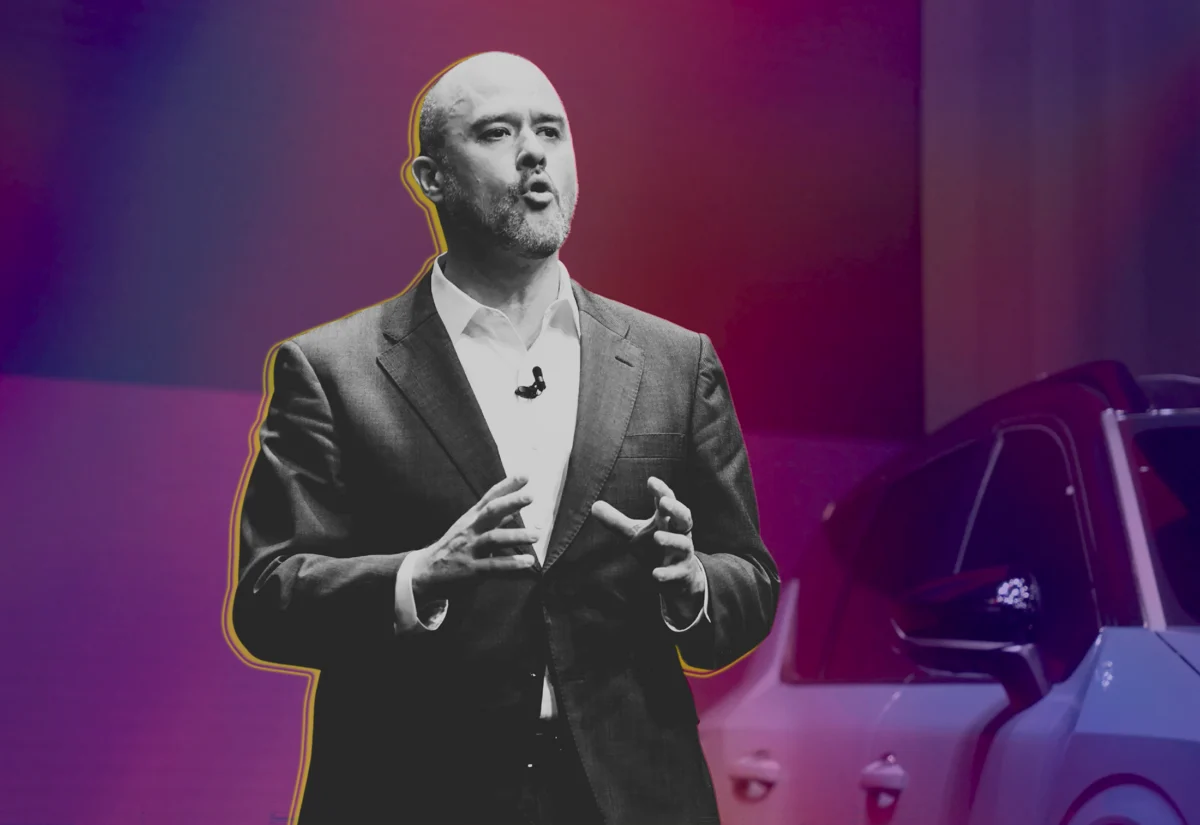
Nvidia’s Jensen Huang Courts Japanese Industrial Elite, Forging Key Deals for the Physical AI Era

Nvidia CEO Jensen Huang spent two days, July 15th and 16th, in Tokyo, a strategic visit aimed at deeply engaging Japan’s industrial and chip-supply powerhouses. This high-stakes trip follows a significant keynote address in Taiwan and months after a crucial visit to South Korea, underscoring Nvidia’s accelerating global push into the burgeoning field of "physical AI." Huang departed Tokyo having secured a suite of agreements that span Japan’s entire technological ecosystem. These include the establishment of a national AI factory, robust partnerships with the nation’s leading robotics firms, and critical pacts with the essential chip-material suppliers vital for Nvidia’s next generation of advanced AI processors. The message from Huang was unequivocal: Nvidia is laser-focused on revolutionizing Japan’s factory floors, and a significant portion of the country’s manufacturing behemoths are now aligning with this vision. He articulated that the next transformative chapter of artificial intelligence will unfold on factory floors, within the intricate movements of robots, and the operational logic of machines, and he intends for Japan to be a foundational architect of this future.
This renewed interdependence between Nvidia and Japan’s industrial titans echoes a critical moment three decades ago. In the 1990s, a $5 million investment from Sega, a Japanese gaming giant, played a pivotal role in keeping a struggling Nvidia from financial collapse. Today, the dynamics have shifted dramatically, with both Nvidia and Japan’s industrial leaders recognizing a mutual need to collaboratively build the physical-AI era. This collaboration is set to manifest through three key, forward-looking projects: Noetra, the development of a sovereign AI infrastructure; a comprehensive robotics coalition; and an expanded partnership with automotive leader Toyota.
Noetra: Japan’s Ambitious Sovereign AI Initiative
A significant outcome of Huang’s visit is the formation of Noetra, a national initiative designed to ensure Japan’s critical industries, from manufacturing to robotics, operate on AI infrastructure that the nation controls. This strategic move reflects a desire to reduce reliance on foreign AI platforms, particularly those originating from the United States and China. The Japanese government has orchestrated a formidable consortium of approximately 44 domestic firms, with SoftBank, Sony, NEC, and Honda serving as the core entities driving this ambitious project.
Tokyo is backing Noetra with a substantial commitment of up to 1 trillion yen (approximately $6.2 billion) over the next five years. This considerable investment signifies a deep-seated belief in the potential of homegrown "physical AI" – foundational AI models specifically engineered to control and optimize the operation of machines, robots, and vehicles. While Japan aims to develop and own the intellectual property and software architecture for these AI systems, the underlying hardware infrastructure, crucially, will be powered by Nvidia.
Nvidia is set to construct what is being termed a "Vera Rubin AI factory," a massive data center facility slated for completion in 2028. This state-of-the-art center will be equipped with Nvidia’s cutting-edge next-generation chips, specifically the Vera CPUs and Rubin GPUs. The facility will boast an impressive 13,750 Vera CPUs and 27,500 Rubin GPUs, capable of delivering 140 megawatts of power. Noetra will spearhead the development and operation of this data center.
The phased approach for Noetra’s development is structured in three distinct stages. The first stage, commencing in fiscal year 2026, will focus on developing a reasoning model with a strong emphasis on Japanese language capabilities. By 2028, the initiative aims to achieve an omni-modal version of the AI, capable of processing and generating text, images, video, and audio. The ultimate goal, targeted for 2030, is the realization of "Real-world Native AI," designed explicitly for the autonomous operation of robots. This advanced AI will then be made available to external developers outside the Noetra consortium in subsequent phases, fostering broader innovation.
The Robotics Coalition: Japan’s Industrial Giants Unite Behind Cosmos
Nvidia’s strategic focus on the Japanese factory floor is further solidified by the formation of a broad robotics coalition. A significant number of Japan’s leading robotics and manufacturing companies have pledged to build upon Nvidia’s Cosmos models, an open-model initiative launched by Nvidia in May. This coalition includes industry heavyweights such as Fanuc, Yaskawa, Kawasaki Heavy Industries, Fujitsu, Hitachi, NEC, Sony, SoftBank, Kubota, and the robotics group AIRoA.
During Huang’s Tokyo visit, Nvidia unveiled Cosmos 3 Edge, a specialized version of the Cosmos model designed to run directly on its Jetson Thor chips, enabling sophisticated AI processing within the machines themselves. This move provides a compelling incentive for these Japanese firms to commit to the Cosmos ecosystem. Several companies are already actively testing a shared control system, while others, including Honda R&D and Omron, are actively leveraging the newly available tools.
Jensen Huang emphasized the transformative potential of this collaboration, stating, "The next frontier of AI is in the physical world, and this is a once-in-a-generation opportunity for Japan." He further highlighted Japan’s historical leadership in manufacturing, adding, "Japan invented modern manufacturing. Now, it has the opportunity to reinvent it for the age of intelligent industries." This sentiment underscores the strategic importance of Japan’s manufacturing prowess in shaping the future of physical AI.
Toyota: Deepening Integration Across Vehicles and Manufacturing
The automotive giant Toyota has also significantly expanded its existing relationship with Nvidia, solidifying its commitment to the company’s platforms across its vehicle development and manufacturing operations. Toyota has been utilizing Nvidia chips within its automotive stack for some time. Notably, at CES in January 2025, Toyota announced its decision to equip its next-generation vehicles with Nvidia’s Drive platform.
The recent agreements extend this partnership beyond in-car technology. Nvidia’s influence will now permeate Toyota’s manufacturing processes, particularly in the use of advanced simulations for designing and optimizing production lines. Furthermore, the software that governs Toyota’s vehicles and its systems for analyzing road traffic will increasingly incorporate Nvidia’s AI capabilities.
Toyota’s approach to advanced driver assistance systems (ADAS) remains a more measured one compared to some competitors. While its vehicles will feature sophisticated systems capable of steering and braking assistance, a human driver will still be required. This contrasts with the development trajectories of companies like Waymo and Tesla, which are pursuing systems that aim to minimize or eliminate the need for direct human intervention. Toyota’s strategy reflects a pragmatic integration of AI, prioritizing safety and reliability in its adoption of automated driving technologies.
Why It Matters: Japan’s Strategic Imperative and Global Ambitions
Jensen Huang’s high-profile visit has firmly positioned physical AI at the core of Japan’s national industrial strategy, a strategy that Tokyo is backing with significant financial investment. Facing demographic challenges, including a shrinking workforce, Japan has set an ambitious target: to deploy 10 million AI-equipped robots across 18 key industrial sectors by the year 2040. This initiative is further bolstered by an estimated $65 billion in public and private investment dedicated to physical AI development and deployment.
The longer-term vision is even more expansive. Japan’s AI Robotics Strategy, unveiled in March, aims to capture over 30% of the global AI robotics market by 2040. This market, valued by Tokyo at approximately 20 trillion yen (roughly $133 billion), represents a significant economic opportunity. The Ministry of Economy, Trade and Industry (METI) is actively funding the development of domestic foundation models designed to power these intelligent machines. The Noetra-powered Nvidia facility is anticipated to be instrumental in training these massive models, which could involve trillions of parameters. The underlying hypothesis is that Japan’s extensive factory-floor data and its deeply entrenched manufacturing expertise can serve as a unique catalyst for advancing physical AI, much like how its historical industrial prowess shaped earlier technological revolutions.
A Sovereign Push for Autonomy in the AI Landscape
Beyond the compelling industrial and economic arguments, Japan’s pursuit of physical AI is also driven by a strong sovereign imperative. As the United States and China continue to lead in the development of large-scale AI systems, Tokyo seeks to cultivate its own independent capabilities, including control over its data and compute infrastructure. This desire for self-sufficiency is a direct response to the geopolitical realities of the global AI race.
The significance of Huang’s visit was underscored by his appearance on July 16th alongside Japan’s Minister of Economy, Trade and Industry, Ryosei Akazawa, at the government’s official physical AI launch event. Prime Minister Sanae Takaichi also addressed the event via video conference. The Takaichi administration has identified AI and semiconductors as central pillars of its economic growth strategy, aiming to stimulate a total of 370 trillion yen ($2.3 trillion) in public and private investment by 2040 across 17 strategic sectors.
Nvidia’s description of the Noetra factory as "the world’s first national AI infrastructure" highlights the strategic importance of this project. It represents Japan’s most concrete step yet towards establishing an independent AI ecosystem. While this pursuit of autonomy is a primary objective, it is notable that, at present, Japan’s ambitions in this arena remain fundamentally reliant on American silicon. This reliance underscores the complex interdependencies that characterize the global semiconductor and AI industries.
Working the Entire Room: A Global Playbook in Tokyo
Jensen Huang’s two-day itinerary in Tokyo was characterized by a deliberate and comprehensive engagement with the nation’s key technology leaders. He held meetings with the chief executive officers of prominent companies such as Toyota, Fanuc, Yaskawa, Fujitsu, and Kawasaki during a working lunch. Later, he connected with dozens of supply chain executives in a more informal setting at an izakaya in Kanda, a district known for its vibrant culinary scene, over skewers and whisky.
This intensive, relationship-building approach mirrors the playbook Huang has deployed in other critical AI hubs. Weeks prior, he conducted a similar high-level engagement in Taiwan, his ancestral homeland, delivering a keynote address. This was followed by a significant partnership agreement in Seoul last fall, which reportedly involved a substantial commitment of 50,000 GPUs from South Korean tech giants like Samsung and SK Hynix. The Tokyo visit represents the latest iteration of this global strategy, focusing specifically on solidifying Nvidia’s role in the robotics sector, its supply chain, and the underlying chip technology that powers it all. The comprehensive nature of these engagements signals Nvidia’s intent to embed itself deeply within the fabric of global AI development, from foundational research to industrial application.
Related posts: