How a Sixth-Grade Teacher and a Door-to-Door Job Built a Billion-Dollar Pest Control Empire


David Royce’s ascent from a self-proclaimed underachiever to the architect of a multi-billion-dollar pest control empire is a testament to a core belief: true success isn’t dictated by industry choice, academic pedigree, or the initial allure of an opportunity. Instead, it hinges on an unwavering willingness to tackle the most arduous tasks, persisting with them until mastery is achieved. This philosophy has propelled Royce, the founder and chairman of Aptive, the third-largest residential pest control service in North America, to build a business empire in an industry many of his finance-educated peers would deem unglamorous.
Royce’s entrepreneurial journey began not in a boardroom, but on the front lines of sales. He spent four pivotal college summers engaging in door-to-door sales, a grueling profession that honed his resilience and business acumen long before he contemplated founding a company. This formative experience laid the groundwork for a remarkable career trajectory, marked by three successive eight and nine-figure exits to the same strategic buyer. His subsequent venture, Aptive, achieved an annual revenue exceeding $500 million. This remarkable achievement stands in stark contrast to the career paths often favored by individuals with finance degrees, highlighting Royce’s unconventional yet highly effective approach to business building.
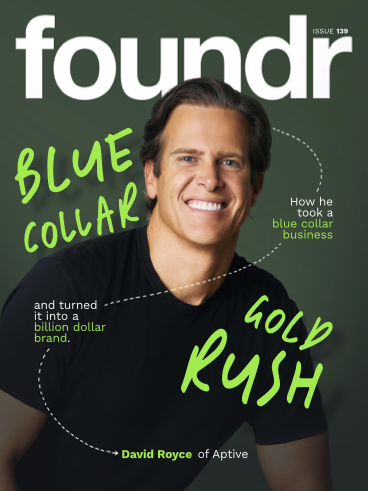
In an interview with Foundr CEO Nathan Chan, Royce shared insights into his journey, detailing how a childhood perception of not being "smart" evolved into a formidable force in American business. The conversation delved into his hard-won lessons on cash flow management, the cultivation of a powerful company culture, and the critical skill of knowing when to transition from being the sole problem-solver to empowering others.
From Classroom Struggles to Entrepreneurial Acumen
Royce’s early academic career was characterized by a struggle to maintain focus, a challenge he now understands as a manifestation of undiagnosed ADHD. "I struggled in school because I couldn’t focus unless I cared deeply," Royce explained. This lack of engagement led him to believe he was intellectually deficient. However, a turning point arrived in the sixth grade with Mrs. Luft, a teacher who recognized his potential and instilled a belief in himself that he had yet to cultivate. This newfound encouragement fueled a dedication to academic excellence.
It wasn’t until adulthood that Royce received an ADHD diagnosis. He views this neurodivergence as a double-edged sword: debilitating in unengaging environments, yet a powerful asset when applied to areas that capture his passion. "Sales and entrepreneurship were the first place my brain felt like an asset instead of a liability," he stated. This self-awareness was crucial, as it allowed him to actively seek out and excel in fields that leveraged his unique cognitive strengths.

The Crucible of Door-to-Door Sales
Royce’s immersion into the pest control industry was serendipitous. A friend’s success in door-to-door sales, earning $25,000 in a single summer, piqued his interest. Relocating to Sacramento, Royce faced immediate adversity. His initial week yielded zero sales in a commission-only role, a stark contrast to his colleagues who were averaging one to four sales daily. This period of intense struggle, however, became a catalyst for his development.
Instead of succumbing to failure, Royce dedicated himself to improvement. He eschewed returning home and instead invested in sales literature, scheduling 90 minutes of daily study. This commitment to learning and self-improvement paid dividends. By the end of that summer, he had become the top sales rookie in a company of 200 representatives. "Not because I was special," Royce emphasized, "but because I was too stubborn to go home and admit I failed. Persistence is genius in disguise." This mantra became a guiding principle, underscoring the power of sheer determination in overcoming obstacles.
Codifying Success: The Pillars of Sales Training
Having reached the pinnacle of sales performance, Royce began to distill his experience into a trainable methodology. He identified three core components that formed the foundation of his sales training programs:
- Option Closes: Moving beyond simple yes-or-no questions, Royce trained his teams to present choices that guided the customer towards a decision favorable to the sale. For instance, instead of asking "Would you like pest control?", the approach was "We’ll be in your area tomorrow at three or five, which works better?" This framing ensures any answer leads to a positive outcome for the salesperson.
- RAC (Resolve Doubt, Ace, Close): This technique involved addressing customer objections (Resolve Doubt), presenting a compelling unique selling proposition or benefit (Ace), and then re-engaging the customer to close the sale (Close).
- Body Language Mastery: Royce recognized the profound impact of non-verbal communication. He taught his sales representatives that their physical demeanor often precedes their verbal pitch. "Your body sells before your mouth does," he advised, encouraging reps to project confidence and assertiveness rather than appearing hesitant or desperate.
A Pivot from Investment Banking to Pest Control
Royce’s academic trajectory had been aimed at investment banking, a field that typically attracts high achievers with finance degrees. His plan was to leverage his sales experience and financial education for a career in Mergers & Acquisitions. However, a conversation with his boss during his final year of college presented a radical alternative. When Royce requested a letter of recommendation for investment banking positions, his boss challenged him: "Why would you go work 80 to 100 hour weeks for someone else when you could start your own pest control company?"
Initially, Royce admits to a degree of superficiality in his thinking. "My first thought was literally, pest control doesn’t sound impressive," he confessed. This reaction stemmed from a common misconception that success must be outwardly glamorous, embodied by suits and city skylines. This dilemma of image versus opportunity was not new; Royce had grappled with it at age fifteen when he found himself working at McDonald’s after being let go from a pizza parlor. It was at McDonald’s that he learned the invaluable lesson of adhering to best practices, a principle he credits for a significant portion of his personal wealth.
His boss, who had recently sold his own pest control startup to Terminix for $10 million after four years, offered Royce the same blueprint for success. Armed with $300,000 saved from his summer sales endeavors—funds originally earmarked for an MBA—Royce embraced the opportunity over the perceived prestige. He identified the significant potential within the pest control industry, driven by his boss’s insights and his own experiences.

Navigating the Treacherous Waters of Early Growth
Royce’s entrepreneurial debut in Los Angeles was fraught with peril, nearly leading to bankruptcy in its first year, not due to a lack of demand, but an excess of it. The business model mandated the advance payment of sales commissions, creating a significant cash flow crunch as the company experienced explosive growth. Royce had projected between 4,000 and 5,000 new customers in the first year; they secured 7,500, an unprecedented figure for a single branch in the industry.
This rapid expansion outpaced his financial capacity, forcing him to negotiate with sales leaders for delayed commission payments, offering them an additional 10% interest on their earnings. Fortunately, their successful summer enabled their cooperation. This near-catastrophe cemented a critical lesson: "Revenues are vanity. Profits are sanity. But cash flow is reality." This experience led to a strategic adjustment in how he funded growth, a model that became foundational for his subsequent companies.
Building a Repeatable Model: Asset Sales and Team Retention
Royce’s entrepreneurial success is characterized by a pattern of selling businesses and rebuilding. He orchestrated three successful exits of pest control companies to the same strategic buyer before founding Aptive. A key element of these transactions was his deliberate strategy to retain his core team.
"The asset deal structure was the key," Royce explained. In each sale, he exclusively transferred customer lists and the technicians servicing them. The strategic buyers, focused on acquiring recurring revenue streams, were less concerned with the operational infrastructure. Royce strategically carved out his leadership team, operations managers, and salesforce from each deal. This "golden goose"—his talented team—was then redeployed to establish new companies in different territories, fortified with fresh capital. This approach allowed him to scale without the dilution of equity through external investors, fostering a consistent, high-performing team across ventures.
Aptive’s Rapid Ascent: Differentiation in a Crowded Market
In a North American market boasting over 20,000 pest control competitors, Aptive’s growth trajectory—seven to ten times faster than its peers—can be attributed to several strategic pillars:
- A Superior Sales Program: Royce refined his sales training into a highly efficient system, capable of onboarding and developing over 3,000 individuals. His program demonstrably boosted sales productivity, with reps switching from competitors reportedly achieving 70% higher performance within a single summer.
- Enhanced Service Offerings: Drawing on his extensive door-to-door experience, Royce gained deep insights into homeowner pain points. This direct feedback loop informed the development of additional service features that addressed common complaints, thereby enhancing customer satisfaction and loyalty.
- Early Adoption of Technology: Seventeen years ago, investing in software was a novel concept for a traditionally blue-collar industry. Aptive proactively implemented technology to improve operational efficiencies and introduce gamification. A proprietary sales app, for instance, hosted nationwide tournaments, leading to a productivity increase of up to 30% on tournament days.
The Hidden Riches of Blue-Collar Industries
Royce contends that opportunities in seemingly "unsexy" industries often yield significant financial rewards. He points to statistics from The Wall Street Journal, which identify a substantial portion of the nation’s top earners—those making $2.3 million or more annually—as operating within what are commonly perceived as mundane blue-collar sectors. These industries, he notes, are also poised for a generational shift. Millions of Baby Boomer business owners are nearing retirement without succession plans, creating a fertile ground for acquisitions. Furthermore, these are often essential services with recurring revenue models, proving resilient even in economic downturns.

The advent of artificial intelligence, while transforming many sectors, is unlikely to disrupt the core services provided by these industries. While AI can automate tasks like coding and legal analysis, it cannot perform the physical labor required for plumbing, roofing, or pest eradication. This enduring demand, coupled with technological advancements, positions blue-collar industries for continued growth and profitability.
Cultivating a Culture of Excellence and Ownership
Aptive gained recognition for its distinctive company culture, featuring amenities like an NCAA basketball court at headquarters, a golf simulator, international retreats, and adventurous activities. This emphasis on employee experience was inspired by Tony Hsieh’s book "Delivering Happiness." Hsieh’s experience, selling his first company for hundreds of millions but regretting the lack of intentional culture, deeply resonated with Royce. He understood that culture is not merely about perks but requires deliberate design.
While these amenities contributed to Aptive’s appeal, Royce acknowledges that the primary draw for top talent was the company’s exceptional training program and the opportunity for significant financial gain. A pivotal aspect of Aptive’s success was the decision to grant 25% of the company’s equity to its employees. This move was designed to align their interests with the company’s overall success, particularly in anticipation of an exit. With annual revenues exceeding $500 million and industry valuations typically ranging from one to three times revenue, this equity distribution represented a nine-figure sum. The impact was profound, enabling numerous employees to achieve financial freedom, pay off mortgages and student loans, and even purchase homes for their parents. "Turns out ownership is a far better retention tool than ping-pong tables," Royce observed.
The Art of Letting Go: From Hero to Architect
After a decade as CEO, Royce made the deliberate decision to step down from the leadership role at Aptive, entrusting the company to a protégé he had mentored for years. This individual, who had joined the company early in its journey and risen through the ranks, was appointed CEO. This transition allowed Royce to assess the true strength of the company he had built: whether it was dependent on him or a robust, self-sustaining entity. The greatest challenge, he admitted, was not the structural handover but his own internal struggle to refrain from intervening when he perceived inefficiencies. He learned that effective leadership at this level requires empowering others to succeed, even if their methods differ. He transitioned from being the "hero" to becoming the "architect."
Lessons Learned from a Missed Exit
Royce’s experience with bringing in seasoned executives from larger corporations provided a stark lesson in the practicalities of business leadership. He recounts hiring a CFO with a background in a billion-dollar tech company, an individual whose resume suggested immense capability. However, the CFO’s experience in a large corporate structure, where numerous subordinates handled specific functions, did not translate effectively to Aptive’s leaner operational model. This disconnect led to oversight in expense management.
During a process to sell half of Aptive, where initial offers ranged from $1 to $1.6 billion, the company began missing its financial forecasts with increasing regularity. This deviation from projections, particularly during a sales process, proved detrimental, eroding buyer confidence and ultimately leading to the withdrawal of all potential suitors.
Royce distilled several key takeaways from this setback:
- Trust but Verify: While empowering executives is crucial, diligent oversight and verification of their performance and understanding of the business are equally important.
- Maintain Forecast Integrity: Consistently meeting financial forecasts is paramount, especially when engaging in a sale process. Missed targets significantly weaken negotiating leverage.
- The Value of a Failed Process: Even unsuccessful sale processes offer valuable insights. They provide a clearer understanding of buyer expectations and areas for improvement, enabling a more successful future market engagement.
The Enduring Pursuit of Growth and Impact
Reflecting on his twenty-year career and four entrepreneurial ventures, Royce articulates a nuanced perspective on success. He posits that the concept of "enough" is a constantly shifting target for entrepreneurs. The inherent nature of entrepreneurship, he believes, is not solely about achieving a specific financial milestone or securing freedom, but rather about the personal development—the expertise, discipline, and character—forged along the way. "If you don’t enjoy the climb, the summit is going to disappoint you," he stated.
Royce’s most profound passion lies in developing people. Quoting Mahatma Gandhi, he emphasizes that a true leader cultivates more leaders. His enduring legacy, he hopes, will not be measured by valuations but by the individuals he has helped mentor and empower to become leaders themselves. From a child who doubted his own intelligence to a tenacious door-to-door salesman and ultimately the founder of a billion-dollar enterprise in an often-overlooked industry, David Royce’s story is a powerful illustration that the most valuable opportunities are frequently those that require the courage to look beyond conventional appearances.
Related posts: