CircleCI Launches Smarter Testing Suite to Optimize CI/CD Pipelines and Reduce Compute Costs

In an era where software delivery speed is often hampered by bloated testing cycles, San Francisco-based CircleCI has unveiled a major expansion to its Smarter Testing suite. This initiative is designed to address a critical bottleneck in the modern software development lifecycle: the disproportionate amount of time and compute power consumed by redundant test execution. As organizations pivot toward AI-assisted coding, the volume of code generated has skyrocketed, necessitating a parallel evolution in how that code is validated. By leveraging intelligent test selection and dynamic infrastructure allocation, CircleCI aims to provide engineering teams with a mechanism to maintain high deployment confidence while significantly curbing cloud infrastructure expenses.
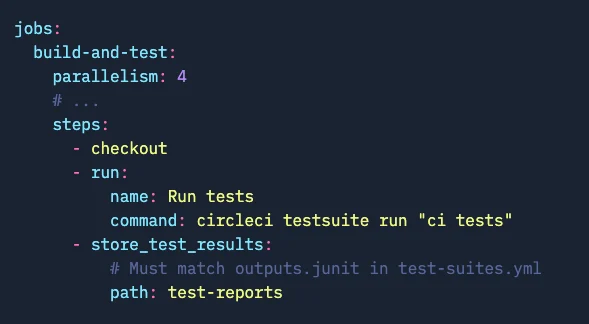
The core of this release centers on two primary functionalities: selective testing—which executes only the test suites impacted by specific code changes—and Dynamic Parallelism, a feature that intelligently scales the number of machines assigned to a build based on the real-time requirements of the test workload.
The Evolution of CI/CD Efficiency Challenges
Continuous Integration and Continuous Delivery (CI/CD) pipelines have long been the backbone of modern DevOps. However, as monolithic applications evolve into complex microservices architectures, the time required to run full test suites has expanded exponentially. Historically, when a developer pushed a small change, the pipeline would often trigger a full suite of tests. This process frequently accounts for up to 50% of the total pipeline duration, leading to significant "context switching" for developers who must wait for feedback before moving to the next task.
The rise of AI coding agents—such as GitHub Copilot, Cursor, and internal LLM-based assistants—has exacerbated this issue. These tools allow engineers to generate, refactor, and commit code at a pace previously unseen. While these agents accelerate the "write" phase of the software lifecycle, they often inadvertently increase the frequency of pull requests and the volume of automated tests required to ensure quality. Without a corresponding improvement in pipeline intelligence, the CI/CD platform becomes a bottleneck, effectively negating the speed gains provided by generative AI.
Understanding Smarter Testing Mechanics
CircleCI’s approach to solving this latency problem is rooted in granular analysis. The Smarter Testing suite functions by mapping the relationship between code changes and the specific test files required to validate them. Rather than a blanket execution of the entire repository’s test battery, the system identifies the dependency graph of the affected components.
Complementing this is Dynamic Parallelism. In traditional cloud-based CI setups, users often pre-configure the number of nodes (machines) for a job. This leads to two common inefficiencies: over-provisioning, where machines sit idle during smaller jobs, or under-provisioning, which creates a bottleneck for larger, more complex test suites. By automatically adjusting the compute resources in real-time based on the specific load of a given commit, CircleCI allows organizations to optimize their cloud consumption, ensuring they only pay for the exact compute capacity required for that specific iteration.
Chronology of Pipeline Optimization
The shift toward "smarter" testing represents a logical progression in the maturation of DevOps tools. In the early 2010s, the focus was on the mere automation of deployments. By the late 2010s, the industry shifted toward "DevSecOps," integrating security scans into the pipeline. Now, in the mid-2020s, the focus has shifted firmly toward "Developer Experience" (DevEx) and cost optimization.
The development of the Smarter Testing suite aligns with the broader industry trend of FinOps—the practice of bringing financial accountability to the variable spend of the cloud. Engineering leadership has increasingly identified "cloud waste" as a primary concern, particularly as AI workloads drive up operational costs. CircleCI’s integration of these features directly into their native platform—avoiding the need for external third-party plugins or complex infrastructure refactoring—suggests a strategic push to make efficiency a default state rather than a manual optimization task.

Real-World Impact and User Validation
The efficacy of the Smarter Testing suite is already being measured by early adopters, including firms that handle high-stakes, data-intensive operations. Medallion, a healthcare technology firm specializing in provider credentialing, has reported a substantial transformation in its development throughput. According to William Yardley, Staff Infrastructure Engineer at Medallion, the organization faced the challenge of a 10x increase in pull request volume alongside a 2.5x expansion in the size of their test suite.
By implementing CircleCI’s Dynamic Parallelism, Medallion reported that they were able to stabilize their cost-per-pull-request while simultaneously reducing build times. This is a critical metric for engineering teams: when build times drop, the feedback loop shortens, allowing developers to catch regressions in near real-time, which significantly reduces the cost of fixing defects later in the development cycle.
Kustomer, an AI-powered customer service platform, reported similar success. Senior Software Engineer Maria Volpe noted that the platform fundamentally changed the "economics" of their CI process. By eliminating unnecessary test runs, Kustomer successfully reduced their CI testing costs by 25%. For companies operating at scale, a 25% reduction in CI costs represents a significant shift in operational overhead that can be reallocated toward product innovation or further R&D.
Broader Implications for the Software Industry
The introduction of these features signals a wider transition in the DevOps market. As software organizations move toward more modular architectures, the "all-or-nothing" approach to CI testing is becoming obsolete. The ability to perform impact analysis—determining exactly which tests are required—is likely to become a standard requirement for CI/CD platforms over the next 24 to 36 months.
Furthermore, the integration of these features into the core platform highlights a growing trend: the consolidation of DevOps tools. By embedding intelligence into the CI pipeline, vendors like CircleCI are reducing the "tool sprawl" that often plagues large organizations. Instead of managing a separate test-optimization tool, engineering teams can rely on the underlying platform to make resource-allocation decisions.
This shift also has profound implications for AI-driven development. If AI agents are to become truly autonomous, they require rapid, reliable validation signals. The "feedback loop" is the primary constraint on agentic workflows. If a developer or an AI agent has to wait 20 minutes to verify a minor code change, the productivity gains of the AI are severely dampened. By reducing that wait time to seconds or a few minutes through intelligent selection, the industry is effectively clearing the path for deeper integration of AI into the production-release process.
Strategic Outlook and Future Challenges
While the benefits of Smarter Testing are clear, the industry faces the ongoing challenge of "false negatives"—the risk that a test might be incorrectly identified as irrelevant to a code change. For this reason, the adoption of such tools requires a high level of trust in the underlying dependency analysis. CircleCI’s success in this space will depend on the platform’s ability to remain transparent and configurable, allowing engineers to maintain control over which tests are skipped.
Looking forward, the integration of AI into the testing process itself—not just in writing the code, but in predicting which tests are most likely to fail—is the next logical frontier. As CircleCI continues to refine its Smarter Testing suite, the distinction between "writing code" and "verifying code" will likely continue to blur. The objective remains clear: to build systems that allow developers to ship code with the same speed at which they can conceive it, all while maintaining the rigors of modern enterprise security and reliability standards.
In conclusion, CircleCI’s latest features represent a necessary response to the increased velocity of the modern development stack. By focusing on resource efficiency and intelligent test execution, the platform provides a roadmap for how organizations can reconcile the dual demands of rapid innovation and cost-effective operational management. As these practices become more widespread, the standard for CI/CD performance will undoubtedly rise, leaving little room for inefficient, resource-heavy testing methodologies.