Miso Emerges as a Local-First Open Source Studio for AI-Powered Music Generation and Remixing

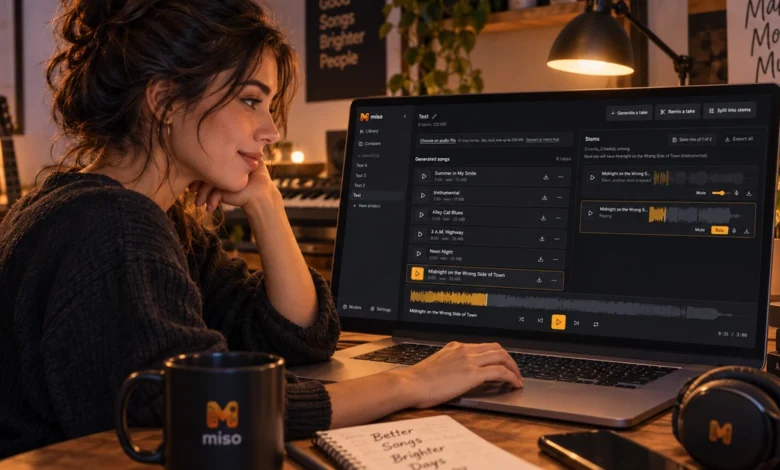
The landscape of generative audio has evolved rapidly over the past eighteen months, moving from simple text-to-audio prompts to sophisticated, multi-stage workflows that require more than just a chat interface. Addressing the growing demand for local, privacy-centric, and highly controllable music production environments, a new open-source platform called Miso has been released. Built atop the C++ inference engine audio.cpp, Miso functions as a comprehensive studio environment that allows users to generate, edit, and reconstruct music tracks entirely on their own hardware.
The Genesis of a Local-First Audio Studio
The development of Miso originated from a common frustration among developers and power users experimenting with local artificial intelligence models. While command-line tools have provided the necessary functionality to invoke powerful audio models, they often lack the persistent state, visual feedback, and workflow management required for iterative creative processes. The creator of Miso sought to bridge the gap between raw inference—the process of a model generating data—and the actual needs of a music producer or hobbyist.

Historically, generative AI in music has been dominated by web-based, proprietary platforms where the underlying models are black boxes, and the creative lineage of a track is often obscured or lost. Miso represents a shift in this paradigm by implementing a "local-first" architecture. By utilizing Docker containers to manage dependencies, the platform ensures that users maintain full sovereignty over their creative assets. The system architecture separates the inference backend—which handles resource-heavy GPU computations via audio.cpp—from the frontend studio, which manages project history, metadata, and traditional audio editing tasks.
A Multimodal Approach to Generative Music
Miso differentiates itself by integrating a diverse suite of AI models, each optimized for specific functions within the production pipeline. This strategy acknowledges that no single model currently excels at all aspects of musical composition, from rhythmic structure and lyricism to vocal timbre and instrumental layering.
The platform utilizes several key model families:

- ACE-Step 1.5: Serving as the primary engine for full-song generation and selective "repainting," this model provides the core creative output for most projects.
- YuE2: Recognized for its capability to bridge generative audio with symbolic music theory, YuE2 is utilized for its ability to plan musical structures via ABC notation, which can then be transcribed and refined.
- Specialized Models: The platform also integrates MiniMax Music 3 and HeartMuLa for varied prompting styles, alongside Stable Audio 3 for instrumental and sound-effect generation.
By providing a unified interface that translates user-friendly controls into the disparate syntax requirements of these various models, Miso abstracts the technical complexity of model interaction. This allows the user to focus on parameters such as tempo, key, and mood rather than the idiosyncratic formatting requirements of individual APIs.
Technical Milestones and Workflow Integration
The project has reached a significant maturity milestone with version 1.4.0, which introduces the integration of MIDI transcription with YuE2’s scoring capabilities. This update allows users to take an existing audio recording, isolate the vocal stem, transcribe it into note events, and convert those events into an ABC melody. This melody can subsequently be fed back into the generative pipeline to serve as the foundation for an entirely new arrangement.
The implications for this type of iterative workflow are significant. In traditional digital audio workstations (DAWs), such a process would require a complex chain of third-party plugins and manual alignment. Miso streamlines this by keeping all "takes," prompts, stems, and transcriptions in a traceable project file. This lineage tracking allows users to revert to previous versions or understand the specific parameters that led to a successful generation—a critical feature for professional-grade experimentation.

Repainting: The New Standard for AI Editing
Perhaps the most impactful feature introduced in Miso is the "repainting" function. In standard generative models, a single discordant note or awkward vocal inflection often necessitates the regeneration of an entire track, which is both time-consuming and destructive to the user’s creative vision.
Miso’s repainting tool allows users to isolate a specific segment of a waveform and re-run the inference process only for that section. Through extensive testing, the project lead determined that the surrounding audio context acts as a powerful constraint on the generative process. When a section is repainted, the existing music provides a structural anchor, ensuring that the new generation maintains coherence with the rest of the track. This discovery highlights the importance of human-in-the-loop design in AI software, where the interface is built around the actual behavior of the model rather than theoretical API documentation.
Data Privacy and System Infrastructure
A defining characteristic of Miso is its commitment to data privacy. Because the platform is entirely self-hosted, no audio files, prompts, or user projects are transmitted to external servers. The separation of the browser-based client from the GPU-backed inference server provides significant operational advantages. Users can theoretically host their models on a high-performance machine in a server room or a dedicated workstation, while accessing the Miso interface from a less powerful laptop or secondary computer.

The technology stack is intentionally kept lightweight and accessible. By relying on React, TypeScript, Vite, and SQLite for project management, the platform avoids the "bloat" often associated with modern web applications. Furthermore, the decision to handle routine audio tasks—such as trimming, fading, and gain normalization—within the browser rather than through an AI model serves to reduce latency and preserve computational resources for the tasks that truly require machine learning.
The Broader Implications for Creative AI
The release of Miso arrives at a time when the legal and ethical debates surrounding generative music are intensifying. By focusing on local execution, the platform provides a degree of insulation from the copyright and data-usage controversies currently plaguing centralized, cloud-based AI services. Users who train or fine-tune models on their own data or use models with permissive licenses are empowered to create without the interference of third-party platform terms of service.
Furthermore, Miso represents a broader trend in the developer community: the transition from "prompt-engineering" toward "system-engineering." Rather than simply seeking better ways to write prompts, developers are building robust software ecosystems that treat AI models as modular components within a larger creative toolkit. This shift suggests that the future of generative media may not lie in all-encompassing "magic boxes," but in modular, customizable environments that give artists granular control over every stage of the production process.

Future Outlook and Open Source Development
While Miso is currently in an active state of development and has primarily been validated on high-end hardware, such as systems equipped with an RTX 4090, the project’s open-source nature invites broader community participation. The roadmap for future iterations likely involves optimizing for a wider array of hardware configurations and potentially expanding the library of supported models as new research in audio synthesis is published.
For the user, Miso offers a glimpse into a future where the distinction between a "musician" and a "software engineer" becomes increasingly blurred. As these tools become more accessible, the ability to orchestrate complex AI workflows will become a distinct creative skill, akin to learning the nuances of a traditional recording console or a digital synthesizer. By providing a transparent, local, and extensible platform, Miso has established itself as a significant entry in the growing ecosystem of local-first creative software. The project stands as a testament to the idea that the most effective AI tools are those that don’t just generate content, but rather facilitate the messy, iterative, and deeply human process of creation.