The Evolution of Remote Work: How Professionals Are Transforming Backyard Sheds and Patios Into Functional Outdoor Offices

The landscape of modern employment has undergone a profound transformation over the past decade, shifting away from rigid, centralized corporate headquarters toward decentralized, flexible working environments. As remote work establishes itself as a permanent pillar of the contemporary global economy, millions of employees are looking beyond the traditional home office—moving past kitchen tables and spare bedrooms to embrace a novel frontier in professional productivity: the outdoor workspace. Driven by a desire for enhanced mental well-being, improved focus, and a refreshing change of scenery, workers are increasingly turning to creative exterior solutions, ranging from simple patio desks to fully insulated backyard office pods.

The Paradigm Shift: Why Professionals Are Moving Outdoors
The movement to take the workday outside is not merely an aesthetic fad; it is increasingly backed by empirical science regarding human cognition and environmental psychology. Contemporary research published in academic journals underscores that routine exposure to nature, fresh air, and natural light plays a vital role in reducing cortisol levels, mitigating chronic workplace stress, and alleviating mental fatigue.
Psychologists note that prolonged confinement in windowless or artificial indoor environments can stagnate creative output and dull cognitive stamina. By integrating natural elements into the daily routine, remote professionals can effectively restore directed attention capacity. This shift addresses a central challenge of remote employment: the blurring of boundaries between personal sanctuary and professional obligation. Stepping into a distinct outdoor workspace creates a vital physical transition, signaling to the brain that the workday has officially begun or ended, thereby bolstering work-life balance.

Exploring the Spectrum of Outdoor Workspaces
The modern market for outdoor workspaces has matured significantly, offering scalable solutions tailored to diverse spatial constraints, budgetary limits, and functional requirements. Urban dwellers with compact balconies face different logistical realities than suburban homeowners with expansive yards. Consequently, the industry has responded with a versatile hierarchy of outdoor office typologies.
Backyard Sheds and Prefabricated Pods
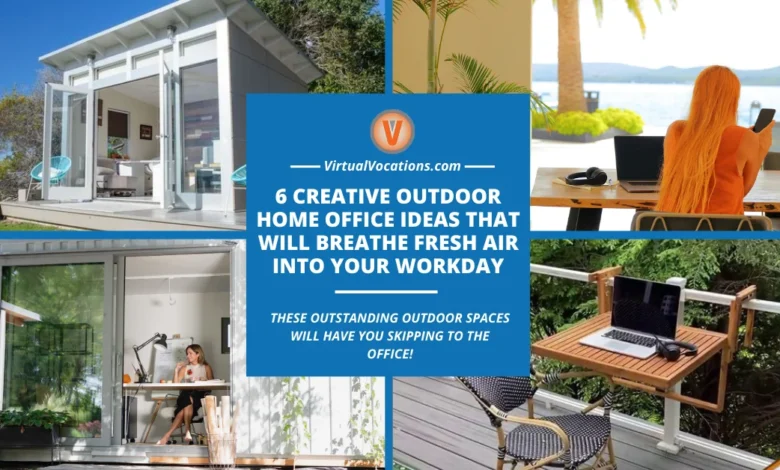
For professionals seeking permanent, dedicated sanctuaries, backyard structures have emerged as the gold standard. Converting an existing residential shed or investing in a specialized prefabricated office pod offers absolute privacy and physical separation from household distractions. While traditional backyard sheds require extensive retrofitting—including the installation of insulation, drywall, electrical wiring, and climate control—modern office pods are engineered specifically for professional use. These factory-built units arrive pre-wired, insulated, and ventilated, drastically reducing the labor required to establish a year-round, climate-controlled workspace.

Unconventional and Sustainable Conversions
Sustainability-conscious professionals are increasingly exploring industrial repurposing, most notably through the conversion of decommissioned shipping containers. These robust steel structures provide a modular framework that can be heavily customized with floor-to-ceiling glass panels, solar panels, and advanced HVAC systems. Beyond their distinct aesthetic appeal, shipping container offices represent an eco-friendly architectural choice, diverting heavy industrial materials from landfills while offering a secure, highly durable working environment.
Flexible Open-Air and Portable Solutions
For those constrained by leasing agreements, strict homeowners association (HOA) rules, or modest budgets, flexible open-air options provide an accessible entry point. Patios, terraces, and verandas can easily double as executive suites during favorable weather conditions. Meanwhile, urban professionals frequently rely on portable balcony desks—foldable or railing-mounted workstations that maximize square footage without imposing permanent modifications on rental properties.

Critical Infrastructure: Technology, Climate Control, and Security
Transitioning a professional operation from a climate-controlled interior room to the elements introduces distinct technical and logistical hurdles. Urban planners and remote work consultants emphasize that a successful outdoor office requires rigorous advance planning across four core vectors: connectivity, thermal management, weatherproofing, and physical security.
Bridging the Digital Divide
Maintaining enterprise-grade productivity outdoors requires robust digital infrastructure. Standard residential routers often fail to project reliable signals through exterior walls, brick facades, and double-paned glass. Consequently, remote workers frequently deploy dedicated Wi-Fi extenders, outdoor-rated mesh network nodes, or direct ethernet runs to ensure uninterrupted broadband access. Furthermore, power continuity demands weather-rated exterior outlets or heavy-duty surge protectors, coupled with portable power stations to safeguard sensitive hardware against sudden voltage fluctuations.

Thermal Regulation and Ergonomics
Human comfort directly dictates professional output. Direct solar radiation can severely degrade laptop performance, overheat lithium-ion batteries, and induce blinding screen glare. To combat these issues, architects recommend integrating strategic shade solutions, such as automated pergolas, heavy-duty commercial umbrellas, or UV-blocking sail shades. In enclosed pods and converted sheds, mini-split heat pumps provide precise, energy-efficient climate control, ensuring the workspace remains usable through fluctuating seasonal temperatures.
Weatherproofing and Risk Mitigation
Meteorological unpredictability poses an ongoing threat to exterior electronics and ergonomic furniture. Industry best practices dictate the selection of marine-grade metals, moisture-resistant synthetic woods, and solution-dyed acrylic fabrics that resist ultraviolet degradation and precipitation damage. Furthermore, corporate cybersecurity policies mandate that confidential documents, mobile devices, and laptops not be left unattended in unsecured outdoor structures overnight, necessitating secure indoor storage protocols at the close of each workday.

Zoning Regulations, Compliance, and Industry Outlook
Before breaking ground on any permanent exterior structure, property owners must navigate a complex web of municipal zoning codes, building permits, and HOA restrictions. Local ordinances frequently dictate maximum lot coverage, structural height limitations, and permissible setbacks from property lines. Furthermore, running underground electrical lines or installing specialized plumbing for climate control systems often requires licensed contractor oversight and formal municipal inspections to ensure compliance with local electrical and fire safety codes.
As corporations continue to refine permanent hybrid and fully remote workforce models, the demand for specialized residential architecture is projected to accelerate. The outdoor home office transcends a temporary lifestyle trend, evolving into a permanent architectural asset that redefines how individuals interact with their living and working spaces. By merging ergonomic efficiency with the restorative properties of the natural environment, remote professionals are successfully constructing a sustainable, high-performance future of work—one backyard pod, patio desk, and balcony workstation at a time.