The Evolution of the American Middle Class and the Shifting Boundaries of Economic Status


The definition of the American middle class has long served as a primary focal point for political discourse, economic policy, and societal self-perception. However, recent public debate, sparked by a viral analysis of a high-income household budget, suggests that the traditional markers of this class—income thresholds, lifestyle choices, and asset accumulation—are undergoing a significant re-evaluation. As income inequality continues to widen, the "middle class" is increasingly defined not by objective financial metrics, but by a complex interplay of public perception, tax policy, and the shifting costs of essential services such as housing and education.
The Statistical Context of the Middle Class
Economically, the middle class has historically been characterized as the segment of the population earning between two-thirds and double the national median household income. According to Pew Research Center data, the share of American adults living in middle-income households has decreased from 61% in 1971 to approximately 50% in recent years. This contraction is accompanied by a concurrent expansion of both the lower and upper-income tiers, signaling a growing polarization in wealth distribution.
The recent discourse surrounding a hypothetical $408,000 annual household income—often categorized as "mass affluent"—highlights the disconnect between high nominal earnings and the actual purchasing power required to sustain a traditional middle-class lifestyle in major metropolitan areas. For households in cities like San Francisco, New York, or Seattle, an income of $400,000 is frequently absorbed by aggressive taxation, housing costs that often exceed $5,000 per month, and the prohibitive expense of private education, leaving little room for the traditional indicators of wealth, such as significant passive income or early retirement.
Chronology of the Debate
The current debate reached a fever pitch in July 2026, following the release of a detailed budget breakdown for a family earning $408,000 annually. The analysis presented a scenario where, despite the high income, the household faced extreme financial constraints due to fixed costs. The subsequent public response—comprising over 1,400 comments and millions of views on social media—revealed a deep divide in how the American public perceives "luxury" versus "necessity."
- July 2026: Initial publication of the budget analysis, which argued that high earners are increasingly squeezed by inflation and the loss of government benefits.
- August 2026: Widespread social media backlash, with critics labeling the budget "out of touch" and arguing that the lifestyle described—including private school and home ownership—far exceeds the reality of the median American experience.
- September 2026: Discussion shifted toward the "mass affluent" category, with economists noting that those in the top 10–15% of earners are increasingly vilified in political rhetoric while simultaneously seeing their disposable income eroded by cost-of-living increases.
Key Drivers of Economic Pressure
The modern middle-class experience is dictated by several structural factors that differentiate it from the economic conditions of the late 20th century.
The Burden of the W-2 Employee
The majority of middle-class wealth is generated through W-2 salary income. Unlike the wealthy, who often derive significant income from capital gains, business equity, or real estate—which are taxed at preferential rates—the middle class is subject to the highest marginal tax brackets on their primary earnings. This creates a reliance on institutional employment that discourages risk-taking and entrepreneurship. The perception that a W-2 job offers "security" is increasingly challenged by cycles of corporate layoffs, yet the middle-class identity remains deeply tethered to this traditional employment model.

The Education Paradox
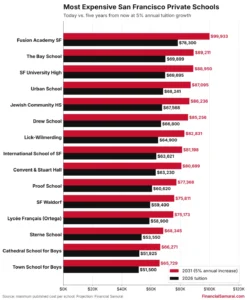
The cost of education has fundamentally altered the middle-class trajectory. While public education is technically available, the increasing stratification of schools has led many middle-class families to seek private alternatives. However, the cost of private tuition, often exceeding $40,000 per child, acts as a massive drain on liquidity. Simultaneously, the rise of "zero-tuition" policies at elite universities for lower-income families has created a "middle-class squeeze," where families earning between $200,000 and $400,000 are expected to pay full freight, while their children struggle to meet the increasingly competitive admission standards of these institutions.
The Asset-Liability Mismatch
A hallmark of the traditional middle class is the prioritization of depreciating assets, specifically automobiles and large suburban homes, over income-generating investments. Financial analysts point to the "House-to-Car Ratio" as a metric of financial health; however, common practice among the middle class often reverses this, with households stretching for expensive vehicles and larger square footage. This behavior is reinforced by social norms that equate these purchases with the achievement of middle-class status, even as they hinder the path to long-term passive income and independence.
Political Implications and Voter Behavior
The middle class remains the most vital voting bloc in the United States, yet their political influence is often frustrated by the competing agendas of political parties. Recent election cycles have seen a significant shift in voting patterns, driven by frustration over inflation, high mortgage rates, and the perceived indifference of the ultra-wealthy political class.
When middle-class voters feel that their contributions—through taxes and consumption—are not being met with tangible benefits, the result is often a "protest vote" or a pivot toward candidates promising radical economic restructuring. The current political climate suggests that the middle class is increasingly suspicious of policies that provide tax breaks for the wealthy while simultaneously failing to address the rising cost of basic goods, such as food and energy.
Analysis: The Path Forward
The implications of this shift are profound. If the middle class continues to define itself by a high-consumption, low-equity lifestyle, the result will be a permanent reliance on the labor market and an inability to achieve true financial independence. Conversely, a shift toward "stealth wealth"—the prioritization of passive income, taxable brokerage accounts, and the reduction of depreciating liabilities—could offer a route to stability.
However, such a transition requires a departure from the traditional, socially validated "middle-class lifestyle." Experts argue that the following adjustments are becoming essential:
- Diversification of Income: Moving away from a sole reliance on W-2 salary toward equity-based income or side ventures.
- Rationalization of Fixed Costs: Re-evaluating the "necessity" of private education and large-scale real estate in favor of long-term investment capital.
- Strategic Saving: Moving away from the sole reliance on tax-advantaged retirement accounts, which trap capital until age 59.5, in favor of accessible, taxable investment vehicles that allow for earlier financial freedom.
Conclusion
The definition of the middle class is no longer a fixed point on the economic map; it is a moving target. As the costs of living continue to rise and the gap between income and wealth widens, the middle class faces a choice: continue to adhere to the traditional markers of success—which often lead to long-term financial fragility—or adopt a more disciplined, equity-focused approach to personal finance. The current discourse, while heated and occasionally vitriolic, serves as a necessary wake-up call regarding the fragility of the middle-class position in an era of high-cost living and economic volatility. Whether through policy reform or individual behavioral change, the future of the middle class will depend on its ability to adapt to a landscape that no longer guarantees the security it once promised.