The Growing Complexity of LLM Integration
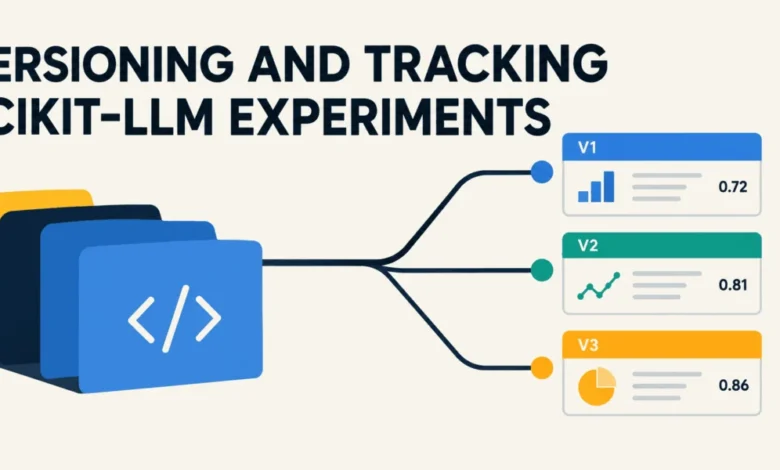
The integration of LLMs into standard machine learning pipelines presents unique challenges. Unlike traditional models, where hyperparameter tuning is the primary variable, LLM-based pipelines introduce dependencies on specific model backends, quantization formats, and prompt engineering strategies. When a development team swaps an Orca Mini model for a Falcon-based architecture, they are not merely changing a parameter; they are fundamentally altering the semantic processing engine of their application. Without a structured approach to versioning, teams risk "model drift" and technical debt, where the provenance of a specific classification decision becomes impossible to trace back to its source code and underlying model weights.
The use of MLflow—an open-source platform originally designed for standard ML lifecycle management—has emerged as the industry standard for addressing these hurdles. By treating LLM-driven pipelines as serializable objects, developers can effectively manage the lifecycle of these complex systems within a centralized registry, mirroring the discipline typically reserved for production-grade regression or classification models.
Establishing the Operational Framework
To initiate a robust tracking system, developers must first establish a standardized environment. This requires the installation of specific library dependencies, notably the Scikit-LLM package with the gpt4all backend, and the MLflow tracking server. The gpt4all integration is particularly significant for privacy-conscious organizations, as it enables the execution of LLMs locally on hardware, removing the need for external API calls that can introduce latency and data governance concerns.
The configuration process involves initializing the SKLLMConfig with dummy credentials for local execution, followed by the establishment of an SQLite database backend for the MLflow Model Registry. This setup provides a durable, portable database to store metadata, facilitating the auditability required for enterprise compliance. Once the tracking URI is set and an experiment is defined—labeled here as "Scikit-LLM-Versioning"—the groundwork is laid for systematic experimentation.
Chronology of Pipeline Evolution
The workflow begins with the creation of a baseline pipeline. In a typical scenario, this involves a Zero-Shot GPT Classifier tasked with categorizing unstructured text into predefined labels such as "bug," "praise," or "feedback." During the initial phase, developers log the baseline model, ensuring that the specific version of the LLM—such as orca-mini-3k-71m-q4_0.gguf—is captured as an environment parameter.
The importance of this step cannot be overstated. By logging the llm_backend and the llm_model_file alongside the pipeline object, researchers ensure that every iteration of the model can be reconstructed in the future. The use of cloudpickle as a serialization format is essential here, as standard pickle protocols often fail to capture the complex, nested structures inherent in deep learning pipeline objects. Following the successful logging of the baseline, the transition to an "Upgraded" pipeline demonstrates the agility of the system. By swapping the model backend to a larger, more sophisticated architecture, such as the Falcon-based model, developers can conduct side-by-side performance assessments.
Data-Driven Model Selection and Auditing
One of the most significant advantages of this tracking architecture is the ability to query historical data via the MLflow search API. After multiple runs, the results can be synthesized into a pandas DataFrame, providing a transparent view of the experiment history. This audit trail is not merely a record of success; it is a vital diagnostic tool. In professional settings, tracking failed runs is as important as tracking successful ones, as it reveals the limitations of specific model backends when applied to particular data distributions.
The ability to extract a comprehensive comparison table—showing the run ID, the associated LLM backend, and the execution status—allows stakeholders to make informed decisions based on empirical evidence. This process removes the subjectivity from model selection, enabling teams to promote the best-performing model from the "tracking" phase to the "registry" phase with high confidence.
The Shift to Production: From Logging to Registration
The final phase of the pipeline lifecycle involves the promotion of a model to the MLflow Model Registry. This is the stage where the "experiment" becomes a "product." By selecting the optimal run ID based on performance metrics—such as classification accuracy—developers can formally register the model.
The registration process effectively "freezes" the model at a specific version number. This versioning acts as a guarantee for downstream applications. When a deployment service requests the "Production_ZeroShot_Classifier," the registry provides the exact version that was validated during the testing phase. This eliminates the risk of deploying an untested model variant and provides a clear rollback path should the production environment encounter issues.
Implications for Enterprise AI Strategy
The adoption of this two-step workflow—logging for iteration and registering for production—has broad implications for AI maturity within organizations. First, it addresses the "black box" nature of LLMs by enforcing transparency in which model version generated a specific output. Second, it facilitates collaboration among data science teams. When every pipeline is logged with its parameters and dependencies, team members can replicate their colleagues’ work instantly, reducing the time required for onboarding and project handoffs.
Furthermore, the integration of these tools aligns with the growing demand for "AI Governance." As regulatory bodies begin to scrutinize the use of generative models in commercial applications, the ability to produce a detailed log of model lineage becomes a core requirement for compliance. By maintaining an audit trail of every model version, companies can demonstrate that their systems are not only performant but also stable and predictable.
Broader Impact and Future Directions
As LLM technology continues to evolve at an unprecedented pace, the ability to rapidly swap backends without destabilizing the application architecture is a competitive advantage. The techniques discussed here provide a template for this agility. While the example provided focuses on zero-shot classification, the underlying architecture is highly extensible. The same MLflow-based versioning logic can be applied to complex RAG (Retrieval-Augmented Generation) pipelines, fine-tuned LLM iterations, and multimodal systems.
The move toward automated model registration, driven by quantitative metrics like accuracy or F1-scores, represents the next frontier in MLOps. By automating the transition from the experimental tracking environment to the production registry, organizations can shorten their CI/CD cycles, allowing for more frequent updates and faster response times to changes in data patterns or user requirements.
Conclusion
The convergence of Scikit-LLM and MLflow provides a necessary framework for the systematic management of Large Language Model applications. By emphasizing reproducibility, traceability, and formal model registration, this approach mitigates the risks associated with the rapid development of generative AI systems. As the industry moves toward more complex, multi-agent AI environments, the principles of rigorous experimentation and centralized model management will remain the cornerstones of successful, scalable, and responsible AI implementation. For developers, the goal is clear: transition from manual, ad-hoc experimentation to a disciplined, data-driven lifecycle that ensures every model deployed is traceable, validated, and ready for the rigors of the production environment.