In 2006, Amazon Web Services (AWS) fundamentally altered the landscape of technology infrastructure, transforming what was once a capital-intensive, multi-month undertaking into an accessible, on-demand utility for developers worldwide. By democratizing access to high-scale computing power, Amazon paved the way for the modern digital economy. Today, AWS stands as a colossus of the tech industry, operating at an $11.5 billion run rate and accounting for approximately 67% of Amazon’s total operating revenue as of the most recent quarterly reports. This financial dominance, which has propelled the parent company to record-breaking profitability, is not merely the result of market timing, but the product of a rigid, counter-intuitive development methodology known as “working backwards.”
The Genesis of a Methodology
The “working backwards” framework is a strategic departure from traditional product development lifecycles. In most corporate environments, product managers begin with an idea, move to technical feasibility, and eventually draft marketing copy as a final step before launch. Amazon reverses this trajectory. Before a single line of code is written or a server is provisioned, a product manager must draft an internal press release.
This document serves as the "North Star" for the entire project. It is written from the perspective of the end-user, articulating the specific problem the product aims to solve, why existing solutions fall short, and how the new offering provides a superior, unique benefit. Ian McAllister, a former General Manager at Amazon, has noted that this process forces teams to focus on the customer’s experience rather than the technical allure of the features themselves. If the narrative within the press release does not sound compelling or revolutionary, the project is often scrapped before resources are wasted on development.
A Chronological Look at the AWS Launch
The efficacy of this approach was first proven during the development of Amazon S3 (Simple Storage Service). When Andy Jassy, the current CEO of Amazon and former head of AWS, was spearheading the project, the team did not rely on complex technical specifications to gain internal buy-in. Instead, Jassy famously iterated through 31 drafts of the initial press release before presenting it to Jeff Bezos.
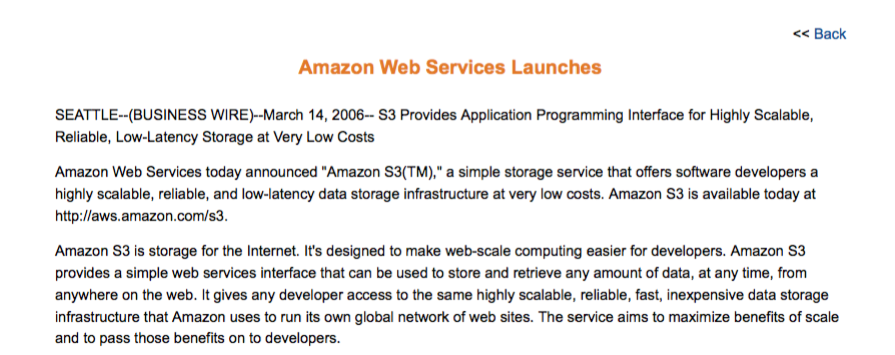
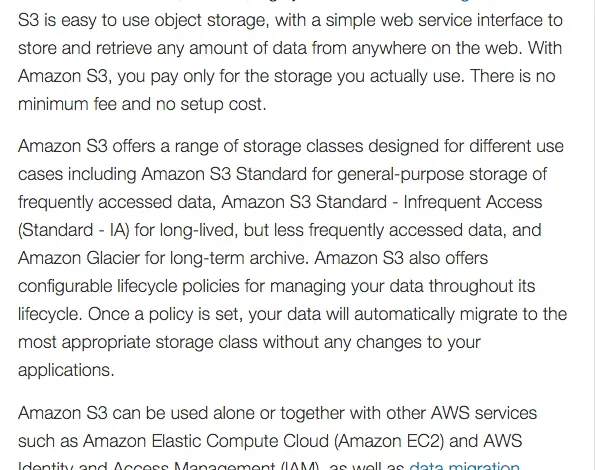
The 2006 launch announcement for S3 described a "simple web service interface to store and retrieve any amount of data from anywhere on the web." Notably, the core vision articulated in that original press release has remained remarkably stable over the last two decades. While the infrastructure behind the scenes has scaled exponentially, the external promise to the customer has required only minimal updates. This stability demonstrates how a well-crafted, customer-centric vision can anchor a product through years of rapid technological evolution.
By focusing on a mental image of a developer—often envisioned as a student in a dorm room—gaining access to the same infrastructure as a Fortune 500 company, Amazon successfully created a product that scaled from small startups to industry giants like Netflix, Airbnb, and Slack.
Quantitative Impact and Economic Significance
The financial implications of this methodology are stark. According to data from the Wall Street Journal, the efficiency gains realized through the “working backwards” approach have allowed AWS to maintain a lean, high-output development cycle. By the mid-2010s, AWS had already captured a significant portion of the cloud infrastructure market, a lead it has widened in the years since.
The strategy effectively short-circuits the traditional pitfalls of "feature creep" and project abandonment. When teams are required to justify a product’s existence through a polished, public-facing document, they are forced to prioritize features that provide actual utility. This prevents the "sunken cost" fallacy, where organizations continue to pour money into projects simply because they have already spent significant time on them. In the context of Amazon’s broader growth, this discipline has been a primary driver of its ability to pivot from an e-commerce retailer to a diversified technology conglomerate.
Internalization of Customer-Centricity
While the press release is the most visible tool in the Amazon development kit, the true success of the model lies in its integration into the company’s corporate culture. Amazon does not treat “working backwards” as a temporary phase; it is a permanent fixture of its operations.

For many organizations attempting to replicate this success, the difficulty lies in the transition from a feature-led mindset to a customer-centric one. This requires small, daily triggers that force employees to consider the user impact of every decision. Organizations that have successfully adopted similar frameworks often implement the following practices:
- Narrative-Driven Decision Making: Replacing standard slide decks with six-page written narratives that force stakeholders to think through the customer journey in depth.
- Iterative Drafting: Encouraging the rewriting of product definitions until they are clear and concise. The philosophy here is that rewriting a document is infinitely cheaper than refactoring code.
- Strict Customer Focus: Evaluating every feature against the original press release. If a feature does not directly serve the value proposition outlined in the initial document, it is reconsidered or discarded.
Broader Implications for the Tech Industry
The influence of Amazon’s development style has rippled through the broader software industry, influencing how venture-backed startups and established firms alike approach their product roadmaps. The shift toward “shipping for the customer” rather than “shipping for the specs” has become a hallmark of modern agile development.
However, the strategy is not a universal panacea. Critics often point out that the rigor required by this process can sometimes slow down rapid, experimental innovation in the early stages of a startup. Yet, for products intended to reach massive scale, the "working backwards" model provides a critical safeguard against building solutions in search of a problem.
Long-term Value Creation
The most enduring lesson from Amazon’s trajectory is that lasting products are those that solve fundamental, unchanging customer needs. While market trends shift and technologies become obsolete, the need for reliable storage, compute, and scalability remains constant. By embedding the customer into the very beginning of the development lifecycle, founders ensure that their products are built on a foundation of tangible value.
As companies navigate an increasingly competitive digital marketplace, the ability to maintain focus on the end-user is a significant competitive advantage. The “working backwards” approach is a testament to the idea that clarity of vision, when combined with a disciplined, iterative process, can lead to the creation of platforms that define generations of technology. Whether one is a lone developer or a member of a global product team, the lesson remains clear: if you cannot articulate the value of your product to your customer in a single, compelling narrative, you are not yet ready to build it. By making the customer the centerpiece of the entire development process, companies move beyond simple product-market fit and into the realm of building sustainable, industry-defining institutions. This strategy, though demanding, remains the gold standard for long-term product success in the 21st century.