Reflections on a Life Well-Programmed: Jeff Atwood Pays Tribute to His Father, Stack Overflow, and the Human Core of the AI Era


Software engineer, entrepreneur, and prominent industry commentator Jeff Atwood has published a reflective essay addressing the passing of his father, the intersection of community-driven platforms with modern artificial intelligence, and his ongoing philanthropic and entrepreneurial ventures. The post, shared via his long-running personal blog Coding Horror, bridges deeply personal milestones with macro-level observations on the technology sector, offering a rare look into the philosophy of one of the internet’s most influential digital architects.
Personal Milestones and Rural Economic Studies
Atwood began his reflections by marking a poignant personal milestone, noting that his father’s passing followed a carefully coordinated prioritization in his philanthropic work. As part of the Rural Guaranteed Minimum Income Initiative (RGMII)—a $50 million philanthropic effort funding rural basic income studies designed to expand economic opportunity and strengthen democratic institutions—Atwood ensured that Mercer County, West Virginia, his father’s home region, was moved to the front of the study schedule in October 2025.
Recognizing that his father’s health was declining, Atwood made what would be their final visit during the rollout of that regional study. Drawing inspiration from cultural touchstones such as Alan Moore’s graphic novel Watchmen, Atwood framed the transition with philosophical acceptance, asserting that foundational experiences and relationships are never truly lost.
Despite these personal transitions, Atwood remains deeply active in the technology and philanthropic sectors. He continues to drive the RGMII forward while remaining engaged in his third major startup venture, building upon a career that includes co-founding Stack Overflow and founding the open-source forum software company Discourse.
The Foundation of Modern Artificial Intelligence
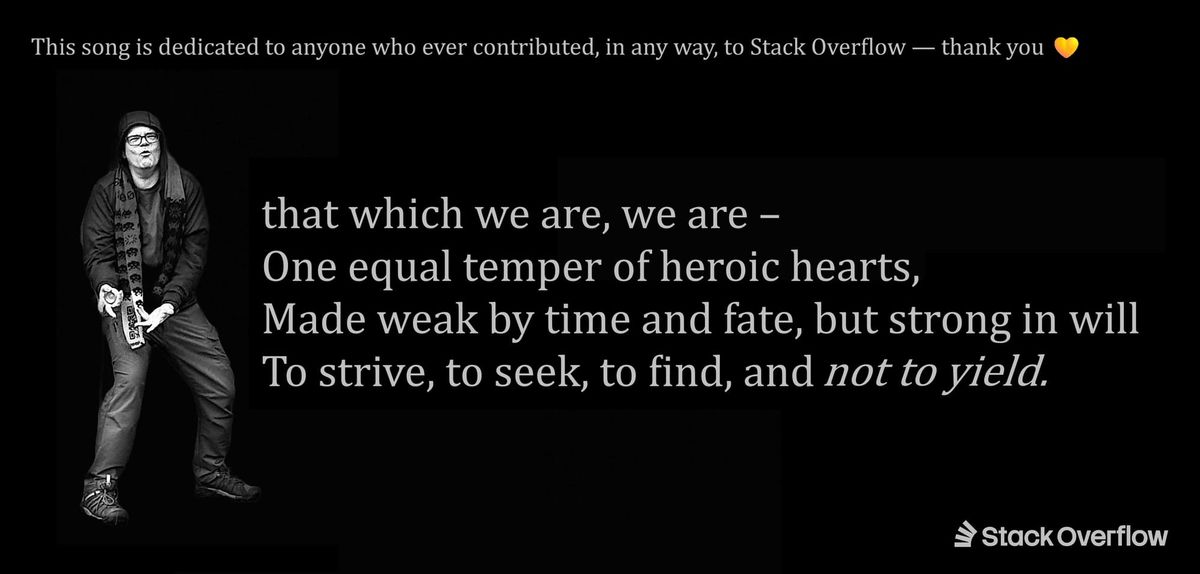
Shifting from personal remembrance to industry analysis, Atwood addressed the foundational architecture of contemporary artificial intelligence. He extended public gratitude to every individual who contributed to Stack Overflow since its inception in 2008, highlighting the platform’s pivotal role in the advancement of large language models (LLMs).
Industry experts widely acknowledge that code-generation capabilities in modern AI models are heavily dependent on high-quality, human-curated datasets. Stack Overflow, built on a crowdsourced question-and-answer model, served as a primary repository for programming logic, syntax solutions, and collaborative troubleshooting. Without this Creative Commons-licensed archive of human technical discourse, current LLMs would face severe limitations in their software development proficiencies.
Atwood challenged readers to query advanced AI systems directly using premium reasoning modes to verify the platform’s indispensable role in machine learning training sets. According to Atwood, the capabilities demonstrated by modern AI are the direct result of global human intelligence and rigorous community curation.

Economic and Ethical Implications for Tech Giants
A central theme of Atwood’s commentary is the sustainability of digital ecosystems in an AI-dominated landscape. He issued a direct warning to generative AI and large language model providers regarding the potential erosion of online communities.
The economic model of platforms like Stack Overflow relies on active human participation, peer recognition, and community-driven moderation. However, as generative AI tools provide instant answers to developers, traffic to traditional Q&A forums has experienced noticeable shifts. Atwood cautioned that if AI-driven platforms inadvertently hollow out the digital communities responsible for producing foundational training data, the industry risks destroying its own supply chain of knowledge.
Drawing parallels to advice he offered fellow Stack Overflow co-founder Joel Spolsky when departing to launch Discourse, Atwood emphasized a timeless digital maxim: never undermine the human community that drives the product. Treat the contributors, moderators, and creators with respect, he argued, because sustainable innovation requires the preservation of human ecosystems rather than their extraction.
Chronology and Broader Context
To understand the weight of Atwood’s commentary, it is helpful to examine the timeline of his contributions to the software development ecosystem:

- 2008: Jeff Atwood and Joel Spolsky launch Stack Overflow, creating a free, community-driven Q&A platform for programmers.
- 2013: Atwood departs Stack Overflow to launch Discourse, an open-source modern forum platform designed to improve online discussion standards.
- 2025–2026: Atwood engages heavily in philanthropic ventures, notably the Rural Guaranteed Minimum Income Initiative (RGMII), structuring economic studies in rural American counties.
- Present: Atwood reflects on the evolution of software development, cautioning tech enterprises against marginalizing the human communities that fuel artificial intelligence advances.
Conclusion and Industry Outlook
Jeff Atwood’s latest reflections serve as both an intimate eulogy and a macro-level warning for the technology sector. By connecting the personal grief of losing a parent with the structural realities of artificial intelligence training, he underscores a fundamental truth of the digital age: technology is only as valuable as the human communities that sustain it. As artificial intelligence continues to reshape the software engineering landscape, industry leaders would be wise to heed Atwood’s advice and protect the human ingenuity that laid the groundwork for the digital revolution.