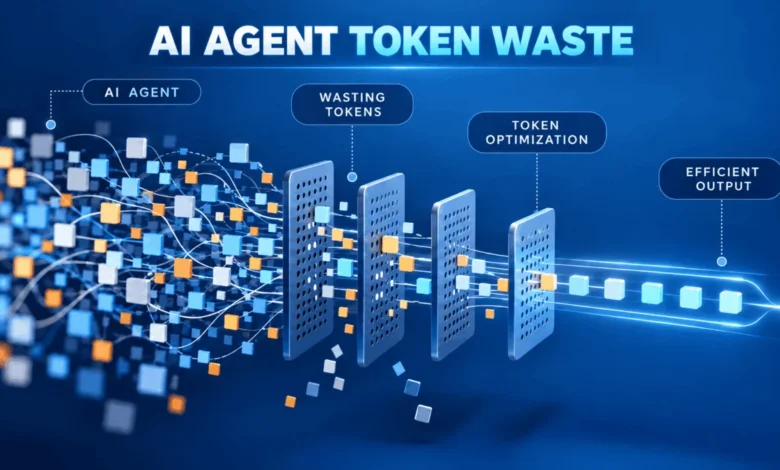
In the rapidly maturing landscape of generative AI, the transition from a weekend-long prototype to a scalable, production-grade agent system is fraught with fiscal and operational pitfalls. While developers often focus on model intelligence, the hidden reality of deployment is the escalating cost of inference. As agents move from static chat interfaces to autonomous loops—where they perform tool calls, retrieve documents, and iterate on complex logic—token consumption often scales non-linearly. Industry data suggests that without architectural guardrails, an agent’s API expenditure can balloon by 300% to 500% within the first three months of production as context windows grow and reasoning chains lengthen. To manage these costs, engineering teams must shift their perspective: the context window is not a long-term database, but an ephemeral workspace that requires rigorous, automated management.
The Problem of Contextual Bloat
The primary driver of excessive token usage is the "append-only" trap. Naive implementations store the entire history of an agent’s lifecycle—every user query, every system observation, and every intermediate reasoning step—within the prompt array. By the 20th interaction, the agent is effectively re-reading its entire history to generate a single response. This creates a quadratic increase in latency and a linear increase in costs.
Engineers must draw a firm line between Context and State. Context should be defined as the transient payload necessary for immediate inference, while State represents the persistent, serialized record of the agent’s progress. By offloading long-term data to deterministic stores like SQLite or Redis, developers can ensure the model only processes the information relevant to the immediate next step.
Sliding Windows and Semantic Compression
To mitigate context accumulation, modern architectures employ a sliding window approach paired with semantic summarization. By passing only the most recent N turns verbatim and compressing older interactions into a concise background summary, the system maintains the agent’s "memory" without the prohibitive costs of raw history.
However, this approach introduces a risk of information loss. Semantic compression is inherently lossy; details like specific UUIDs, cryptographic signatures, or exact code snippets can be erased during the summarization process. To combat this, high-performance systems utilize a "key-value lookup" strategy. When an agent requires precision, it queries a structured database rather than relying on the compressed history, ensuring that the model retains access to critical data points while keeping the main prompt slim.
Optimization of Tool Interaction and Payload Ingestion
A common, yet frequently overlooked, source of waste is the ingestion of raw, machine-readable tool outputs. APIs from providers like Stripe, AWS, or Jira return verbose, deeply nested JSON objects designed for machines rather than large language models. Including these raw payloads in the agent’s observation context is inefficient, as most of the data is irrelevant to the model’s reasoning process.
The architectural fix involves implementing a middleware transformation layer. Before an API response enters the model’s context, this layer filters out non-essential keys, flattens deep JSON structures, and converts the data into dense YAML or structured Markdown. While this requires careful engineering to ensure pagination cursors or metadata remain intact, the reduction in token count per tool call is often significant, frequently resulting in a 60% to 80% decrease in input tokens per retrieval action.
Abstract Syntax Tree (AST) Aware Retrieval
For coding agents and RAG-heavy systems, the "grep-and-dump" method of information retrieval—where an entire file is injected into the context window to answer a single question—is unsustainable. This approach is akin to reading an entire encyclopedia to verify one fact.
The industry is moving toward AST-aware retrieval. By parsing code into a call graph during the indexing phase, developers can ensure that when a function is requested, the system retrieves only the function signature, its docstring, and immediate structural dependencies. Tools like Tree-sitter facilitate this granular retrieval, reducing the token overhead of code context by orders of magnitude. The implication here is significant: better indexing leads to faster reasoning, lower costs, and a drastic reduction in hallucinations caused by irrelevant noise.
Dynamic Tool Schemas and State Management
Large agent frameworks often inject the full registry of available tools into every LLM call, regardless of the task at hand. For agents with 30 to 50 tools, the schema definitions themselves can consume upwards of 1,500 tokens per request.
By implementing context-aware tool pruning governed by a finite state machine, developers can ensure that the agent only receives the specific tools required for its current operational state. An agent in a "discovery" phase receives search tools, while an "execution" phase enables mutation tools. While dynamic schemas can complicate prompt caching, the reduction in unnecessary input tokens frequently offsets the latency penalty of a cache miss.
Guardrails for Autonomous Reasoning Loops
Autonomous agents are prone to "runaway" logic. If a tool call fails, an agent may attempt to retry, encounter the same error, and continue the cycle indefinitely. Without a circuit breaker, a single stalled process can consume tens of thousands of output tokens, which are typically billed at a premium compared to input tokens.
Orchestrator-level circuit breakers are now considered a mandatory production guardrail. By capping the maximum number of retries and defining an output token budget per action, engineers can force the system to escalate to human oversight or return a deterministic fallback when an autonomous process stalls. This prevents the "billing shock" that occurs when an agent enters an infinite loop, providing a predictable cost floor for production deployments.
Strategic Use of KV Caching and Model Routing
The effective use of Key-Value (KV) caching is the final frontier in token efficiency. Modern LLM providers allow developers to cache the static prefixes of their prompts, avoiding the recomputation of attention over static content. The key is to structure requests with a "static-to-dynamic gradient," placing system prompts and style guides at the top and dynamic variables at the end.
Furthermore, the "monolithic routing" model—using top-tier frontier models for every task—is increasingly viewed as an inefficient use of capital. Cascaded routing, where a fast, cost-effective model handles intent classification and simple data extraction, only escalating to a frontier model for complex reasoning, allows companies to achieve high-quality results at a fraction of the cost. Frameworks such as LiteLLM have made this approach more accessible by providing a provider-agnostic interface for model routing.
Broader Implications and Long-Term Stability
Token optimization is no longer just a financial metric; it is a fundamental component of data quality and system reliability. As production agents age, they become susceptible to the accumulation of stale data and "context drift," where the agent struggles to distinguish between current system state and historical noise.
By the 100-day mark in production, the architectural decisions made in the development phase begin to compound. A bloated context window results in higher inference latency, which in turn leads to a higher rate of orchestrator timeouts and retrieval failures. Consequently, the most stable agent systems are those that prioritize constraints. By forcing the agent to operate within the minimum context required for the task, developers create a smaller, more predictable failure domain.
Ultimately, the goal of these seven strategies is to move toward deterministic agent behavior. In a field defined by the probabilistic nature of LLMs, reducing the noise within the context window is the most reliable way to improve performance, maintain cost-effectiveness, and ensure that the agent remains a dependable tool within the enterprise infrastructure. Organizations that fail to implement these guardrails risk not only financial waste but also the erosion of the agent’s reasoning capabilities, turning a high-potential asset into a source of technical debt.