Mark Rober and the Human Moat: Why Real-World Authenticity Is the Ultimate Competitive Advantage in the Age of AI

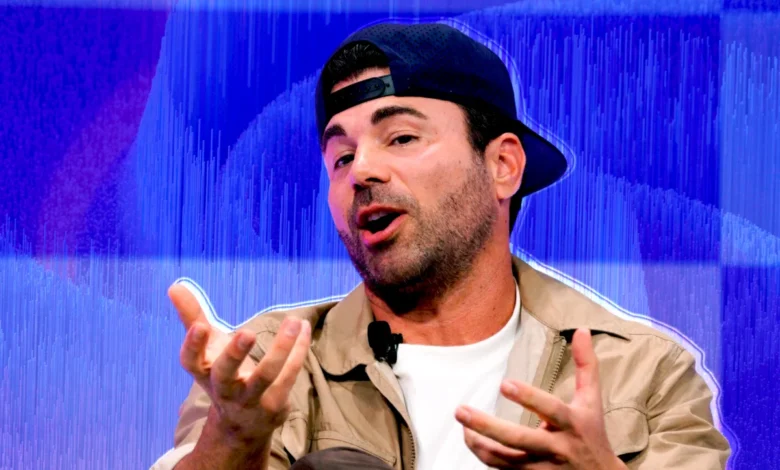
The rise of generative artificial intelligence has fundamentally altered the landscape of digital media, prompting a philosophical and strategic pivot among the world’s most successful content creators. Mark Rober, the former NASA engineer turned scientific phenom with over 85 million YouTube subscribers, has emerged as a central figure in the debate over how human-led creativity can survive in an ecosystem increasingly saturated by AI-generated "slop." In a recent discourse regarding the future of the creator economy, Rober identified a singular, time-tested solution to the existential threat posed by automated content: the undeniable, visceral power of real-world, high-stakes human achievement.
The Evolution of a Science Icon
Mark Rober’s trajectory from the corridors of NASA’s Jet Propulsion Laboratory to the top of the YouTube creator hierarchy is a testament to the power of tangible experimentation. His early career was defined by his work on the Curiosity rover, but his digital legacy was cemented through videos that blurred the lines between rigorous engineering and viral entertainment. Hits such as "How to Survive a Grenade Blast," which garnered 100 million views, and the viral sensation "Can you swim in Jello?" with 224 million views, established a template for success: massive, high-budget, real-world experiments that no AI, regardless of its sophistication, could truly simulate.
These projects were not merely exercises in vanity; they were meticulously planned technical endeavors that required months of preparation, safety testing, and iterative design. By documenting these processes, Rober cultivated an audience that valued the authenticity of the struggle—the failures, the chemical reactions, and the human triumph inherent in scientific discovery.
The AI Conundrum: Quality Versus Velocity
The current digital environment is defined by a paradoxical tension. On one hand, AI tools provide unprecedented efficiencies. Startups like Linguana are leveraging AI to automate the translation and localization of existing video content, allowing creators to reach global markets without the prohibitive costs of human dubbing and editing. According to industry data, services like these were facilitating over 10,000 video translations monthly by early 2025, effectively lowering the barrier to international expansion.
However, this democratization of production has introduced a glut of low-effort, AI-generated content—often derisively referred to as "slop." This creates a significant challenge for creators who rely on traditional, labor-intensive production models. As AI continues to refine its ability to mimic human speech, animation, and narrative structures, the market is becoming flooded with generic content that is faster and cheaper to produce than anything a human team could manufacture.
Rober’s assessment of this shift is grounded in a belief in the "human moat." He argues that while AI can simulate a trick shot or an engineering feat, it cannot replicate the stakes of the real world. "Do you want to see a simulation of someone dunking a basketball with a sick trick, or do you want to see someone actually do it?" he posited. "The fact that you know it’s real is what makes it crazy." This observation highlights a growing consumer desire for verified, high-effort content as a reaction against the perceived sterility of synthetic media.
Economic Implications of the Creator Shift
The economic model surrounding content creation is currently undergoing a structural realignment. In the previous fiscal year, Rober’s channel generated approximately $17 million in revenue, a figure that largely mirrors the capital investment required to execute his elaborate experiments. This high-expenditure model serves as a barrier to entry; while anyone can prompt an AI to generate a video, few can replicate the logistical complexity of launching a glitter bomb trap or building a massive sandbox.
Beyond his YouTube presence, Rober has successfully pivoted into the ed-tech and consumer goods sectors with CrunchLabs. By manufacturing maker kits and engineering tools, he has diversified his revenue streams, effectively insulating his business from the volatility of platform ad rates. With a workforce exceeding 200 employees, his operation represents a shift toward a more robust, business-oriented creator model that treats the YouTube channel as a top-of-funnel brand asset rather than the sole source of income.
A Timeline of AI Integration in Media
To understand the current state of the industry, it is necessary to examine the rapid adoption of synthetic media tools:
- 2022: The emergence of high-fidelity generative AI tools (such as DALL-E 2 and early LLMs) prompts initial discussions regarding the automation of thumbnail and script creation.
- 2023: Large-scale creators begin experimenting with AI for data analysis, audience sentiment tracking, and, controversially, voice cloning.
- 2024: AI-driven translation platforms like Linguana begin to see mass adoption, enabling creators to scale their audience reach by 5x or more through automated localization.
- 2025: A market correction occurs as audiences grow weary of "AI slop," leading to a premium being placed on "human-certified" content, as highlighted by figures like Rober.
The Role of Curiosity as a Defensive Strategy
Rober emphasizes that the defense against technological obsolescence is not to fight the technology itself, but to lean into uniquely human traits—most notably, curiosity. In an era where answers are readily provided by LLMs, the act of inquiry becomes a competitive advantage.
"Curiosity is so important in this new age of AI," Rober noted. "It means you just have a lifetime of learning." This philosophy permeates the work being done at CrunchLabs, where the objective is to cultivate the next generation of engineers who view AI as a tool for inquiry rather than a replacement for creative thought. By framing his business around the promotion of science and engineering education, Rober is effectively future-proofing his brand against the inevitable decline of content formats that can be easily automated.
Analysis: The Future of "The Moat"
The "moat" that Rober refers to is essentially a form of brand equity built on trust and physical reality. In a post-truth digital environment, credibility is the most scarce commodity. Content that is verifiable, physically situated, and personally endorsed will likely command a higher premium than synthetic media.
However, this does not mean that AI is the enemy of the creator. The most successful entities of the next decade will likely be hybrid operations: those that utilize AI to handle the drudgery of global distribution and data management, while keeping the creative, high-stakes "heart" of the content firmly in the realm of human experience.
Channels that lack this "human moat"—such as those focused exclusively on generic news aggregation, basic animation, or unverified facts—will face increasing pressure from automated competitors. The trajectory of the industry suggests a bifurcated future: one path leads to a race to the bottom, where content is produced at zero cost by AI; the other path leads to a premium market where human effort, risk, and authenticity are the primary drivers of value.
Conclusion
As the lines between human creation and machine generation continue to blur, the strategy employed by figures like Mark Rober serves as a bellwether for the broader creator economy. By focusing on high-stakes, real-world experimentation and fostering a genuine curiosity that transcends simple entertainment, creators can establish a defensible position in the market. The rise of AI does not necessitate the decline of the creator, but it does mandate a shift in focus. In the coming years, the most successful content will be defined not by how efficiently it can be generated, but by the tangible, undeniable, and human reality that it captures.