The Human Element in Code: How Stack Overflow and Community-Driven Platforms Reshaped Software Development and Why Their Decline Matters

The modern software development landscape is undergoing a profound structural transformation, driven by the rapid ascent of generative artificial intelligence and large language models (LLMs). While automated coding assistants offer unprecedented speed and efficiency in generating syntax and debugging code, a growing discourse among veteran engineers highlights a critical casualty of this technological shift: the erosion of human-centric online communities. Recently, software engineer and Stack Overflow co-founder Jeff Atwood published a poignant reader email that underscores this tension. The correspondence—sent by an Air Force veteran recalling his service during the 2013 Zamboanga Siege in the Philippines—illustrates how peer-to-peer developer platforms provided not merely technical solutions, but vital psychological lifelines and human connection in moments of extreme crisis. This narrative brings to the forefront a broader industry debate regarding the irreplaceable value of human empathy, mentorship, and community-driven knowledge sharing in an era increasingly dominated by algorithmic efficiency.
The Zamboanga Siege and an Unlikely Academic Lifeline
The backdrop of the reader’s testimony traces back to September 2013, during one of the most volatile security crises in recent Philippine history. The Zamboanga Siege began on September 9, 2013, when a faction of the Moro National Liberation Front (MNLF) under the command of Ustadz Habier Malik entered Zamboanga City with the objective of hoisting a self-declaration flag of independence. The ensuing armed conflict between the MNLF and the Armed Forces of the Philippines (AFP) turned densely populated urban neighborhoods into active combat zones. Over the course of a three-week urban battle, more than 100 people were killed, and approximately 120,000 civilians were displaced as residential areas were caught in the crossfire, resulting in widespread structural fires and infrastructural collapse.
Amidst this humanitarian emergency, active-duty U.S. Air Force personnel stationed in the region were managing operational duties while simultaneously attempting to maintain their personal commitments. The reader, deployed in Zamboanga and operating remotely as a full-time college student, faced the simultaneous pressures of military operations, humanitarian response, and rigorous academic coursework. Working within buildings where smoke from burning urban infrastructure filtered through structural cracks, the service member relied on a Microsoft Surface device—transported within military equipment plates to withstand vehicular vibrations—to complete academic programming projects.
Faced with complex technical roadblocks, the student initially sought assistance from immediate familial and professional networks within the software engineering sector. According to the correspondence, these traditional channels offered little support, with responses ranging from outright dismissal to demands for independent problem-solving. It was within this high-stress environment that the engineer turned to Stack Overflow, a crowdsourced question-and-answer platform founded in 2008 by Jeff Atwood and Joel Spolsky. Random, anonymous contributors on the platform provided timely technical guidance, offering the exact nudge required to clear academic hurdles without any personal incentive beyond altruism.
The Evolution and Function of Developer Communities
To understand the weight of this testimony, it is necessary to examine the foundational architecture of platforms like Stack Overflow. Launched during an era when programming knowledge was heavily fragmented across disparate forums, mailing lists, and proprietary documentation, Stack Overflow introduced a gamified, peer-reviewed ecosystem. Users earned reputation points and badges for accurate answers, creating a self-regulating repository of coding solutions that indexed millions of technical queries.
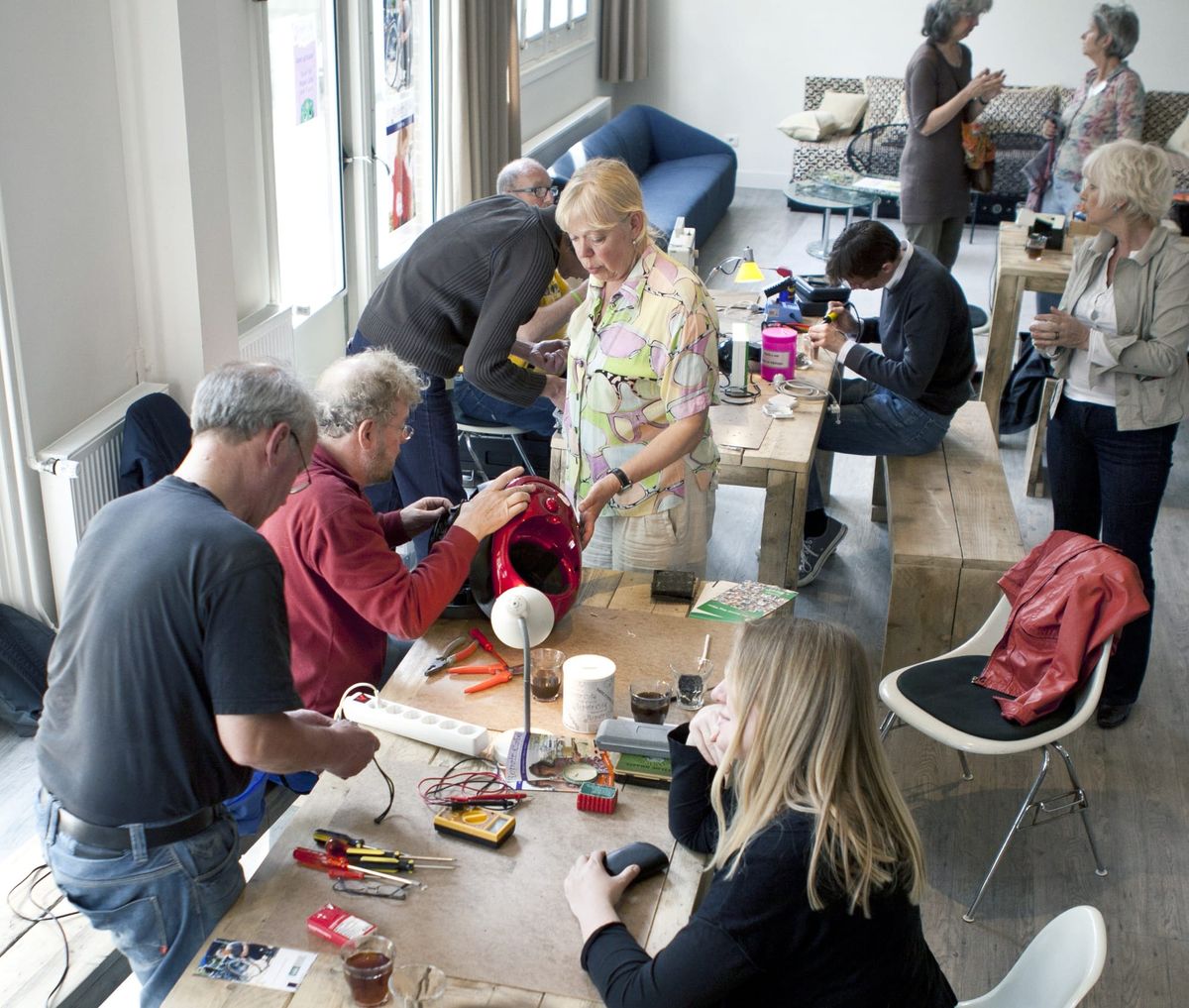
For more than a decade, these community-driven spaces served as the de facto digital town squares for the global technology workforce. Beyond transactional troubleshooting, the platform fostered a culture of mentorship. Junior developers, students, and professionals working in isolated environments could articulate complex problems and receive nuanced, context-aware responses from senior practitioners. This interaction model created a sense of shared identity and belonging within a rapidly expanding global profession.
However, the operational dynamics of these platforms have shifted dramatically in recent years. The proliferation of large language models—such as OpenAI’s GPT series, Anthropic’s Claude, and specialized coding tools like GitHub Copilot—has fundamentally altered how developers source information. Instead of formulating queries on public forums, waiting for peer review, and parsing through discussion threads, modern programmers increasingly rely on real-time conversational agents to synthesize code snippets instantly.
This technological pivot has introduced significant unintended consequences for community health. Traffic and active engagement on traditional question-and-answer platforms have experienced noticeable declines as users migrate toward instantaneous AI interfaces. Industry analysts and long-time community participants have observed a "hollowing out" effect, where the friction of public contribution is abandoned in favor of private, frictionless utility.
Economic and Psychological Implications of the AI Shift
The transition from human-curated forums to algorithmic assistance presents a complex mix of economic efficiencies and psychological costs. From a productivity standpoint, LLMs offer undeniable advantages. They operate continuously, eliminate the social friction often found in online developer communities (such as hostile moderation or the dismissal of novice questions), and provide immediate context-specific solutions tailored to proprietary codebases. For enterprise organizations, these tools translate directly into accelerated software delivery lifecycles and reduced overhead in initial developer onboarding.
Yet, as the Zamboanga testimony illustrates, the value proposition of human-centric communities extends far beyond functional efficiency. The psychological impact of receiving validation, time, and empathy from a fellow human being cannot be replicated by a neural network. While an artificial intelligence can generate syntactically correct code to solve an algorithmic problem, it remains fundamentally incapable of recognizing human struggle, offering solidarity, or validating an individual’s sense of belonging within a larger professional collective.
Observers note that the decline of these public forums threatens the organic transmission of institutional knowledge and mentorship. Platforms like Stack Overflow did not merely store answers; they trained a generation of developers in collaborative problem-solving, public documentation, and community governance. As these platforms contract, the digital commons of the software industry risk becoming fragmented, private, and transactional.
Industry Reactions and Future Outlook
The broader technology sector has increasingly recognized the need to reconcile the efficiency of artificial intelligence with the preservation of human community structures. Tech leaders, educators, and platform administrators are currently debating sustainable models to revitalize public digital spaces. Proposals range from integrating AI tools as supportive scaffolding rather than replacements for human interaction, to restructuring online forums to emphasize mentorship, collaborative open-source projects, and localized developer meetups.
Jeff Atwood’s decision to publish the correspondence highlights an ongoing industry introspection regarding what is quietly being lost in the rush toward total automation. The narrative serves as a stark reminder that software engineering is, at its core, a human discipline built upon shared struggle, collaboration, and mutual aid.
As artificial intelligence continues to redefine the technical parameters of writing code, the challenge facing the technology community will not be technological, but social. Ensuring the survival of vibrant, resilient online communities requires a deliberate commitment from practitioners and industry stakeholders alike. Without intentional efforts to cultivate human relationships and preserve spaces dedicated to mutual support, the software industry risks losing the very social fabric that enabled its unprecedented global growth.