The internet, since its popularization in the 1990s, has primarily served as a vast repository for human-readable documents. These documents, predominantly formatted using HTML and styled with CSS, present information in a visually appealing and organized manner for human consumption. HTML provides a basic structural framework, delineating elements such as paragraphs, headings, and emphasized text. CSS then layers aesthetic enhancements, transforming raw HTML into visually engaging web pages with specific fonts, colors, and layouts. While this system has been highly effective in creating a visually rich and accessible web for billions of users, it possesses inherent limitations when it comes to machine comprehension of the underlying data.
The Semantic Gap: When Computers Don’t Understand
The fundamental challenge lies in the semantic gap between how humans interpret information and how machines process it. For instance, a beautifully designed web page might display details about a book, such as its title, author, illustrator, publisher, and ISBN. To a human reader, this information is immediately recognizable as a book entry. However, a conventional computer program scanning the same page might only perceive a series of bolded, italicized, and regular text strings. It lacks the inherent understanding that these discrete pieces of text collectively represent a "book" with specific attributes. The system knows "this is bold text," but not "this bold text is a book title." This lack of intrinsic, machine-readable structure severely limits the potential for automated processing, intelligent search, and advanced data integration.
Consider the illustrative example of a book listing:
Goodnight Moon
by Margaret Wise Brown
Illustrated by Clement Hurd
Harper & Brothers, 1947
ISBN 0-06-443017-0
While perfectly clear to a human, a naive web crawler or an artificial intelligence agent would struggle to programmatically extract that "Goodnight Moon" is the title, "Margaret Wise Brown" is the author, or "0-06-443017-0" is an ISBN. The visual formatting (bolding, italics) provides presentation cues, but no semantic meaning for a machine.
The Enduring Vision of the Semantic Web
The limitations of the human-centric web were recognized early in its development. As far back as 1999, Sir Tim Berners-Lee, the inventor of the World Wide Web, articulated a profound vision for a "Semantic Web" in his seminal work, Weaving The Web. He dreamt of a web where computers would become capable of analyzing all the data available online – the content, links, and transactions – to understand its meaning, not just its presentation.
Berners-Lee famously stated: "I have a dream for the Web [in which computers] become capable of analyzing all the data on the Web — the content, links, and transactions between people and computers. A ‘Semantic Web’, which makes this possible, has yet to emerge, but when it does, the day-to-day mechanisms of trade, bureaucracy and our daily lives will be handled by machines talking to machines. The ‘intelligent agents’ people have touted for ages will finally materialize."
This vision spurred the development of various technologies aimed at adding machine-readable metadata to web content. Initiatives like RDF (Resource Description Framework), OWL (Web Ontology Language), and SPARQL (a query language for RDF) emerged, providing robust frameworks for defining and interlinking data on the web. Schema.org, a collaborative effort by major search engines, later offered a standardized vocabulary for structured data markup, enabling webmasters to semantically tag common entities like articles, products, events, and books.

The Adoption Hurdle: Complexity and Effort
Despite these technological advancements and the clear benefits of a more intelligent web, widespread adoption of semantic markup has remained elusive. Implementing structured data typically involves manually adding complex code snippets, often in formats like JSON-LD or Microdata, directly into the HTML. This process requires a significant understanding of data schemas, syntax, and best practices. For content creators, particularly those without deep technical expertise, the effort involved in adding this "behind-the-scenes" markup often outweighs the perceived immediate benefits.
After crafting a compelling blog post or an informative article, the prospect of undertaking additional "homework" to make it machine-readable can be daunting. The payoff for such effort is often not directly visible to the human visitor, nor does it immediately enhance the content creation process. Consequently, despite two decades passing since Berners-Lee’s initial pronouncement, the web largely remains a collection of beautifully formatted but semantically opaque documents. The dream of a fully machine-understandable web, where "intelligent agents" seamlessly process information, has largely gone unfulfilled due to this critical barrier to entry for content publishers.
Introducing the Block Protocol: A Pragmatic Solution
Recognizing this enduring challenge, a new initiative, the Block Protocol, proposes a pragmatic and user-centric approach to finally bridge the semantic gap. The core philosophy underpinning the Block Protocol is simple yet powerful: people will only add semantic markup to their web pages if doing so is easier than not. This shifts the focus from requiring creators to become data architects to providing tools that make structured data entry intuitive, assisted, and even advantageous for the content creation workflow itself.
The Block Protocol envisions a world where adding complex, structured information is not a burden but an integrated, streamlined process. Imagine, for instance, inserting a "book" element into a web page. Instead of manually typing out the title, author, ISBN, and publication details, a Block Protocol-compliant editing interface could offer an intelligent "book block." The user might simply type the book’s title, and the block, leveraging external databases, would auto-populate all relevant metadata – author, ISBN, publisher, publication year, even cover art – making the process significantly faster and less error-prone than manual entry. The content creator would perform less work, not more, to achieve a richer, semantically defined outcome.
This paradigm extends to countless other data types. An "address block" could allow a user to input a street address, and the block would automatically format it correctly, perhaps even verifying it against a mapping service and adding geocoordinates. The visual representation of this address on the front end could be customized (e.g., plain text, an interactive map, a map in a specific language), but the underlying semantic data would remain consistent and machine-readable. This means a web browser could recognize it as an address, offering contextual actions like "get directions" or "summon a ride-sharing service," leading to truly "smart" web experiences.
Overcoming Fragmented Ecosystems
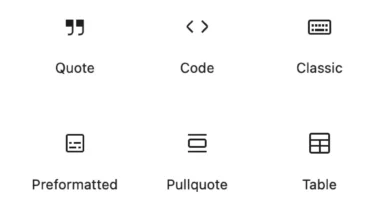
A significant hurdle to widespread adoption of advanced content types currently lies in the fragmented landscape of web editing environments. While many popular platforms like WordPress, Notion, Trello, and Mailchimp have embraced the concept of "blocks" for content creation, these blocks are proprietary and platform-specific. A "product block" developed for WordPress cannot be seamlessly transferred and used within Notion, and vice-versa. This forces developers to rebuild custom blocks for each platform, leading to redundant effort, limited availability of niche block types, and a stifled ecosystem for innovation.
The Block Protocol directly addresses this by proposing an open, universal protocol for blocks. The vision is analogous to the open protocols that underpin the web itself, such as HTTP or SMTP. If developers agree on a common standard for how blocks are defined and interact, then any developer can create a new block type that conforms to this protocol. Crucially, any web-text-editing application that also conforms to the protocol would then be able to integrate and utilize these blocks. This eliminates the need for vendors like WordPress, Notion, or Trello to individually develop thousands or millions of specialized block types. Instead, a vibrant, distributed ecosystem of block creation could flourish, allowing anyone to contribute and share useful, semantically rich components.

An Open, Free, and Public Foundation
A cornerstone of the Block Protocol is its commitment to being 100% free, open, and public. This ensures there are no financial or proprietary impediments to its adoption and use globally. While the protocol itself is open, it also supports flexibility for developers, allowing them to create open-source, public blocks, or even private and commercial blocks, fostering a diverse marketplace of components. This open approach is critical for building the broad consensus and developer buy-in necessary for such a foundational web standard to succeed.
Strategic Launch: Leveraging WordPress’s Dominance
The Block Protocol team has been actively developing the specification for approximately a year, refining its architecture to ensure it can robustly handle the diverse requirements of structured data in a clean and straightforward manner. However, acknowledging that a new protocol’s success hinges on widespread adoption, the team has strategically focused on a critical initial implementation: a WordPress Plugin.
WordPress, the world’s most popular Content Management System, powers an astounding 43% of all websites on the internet. By developing a plugin that allows WordPress users to embed Block Protocol-compliant blocks into their posts and pages as easily as any native WordPress block, the initiative immediately taps into a massive user base. This means that any developer who creates a block conforming to the Block Protocol can achieve wide usability for their creation almost instantly, bypassing the chicken-and-egg problem of adoption that often plagues new standards.
The WordPress Plugin is slated for general release in February, coinciding with the publication of version 0.3 of the Block Protocol specification. Early access to the plugin is currently available, allowing developers and early adopters to experiment and provide feedback. The plugin is designed to be free, further lowering the barrier to entry. For existing WordPress plugin developers, the Block Protocol plugin offers a streamlined path to creating custom blocks without needing deep knowledge of WordPress’s internal plugin architecture or PHP coding. This not only promotes the protocol but also simplifies custom block development within the WordPress ecosystem.
Broader Implications for the Future of the Web
The Block Protocol represents a significant step towards realizing a more intelligent and interconnected web. Its successful adoption could have profound implications across various facets of the digital landscape:
- For Content Creators: The ability to easily embed structured data will empower creators to produce richer, more informative content without technical overhead. This could lead to more engaging user experiences and better content discoverability.
- For Developers: A universal block protocol creates a standardized ecosystem for component development, fostering innovation and reducing the need for platform-specific coding. This could lead to new tools, services, and even marketplaces centered around reusable, semantic blocks.
- For Users: A machine-readable web translates to smarter applications. Search engines could provide more precise and contextual results, AI agents could process information more accurately, and web browsers could offer proactive, intelligent features based on understanding the content. Accessibility could also be significantly improved as assistive technologies gain a deeper understanding of page elements.
- For the Web Ecosystem: The Block Protocol has the potential to break down data silos and increase interoperability between different platforms and services. It aligns closely with the original spirit of the Semantic Web, moving towards a truly linked data environment where information can be seamlessly exchanged and processed across the internet.
While the journey towards a fully semantic web is ongoing, the Block Protocol offers a compelling, pragmatic pathway forward. By focusing on ease of use and leveraging the widespread adoption of existing content platforms like WordPress, it seeks to democratize structured data, making it an inherent part of web content creation rather than an afterthought. This initiative could represent a pivotal moment in the web’s evolution, transforming it from a collection of human-readable documents into a vast, interconnected, and intelligent information network, ready for the next generation of AI and automated services.
To foster community and collaboration, the Block Protocol team has established a Discord server where individuals can participate in discussions, ask questions, and connect with the development team. This open channel reflects the project’s commitment to community-driven development and widespread adoption.