Dolt 2.0 Revolutionizes Version-Controlled SQL with Automated Optimization and Enhanced Performance

DoltHub has officially released Dolt 2.0, marking a pivotal advancement for the open-source, version-controlled SQL database. This latest major update introduces a suite of sophisticated features designed to enhance efficiency, performance, and data management capabilities, most notably through automatic storage optimization, which includes robust garbage collection and compression mechanisms, alongside significantly improved support for both large and vector data types. The release signals a maturing ecosystem for "Git-for-data" solutions, addressing critical pain points in modern data workflows.
Understanding Dolt: The "Git for Data" Paradigm
At its core, Dolt is a MySQL-compatible SQL database that uniquely integrates Git-style version control directly into its architecture. This fundamental design allows users to perform operations traditionally associated with code repositories, such as branching, merging, cloning, and diffing, directly on their relational data. Unlike traditional databases where changes are often destructive or require complex manual auditing, Dolt preserves a complete, immutable history of all data modifications. This capability is crucial for data integrity, reproducibility, and collaborative data development, offering a paradigm shift from conventional database management.
The database achieves this granular version control by storing data in content-addressed Prolly Trees. This advanced data structure facilitates row-level versioning, meaning every individual data change is tracked. Furthermore, Prolly Trees enable highly efficient structural sharing across different versions of the database, significantly reducing storage overhead when multiple branches or historical states exist. This efficiency is also key to fast diff operations, allowing users to quickly identify changes between any two versions of their data, and streamlined merges, which reconcile divergent data histories.
A Journey of Innovation: Dolt’s Development Timeline
The journey to Dolt 2.0 has been one of continuous innovation and refinement, building upon the foundational concepts introduced with the first major version released three years prior. When Dolt first emerged, it promised to bring the power of Git to SQL, addressing a long-standing challenge in data management: how to version control data with the same ease and robustness as source code. Early adopters and developers immediately recognized the potential, particularly for auditing, rollbacks, and enabling parallel data experimentation without affecting production systems.
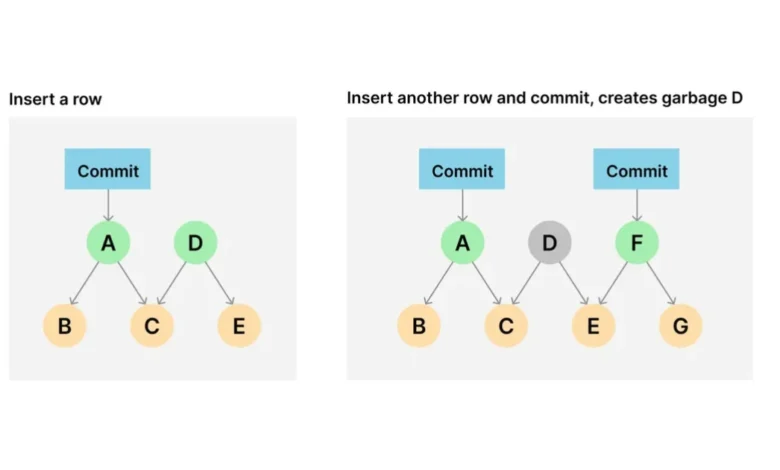
However, early iterations faced challenges common to novel database architectures, particularly concerning storage efficiency and raw performance compared to highly optimized, mature systems like MySQL. The copy-on-write (CoW) nature of Dolt’s storage, while integral to its versioning capabilities, inherently generated "disk garbage" – intermediate committed transaction states that, while not part of the final commit graph, still occupied valuable disk space. This necessitated ongoing development to refine the storage engine and optimize data pathways. Over the past three years, the DoltHub team has diligently worked on these areas, iteratively improving the underlying storage format, query execution engine, and overall system architecture. The release of 2.0 represents the culmination of these efforts, directly addressing the most significant performance and storage hurdles encountered in its earlier versions, and expanding its utility into emerging data domains like vector data.
Dolt 2.0’s Landmark Features: A Deep Dive
Version 2.0 introduces several groundbreaking features that solidify Dolt’s position as a leading solution for version-controlled data.
-
Automated Storage Optimization: Taming Disk Growth
One of the most significant enhancements in Dolt 2.0 is the introduction of automated garbage collection and archive compression, both now enabled by default. As Tim Sehn, founder and CEO of DoltHub, articulates, "Dolt makes a lot of disk garbage, especially during import. Dolt is copy-on-write so all intermediate committed transaction state is preserved to disk. Any intermediate state that is not in a Dolt commit is garbage and can be collected… Dolt already must preserve all history in the commit graph on disk. Adding extra garbage can eat through your disk very quickly."This inherent characteristic of copy-on-write storage, while essential for maintaining an immutable history and enabling efficient branching, could lead to rapid disk space consumption, especially in environments with high write volumes or frequent imports. The new automated garbage collection intelligently identifies and reclaims this unreferenced intermediate state, ensuring that only data reachable from the commit graph is permanently stored. This significantly reduces the storage footprint and maintenance overhead for users.
Complementing garbage collection is a new on-disk format called "archives." This format is specifically engineered to reduce storage consumption by an impressive 30-50% through dictionary compression. Dictionary compression works by identifying recurring patterns or data segments within the stored information and replacing them with shorter codes, effectively deduplicating storage. For databases, which often contain repetitive values or patterns, this technique can yield substantial space savings without compromising data integrity or access speeds. The combination of automated garbage collection and archive compression marks a major leap in Dolt’s operational efficiency and cost-effectiveness for large-scale data management.
-
Unprecedented Performance: Surpassing MySQL
Another cornerstone of the Dolt 2.0 release is a dramatic improvement in performance, with the team claiming the database is now faster than MySQL on sysbench. This achievement is particularly noteworthy given Dolt’s complex versioning capabilities, which inherently add overhead compared to a traditional database focused solely on current state.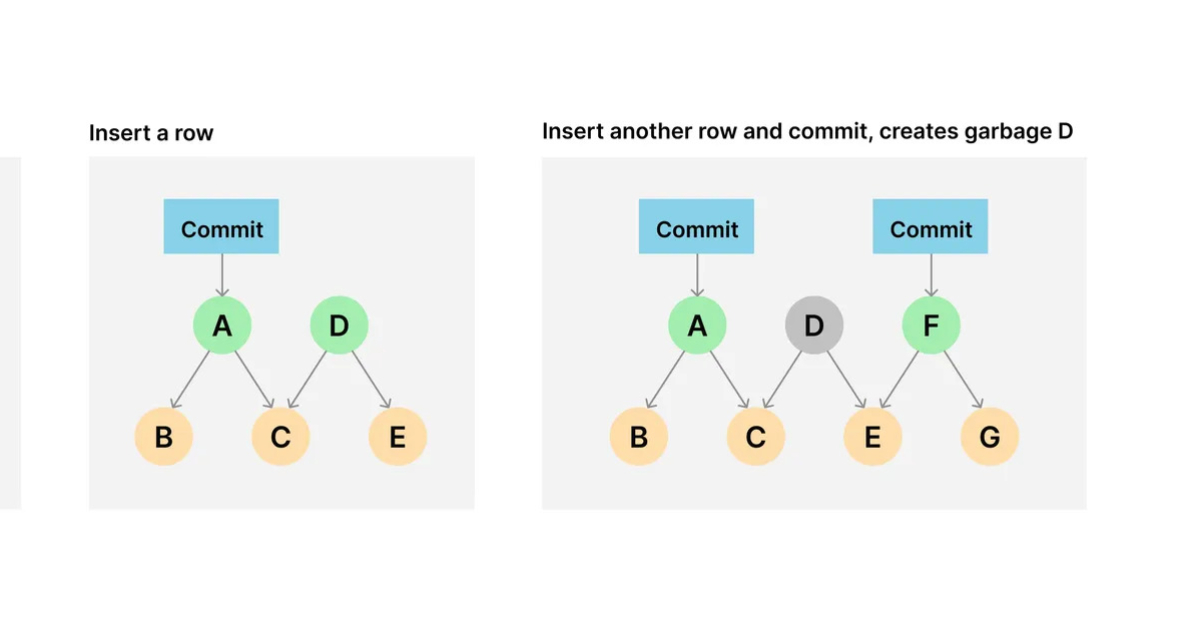
Tim Sehn elaborated on the journey to this performance milestone: "We started at about 10X slower on reads and 20X slower on writes than MySQL. We’ve worked tirelessly to improve Dolt’s performance and we are now 13% faster than MySQL on writes and 5% faster on reads." This represents an extraordinary engineering feat, transforming Dolt from a specialized, albeit slower, alternative into a high-performance database capable of competing with industry stalwarts on raw speed, even with the added complexity of Git-style versioning.
Sysbench, a popular open-source benchmarking tool, is widely used to evaluate the performance of databases by simulating various workloads, including OLTP (Online Transaction Processing) operations. Its use here provides a credible, industry-standard comparison point. The fact that Dolt can now outperform MySQL in certain sysbench scenarios indicates a maturity in its query optimizer, storage engine, and concurrency controls, making it a viable option for a broader range of applications where both version control and high performance are critical. This performance parity, or even superiority, removes a significant barrier to adoption for many potential users who might have previously hesitated due to speed concerns.
-
Embracing the Future: Version-Controlled Vector Indexes (Beta)
Dolt 2.0 also introduces beta support for version-controlled vector indexes, leveraging MariaDB’s Vector type. This feature positions Dolt at the forefront of a rapidly evolving data landscape, particularly in the context of Artificial Intelligence (AI) and Machine Learning (ML). Vector databases are specifically designed to store, manage, and query high-dimensional vectors, which are numerical representations of complex data like images, text, audio, or user behavior. These vectors are essential for similarity search, recommendation engines, semantic search, and other AI-driven applications.The ability to version-control vector indexes within a SQL database is a unique offering. According to the announcement, Dolt is currently the only database that provides this capability. This innovation allows data scientists and ML engineers to track changes to their embedding models, experiment with different vectorization techniques, and ensure the reproducibility of their AI pipelines. Just as Git tracks changes in code, Dolt can now track changes in the very "memory" of AI models, providing a critical layer of governance and auditability for machine learning operations (MLOps). The beta status indicates that while the core functionality is present, the team is still refining the read-path performance and stability, with a full release planned once these remaining gaps are addressed.
The Broader Landscape: The "Git for Data" Movement
Dolt is not an isolated phenomenon but a key player in a burgeoning movement focused on bringing Git-like principles to data management. The need for robust data versioning has become increasingly apparent as data volumes explode, data pipelines grow more complex, and data-driven decision-making becomes ubiquitous across industries. Traditional data management tools often lack the granular change tracking, branching capabilities, and clear audit trails that developers take for granted with source code.
This is where the "Git for Data" movement steps in, offering solutions to critical problems like data lineage, experiment reproducibility, regulatory compliance, and collaborative data development. Simon Späti, a notable voice in the data community, emphasizes the growing importance of these workflows: "Git-like workflows are becoming table stakes. Maybe not today or tomorrow, but with the right tools and changes in workflow we can achieve significantly better change management, testing on production data, fast rollbacks, isolated experiments, and most importantly, peace of mind when deploying changes." This sentiment underscores the transformative potential of such tools for data professionals.
While Dolt provides a MySQL query interface and integrates version control directly into a relational database, other projects approach data versioning from different angles, often targeting data lakes rather than operational databases. Popular alternatives include:
- LakeFS: A data version control solution specifically designed for data lakes. It enables Git-like operations on large, unstructured and semi-structured datasets stored in object storage (like S3), providing atomic, versioned operations on data pipelines.
- Nessie: A transactional catalog for data lakes that provides Git-like semantics. Nessie sits atop data lake storage, offering a way to manage different versions of data tables and schemas, enabling branching, merging, and isolation for data lake operations.
These solutions highlight the diverse needs within the data ecosystem, with Dolt uniquely positioned for transactional SQL data. Furthermore, DoltHub is also developing DoltgreSQL, a PostgreSQL-compatible version of Dolt. While currently in beta, DoltgreSQL shares the same robust storage engine and implements the identical version control interfaces, aiming to bring Dolt’s unique capabilities to the vast PostgreSQL user base. This expansion signifies DoltHub’s commitment to broader compatibility and market reach, acknowledging PostgreSQL’s growing popularity in enterprise and cloud environments.
Implications and Future Outlook
The release of Dolt 2.0 carries significant implications for various sectors, from data engineering and data science to MLOps and compliance.
- For Data Engineering and Science: The enhanced performance and storage efficiency make Dolt a more compelling choice for managing complex data pipelines, enabling faster iterations, more reliable testing environments, and seamless collaboration on data models. The ability to branch and merge data allows data engineers to safely develop and test schema changes or ETL processes without impacting production, while data scientists can experiment with different feature engineering techniques or dataset versions with full traceability.
- For MLOps: Version-controlled vector indexes are a game-changer for MLOps. As AI models become more sophisticated, managing the evolution of embedding vectors and their associated indexes is paramount. Dolt 2.0 provides the infrastructure to version not just the code, but the very data that powers these intelligent systems, enabling reproducible model training, debugging, and deployment.
- For Data Governance and Compliance: The immutable history and granular auditing capabilities inherent in Dolt’s version control are invaluable for regulatory compliance (e.g., GDPR, HIPAA) and internal data governance policies. Organizations can now demonstrate precisely when and how data changed, who made the change, and easily revert to any previous state if necessary. This significantly reduces risk and increases trust in data assets.
- Broader Adoption: By addressing critical performance and storage concerns, Dolt 2.0 is poised for broader adoption across industries. The database’s open-source nature, under an Apache 2.0 license, further encourages community contributions and enterprise adoption without proprietary lock-in. As the data landscape continues to evolve, the demand for robust, version-controlled data solutions will only intensify, making Dolt a key technology for the future of data management.
Dolt 2.0 represents a significant leap forward in making "Git for data" a practical and high-performing reality. By integrating automated storage optimization, achieving competitive performance with traditional databases, and innovating with version-controlled vector indexes, DoltHub is not just building a database; it is shaping the future of how data is managed, collaborated upon, and trusted in an increasingly data-driven world.
About the Author
Renato Losio