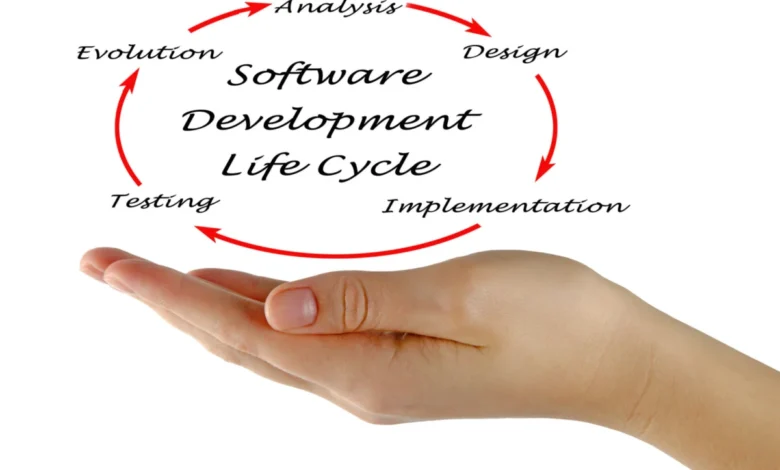
The venerable Software Development Life Cycle (SDLC), with its established phases of planning, analysis, design, coding, testing, deployment, and maintenance, has long served as the bedrock of software engineering. Its structured approach was meticulously designed to prioritize code safety, system stability, and comprehensive risk management from a project’s inception through to its final delivery. This methodical framework, evolving from the linear Waterfall model of the 1970s and later refined by iterative methodologies like Agile, Scrum, and DevOps, has been instrumental in delivering complex software at scale for decades. However, the advent and rapid proliferation of artificial intelligence are now exposing the inherent limitations of this traditional paradigm. Its characteristic rigidity, fixed assumptions, and built-in constraints, while once safeguarding quality, are increasingly becoming a liability, lengthening delivery pipelines, stifling engineers’ agility, and severely impeding organizations’ capacity to innovate at the breakneck speed that AI itself now enables. The digital economy, perpetually hungry for faster iterations and intelligent solutions, finds itself at a crossroads, where the proven stability of the past clashes with the unprecedented velocity of the future.
The SDLC’s Enduring Legacy and Emerging Bottlenecks
Historically, the SDLC’s structured approach has been indispensable. Each stage performs a critical function: planning defines scope and objectives, analysis gathers requirements, design architects the solution, coding builds it, testing validates functionality and quality, deployment releases it, and maintenance ensures ongoing operation and improvement. This systematic progression minimizes costly errors, ensures compliance with regulatory standards, and provides a clear roadmap for complex projects involving large, distributed teams. The emphasis on documentation, formal reviews, and phased gatekeeping instilled discipline and accountability.
However, this very discipline is now perceived as a bottleneck. The sequential nature of many SDLC implementations, even within ostensibly agile frameworks, can introduce delays. Requirements might change mid-cycle, necessitating costly rework. The human-intensive nature of coding, debugging, and testing, while fostering deep understanding and craftsmanship, is inherently slow. In an era where market windows are fleeting and user expectations demand constant innovation, the traditional SDLC’s pace is proving unsustainable. Businesses need to deploy new features, integrate cutting-edge technologies, and respond to competitive pressures with unprecedented speed. The average time to market for new software products, which could once span months or even years, is now compressed into weeks or even days, driven by the instant feedback loops and continuous delivery models prevalent in modern cloud-native environments.
The AI Imperative: Accelerating Development and Innovation
The current wave of AI, particularly in areas like large language models and generative AI, offers a powerful antidote to the SDLC’s inherent slowness. These technologies excel at tasks requiring pattern recognition, synthesis, rapid iteration, and the execution of repetitive, high-volume processes. This capability doesn’t merely offer incremental improvements; it promises a fundamental reshaping of how software is conceived, developed, and maintained. Industry reports suggest that AI-powered development tools can increase developer productivity by 20-40%, with some early adopters reporting even higher gains. The global market for AI in software development is projected to grow significantly, reaching tens of billions of dollars within the next few years, reflecting the widespread adoption of these transformative tools.
Rethinking the SDLC in the context of AI does not advocate for abandoning best practices entirely. Instead, it calls for an evolution, a strategic recalibration that leverages the complementary strengths of human engineers and artificial intelligence. The objective is to strike a delicate balance: maintaining the paramount importance of secure, stable, and customer-focused code while simultaneously embracing the rapid, iterative development cycles that define the modern enterprise. The ultimate prize is dramatically compressed delivery timelines without compromising on the non-negotiable pillars of stability, reliability, and user value.
A New Division of Labor: Human and AI Synergies
For decades, the SDLC has been the organizational blueprint for managing risk, coordinating diverse teams, and delivering high-quality software at scale. AI doesn’t render this structure obsolete, but it fundamentally redefines the mechanics of software construction. The true value proposition of AI lies in its ability to augment and empower often-overworked engineers, not to replace them. AI tools are uniquely proficient at tasks that demand synthesis, intricate pattern recognition across vast datasets, rapid prototyping and iteration, and the efficient execution of well-defined, simple tasks. This allows human engineers to ascend to higher-order cognitive functions.
The impact of AI will be most transformative across several key areas:
- Automating Boilerplate and Eliminating Maintenance Toil: One of the most significant drains on engineering time is the generation of foundational, repetitive code and the relentless cycle of maintenance. AI agents can effortlessly generate boilerplate code, scaffold new projects, and batch repetitive work such as dependency upgrades, security patches, and library updates across dozens, even hundreds, of repositories simultaneously. This frees engineers from tedious, undifferentiated tasks even before meaningful, innovative building has commenced. Studies indicate that developers spend up to 30-40% of their time on maintenance and boilerplate code, a significant portion of which AI can now offload.
- Enhanced Code Generation and Refactoring: Beyond boilerplate, AI-powered tools can suggest code completions, generate entire functions or modules based on natural language prompts, and refactor existing code for improved readability, performance, or adherence to coding standards. This accelerates the coding phase and helps maintain code quality.
- Intelligent Testing and Quality Assurance: AI can analyze codebases to identify potential test cases, generate unit tests, and even perform complex integration and end-to-end testing with minimal human intervention. Machine learning models can predict areas of code most likely to contain bugs, allowing human testers to focus their efforts more strategically. This drastically reduces the time and resources traditionally allocated to quality assurance.
- Automated Documentation and Specification Drafting: The often-neglected but critical task of documentation can be largely automated by AI. It can draft technical specifications, user manuals, API documentation, and even project tickets and status reports based on code changes and project activities. This ensures that documentation keeps pace with development, preventing knowledge silos and easing onboarding for new team members.
- Proactive Security Analysis and Vulnerability Remediation: AI tools are becoming increasingly sophisticated at identifying security vulnerabilities, potential exploits, and compliance issues within code in real-time. They can not only flag these issues but also suggest or even implement fixes, moving security "left" in the development pipeline and making it an inherent part of every stage.
While AI profoundly changes how engineers deliver code, it does not alter why. The fundamental drivers remain constant: customers, their evolving problems, and the tangible value engineers strive to deliver. The bedrock principles of good engineering—sound architecture, clear ownership, robust reliability, and meticulous attention to detail—do not diminish; if anything, they become more crucial. As AI democratizes development at an unprecedented pace, enabling a wider array of individuals to generate code, the potential scope for errors, security risks, and technical debt expands significantly. This amplification of potential pitfalls renders the human factor—judgment, oversight, and accountability—more critical than ever before.

The Human Advantage: Judgment, Context, and Empathy
As AI shoulders much of the repetitive and laborious "toil" involved in software development, the human role undergoes a profound and strategic transformation. Humans contribute capabilities that AI, in its current and foreseeable forms, cannot replicate: nuanced judgment, deep contextual understanding, and empathy for users and stakeholders. These are the skills that operate at the system level, transcending individual lines of code. Engineers will increasingly focus on:
- Strategic Problem Definition: Articulating complex business problems, translating them into technical requirements, and defining the scope and objectives of AI-augmented projects.
- Architectural Decision-Making: Designing scalable, resilient, and secure system architectures, making critical trade-offs between different technical approaches, and ensuring alignment with long-term business goals.
- Production Discipline and Governance: Establishing and enforcing best practices for deployment, monitoring, and incident response, ensuring that AI-generated code integrates seamlessly and operates reliably in production environments.
- Resource Allocation and Prioritization: Strategically deploying engineering resources, including AI tools, to maximize impact and address the most pressing customer needs.
- Ethical Oversight and Bias Mitigation: Critically evaluating AI-generated solutions for potential biases, ethical implications, and unintended consequences, ensuring fairness and responsible innovation.
In this evolving human + AI model, the most valuable engineers will be those who possess not only strong technical acumen but also exceptional oversight capabilities for AI tools. Their role shifts towards a more strategic function, capitalizing on their judgment, understanding of nuance, and deep business context. Critically, these human engineers remain ultimately accountable for outcomes. They are tasked with rigorously reviewing AI-generated code to assess its quality, identify potential security vulnerabilities, catch obscure edge cases that AI might miss, and ensure overall production reliability. This accountability is non-negotiable; AI is a tool, and its outputs, however sophisticated, still require human validation and ultimate ownership.
Navigating the Risks: AI-Generated Code Drift and Quality Control
The rapid adoption of AI in code generation introduces new complexities and risks that demand proactive mitigation. One significant concern is "AI-generated code drift." Without a robust standardization layer that embeds approved patterns, libraries, security requirements, and architectural guidelines directly into every AI agent session, code generated by different AI instances or by different developers using AI tools can diverge significantly. This divergence can lead to inconsistent code quality, introduce new forms of technical debt, and exacerbate security exposure, particularly as more developers integrate AI code generation into their workflows without adequate governance.
Moreover, the "black box" nature of some advanced AI models can make it challenging to understand the rationale behind generated code, complicating debugging and audit processes. Ensuring the explainability and interpretability of AI-generated code will be paramount for maintaining trust and control. Organizations must also develop sophisticated mechanisms for continuous security scanning and compliance checks, not just on human-written code, but especially on AI-generated components, to prevent the propagation of vulnerabilities at scale.
Towards a Hybrid Model: Rebuilding the SDLC from the Ground Up
Modern software delivery, in the age of AI, is far more than a simple handoff of manual work to automated systems. Organizations that approach AI as merely a bolt-on solution—automating existing processes without fundamentally rethinking the underlying development model—will likely achieve only incremental gains, at best. The true opportunity lies in a more radical and fundamental transformation: rebuilding the SDLC from the ground up, meticulously weaving humans and AI together into a cohesive, symbiotic framework. This new "gold standard" for software delivery will maximize the unique strengths of both human ingenuity and artificial intelligence.
This comprehensive reimagining requires:
- Integrated Toolchains: Seamless integration of AI capabilities directly into existing development environments, version control systems, and CI/CD pipelines.
- Intelligent Automation Layers: Development of custom AI agents and models trained on an organization’s specific codebase, architectural patterns, and security policies to ensure generated code aligns with internal standards.
- Upskilling and Reskilling Programs: Investing in training engineers to become proficient in overseeing, prompting, and validating AI outputs, shifting their focus from manual coding to strategic architectural design, review, and governance.
- Robust Governance Frameworks: Establishing clear policies for AI usage, code review protocols for AI-generated code, and mechanisms for tracking and auditing AI contributions to ensure quality, security, and compliance.
- Culture of Continuous Learning and Adaptation: Fostering an organizational culture that embraces experimentation with new AI tools, learns from successes and failures, and continuously adapts its SDLC processes.
Broader Business Implications and the Path Forward
The benefits of successfully implementing this human + AI model extend far beyond the engineering teams themselves, catalyzing a profound transformation across the entire business. With AI accelerating execution and handling repetitive tasks, while humans provide the indispensable judgment, contextual understanding, and accountability that technology cannot replicate, the entire enterprise gains unprecedented agility and efficiency.
Products will reach market faster, allowing businesses to seize fleeting opportunities and respond dynamically to market shifts. Systems will inherently be more reliable and secure, reducing operational overhead and enhancing customer trust. Crucially, precious engineering resources will be liberated from "toil" and re-focused on solving complex, high-value customer problems and driving true innovation. Organizations that proactively rebuild their SDLC around this intelligent human + AI collaboration model will not only move faster and more efficiently but will ultimately build superior, more resilient, and more innovative software, securing a decisive competitive advantage in the rapidly evolving digital landscape. This paradigm shift marks not just an evolution of the SDLC, but a fundamental redefinition of the future of software engineering.
Related posts: