The Software Development Life Cycle Redefined: Navigating the AI Era for a New Gold Standard in Delivery

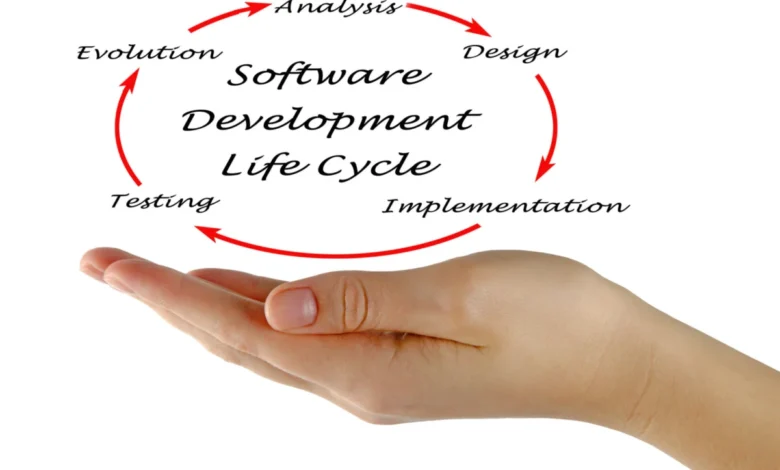
The traditional software development life cycle (SDLC), a bedrock of software engineering for decades, finds itself at a pivotal juncture, challenged by the relentless pace and transformative capabilities of artificial intelligence. Comprising well-defined stages such as planning, analysis, design, coding, testing, deployment, and maintenance, the SDLC was meticulously crafted to ensure the safety, stability, and robust risk management of code from its very inception to final delivery. This structured approach, born out of the need to manage complexity and ensure quality in a pre-internet, pre-agile era, prioritized predictability and control. However, its inherent rigidity, reliance on fixed assumptions, and built-in constraints are increasingly proving to be liabilities in an age where agility and rapid iteration are paramount. The traditional SDLC lengthens the software delivery pipeline, curtails engineers’ capacity for flexible thinking and building, and ultimately stifles organizations’ ability to operate at the unprecedented speed that AI now makes not only possible but imperative for competitive advantage.
The Evolution of Software Development Methodologies
To fully grasp the magnitude of AI’s impact, it is essential to contextualize the SDLC’s journey. Its roots trace back to the "waterfall" model, a sequential approach popularized in the 1970s for large-scale projects, particularly in government and defense. This linear progression, while offering clear documentation and control, notoriously struggled with accommodating changes late in the cycle. The limitations of waterfall paved the way for iterative methodologies in the 1990s and early 2000s, most notably Agile. Agile manifesto principles—individuals and interactions over processes and tools, working software over comprehensive documentation, customer collaboration over contract negotiation, and responding to change over following a plan—revolutionized software delivery, emphasizing adaptability and continuous feedback.
The subsequent rise of DevOps further integrated development and operations, fostering a culture of collaboration and automation aimed at shortening the systems development life cycle and providing continuous delivery with high software quality. Tools like continuous integration/continuous delivery (CI/CD) pipelines, infrastructure as code, and automated testing became standard practice, pushing the boundaries of efficiency. Yet, even with these advancements, human engineers remained the primary bottleneck in many processes, particularly in high-volume, repetitive tasks, and the inherent cognitive load of complex problem-solving. The current wave of generative AI, powered by large language models (LLMs), represents not just another iteration but a fundamental shift, offering capabilities that transcend previous automation efforts and demand a radical re-evaluation of how software is conceived, built, and maintained.
AI’s Gradual Infiltration: A Chronology
The integration of AI into the software development workflow has not been an overnight phenomenon but a gradual, accelerating process. Early applications of AI and machine learning (ML) primarily focused on analytical tasks:
- Early 2010s: Static code analysis tools began incorporating rudimentary ML to identify potential bugs and security vulnerabilities with greater accuracy than rule-based systems. Predictive analytics were used to estimate project timelines and resource allocation.
- Mid-2010s: Intelligent IDEs emerged, offering smarter code completion, refactoring suggestions, and context-aware assistance, laying the groundwork for more sophisticated AI aids. Tools for automated test case generation gained traction, reducing the manual effort in quality assurance.
- Late 2010s: AI began assisting in bug triaging and prioritization, learning from historical data to route issues to the most appropriate teams. Cloud-based ML services started offering APIs for integrating AI capabilities into applications, accelerating the development of intelligent features.
- Early 2020s: The advent of large language models (LLMs) like GPT-3 and subsequent iterations marked a turning point. Tools like GitHub Copilot demonstrated the unprecedented ability of AI to generate significant blocks of functional code from natural language prompts, write unit tests, explain complex code, and even refactor existing codebases. This shifted AI from primarily analytical and assistive roles to generative and proactive ones.
- Current State (2023-Present): AI agents are increasingly capable of orchestrating multi-step development tasks, from drafting specifications and tickets to performing dependency upgrades across numerous repositories simultaneously. The focus is now on integrating AI throughout the entire SDLC, not just in isolated pockets, leading towards autonomous agents capable of managing aspects of the development process with minimal human intervention.
- Future Outlook: The trajectory points towards self-healing systems, where AI identifies and resolves issues autonomously, and highly sophisticated AI assistants that can engage in complex architectural discussions, evaluate trade-offs, and even learn from production environments to continuously optimize software performance and reliability.
The New Division of Labor: Augmenting Human Ingenuity
Rethinking the SDLC in the AI era does not equate to abandoning established best practices. Instead, it demands their evolution to reflect the unique strengths of both humans and AI. The goal is to strike a delicate balance between the imperative for secure, stable code and the modern enterprise’s need for rapid, iterative development. This synergy promises compressed delivery timelines without compromising stability or customer focus. The value of AI lies in its capacity to augment often-overworked engineers, not to replace them. AI tools excel at synthesis, pattern recognition, rapid iteration, and the execution of high-volume, low-judgment tasks, thereby freeing human talent for higher-order cognitive work.
Five key areas where AI’s impact is proving most transformative include:
- Writing Boilerplate and Handling Maintenance Toil: AI can generate foundational code, API scaffolding, CRUD operations, and configuration files with remarkable speed. It also excels at batching repetitive maintenance work, such as dependency upgrades, security patches, and minor bug fixes across dozens or even hundreds of repositories simultaneously. This liberates engineers from mundane tasks before meaningful building has even commenced, allowing them to focus on unique problem-solving and innovation.
- Automated Testing and Quality Assurance: AI can generate comprehensive test cases, identify edge cases that humans might overlook, and even write tests based on design specifications. Furthermore, AI-powered tools can analyze code changes in real-time, predict potential failure points, and suggest remediations, dramatically accelerating the QA process and improving test coverage. Some advanced systems can even self-heal tests that break due to minor code changes.
- Intelligent Debugging and Error Resolution: AI can analyze vast logs, telemetry data, and error reports to pinpoint the root cause of issues, often suggesting potential fixes or relevant documentation. This capability significantly reduces the time spent on debugging, a notoriously time-consuming aspect of software development.
- Smart Documentation and Knowledge Management: AI can automatically generate and update technical documentation, user manuals, and code comments. It can also act as an intelligent knowledge base, answering developer queries, explaining complex code segments, and summarizing project progress, ensuring that critical information is consistently accessible and up-to-date.
- Enhanced Security and Compliance: AI can perform continuous security scans, identify vulnerabilities and compliance deviations with greater accuracy and speed than traditional methods. It can suggest specific code changes to remediate issues, enforce coding standards, and even learn from past security incidents to proactively prevent future breaches.
Supporting Data and Industry Perspectives
The shift towards an AI-augmented SDLC is not merely theoretical; it is manifesting in tangible productivity gains and market trends. Reports from leading industry analysts, such as McKinsey and Gartner, suggest that AI-powered development tools can boost developer productivity by 20-45% for specific tasks, with some estimates for boilerplate code generation reaching upwards of 70%. A recent GitHub survey indicated that developers using AI coding assistants complete tasks 55% faster on average.

The market for AI in software development is experiencing exponential growth. Projections indicate that the global AI in software development market, valued at approximately $1.5 billion in 2022, is expected to reach over $10 billion by 2030, driven by widespread enterprise adoption. Venture capital funding for startups in this space has surged, reflecting strong investor confidence in the transformative potential of these technologies.
Chief Technology Officers (CTOs) and VPs of Engineering are increasingly vocal about the strategic imperative of integrating AI. "AI isn’t just a tool; it’s a paradigm shift," states a prominent CTO from a leading SaaS provider (inferred statement). "We’re not just looking for incremental gains; we’re reimagining our entire engineering workflow to leverage AI for innovation and speed. This means investing heavily in upskilling our teams and developing robust governance frameworks for AI-generated code." Industry analysts echo this sentiment, highlighting that organizations failing to embrace AI in their SDLC risk falling behind competitors who can bring products to market faster and more cost-effectively.
Broader Impact and Implications
The implications of this redefinition extend far beyond the engineering department, impacting the entire business ecosystem.
- Economic Impact: Faster time-to-market for new products and features directly translates to increased revenue opportunities and stronger competitive positioning. Reduced development costs through automation can improve profit margins, allowing for greater investment in R&D or expansion. The overall innovation cycle is accelerated, driving economic growth across sectors.
- Job Market Transformation: While the fear of AI replacing engineers persists, the prevailing industry consensus is that AI will transform roles rather than eliminate them. Demand for "AI-fluent engineers" capable of overseeing, orchestrating, and prompt-engineering AI tools will surge. Roles will pivot towards system architecture, complex problem definition, strategic trade-off evaluation, security auditing of AI-generated code, and ensuring production reliability. The future engineer will be a skilled orchestrator of AI tools, a critical thinker, and a master of judgment and context.
- Security and Governance Challenges: The rapid proliferation of AI-generated code introduces new vectors for risk.
- Code Drift: Without a robust standardization layer that embeds approved patterns, libraries, and security requirements into every AI agent session, AI-generated code can diverge from quality and compliance standards across teams. This introduces new forms of technical debt, increases maintenance overhead, and significantly amplifies security exposure.
- Supply Chain Risks: AI might inadvertently pull in insecure or vulnerable open-source dependencies or generate code that subtly introduces weaknesses. Ensuring the provenance and security of AI-generated components becomes paramount.
- Bias in AI-generated Code: If the training data for AI models contains biases, the generated code might perpetuate or even amplify these biases, leading to unfair or discriminatory outcomes in software applications.
- Intellectual Property (IP): Questions surrounding the ownership and originality of AI-generated code, especially when trained on proprietary data or publicly available code, remain complex and are still being navigated legally.
- Accountability: When AI makes a mistake, who is ultimately responsible? This necessitates clear lines of accountability, placing the human engineer in the critical role of oversight and final approval.
- Ethical Considerations: Ensuring fairness, transparency, and accountability in AI-driven development is crucial. This involves auditing AI models for bias, ensuring explainability of AI-generated decisions, and establishing ethical guidelines for AI’s use in sensitive applications.
- Cultural Shift: The shift from individual coding heroics to collaborative human-AI orchestration requires a significant cultural transformation within engineering teams. Embracing AI means fostering a mindset of continuous learning, adaptation, and trust in AI as a powerful co-pilot, while simultaneously reinforcing the irreplaceable value of human judgment and critical thinking.
The Human Advantage: The Irreplaceable Core
While AI handles much of the rote and repetitive "toil" involved in software development, the human role undergoes a profound and strategic elevation. Humans bring capabilities that AI, in its current and foreseeable forms, cannot replicate: judgment, contextual understanding, and empathy. These are skills that matter profoundly at the system level: breaking down organizational silos, making nuanced architectural decisions that balance technical debt with future scalability, ensuring rigorous production discipline, and strategically deploying engineering resources to achieve business objectives.
In practice, this means an engineer’s day increasingly shifts from writing and debugging lines of code to defining complex problems, evaluating intricate trade-offs between competing solutions, and making critical calls that demand real-world experience, deep domain knowledge, and acute business context. The most valuable engineers in this human + AI model will be those who possess exceptional oversight capabilities over AI tools. They will operate in a strategic capacity, capitalizing on their judgment and understanding of nuance. Crucially, they remain fully accountable for outcomes, meticulously reviewing AI-generated code to assess its quality, identify potential security vulnerabilities, catch unforeseen edge cases, and ultimately ensure production reliability and adherence to customer needs. These "AI whisperers" or "AI orchestrators" will be the vanguard of this new era.
Forging a New Gold Standard for Software Delivery
It is imperative to understand that modern software delivery is not merely a handoff of manual work to AI, nor is it about treating AI as a "bolt-on" addition to existing processes. Organizations that adopt such an approach will likely find themselves disappointed, achieving at best incremental gains. The real opportunity, the path to truly unlocking AI’s transformative potential, lies in something far more fundamental: rebuilding the SDLC from the ground up. This involves a deliberate and integrated weaving of human intelligence and AI capabilities, creating a new gold standard that maximizes the respective strengths of both.
Rebuilding the SDLC from the ground up entails:
- Integrated AI at Every Stage: AI tools are not isolated but seamlessly embedded into every phase, from requirements gathering and design to coding, testing, deployment, and ongoing maintenance.
- Continuous Feedback Loops: AI learns from human corrections and feedback, continuously improving its suggestions and code generation. Humans, in turn, learn how to better leverage AI.
- New Metrics for Success: Beyond traditional metrics like lines of code or bug counts, new performance indicators will emerge, such as AI-assisted bug resolution rates, time saved on boilerplate generation, and the speed of feature delivery with AI integration.
- Comprehensive Training and Upskilling: Organizations must invest heavily in training programs to equip engineers with the skills needed to effectively interact with, manage, and oversee AI tools, fostering a culture of continuous learning.
The benefits of successfully implementing this human + AI model will reverberate throughout the entire enterprise. As humans and AI work together – with AI accelerating execution and automating repetitive tasks, while humans provide the irreplaceable judgment, contextual understanding, and accountability – the entire business transforms. Products will reach the market faster, systems will be inherently more reliable and secure, and engineering resources will be strategically focused on solving the most complex and valuable customer problems. The organizations that proactively embrace and rebuild around this synergistic human + AI model will not only achieve unparalleled speed in delivery but will also fundamentally build better, more resilient, and more innovative software solutions for the future.