Tech Visionary Jeff Atwood and Democracy Advocate Colonel Alexander Vindman Convene at Cooper Union to Chart a Path Forward for the American Dream

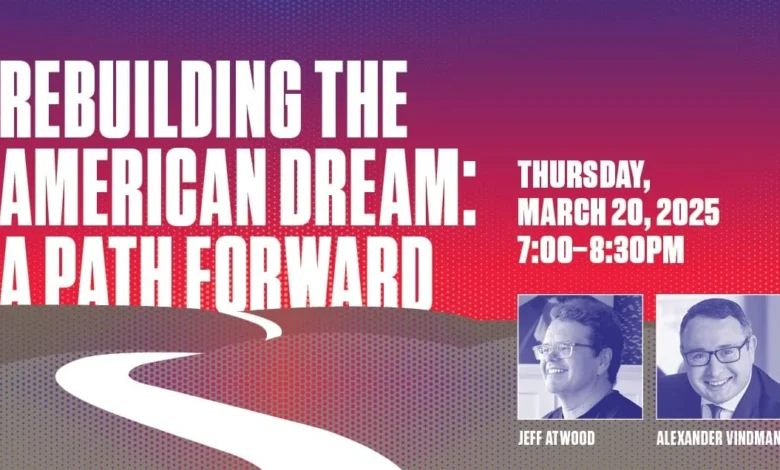
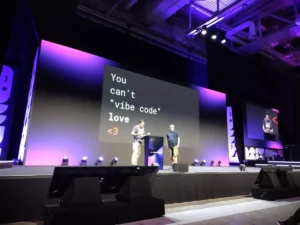
New York, NY – The historic Cooper Union Great Hall recently hosted a profound dialogue between technology entrepreneur Jeff Atwood and former National Security Council official Colonel Alexander Vindman, focusing on the critical theme of "Rebuilding The American Dream: A Path Forward." The event, which took place fourteen days after its initial announcement, served as a potent forum to dissect the contemporary challenges facing American society and to explore actionable strategies for fostering democracy, strengthening community bonds, and enhancing economic mobility for all citizens. This convergence of a prominent figure from the digital realm and a decorated military officer known for his commitment to civic duty underscored a shared urgency to address fundamental questions about the nation’s future.
A Historic Venue for Critical Discourse
The Cooper Union Great Hall, renowned for its legacy as a platform for impactful public discourse, provided a fitting backdrop for this significant conversation. Since its opening in 1859, the hall has been a crucible for pivotal moments in American history, hosting luminaries such as Abraham Lincoln, Susan B. Anthony, Frederick Douglass, and various presidents and civil rights leaders. Its very architecture and history embody the ideals of public education, open debate, and the pursuit of a more just society. For Atwood and Vindman to choose this specific venue for their discussion on the American Dream emphasized the historical weight and the enduring relevance of the challenges they sought to address. The selection of such an iconic space signaled a deliberate intention to anchor the discussion in a tradition of civic engagement and to frame it within the broader narrative of American progress and self-reflection.
The Genesis of the Dialogue: "Stay Gold"
The impetus for this joint appearance stems in part from Jeff Atwood’s earlier reflections on what it means to "stay gold," a concept he explored in a previous blog post. This philosophy, rooted in the idea of preserving the most valuable aspects of oneself, one’s community, and the foundational principles of the American Dream, is not a call for passive preservation. Instead, Atwood articulates it as an active, demanding process requiring diligent effort, decisive action, and often difficult conversations. It necessitates a candid confrontation with past realities, present circumstances, and future aspirations. The Cooper Union event was positioned as a direct extension of this philosophy, a concrete step towards translating introspective thought into tangible public engagement aimed at structural change. The unstated, yet deeply felt, question underlying the "Stay Gold" premise is how to operationalize these ideals in a complex, rapidly evolving society.
Colonel Alexander Vindman: A Life Dedicated to Democratic Ideals
Colonel Alexander Vindman’s participation brought the weighty perspective of a career dedicated to national service and the unwavering defense of democratic principles. Born in the Soviet Union and immigrating to the United States as a child, Vindman’s personal journey from Brooklyn to the highest echelons of military and diplomatic service embodies a quintessential American success story. His 21-year tenure in the U.S. Army was marked by exceptional distinction, including earning a Purple Heart for injuries sustained during combat in Iraq. He rose to the influential position of Director for European Affairs on the National Security Council, where his expertise and commitment were instrumental in shaping foreign policy.
Vindman’s public profile dramatically intensified in late 2019 when he testified before the U.S. Congress during the impeachment inquiry of then-President Donald Trump. His testimony, delivered under oath, detailed concerns about the President’s conduct regarding Ukraine, directly contradicting official narratives and upholding what he believed to be his civic duty to report potential wrongdoing. This decision, while praised by many as an act of profound integrity and patriotism, ultimately led to the termination of his military career. His willingness to prioritize constitutional values over personal advancement resonated deeply with the "stay gold" ethos, providing a powerful real-world example of the active work required to defend democratic ideals. His lived experience offered a unique vantage point on the fragility and resilience of democratic institutions, a perspective forged in both foreign policy arenas and the crucible of domestic political controversy.
Jeff Atwood: Architect of Digital Communities
Complementing Colonel Vindman’s experience, Jeff Atwood contributed the insights of a pioneering figure in the digital landscape. As the co-founder of Stack Overflow and the founder of Discourse, Atwood has spent decades shaping how individuals interact, learn, and collaborate online. Stack Overflow, launched in 2008, revolutionized technical knowledge sharing, becoming an indispensable resource for millions of programmers worldwide. Its success lies in its community-driven model, where users contribute, moderate, and curate content, establishing a self-governing system of peer validation and collective knowledge building. Discourse, a modern open-source forum software, further extends Atwood’s vision for constructive online communities, emphasizing robust moderation tools, clear communication hierarchies, and features designed to foster meaningful discussions rather than divisive debates.
Atwood’s work in building these platforms has provided him with a unique laboratory for observing human behavior within structured digital environments. He has grappled firsthand with the challenges of scale, ensuring fairness, establishing clear expectations, and defining strong boundaries – principles he argues are equally applicable to governing a nation as they are to managing an online forum. His perspective illuminated how the mechanics of effective digital community governance, from fostering participation to mitigating conflict, offer transferable lessons for the broader societal project of building a functional, inclusive democracy. The unexpected relevance of his work in online systems to the future of democracy highlights the pervasive influence of digital spaces on contemporary civic life.
The American Dream in 2025: A Question Mark
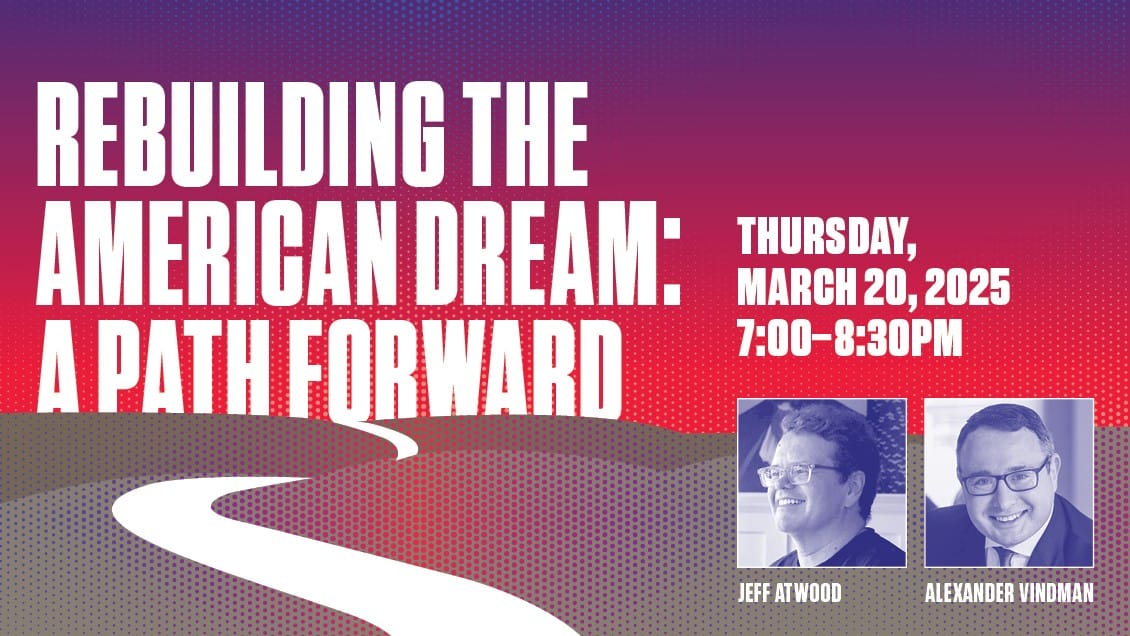
The core of the discussion revolved around the contemporary state of the American Dream. Historically, this dream has been defined by the promise that hard work, coupled with fairness and opportunity, can lead to upward mobility and a better life. However, as Atwood articulated, in the year 2025, this promise feels less like an assertion and more like a profound question: "How can we build on our dream so that it works for everyone?" This query acknowledges a growing sense of disillusionment and inequality, where the pathways to success appear increasingly uneven for different segments of the population.
Data from various sources underscores this concern. Recent studies by organizations like the Pew Research Center and the Federal Reserve have indicated a stagnation in intergenerational economic mobility for many Americans, with wealth disparities widening and access to key resources like quality education and healthcare becoming increasingly stratified. The economic shocks of the past few decades, coupled with technological disruption and global competition, have contributed to a sense that the traditional ladders of opportunity are less accessible than they once were. The talk aimed to move beyond mere lamentation, seeking concrete pathways to reinvigorate the dream for a diverse citizenry.
Exploring Solutions: Democracy, Community, and Economic Mobility
Atwood and Vindman collaboratively explored these challenges through the distinct lenses of democracy, community, and economic mobility. Their diverse backgrounds, while seemingly disparate, converged on a shared conviction: that every individual’s American Dream is worthy of vigorous defense and active cultivation.
- Democracy: The discussion likely delved into the health of democratic institutions, the importance of an informed citizenry, and the mechanisms necessary to protect against misinformation and political polarization. Colonel Vindman’s firsthand experience with threats to democratic norms provided a stark illustration of the stakes involved. The need for robust civic education, transparent governance, and the active participation of citizens were undoubtedly central themes.
- Community: Jeff Atwood’s insights into building self-governing digital communities offered a unique parallel to the challenges of fostering cohesion in physical communities. The principles of clear expectations, fair systems, strong boundaries, and a shared sense of purpose, which are vital for successful online platforms, were posited as equally crucial for healthy local and national communities. The discussion likely touched on bridging divides, promoting constructive discourse, and creating "artifacts for the common good," analogous to public parks that benefit everyone.
- Economic Mobility: This segment grappled with the complex issue of creating long-term structural change that expands opportunity. The speakers moved beyond the limitations of individual generosity, advocating for systemic solutions that embed security, dignity, and possibility into the very fabric of society. This would entail examining policies related to education, labor markets, social safety nets, and equitable access to capital, all aimed at dismantling barriers and building pathways for sustained upward mobility across socioeconomic strata.
Moving Beyond Individual Generosity to Systemic Change
A central tenet of their discussion was the imperative to transcend individual acts of charity or generosity and instead focus on establishing resilient systems that guarantee security, dignity, and possibility for all. This shift in focus implies a recognition that while individual goodwill is commendable, it cannot adequately address deeply entrenched societal inequalities. Systemic change, by contrast, involves re-evaluating and redesigning policies, institutions, and economic structures to create inherent fairness and broad-based opportunity. This might include reforms in education funding, healthcare access, criminal justice, and labor laws, all with the goal of leveling the playing field and ensuring that the promise of the American Dream is not contingent on luck or personal connections but is accessible through effort and merit.
The complexity of this undertaking was acknowledged, yet the speakers emphasized that focused efforts in particular areas could yield foundational changes for the nation’s future. The goal was not to find "easy answers," but to initiate an "honest, unfiltered conversation about how we move forward, with specifics." This commitment to concrete, actionable steps distinguished their dialogue from mere abstract philosophical debate.
The Synergy of Disparate Expertise
The power of the Atwood-Vindman collaboration lay in the synergy of their seemingly disparate expertise. Colonel Vindman, as an embodiment of American ideals and a defender of constitutional principles, brought a deep understanding of the real-world pressures on democracy and the courage required for civic duty. His perspective was grounded in the tangible consequences of political decisions and the personal sacrifices demanded by integrity. Jeff Atwood, on the other hand, offered a visionary understanding of how systems can be designed to foster participation, manage conflict, and build shared resources in the digital age. His experience in creating scalable, self-governing communities provided an innovative framework for thinking about civic engagement and democratic infrastructure in the 21st century.
Their joint presentation highlighted the unexpected and growing interconnectedness between the digital sphere and the health of national democracies. The principles Atwood applies to online forums – clarity, fairness, boundaries, and shared purpose – resonated with the foundational requirements for a functioning democratic society. The implication was clear: the lessons learned from building successful online ecosystems could offer valuable blueprints for strengthening civic life and democratic processes in the physical world.
Broader Impact and Implications
The event, streamed live on the Cooper Union Great Hall YouTube channel, extended its reach far beyond the physical attendees, allowing for broader public engagement with these critical issues. This accessibility is itself a testament to the principles of open discourse and democratic participation that the speakers championed. The YouTube recording serves as a lasting resource, inviting continued reflection and discussion on the proposed paths forward.
The collaboration between Atwood and Vindman represents a significant trend: the increasing involvement of figures from diverse professional backgrounds in national conversations typically dominated by politicians or traditional policy experts. This cross-pollination of ideas, bringing together technological insight with political and military acumen, offers fresh perspectives on entrenched problems. It underscores the belief that addressing complex societal challenges requires a collective effort, transcending professional silos and ideological divides. The event’s underlying message was an appeal to collective action: "Imagine what we can do if Alex and I work together. Imagine what we could do if we all worked together." This call to unity and collaborative problem-solving resonated as a powerful closing statement, urging citizens to actively participate in shaping the next chapter of the American Dream. The Cooper Union dialogue stands as a compelling example of how thoughtful, interdisciplinary conversations can illuminate paths toward a more secure, dignified, and promising future for all Americans.