Mastering Multi-Agent System Reliability Through Dual-Layer Observability and Autonomous Infrastructure Diagnostics


The rapid proliferation of multi-agent systems (MAS) in enterprise environments has introduced a new paradigm of operational complexity that legacy monitoring solutions are fundamentally ill-equipped to handle. Unlike traditional monolithic applications where health can be measured by binary metrics like 200 vs. 500 HTTP status codes, multi-agent systems often experience "silent failures." In these scenarios, an agent may successfully execute its code and invoke foundation models (FMs) without returning an error, yet fail entirely to achieve the user’s intended outcome. This disconnect between infrastructure health and agent efficacy has prompted a shift toward a dual-layered monitoring architecture that combines continuous quality evaluation with autonomous infrastructure investigation.

The Breakdown of Traditional Monitoring in the Age of AI
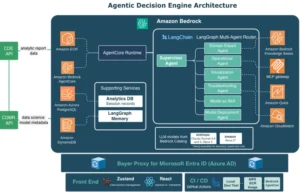
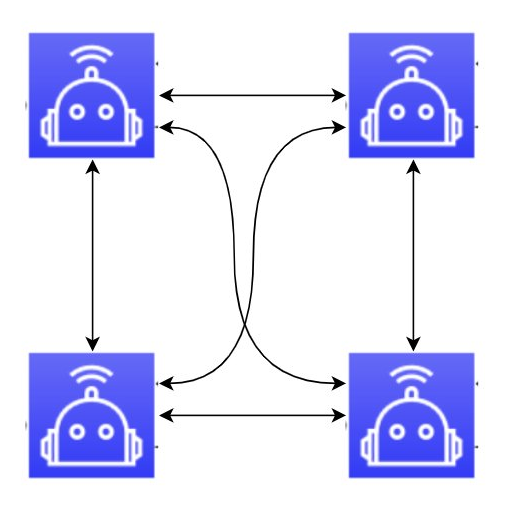
Traditional monitoring infrastructure is built on the assumption of a predictable execution graph. In a standard microservices environment, if a service fails, the system typically generates an exception or a timeout that can be traced back to a specific node. However, multi-agent systems—particularly those utilizing the "Swarm" pattern—operate dynamically. A single user request may trigger a supervisor agent that delegates sub-tasks to multiple specialized peers. Because these handoffs occur based on runtime decisions rather than a static, predefined graph, tracing a failure across service boundaries becomes an exhaustive manual task.
Industry analysts have observed that in production-grade airline reservation systems—which require complex, multi-turn coordination—infrastructure metrics often remain "green" even when the agent is malfunctioning. For example, if an agent’s execution role lacks the necessary AWS Identity and Access Management (IAM) permissions to invoke a foundation model, the system might simply return an empty response rather than a critical system error. Consequently, organizations have been forced to adopt new frameworks, such as Amazon Bedrock AgentCore, to bridge the gap between "system uptime" and "agent helpfulness."
Chronology of the Shift: From Static Logs to Behavioral Analysis
The evolution of AI observability has occurred in three distinct phases. Initially, teams relied on basic log aggregation, manually sifting through JSON blobs to debug model outputs. As agent complexity increased, this proved unsustainable, leading to the second phase: distributed tracing, which allowed developers to see the path of a request across services.
The current, third phase—the transition to intelligent, dual-layer monitoring—began in mid-2026. This period saw the integration of automated quality evaluators and autonomous DevOps agents. By leveraging Amazon Bedrock AgentCore Evaluations, development teams can now implement continuous scoring of live interactions. This allows for the identification of "silent issues" as they emerge, rather than after they manifest in customer support tickets or service-level objective (SLO) breaches.

Quantifying Quality: The Role of AgentCore Evaluations
At the heart of the new monitoring paradigm is the transition from intuition-based debugging to quantitative quality metrics. Amazon Bedrock AgentCore provides a suite of 16 built-in evaluators designed to assess performance across three primary domains: session success, individual trace coherence, and tool-selection accuracy.
Data collected from production environments indicates that the most critical metrics for business impact are Helpfulness, Correctness, and Goal Success Rate. Unlike traditional performance counters, these metrics are derived from LLM-as-a-Judge evaluators that provide detailed reasoning for their scores. For instance, if an agent provides a factually correct answer that is nonetheless unhelpful to the user, the "Helpfulness" evaluator will flag the discrepancy. This level of granularity allows teams to perform "pattern analysis," where the system automatically aggregates low-scoring sessions to identify common failure modes, such as an agent’s tendency to misuse a specific tool during multi-city flight bookings.

Autonomous Infrastructure Investigation: The AWS DevOps Agent
While AgentCore Evaluations addresses the "quality" side of the equation, the AWS DevOps Agent represents a significant leap forward in "infrastructure" health. In complex multi-agent architectures, infrastructure failures are often obscured by the agent’s logic. An incident that previously required a "war room" of engineers to resolve—such as tracking a silent failure to a misconfigured IAM role—is now handled autonomously.
When an anomaly is detected, the AWS DevOps Agent initiates an automated forensic investigation. It constructs a topology graph of the affected resources, pulls relevant Amazon CloudWatch logs, and correlates errors across the entire invocation chain. In a recent case study involving an airline reservation system, the DevOps Agent successfully traced a series of "empty responses" back to a missing bedrock:InvokeModel permission. By visualizing the failure path—from user request to the specific API denial at the IAM layer—the system provided a remediation roadmap in minutes rather than hours.

Implications for Enterprise AI Deployment
The adoption of this dual-monitoring strategy has profound implications for businesses integrating AI into their core operations. First, it reduces the "Mean Time to Recovery" (MTTR) by automating the initial stages of root-cause analysis. Second, it shifts the focus of developers from maintaining infrastructure to refining agent prompts and tool definitions, essentially turning production data into a feedback loop for continuous improvement.
However, experts caution that this level of automation requires a robust foundation of "Responsible AI" safeguards. While asynchronous evaluation is excellent for identifying long-term quality trends, it cannot prevent immediate risks. Consequently, organizations are increasingly layering these tools with Amazon Bedrock Guardrails, which operate synchronously to filter harmful content, mask personally identifiable information (PII), and enforce topic boundaries before a response is delivered to the user.

Comparative Analysis of Monitoring Layers
| Metric Category | Primary Tool | Objective |
|---|---|---|
| Quality/Behavior | AgentCore Evaluations | Measures "Is the agent helpful and correct?" |
| Infrastructure/System | AWS DevOps Agent | Measures "Is the underlying system healthy?" |
| Safety/Compliance | Bedrock Guardrails | Measures "Is the output safe and compliant?" |
This trifecta of monitoring—Quality, Infrastructure, and Safety—forms the backbone of mature AI operations. By separating these concerns, organizations can maintain the flexibility of the Swarm pattern while adhering to the rigorous reliability standards required in regulated industries like travel, finance, and healthcare.
Future Outlook: The Self-Healing Agent
As these systems continue to mature, the industry is moving toward a future of "self-healing" agents. The current capability to identify a missing IAM permission and provide a remediation step is merely the precursor to agents that can autonomously propose and validate infrastructure changes through CI/CD pipelines.

For technical teams, the message is clear: the era of monitoring agents through simple infrastructure health checks is over. Success in the current landscape depends on the ability to interpret the intent behind a response and correlate it with the underlying system state. Organizations that fail to implement this dual-layer visibility will find themselves increasingly unable to diagnose the complex, unpredictable failure modes inherent in autonomous multi-agent swarms.
The integration of these technologies into a unified dashboard, as demonstrated by current AWS sample implementations, highlights the necessity of centralized observability. By bringing together operational logs, distributed traces, and AI-generated quality scores, developers can finally view their systems not as a collection of disjointed services, but as a cohesive, intelligent agentic ecosystem. As the complexity of these models continues to scale, the role of autonomous diagnostic tools will shift from an optional enhancement to a mandatory component of the enterprise software development lifecycle.