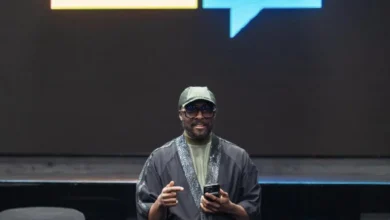
Keith Ferrazzi on why counting AI tool users is a waste of time and how to turn an AI-first intern into your most critical strategic asset by 2027


The modern corporate landscape is currently defined by a profound paradox: while global businesses have spent the last two years aggressively investing in artificial intelligence, actual bottom-line returns remain stubbornly elusive. For many executives, the promise of AI has translated into significant capital expenditure on software tokens and infrastructure, yet the anticipated transformation in productivity has failed to materialize at scale. Keith Ferrazzi, the renowned author of Never Eat Alone and his most recent work, Never Lead Alone: 10 Shifts from Leadership to Teamship, argues that the failure lies not in the technology itself, but in a fundamental misalignment of metrics and organizational structure.
As the opening keynote speaker for the upcoming Leadership Conference in San Antonio, scheduled for November 4–6, Ferrazzi is preparing to present a blueprint for disciplined execution in an era of rapid technological disruption. The conference, which will also feature insights from former Senator Phil Gramm on economic navigation and former Home Depot and Chrysler leader Bob Nardelli, is specifically designed to address the challenges of speed, alignment, and accountability in complex organizations.
The Metrics Trap: Beyond Token Usage
For many CEOs, the primary metric for AI success has been adoption rates—specifically, how many employees are logging into LLM-based tools. Ferrazzi characterizes this approach as a vanity metric that satisfies the requirements of AI providers while failing to provide measurable value to the enterprise.
Data from recent industry surveys suggests that while nearly 70% of Fortune 500 companies have deployed generative AI tools, fewer than 20% report a direct, quantifiable impact on operating margins. The diagnostic provided by Ferrazzi suggests that organizations are conflating three distinct tiers of AI integration. The first tier, which is often the sole focus of current management, is simple productivity improvement. The second tier, which Ferrazzi identifies as the primary driver of ROI, is zero-based workflow redesign. The third tier involves the re-engineering of the core product or service itself.
By focusing exclusively on user counts, companies are essentially subsidizing token consumption without requiring the fundamental process innovation necessary to justify the cost.
A System for Competency: The Belt Hierarchy
To move beyond superficial adoption, Ferrazzi proposes an internal certification framework akin to martial arts rankings. In this model, employees are categorized as yellow, brown, or black belts based on their ability to deliver tangible results.
A "yellow belt" is an employee who expresses interest and begins experimenting with AI tools. However, the progression to "brown belt" requires a demonstrated case study—a five-minute video or town hall presentation—where the employee articulates a specific application, the resulting productivity or financial gain, and the hurdles they overcame. "Black belts," the highest tier, are individuals who have not only achieved ROI but have fundamentally re-engineered their individual workflows and taken on the role of educators for their peers.
This peer-to-peer teaching model decentralizes the burden of training from the IT or HR departments, embedding expertise within the daily operations of the business. Ferrazzi notes that after a reasonable grace period of six to twelve months, employees who fail to engage with this transformation process may no longer be viable contributors to a modern, AI-augmented organization.
The Shift to Teamship: Breaking the Org Chart
A significant obstacle to AI implementation is the rigid adherence to traditional organizational charts. Ferrazzi contends that transformative work by nature does not respect departmental silos. Whether the initiative is a supply chain overhaul or a go-to-market strategy shift, the cross-functional nature of the task requires a new form of collaboration: "Teamship."
The concept of Teamship demands that leaders stop organizing exclusively by function and start organizing by critical initiative. When a CEO identifies the "four big rocks"—the primary strategic priorities for the next 18 months—they must assemble teams that cross departmental lines. These teams require a new social contract, one that prioritizes candor, egoless contribution, and a shared responsibility for outcomes over individual functional KPIs.
In practice, this means moving away from the traditional, meeting-heavy collaboration style that plagues large corporations. Drawing inspiration from AI-native startups, Ferrazzi advocates for asynchronous collaboration. By ensuring all team members have access to the necessary information and have documented their perspectives prior to meeting, organizations can drastically reduce cycle times, allowing them to make critical decisions in single, focused sessions rather than through weeks of bureaucratic back-channeling.
The Role of the AI-Native Intern
A striking observation from current executive circles is the emergence of a new "secret weapon": the AI-native intern or junior hire. These individuals, often coming from competitive academic environments or Y Combinator-backed ecosystems, possess an intuitive grasp of agentic workflows that many seasoned executives lack.
By embedding these individuals into "digital services groups" that swarm around business unit leaders, companies are seeing breakthroughs in areas previously thought to be static. For instance, in customer service, these teams are leveraging agents to improve Net Promoter Scores while simultaneously reducing the headcount requirement for standard inquiries by as much as 80%. These "swashbuckling" young employees are forcing a shift in how established companies think about problem-solving, moving from incremental optimization to radical redesign.
Implementation: The CEO’s Mandate
For mid-market and large-scale enterprises alike, the role of the CEO is shifting from that of a high-level overseer to a direct driver of transformation. Ferrazzi advises that leaders should not attempt to roll out AI-led changes company-wide simultaneously. Instead, they should apply their executive focus to a single, high-stakes area—such as a go-to-market transformation—and hold that specific, cross-functional team accountable to aggressive, multi-factor growth targets.
By mandating that these teams meet monthly for agile "stress tests," the CEO can identify systemic bottlenecks and remove them in real-time. This level of engagement ensures that the transformation is not an abstract directive but a lived reality of the organization.
Broader Implications for 2027
The implications of this shift are clear: by 2027, the gap between companies that treat AI as a software purchase and those that treat it as a catalyst for total organizational redesign will likely be insurmountable.
Data from the World Economic Forum and various consulting firms support the narrative that we are in a "trough of disillusionment" regarding AI. However, the companies that successfully emerge from this period are those that have stopped measuring software usage and started measuring workflow velocity.
The upcoming Leadership Conference in San Antonio serves as a focal point for these discussions. For the 500+ CEOs expected to attend, the objective is not merely to learn about new tools, but to adopt the mindset shift necessary to lead through what promises to be one of the most volatile and innovative periods in modern business history. As the market matures, the ability to orchestrate human and artificial intelligence into a cohesive, high-speed unit will define the competitive landscape for the remainder of the decade.