Net-a-Porter Stages a Strategic Comeback Through Hyper-Personalized Customer Engagement

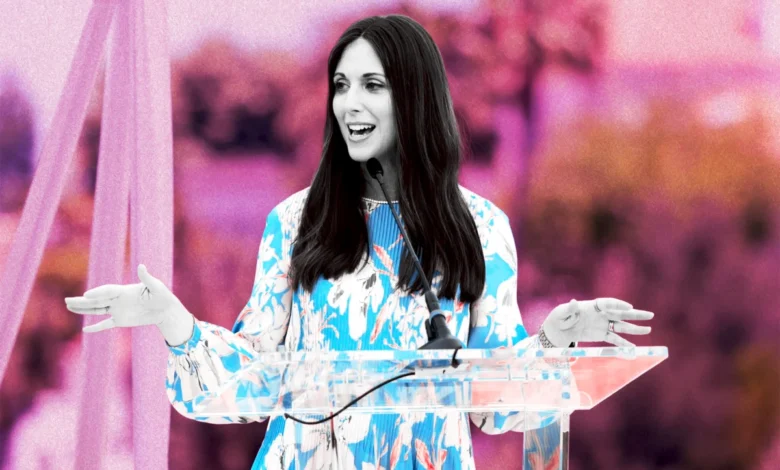
Luxury e-commerce giant Net-a-Porter is currently undergoing a significant operational and brand-centric transformation, utilizing a strategy rooted in direct, unfiltered consumer feedback to reclaim its position in the competitive high-end retail sector. Under the leadership of Managing Director Heather Kaminetsky, who assumed her role in April 2025, the company has pivoted from a traditional retail model to a highly responsive, service-oriented ecosystem. This shift marks a departure from the passive customer relationship management common in e-commerce, replacing it with a proactive, dialogue-driven approach that addresses granular pain points ranging from logistics to product availability.
The impetus for this pivot follows a period of stagnation in the luxury online space, where generic digital storefronts struggled to compete with the experiential, high-touch nature of physical boutique shopping. Kaminetsky’s strategy acknowledges a fundamental reality of the luxury market: a small fraction of the customer base frequently accounts for a disproportionate amount of revenue. By focusing on the "top 4%"—the elite cohort that drives nearly half of the company’s total sales—Kaminetsky has successfully re-engaged the brand’s most valuable stakeholders.
A Chronology of the Operational Turnaround
The roots of this initiative stretch back to the months following Kaminetsky’s appointment. A veteran of the industry with a pedigree that includes leadership roles at Mytheresa and M.Gemi, as well as a previous tenure at Net-a-Porter that began in 2013, Kaminetsky was intimately familiar with the company’s structural strengths and historical weaknesses.
Beginning in early 2025, the leadership team initiated a systematic audit of the customer experience. This was not a standard digital survey campaign; rather, it was a high-level outreach program. Kaminetsky began sending personal emails to top-tier clients, introducing herself and soliciting blunt, actionable critiques. The goal was to identify where the brand had lapsed in its promise of "white-glove" service.
By the summer of 2025, the feedback loop was firmly established. The company began hosting a series of "fireside chats" and intimate gatherings, bringing shoppers into direct contact with internal teams. This face-to-face engagement model served to humanize the digital platform, allowing management to listen to grievances in real-time. By the end of the third quarter of 2025, the company reported a marked shift in customer sentiment and a corresponding uptick in performance metrics.
Translating Feedback into Tangible Infrastructure
The transition from feedback to execution has been swift, characterized by both systemic policy changes and bespoke, individual interventions. The most immediate impact has been seen in the refinement of the post-purchase experience. Recognizing that luxury consumers prioritize convenience, the company overhauled its returns process. The implementation of pre-included return labels in every package eliminated the need for home printing, a seemingly minor friction point that, when removed, significantly improved the customer’s perception of the brand’s "white-glove" standard.
Logistics also underwent a visual and functional upgrade. A common complaint centered on the presentation of delivery staff, which customers felt did not align with the luxury brand’s image. Net-a-Porter responded by standardizing uniforms for its delivery personnel, ensuring that the final touchpoint of the transaction remained consistent with the premium nature of the goods being delivered.
Geographic service gaps were addressed with equal precision. After customers spending the summer at the Jersey Shore questioned the disparity between the delivery services available in the Hamptons versus the Shore, Kaminetsky’s team acted to bridge the gap, expanding same-day delivery services to ensure geographic parity for its high-net-worth clientele.
Perhaps the most unconventional aspect of the new strategy is the "personal shopper" approach to inventory. In one instance, when a client expressed frustration over a sold-out pair of Khaite leopard-print trousers, Kaminetsky bypassed traditional inventory channels and contacted the brand’s leadership directly. The resulting custom-made, one-off production for the client served as a powerful statement on the company’s commitment to service, reinforcing the idea that for the right customer, "sold out" is not an absolute state.
Quantitative Indicators of Success
The efficacy of this strategy is reflected in the company’s most recent financial disclosures. For the quarter ending June 30, 2025, Net-a-Porter reported a 4.3% year-over-year revenue increase. This growth was notably anchored by a 13% surge in U.S. market performance, validating the decision to prioritize local engagement and personalized service in the American sector.
Furthermore, the average order value (AOV) has seen a steady climb, reaching $1,016—a 9% increase over the previous 12-month period. This metric suggests that the enhanced service levels are not only retaining existing customers but are also encouraging them to increase their spending, likely due to a renewed confidence in the platform’s reliability and exclusivity.
Industry Implications and Strategic Analysis
The Net-a-Porter case study serves as a bellwether for the broader luxury retail industry. In an era where AI-driven personalization is often conflated with true customer service, Net-a-Porter’s success demonstrates that there is no substitute for authentic, human-centric engagement. While automation and data analytics are necessary tools, they remain secondary to the qualitative insights gained through direct conversation with the consumer.
Industry analysts observe that this model of "radical accessibility" is particularly effective in the luxury sector, where the product is often secondary to the experience of acquiring it. By making the CEO and high-level management accessible to the consumer, the brand has effectively built a community rather than a mere transactional marketplace.
However, the strategy is not without its limitations. Kaminetsky has been clear that not every request is feasible, noting that even for a luxury retailer, the costs associated with extreme logistics—such as the aforementioned request for private jet delivery—must remain grounded in economic reality. The success of the model relies on the ability of management to discern between "reasonable, high-value service improvements" and "unscalable demands."
The Future of the Luxury Digital Experience
Looking ahead, the challenge for Net-a-Porter will be scaling this highly personalized approach without diluting its efficacy. As the company continues to expand its calendar of designer experiences and community-building events, it faces the operational hurdle of maintaining the same level of intimate attention as the client base grows.
The current trajectory, however, suggests that the retailer is moving away from the "mass-luxury" model that defined the early 2020s and back toward a more exclusive, boutique-style digital experience. By leveraging the insights of its most loyal shoppers to dictate both service standards and inventory curation, Net-a-Porter is essentially allowing its customer base to co-create the brand.
This model effectively creates a "virtuous cycle" of loyalty: customers provide feedback, the company implements changes, the customer feels heard and valued, and their loyalty—and spending—increases. For a brand looking to re-establish its relevance in a crowded digital marketplace, this feedback-led recovery strategy may prove to be the most sustainable path to long-term growth. As the fiscal year progresses, the industry will be watching closely to see if this "customer-first" philosophy can maintain its momentum against the backdrop of global economic fluctuations and changing consumer behaviors in the luxury space.