Leveling Up the Mindset: How Multiplayer Gaming Architectures Foster Cognitive Adaptability and Resilience

The intersection of digital entertainment and cognitive development has long been a subject of intense debate among psychologists, educators, and technology researchers. While the popular discourse often centers on concerns regarding screen time and sedentary behavior, a growing body of evidence suggests that the structural design of competitive multiplayer video games—specifically those requiring rapid decision-making—functions as a sophisticated laboratory for what psychologists define as a "growth mindset." This mental framework, popularized by Stanford psychologist Carol Dweck, posits that individuals who view intelligence and ability as malleable traits rather than fixed attributes are better equipped to navigate professional and academic challenges.
The Theoretical Framework of the Growth Mindset
At the heart of the growth mindset is the distinction between treating failure as a definitive verdict on one’s capabilities and viewing it as actionable information. Sal Khan, founder of Khan Academy, has frequently argued that the traditional educational model inadvertently promotes a fixed mindset by grading students on a linear, time-bound progression. When a student fails a test, the grade is often interpreted as an end-state rather than a diagnostic tool.
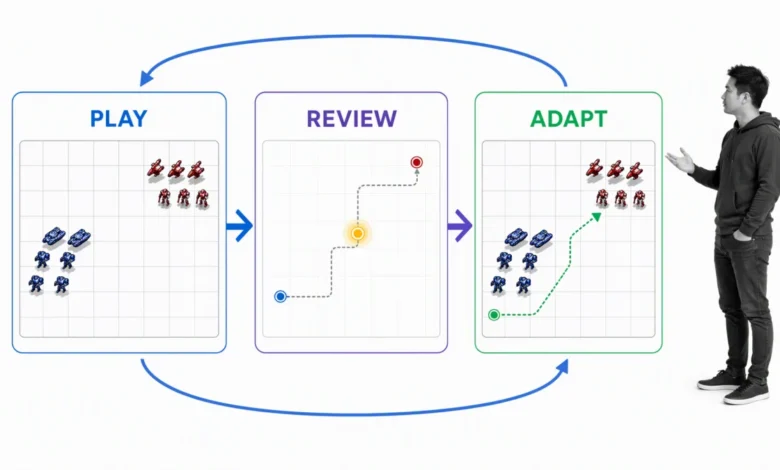
In contrast, competitive multiplayer gaming environments operate on a continuous feedback loop. In titles such as Counter-Strike or StarCraft, players encounter high-stakes scenarios that demand immediate analytical adjustments. When a player is defeated, the game does not provide a permanent label of "failure." Instead, it offers a "death cam" or a replay feature, allowing the user to deconstruct the specific decision—a tactical error, a delayed reaction, or a failure to account for an opponent’s position—that led to the negative outcome. This iterative process of experimentation, failure, and revision mirrors the scientific method, effectively gamifying the pursuit of mastery.
Chronology and Evolution of Gaming Competency
The transition of video games from simple arcade novelties to complex, strategy-driven multiplayer environments began in earnest during the late 1990s and early 2000s. The release of StarCraft in 1998, for instance, introduced a level of strategic depth that necessitated multi-tasking, resource management, and long-term planning. Unlike single-player campaigns, where the artificial intelligence follows predictable patterns, human-versus-human multiplayer games introduced the variable of unpredictable, high-level decision-making.
By the mid-2000s, the rise of high-speed broadband internet allowed for the globalization of competitive play. This era saw the birth of modern esports, where professional players began to formalize training regimens. These athletes do not merely play; they analyze frame-by-frame footage, study opponents’ playstyles, and utilize statistical modeling to optimize their performance. This evolution from casual play to structured practice represents a significant shift in how digital interaction impacts neuroplasticity.
Supporting Data and Scientific Analysis
Recent meta-analyses have begun to move past the broad, often inflammatory claims regarding "brain training" to focus on specific cognitive mechanisms. A 2023 meta-analysis published in Nature suggests that while broad genre labels like "action games" are insufficient for predicting cognitive gains, specific gameplay features—such as spatial navigation, real-time strategic planning, and rapid motor-visual integration—show measurable, albeit modest, training effects.
The data indicates that the cognitive benefits are most pronounced in areas of:
- Attention Allocation: The ability to filter out peripheral distractions while focusing on high-priority targets.
- Spatial Cognition: Enhanced capacity to mentally rotate objects and track multiple moving entities in a 3D environment.
- Task Switching: The efficiency with which the brain shifts from one cognitive demand to another in high-pressure scenarios.
However, researchers caution against the "slogan effect." Growth mindset interventions, whether in a classroom or a gaming lobby, are not magic bullets. A study published in Nature in 2019 emphasized that such interventions produce context-dependent benefits. In short, the mindset must be actively cultivated; simply playing a game is not enough to induce long-term cognitive growth. It is the reflection on the experience that provides the psychological value.
Institutional Perspectives and Safety Considerations
The American Academy of Pediatrics (AAP) has maintained a nuanced stance on digital engagement, urging parents to look beyond the "time spent" metric. Their guidance emphasizes the "four Cs": Child, Content, Context, and Connection. In the context of multiplayer games, the AAP suggests that parents prioritize environments that are age-appropriate and socially supervised.
The primary concern for institutions is not the game itself, but the social infrastructure surrounding it. Toxicity in voice chats and the lack of moderation tools in some platforms can negate the benefits of the mental challenge, replacing a growth-oriented experience with one of frustration or social withdrawal. Consequently, developers are increasingly under pressure to implement robust reporting tools and privacy settings, treating these features as essential components of the user experience rather than optional add-ons.
Broader Implications for Continuous Improvement
The "loop" inherent in competitive gaming—attempting a challenge, observing the feedback, and iterating—is fundamentally identical to the principles of continuous improvement (often referred to as Kaizen in business contexts). In professional environments, this cycle is the hallmark of high-performing teams.
When a professional in a startup environment encounters a failed product launch, the psychological response mirrors that of a gamer who has lost a match. A fixed-mindset individual might see the failure as a sign that they lack the "entrepreneurial gene." A growth-mindset individual, conditioned by years of iterative practice, treats the failure as data. They ask: What were the variables? What was the decision-making process? How can the strategy be adjusted for the next "round"?
This transferability of skills suggests that the gaming experience, when approached with intentionality, can serve as a training ground for resilience. It teaches the brain that discomfort is not a signal to stop, but a signal that the task is approaching the edge of one’s current capability—the exact point where learning occurs.
Conclusion: The Future of Cognitive Development
As digital interfaces become more integrated into daily life, the line between "play" and "work" will continue to blur. The challenge for educators and parents is to move away from viewing video games as a monolithic activity and toward understanding them as diverse tools that can be leveraged for cognitive development.
The most successful learners are those who treat their lives as a series of levels to be conquered, not through inherent talent, but through the patient, disciplined accumulation of feedback. Whether that lesson is learned in a textbook or in a competitive virtual arena, the underlying mechanism remains the same: the willingness to fail, the ability to analyze that failure, and the tenacity to try again with a revised strategy. In an increasingly complex and uncertain world, the ability to adapt in real-time is perhaps the most valuable skill one can develop. The multiplayer gaming experience, at its best, provides a low-risk, high-frequency environment to practice this vital human trait.