Context Managers Beyond Opening Files: Mastering Resource Lifecycle Management in Python

Python developers are intimately familiar with the with statement, most commonly introduced through the boilerplate of file I/O operations. The syntax, which ensures that a file descriptor is closed regardless of whether an operation succeeds or crashes, is a cornerstone of robust software engineering. However, limiting the use of context managers to file handling ignores their true potential as a powerful mechanism for deterministic resource management. By moving beyond simple file interactions, developers can employ context managers to handle temporary directories, configuration states, performance benchmarking, and complex multi-resource cleanup, ensuring that system integrity remains intact even when runtime errors occur.
The necessity for robust cleanup mechanisms has become increasingly evident in modern data science and machine learning workflows. Consider a typical evaluation script: a process that initializes a scratch directory for data extraction, sets environment variables for hardware-specific caching, adjusts logging verbosity to reduce console noise, and initiates a performance timer. In standard imperative programming, the cleanup code—the removal of the directory, the resetting of logging levels, and the printing of elapsed time—is placed at the bottom of the script. This design creates a fragility known as the "happy path" fallacy. If a malformed data record causes the evaluation function to raise an exception mid-execution, the cleanup code is skipped entirely. The result is a system left in a polluted state: orphaned temporary files consuming gigabytes of disk space, stale environment variables that could cause future runs to fail, and silent logging configurations that mask critical errors.
The Anatomy of the With Statement
At its core, the with statement is a boundary defined by the Python Data Model. When a script enters a with block, Python executes the __enter__ method of the associated object. Whatever value this method returns is bound to the target variable defined by the as clause. Crucially, the __exit__ method is guaranteed to execute when the block terminates, whether that termination is due to completion, a return statement, or an unhandled exception.
This protocol provides a safety net for any state that must be reverted. For instance, a custom timer class can encapsulate performance measurement. By defining __enter__ to record the start time via time.perf_counter() and __exit__ to calculate the difference and log the duration, a developer creates a self-cleaning instrument. Even if the code block fails, the timer reports the duration elapsed up to the point of failure, providing vital diagnostic data that would otherwise be lost in a standard stack trace.
Strategic Implementation: Classes vs. Decorators
Determining which pattern to use depends on the complexity and state requirements of the task. A class-based implementation is ideal when the manager needs to maintain state that a caller might want to access after the block finishes, such as a timer’s elapsed duration. Conversely, the @contextmanager decorator—part of the contextlib library—is the preferred approach for "one-off" setup-yield-cleanup workflows.
By wrapping a generator function in @contextmanager, developers can perform setup logic, use the yield keyword to pause and run the managed block, and then use a finally block to guarantee cleanup. This is particularly effective for managing logging configurations. By capturing the current log level before the block and restoring it in a finally clause, a function can temporarily "quiet" a library’s output without the risk of leaving the logging system in a permanently suppressed state if an exception occurs.
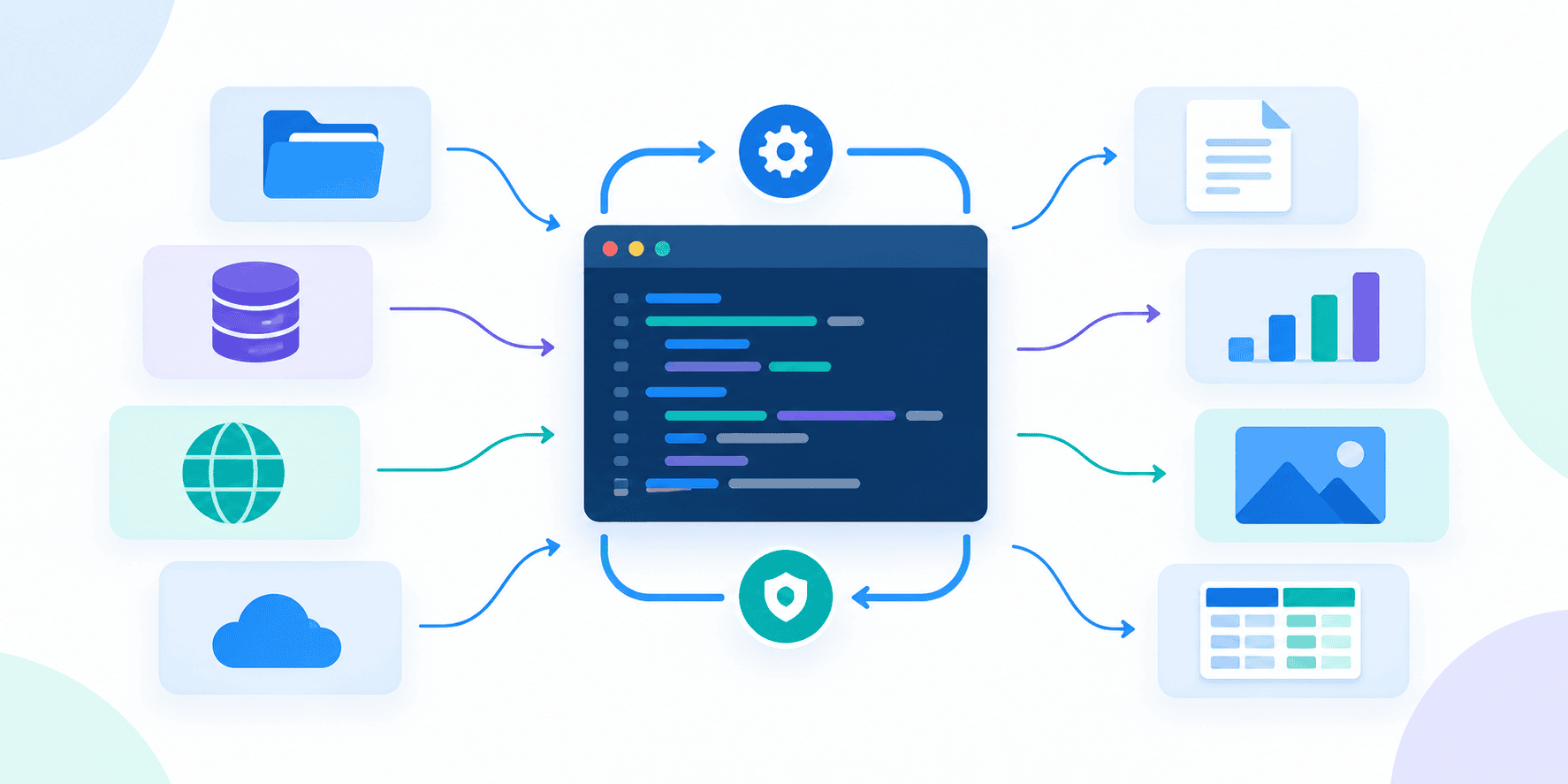
Managing System Artifacts with TemporaryDirectory
The standard library provides specialized context managers that solve common environmental pitfalls. The tempfile.TemporaryDirectory utility is a primary example. Rather than manually creating a directory, tracking its path, and attempting to delete it via shutil.rmtree—which often fails if a process is interrupted—developers can use TemporaryDirectory. This utility creates a unique, isolated environment for a single execution run. Once the context is exited, the entire directory tree is purged. This eliminates the risk of "dirty" runs, where leftover artifacts from previous sessions interfere with new data, and ensures that sensitive or large temporary files do not persist on the host system.
Advanced Resource Orchestration with ExitStack
In scenarios where the number of resources is dynamic or unknown until runtime—such as merging a variable number of data shards—nested with statements become cumbersome and unreadable. The contextlib.ExitStack provides a programmatic interface to manage a collection of context managers. Using stack.enter_context(), developers can register an arbitrary number of files, sockets, or other resources. When the stack unwinds, it does so in reverse order of acquisition, mimicking the safety of nested blocks while maintaining a clean, linear code structure. This is an essential tool for high-performance data pipelines that must open and close dozens of file handles in a single operation.
Reversible State Changes and Configuration Management
A frequent source of bugs in production systems is the modification of global configuration, such as environment variables or dictionary-based settings. Using unittest.mock.patch.dict as a context manager allows for safe, temporary overrides. This utility captures the original state of a dictionary or environment object, applies the requested changes, and restores the exact original values upon exit. This ensures that a temporary change for a specific model evaluation does not bleed into other parts of the application.
Broader Implications and Best Practices
The shift toward context-managed resource handling is more than a stylistic preference; it is a prerequisite for resilient systems. As software architectures grow more complex, the cost of manual resource tracking increases exponentially. Manual cleanup is prone to human error, particularly when considering the "after-hours" scenarios where a production system might fail due to environmental drift.
Fact-based analysis of these patterns suggests that teams adopting structured lifecycle management see a measurable decrease in "ghost" bugs—errors caused by stale state or leftover files. The implementation of ExitStack or class-based managers provides a clear audit trail of what resources are required for a process to complete, making the codebase easier to maintain and audit.
Ultimately, the goal is to make the cleanup logic as visible and predictable as the execution logic. When cleanup lives at the bottom of a file, it is an afterthought. When it lives within a context manager, it is a first-class citizen of the architecture. By standardizing these patterns, engineers can ensure that their systems are not only robust during normal operations but also maintain integrity under the stress of unexpected failures. This discipline of defining clear boundaries for resource lifetimes is one of the hallmarks of professional-grade Python development, separating scripts that "just work" from systems designed for production reliability.