How the Jabees Peace Duo Solves the Age-Old Problem of Bedtime Audio Comfort

For millions of people worldwide, drifting off to sleep requires an auditory backdrop, whether it is the gentle murmur of a sleep podcast, the rhythmic crashing of ambient ocean waves, or a looping playlist of 528 Hz frequency music. However, the mechanics of nighttime listening have long presented a frustrating dilemma for side sleepers and shared-bed occupants alike. Traditional in-ear monitors or wireless earbuds frequently dig uncomfortably into the user’s skull upon rolling over, posing ergonomic hazards and causing physical strain. Conversely, playing audio aloud via smartphone speakers or bedside sound systems disturbs sleeping partners and fails to deliver the intimate, localized soundscape many require to quiet an overactive mind.
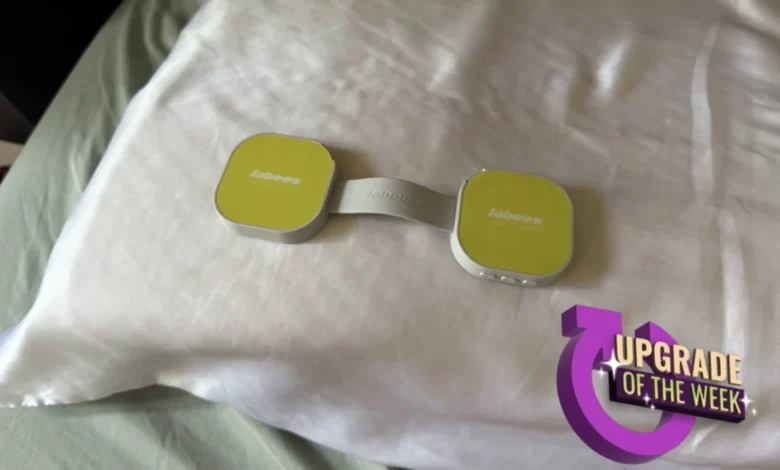
Enter the Jabees Peace Duo sleep speaker, a specialized piece of consumer tech designed to address this exact niche. Positioned as a weekly upgrade for individuals struggling with sleep hygiene and comfort, this under-pillow audio device utilizes specialized sound transmission to deliver private, unhindered audio throughout the night without requiring anything to be worn inside or directly on the ears. As the market for sleep tech continues to expand rapidly—driven by an increasingly health-conscious consumer base prioritizing circadian health and sleep optimization—gadgets like the Peace Duo represent a growing intersection between consumer electronics and wellness solutions.
Understanding the Technology: Under-Pillow and Bone Conduction Mechanics
The foundational engineering behind the Jabees Peace Duo relies on sound transmission principles akin to bone conduction technology. While traditional bone conduction headphones route acoustic vibrations directly through the cranial bones to the inner ear, under-pillow speakers leverage a similar mechanical translation method. Instead of blasting soundwaves openly into a room or forcing earbud tips deep into the ear canal, the device rests discreetly underneath a pillow, transforming the pillow itself into a localized acoustic medium.
This unique placement strategy ensures that sound stays concentrated near the listener’s head. When evaluated against standard bedside Bluetooth speakers, the under-pillow approach drastically minimizes sound leakage, preventing audio from traveling across a dark bedroom and waking a partner. Furthermore, the Peace Duo features a dual-speaker configuration, separating left and right audio channels. This stereo separation allows users to experience spatial dimensionality in their audiobooks, guided meditations, or ambient soundscapes, even while shifting positions throughout the night.
With a reported battery life spanning approximately ten hours on a single charge, the device is engineered to operate continuously from bedtime until morning without requiring mid-night recharges or drawing continuous power from a bedside outlet. This reliability removes the friction typically associated with wireless earbuds, which frequently run out of battery midway through the night or become lost beneath heavy blankets and fitted sheets.
Background and Evolution of Sleep Audio Technology

The desire to consume media or therapeutic audio prior to sleep is hardly a modern phenomenon. From the mid-20th-century introduction of pillow speakers—which originally consisted of bulky, wired magnetic drivers stuffed into foam cushions for radio listeners—to the contemporary boom of smart-home integrations and white noise machines, consumer demand for bedtime audio has remained steady.
In recent years, the market has seen an influx of specialized sleep headbands, soft fabric masks embedded with flat miniature speakers, and specialized Bluetooth pillows. However, these wearable soft bands often present distinct drawbacks, including heat retention during warmer months, uncomfortable pressure points from built-in electronics modules, and issues with sweat accumulation or fabric durability.
The Jabees Peace Duo addresses these friction points by separating the playback hardware from the user’s immediate person. By removing the need to wear fabric headbands or invasive earbud tips, the device capitalizes on a growing consumer preference for non-intrusive wellness technology. Industry analysts note that the global sleep tech market, encompassing smart mattresses, wearable trackers, and specialized audio aids, has experienced double-digit growth over the past half-decade. As public awareness surrounding the physiological impacts of sleep deprivation deepens, consumers are increasingly willing to invest in dedicated hardware designed exclusively to cultivate optimal sleep environments.
Weighing the Trade-Offs: Comfort Versus Audio Fidelity
While the ergonomic advantages of an under-pillow speaker are clear, prospective buyers must evaluate several technical trade-offs before integrating the device into their nightly routines. Chief among these considerations is audio fidelity. Because the sound waves must pass through layers of pillow fabric, stuffing, and down or synthetic filling before reaching the listener’s ears, the resulting audio profile inherently lacks the crisp clarity, deep bass response, and intricate high-frequency detail found in traditional over-ear headphones or premium earbuds.
However, industry observers and early adopters argue that this slight muffling effect is not necessarily a disadvantage within the context of sleep preparation. A softened, diffused acoustic output often proves more soothing than harsh, direct sound streams, effectively blending ambient tracks and spoken-word narratives into a gentle, dream-like auditory backdrop. For users attempting to quiet racing thoughts or distract themselves from chronic insomnia, the absence of sharp audio transients can prevent sudden awakenings caused by abrupt sound spikes in podcasts or music tracks.
Beyond audio quality, users must also contend with practical deployment factors. The thickness and material composition of a pillow heavily influence the performance of an under-pillow speaker. Memory foam pillows with high density may dampen sound transmission significantly more than traditional feather or down pillows, requiring users to adjust volume settings accordingly or reposition the speaker units closer to the edge of the cushion. Additionally, managing wireless connectivity and maintaining charging routines for yet another bedside device requires a minor adjustment to nightly habits, though proponents argue this is far less cumbersome than searching for lost earbuds tangled in bed linens.
Broader Implications for Consumer Electronics and Sleep Hygiene

The proliferation of targeted wellness gadgets like the Jabees Peace Duo underscores a broader shift within the consumer electronics sector. Major technology manufacturers and boutique brands alike are increasingly pivoting away from pure productivity tools toward products that enhance holistic well-being, mental health, and physical recovery. Sleep hygiene, once viewed strictly through the lens of medical intervention or basic lifestyle habits, has effectively transformed into a major product category.
This trend reflects changing consumer priorities. As work-from-home arrangements blur the boundaries between personal life and professional responsibilities, individuals are experiencing heightened levels of bedtime anxiety and cognitive fatigue. Consequently, sleep has been elevated to a prime arena for technological intervention. Products that promise to streamline the bedtime routine—whether by blocking out urban noise, tracking REM cycles, or delivering comfortable, private audio—are positioned to capture substantial market share.
Furthermore, the design philosophy behind under-pillow speakers highlights an ongoing industry focus on passive comfort. Rather than demanding that users adapt their sleeping postures to fit rigid hardware, modern sleep tech is increasingly engineered to integrate invisibly into existing domestic spaces. By working around traditional sleep postures, such as side sleeping, manufacturers can capture demographics that were previously alienated by bulky or invasive wearable devices.
Market Analysis and Future Outlook
As the competitive landscape for sleep audio continues to evolve, companies are expected to refine under-pillow technology through improved wireless range, more efficient battery management, and smarter acoustic drivers capable of compensating for varying pillow densities. While devices like the Jabees Peace Duo occupy a specific, specialized niche rather than serving as universal mainstream electronics, their sustained popularity points to a lasting consumer demand for targeted, problem-solving hardware.
For individuals who rely on audio to bridge the gap between wakefulness and sleep, the elimination of tangled wires, lost charging cases, and painful pressure points offers a compelling value proposition. As long as users approach the technology with realistic expectations regarding acoustic fidelity, under-pillow speakers provide a pragmatic, comfortable alternative to traditional listening methods. Ultimately, the ongoing refinement of these sleep-centric audio tools demonstrates that even the most subtle modifications to nightly routines can yield meaningful improvements in overall rest, comfort, and daily well-being.