Putin and Musk in Close Contact Over Russia’s Rassvet Satellite Project Amid Rising Tensions Over Ukraine Starlink Access

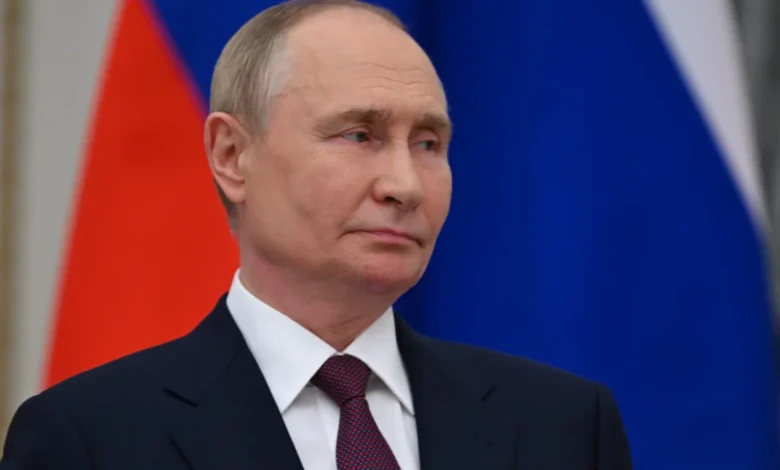
Russian President Vladimir Putin has revealed that he and SpaceX Chief Executive Officer Elon Musk are maintaining close lines of communication regarding "Rassvet," Russia’s domestic satellite internet initiative designed to rival Starlink. Speaking publicly at the Russia-Africa Summit, the Russian leader offered high praise for the billionaire entrepreneur, characterizing him as a visionary of unprecedented scale.
"Elon Musk is a genius, truly a genius," Putin stated during the summit. "He has already had more than 5,000 such satellites in orbit, while we are only taking the first steps."
This diplomatic acknowledgment highlights a complex intersection of geopolitics, commercial space exploration, and modern military strategy. As Russia attempts to bootstrap its sovereign low-Earth orbit (LEO) satellite constellation to close the technological gap with Western infrastructure, its burgeoning dialogue with the world’s most prominent private space industrialist raises profound strategic questions. The development arrives at a particularly sensitive juncture, coinciding with heightened friction between Musk’s enterprises, the United States government, and Ukraine’s defense apparatus as the war in Eastern Europe grinds toward its fifth year.
The Genesis of Rassvet and Russia’s LEO Ambitions
For years, the global race for low-Earth orbit satellite dominance has been dominated by Western entities, primarily SpaceX’s Starlink network. While Russia has historically maintained a robust, state-backed space program rooted in legacy rocket engineering and crewed spaceflight via the Soyuz platform, it has lagged significantly behind in the deployment of commercial mega-constellations.
Rassvet—which translates to "Dawn" in Russian—represents Moscow’s primary answer to the omnipresent threat of Western communication dominance and economic encirclement. Conceived as a sovereign broadband network, Rassvet aims to provide ubiquitous high-speed internet coverage across Russia’s vast landmass, particularly in remote Arctic shipping routes and underserved eastern regions. However, building out a competitive LEO constellation requires massive capital expenditure, advanced semiconductor manufacturing capabilities, and thousands of successful orbital launches—all areas where international sanctions and supply chain bottlenecks have heavily impacted Russia’s aerospace sector.
By opening a dialogue with Musk, the Russian leadership is signaling an acknowledgment of SpaceX’s unrivaled technological supremacy in commercial reusable rocketry and mass-production satellite architecture. While details of the specific discussions between Putin and Musk remain tightly guarded, the mere admission of "close contact" underscores Moscow’s strategic desire to study, adapt, or potentially interface with the methodologies that enabled Starlink’s explosive global deployment.
A Precarious Lifeline: Starlink and Starshield on the Front Lines
The burgeoning diplomatic and technological overtures between Moscow and Silicon Valley do not occur in a vacuum. Since the full-scale invasion of Ukraine in February 2022, Starlink terminals have served as the invisible digital nervous system for Ukrainian military communications, artillery coordination, and drone reconnaissance.
Without the robust, decentralized bandwidth provided by Starlink, Ukrainian forces would face catastrophic command-and-control failures. Musk himself bluntly underscored this reality on social media, writing, "Were Starlink to be turned off, the Ukrainian front line would collapse immediately. This is NOT a threat, it is simply a statement of fact."

However, the relationship between Musk and the Ukrainian government has grown increasingly strained. Musk has openly expressed frustration with Ukrainian leadership, including President Volodymyr Zelensky, over the trajectory of the conflict and the terms of engagement. These tensions escalated dramatically following a recent U.S. policy shift that saw the easing of certain financial and technological sanctions against Russian entities, sending shockwaves through Kyiv and alarming Western defense analysts.
The easing of sanctions triggered immediate anxiety among Ukrainian officials that Kyiv could lose access to Starshield—the specialized, hardened military variant of the Starlink network relied upon by front-line units. These fears quickly materialized into operational reality.
Chronology of the October 2026 Connectivity Crisis
The friction between SpaceX, Washington, and Kyiv reached a boiling point in mid-October 2026, manifesting in sudden and disruptive communications blackouts on the battlefield.
- Early October 2026: The United States government announces a strategic easing of certain sanctions targeting Russian commercial sectors, prompting intense diplomatic concern in Kyiv regarding the long-term reliability of Western-supplied military tech assets.
- Mid-October 2026 (Approx. October 10–20): Ukrainian drone units operating along the eastern and southern front lines experience a sudden, unprecedented surge in connectivity dropouts. Frequent losses of satellite link disrupt real-time targeting and reconnaissance missions.
- October 15, 2026: Investigative reports surface revealing conflicting accounts regarding the blackout. According to the Wall Street Journal, Musk personally ordered SpaceX engineers to limit Ukraine’s access to Starlink services. Conversely, parallel reporting from Reuters cites U.S. government sources indicating that the directive to throttle Starshield came directly from inside the White House.
- Late October 2026 (Approx. October 24): Public scrutiny mounts as military analysts warn of an impending tactical crisis. Musk defends the action via posts on X (formerly Twitter), claiming that Ukrainian military operators violated Starlink’s formal terms of service by employing the commercial technology for offensive drone strikes designed to inflict fatalities.
- Late October 2026 (Current Status): Following intensive backchannel negotiations between defense contractors, administration officials, and SpaceX management, Starlink services across the Ukrainian theater appear to have returned to normal operating parameters.
Despite the resumption of service, the episode exposed the profound vulnerability of relying on a privately owned commercial infrastructure for sovereign national defense.
Geopolitical Implications and Strategic Fallout
The intersection of Putin’s praise for Musk, the Rassvet satellite initiative, and the precarious operational status of Starlink in Ukraine highlights a dangerous new paradigm in modern geopolitics: the outsized influence of private corporate actors in state-level warfare.
For decades, satellite communications networks were strictly the domain of sovereign nation-states and heavily regulated military-industrial complexes. Today, a single private individual—wielding absolute executive control over a commercial enterprise like SpaceX—possesses the unilateral capability to alter the balance of power in an active theater of war.
From Washington’s perspective, the situation presents a severe national security dilemma. U.S. policymakers must navigate the delicate balance between fostering American technological innovation, maintaining oversight of critical dual-use infrastructure, and preventing private billionaires from conducting independent foreign policy.
For Moscow, the public courtship of Musk serves a dual purpose. Tactically, it drives a psychological wedge between Ukraine and its indispensable technological benefactor, fueling distrust within the Western coalition. Strategically, it reflects Russia’s urgent need to bypass its domestic technological shortcomings by engaging directly with global industry titans, even as traditional diplomatic channels remain severely fractured.
As the war in Ukraine continues and the global race for low-Earth orbit intensification accelerates, the relationship between the Kremlin and the world’s most influential space entrepreneur will remain one of the most closely monitored and volatile variables in international relations.