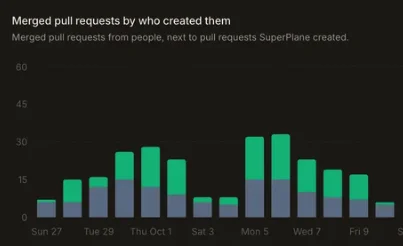
The release of SuperPlane 1.0 marks a significant transition in the software development lifecycle, shifting the focus from individual AI-assisted coding to team-based, agent-orchestrated software engineering. By providing a centralized factory model, SuperPlane aims to standardize how engineering organizations integrate autonomous coding agents into their daily operations. The platform operates as an orchestration layer, ensuring that the transition from a task ticket to a verified pull request remains consistent, auditable, and human-supervised.
The Evolution of AI-Assisted Development
The rise of Large Language Models (LLMs) has fundamentally altered the role of the software engineer. Over the past twenty-four months, the industry has moved from basic code autocompletion—epitomized by tools like GitHub Copilot—to increasingly autonomous coding agents capable of executing complex tasks. However, this transition has introduced a new set of challenges: fragmented workflows, inconsistent quality control, and the difficulty of managing multiple agents across a distributed team.
SuperPlane 1.0 enters this landscape as an infrastructure solution designed to mitigate the "silo effect" of individual developers running private AI scripts. By creating a shared environment, the software factory approach allows teams to treat AI coding agents not as disconnected tools, but as members of a managed pipeline.
Chronology and Development
The development of SuperPlane 1.0 reflects the industry’s rapid iterative pace. In early 2023, the focus for most engineering teams was on experimenting with individual agentic frameworks. By mid-2023, it became clear that while these agents could write code, they lacked the surrounding infrastructure—such as task validation, environment verification, and robust code review protocols—to operate safely in production-grade repositories.
Throughout the latter half of 2023 and early 2024, the SuperPlane team focused on building the core engine for this factory. The objective was to provide a framework that handles the "plumbing" of software development: pulling tickets, initializing development environments, running agents, executing test suites, and managing the submission of pull requests. The official 1.0 release represents the culmination of this effort, moving the project from an experimental state to a production-ready, open-source framework under the Apache 2.0 license.
Technical Architecture and Model Agnosticism
One of the most critical aspects of SuperPlane 1.0 is its commitment to model-agnosticism. In an era where new LLMs are released on a near-weekly basis—ranging from proprietary models like OpenAI’s GPT-4o and Anthropic’s Claude 3.5 Sonnet to open-weights models like Meta’s Llama 3—engineering teams are wary of vendor lock-in.
SuperPlane addresses this by allowing teams to connect their own model accounts and API keys. This architecture enables organizations to swap models as performance benchmarks shift or as cost-efficiency needs change. Because the software factory acts as a container for the workflow, the underlying "intelligence" is treated as a modular component. This flexibility is essential for enterprise security, as it allows teams to use models that comply with their specific data privacy requirements, such as running local models on self-hosted infrastructure.
The Human-in-the-Loop Paradigm
A central concern regarding the integration of autonomous agents is the potential for error and the displacement of engineering oversight. SuperPlane 1.0 addresses these concerns by explicitly centering human decision-making. The platform is designed to handle the routine, high-volume "grunt work"—such as running unit tests, linting code, and managing failed checks—while keeping the final verification and deployment decisions under human control.

In this model, the engineer functions more like an architect or an editor than a code typist. The agent proposes changes based on a ticket, but the human remains the arbiter of what eventually ships. This structure is intended to improve team velocity without compromising on the quality standards that are essential for maintaining stable, long-term codebases.
Supporting Data and Industry Context
Recent industry surveys, including those from Stack Overflow and GitHub, indicate that while over 70% of professional developers are now using AI tools, a significant portion of these tools are being used in an ad-hoc, uncoordinated manner. This lack of standardization often leads to "technical debt" generated by agents that may pass initial tests but fail to adhere to the broader team’s architectural vision.
By centralizing the workflow, SuperPlane 1.0 aims to improve the "developer experience" (DevEx). A shared dashboard allows the entire team to see what is currently running, which tasks have failed, and where manual intervention is required. This level of visibility is designed to reduce the "black box" nature of AI coding, where an agent might be running in the background of an individual’s local machine without the team’s knowledge or approval.
Operational Implications for Engineering Teams
The implementation of a "software factory" like SuperPlane has several downstream implications for engineering management:
- Standardization of Quality: By codifying the verification steps (testing, linting, code review feedback), teams ensure that every piece of AI-generated code meets the same quality bar, regardless of which developer or agent initiated the task.
- Scalability of Onboarding: New engineers can integrate into a team’s workflow more quickly because the standard operating procedures are enforced by the factory itself.
- Auditability and Compliance: For organizations in regulated industries, the ability to track the history of a task from ticket to pull request—including the specific agent actions and the human approval steps—provides a clear audit trail.
- Resource Optimization: Self-hosting capability allows teams to manage their infrastructure costs more effectively. By controlling the compute environment, organizations can optimize for either speed or cost, depending on the complexity of the task at hand.
Broader Impact and Future Outlook
The release of SuperPlane 1.0 underscores a broader shift toward "Agentic Engineering." As agents become more capable of navigating complex codebases, the bottleneck in software development is shifting from writing code to managing the lifecycle of that code. Platforms that can successfully orchestrate this process while maintaining transparency and control are likely to become foundational to the next generation of engineering stacks.
By choosing an open-source, Apache 2.0-licensed model, SuperPlane is positioning itself to benefit from community-driven development. This approach allows the platform to evolve alongside the rapidly changing landscape of AI agents, as users contribute integrations for new testing frameworks, deployment platforms, and agentic workflows.
Official Stance on Automation
The core philosophy of SuperPlane is that automation should empower, not replace, the engineering workforce. By automating the "routine" tasks, the platform allows developers to focus on higher-level problem solving, system architecture, and strategic product development. The platform is designed to handle the friction points that typically slow down development cycles—such as context switching between tickets and pull requests—thereby freeing up cognitive bandwidth for human engineers to tackle more complex, non-repetitive challenges.
As the industry continues to integrate AI into every stage of the software lifecycle, the need for robust, team-oriented management tools will only grow. SuperPlane 1.0 represents a significant milestone in that evolution, offering a blueprint for how engineering teams can harness the power of AI while maintaining the rigor and collaborative spirit that have defined professional software development for decades. Whether or not this specific factory model becomes the industry standard remains to be seen, but the necessity for structured, team-first agent management is now firmly established. For organizations looking to move beyond individual experimentation, SuperPlane offers a clear path toward a more integrated, efficient, and transparent engineering future.