ChartMogul Expands Global Product-Led Growth Labs to Tackle Complex SaaS Operations and Hybrid GTM Models

The modern software-as-a-service (SaaS) landscape has evolved significantly from the early days of simple freemium models and low-friction self-serve funnels. Today, ambitious businesses are constructing sophisticated, opinionated products without the safety net of massive capital reserves, rooms full of enterprise account executives, or guaranteed six-figure contracts. To address the intricate operational challenges faced by founders and operators navigating this environment, ChartMogul Chief Revenue Officer Sara Archer has spearheaded the launch of The Product-Led Growth (PLG) Lab series. This international initiative of intimate, city-based meetups focuses squarely on the unvarnished realities of modern software scaling—ranging from broken automation workflows and complex activation paths to designing equitable compensation plans for hybrid go-to-market (GTM) motions.
Background and Evolution of the PLG Labs Initiative
For years, conversations between SaaS operators and revenue leaders have converged on a singular theme: the hidden complexities of product-led growth. While high-level industry conferences often celebrate rapid user acquisition metrics and top-of-funnel vanity numbers, operational teams routinely grapple with the less glamorous mechanics of retention, expansion architecture, and user activation. Recognizing a critical gap in the market for pragmatic, tactical discourse, ChartMogul designed the PLG Lab series to bypass high-level generalizations and dive straight into the operational weeds.
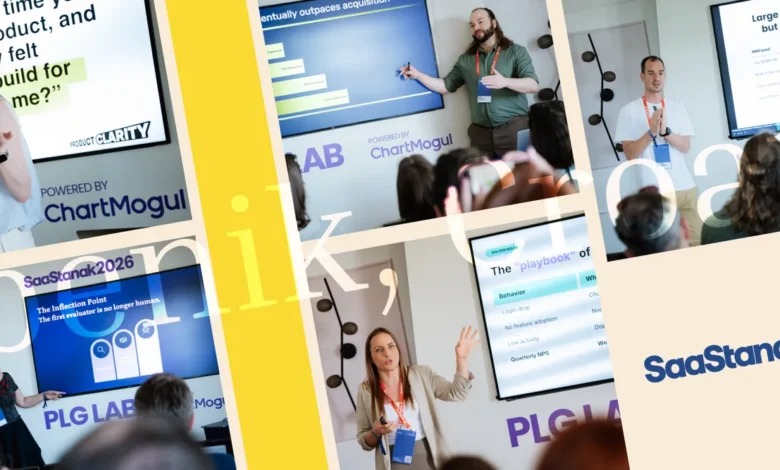
The initiative officially kicked off in San Francisco during the bustling week of Stripe Sessions. The inaugural event featured Doist Chief Revenue Officer Brenna Loury, who offered candid insights into the systemic friction associated with moving upmarket from a pure PLG motion. Discussions among founders and revenue leaders proved so compelling that attendees lingered deep into the evening, eventually continuing their debates over refreshments on a sunny rooftop overlooking the city. Buoyed by the strong engagement in California, the series expanded internationally, partnering with SaaStanak to host two intensive afternoons of content along the Croatian coast. Despite a punishing Mediterranean heat wave, the sessions drew standing-room-only crowds characterized by rigorous questioning, peer-to-peer data sharing, and cross-border networking.
Comprehensive Presentation Recaps and Operational Frameworks
To democratize the wealth of operator-level knowledge shared at these international gatherings, ChartMogul has systematically documented, synthesized, and published presentation decks and key takeaways from each session. This curated repository provides SaaS teams with concrete frameworks to address foundational growth bottlenecks.
The Expansion Engine: Architecting a Scalable PLG Stack for Automated Upsells
Historically, software expansion has been treated primarily as a sales execution challenge—identifying the optimal moment, drafting a persuasive email, and presenting a compelling commercial offer. However, expert presentations from the lab series reframe expansion as a fundamental infrastructure challenge. When clean, reliable customer data flows seamlessly into automated workflows, revenue expansion becomes timely, contextually relevant, and mathematically scalable.
When Automations Guess Wrong: Behavior Shows What Happened, Users Tell You Why
Lifecycle automations often function correctly from a technical standpoint while still delivering a generic, impersonal experience to the end user. Industry presentations highlighted that while behavioral telemetry reveals what actions a user took within an application, qualitative user feedback provides the critical context of why those actions occurred. The framework advises product teams to regularly audit automated sequences to prevent misaligned engagement that alienates new sign-ups.
From Traditional SaaS to AI-Native in Five Days: Case Studies in Rapid Transformation
The industry-wide pivot toward artificial intelligence has frequently resulted in vague strategic mandates rather than actionable product developments. Lab presenters deconstructed how three traditional SaaS organizations successfully integrated AI capabilities into their core offerings within a compressed five-day timeline. The resulting framework outlines a repeatable product exercise: isolating a single valuable outcome, removing operational friction, preserving trust-building human touchpoints, and engineering the user experience backward from the final desired result. Teams were provided with concrete prompts to evaluate which decisions an AI model should make by default and what small actions must remain under user control to ensure a sense of personal accomplishment.
LTV Blind Spots: Insights from Over 3,700 SaaS Businesses Across Six Years
Drawing on proprietary data collected by ChartMogul’s insights team over a six-year period encompassing 3,700 distinct SaaS businesses, this session provided a rigorous empirical analysis of customer lifetime value (LTV). While LTV remains a vital metric for calculating customer acquisition cost (CAC) payback periods and segment investments, the data reveals significant blind spots in standard formulas. Operators were cautioned to continuously cross-reference theoretical LTV projections against actual observed customer behavior to avoid strategic misallocations of capital.
People-Led Growth: Repairing the Product’s First Impression and Activation Path
Treating user onboarding as a static, "set-and-forget" feature represents a common vulnerability for growing software companies. A dedicated presentation on "People-Led Growth" introduced a repeatable audit framework designed to help teams re-evaluate their onboarding flows monthly. By examining the activation path strictly through the eyes of a new user, teams can pinpoint exact moments where trust erodes or momentum stalls, allowing them to engineer a faster, more definitive "first win."
Invisible PLG: Preparing Software for Autonomous Discovery
Looking toward the next horizon of software distribution, lab sessions introduced the concept of "Invisible PLG." This diagnostic framework challenges product leaders with a fundamental question: Could an autonomous AI agent independently discover, evaluate, test, price, and integrate your software product without human intervention? If the answer is negative, businesses risk building products that remain visible to human buyers while becoming entirely invisible to the machine learning systems and AI agents that increasingly dictate software procurement.
Scaling from $1M to $20M ARR: Growth Levers and New Operating Signals
Scaling annual recurring revenue from the initial $1 million milestone to $20 million rarely hinges on a single silver bullet. Instead, workshop discussions emphasized that sustainable scaling requires a compounding set of operational improvements across average revenue per account (ARPA), gross retention, net revenue retention, and rigorous market focus. These metrics must be reinforced by strong leadership standards that ensure structural discipline as headcount and operational complexity expand.
Bridging PLG and Sales: Implementing a Hybrid Growth Engine
The convergence of product-led and sales-led motions creates distinct organizational friction. Hybrid go-to-market strategies require more than simply bolting a self-serve funnel onto an enterprise sales team. Successful hybrid models solve complex routing, account ownership, and incentive design problems. They establish clear product boundaries that accommodate diverse buyer personas, ensuring that customers are met with the appropriate engagement motion regardless of their entry point.
The Launch-to-Adopt Gap: Aligning Product Velocity with User Absorption
A prevalent pain point discussed across the meetup series was the "launch-to-adopt gap"—a phenomenon where development teams ship new features faster than end users can discover, learn, and absorb them. Product marketing frameworks presented at the labs urged teams to transition from merely announcing software releases to explicitly engineering for adoption. In hyper-competitive markets, sustainable competitive advantages accrue to organizations that carefully sequence feature rollouts, target appropriate user segments contextually, and translate product updates into measurable behavioral change.
Broader Industry Impact and Strategic Implications
Taken collectively, the insights gathered across the ChartMogul PLG Lab series signal a maturing software industry. Product-led growth is no longer narrowly defined as the complete elimination of human sales interactions from the software buying journey.
Instead, modern PLG has expanded into a multidisciplinary technical and operational discipline encompassing advanced data architecture, rigorous feedback loops, sophisticated onboarding psychology, hybrid GTM organizational design, launch management systems, and agent-readable infrastructure. At the same time, the core mission remains profoundly human: effectively communicating why a software product delivers genuine value to its users. As the macroeconomic environment demands greater capital efficiency and operational rigor, initiatives like the PLG Labs provide a vital forum for SaaS leaders to exchange empirical learnings, refine execution standards, and build resilient, long-lasting businesses.