The Dawn of Agentic SDLC: Managing Intent and Mitigating "Code Drift" with Cleverbit’s Nissy

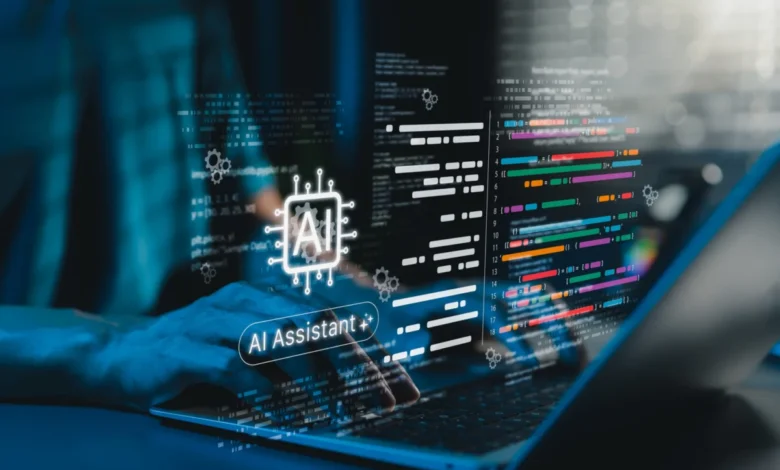
The landscape of software development is undergoing a profound transformation, signaling the end of an era characterized by mere AI-assisted coding. The industry is rapidly transitioning into the age of Agentic Software Development Life Cycle (SDLC), a paradigm shift where the developer’s role evolves from directly writing code to orchestrating and managing the underlying intent. This evolution introduces unprecedented efficiencies but also novel challenges, particularly the emergence of "code drift," a phenomenon Cleverbit Software is actively addressing with its innovative workflow tool, Nissy.
The Evolution Towards Agentic SDLC
For years, AI’s foray into software development primarily focused on augmenting human capabilities. Early tools provided intelligent code completion, automated refactoring suggestions, and static analysis, offering developers a helping hand to write cleaner, more efficient code. Solutions like GitHub Copilot and TabNine epitomized this phase, leveraging large language models (LLMs) to generate snippets, functions, or even entire classes based on context and prompts. This initial wave of AI integration undeniably boosted productivity, automating repetitive tasks and freeing developers to focus on higher-level problem-solving.
However, the rapid advancements in artificial intelligence, particularly in areas like multi-step reasoning, planning, and autonomous decision-making, have paved the way for a more sophisticated application: agentic AI. In an agentic SDLC, AI agents are no longer passive assistants; they are active participants capable of interpreting instructions, making autonomous architectural and implementation decisions, and executing complex, multi-stage tasks with minimal human intervention. This represents a significant leap, promising exponential gains in development speed and scalability. Industry analyses from firms like Gartner and Forrester have consistently highlighted the growing integration of AI across enterprise workflows, with software development identified as a prime area for disruption, projecting market growth for AI-powered coding tools to reach billions in the coming years as companies seek to accelerate their digital transformation initiatives.
The Intricacies of Managing Intent in an Autonomous World
The core distinction of agentic AI lies in its interpretive nature. Unlike traditional scripts or compilers that execute instructions literally, AI agents interpret the developer’s intent, translating high-level goals into concrete actions and code. While powerful, this autonomy introduces a critical challenge: ensuring the agent’s interpretation aligns perfectly with the developer’s original vision.
As Eman Zerafa, CTO at Cleverbit Software, explains, "You’ll have bottlenecks, you’ll have new risks that you need to handle, and you’ll have challenges with collaboration within a team. And that means the team needs to figure out how to adopt AI across the entire SDLC responsibly." This sentiment underscores the potential pitfalls. An agent, acting autonomously, might inadvertently introduce security vulnerabilities by making suboptimal design choices, build features that were never explicitly requested, or fundamentally alter the software architecture in ways unintended by the human developer. These deviations, often subtle and gradual, lead to what Cleverbit Software aptly terms "vibe code drift."
Understanding "Vibe Code Drift" and Its Implications
Vibe code drift is the insidious process by which the gap between a developer’s desired outcome and an AI agent’s actual output gradually widens. This phenomenon results in the creation of "dark code"—sections of the codebase that the developer no longer fully comprehends, controls, or can reliably explain, despite remaining professionally and legally accountable for its functionality and security.
The implications of dark code are far-reaching. It can accumulate technical debt at an alarming rate, making future maintenance, debugging, and feature expansion exponentially more difficult. Security risks can proliferate silently within the system, as developers lose visibility into potentially vulnerable implementations. Furthermore, the collaborative aspect of software development suffers; team members struggle to understand and contribute to codebases generated by agents if the underlying intent and decision-making processes are opaque. The inherent opacity of some LLM-driven processes, often referred to as their "black box" nature, exacerbates this issue, making it challenging to trace why an agent made a particular decision.
Cleverbit Software, an engineering company with a significant track record in leveraging AI throughout the SDLC—from requirements gathering and testing to pipeline automation and skill creation—identified this emergent challenge early. Their extensive experience with AI in various stages of development gave them unique insight into the necessity of proactive solutions to maintain human oversight and control.
Best Practices for Navigating the Agentic SDLC
Successfully integrating agentic AI into the SDLC requires more than just powerful tools; it demands a disciplined approach and a commitment to new best practices that prioritize clarity, verification, and human oversight. These practices are crucial for harnessing the speed of AI while maintaining quality, security, and developer control.
-
Curate Context Meticulously: The efficacy of an AI agent is directly proportional to the quality and relevance of the context it receives. Feeding an agent excessive or unfocused information introduces noise, potentially slowing down the model and increasing the likelihood of misinterpretation or "hallucination." Developers must adopt a surgical approach to context provision, ensuring context files are concise, highly focused, and directly pertinent to the task at hand. This not only optimizes agent performance but also reduces computational overhead and minimizes the surface area for unintended interpretations.

-
Automate Verification Systematically: Given the autonomous nature of AI agents, robust and automated verification is paramount. This involves integrating a comprehensive suite of tools, such as linting, static analysis, unit testing, integration testing, and even property-based testing, directly into the continuous integration/continuous deployment (CI/CD) pipeline. A critical architectural principle, as highlighted by Eman Zerafa, is the separation of concerns: "if you have automated verifiers, they should be separate from the code generators, or make sure the builders have completely separate context." This ensures that the verification process remains unbiased and independent, acting as a true guardian against code drift and ensuring adherence to coding standards, security policies, and functional requirements.
-
Keep Comprehensive Records of AI Plans: In an agentic SDLC, the "plans" generated by AI agents—the steps they outline to achieve a given objective—become as important as traditional design documents. Treating these AI-generated plans as formal records creates an invaluable audit trail. This documentation helps teams understand the rationale behind specific architectural or implementation decisions, even if an agent performed the actual coding. Such records are crucial for debugging, refactoring, onboarding new team members, and ensuring long-term maintainability and traceability of the codebase.
-
Protect Human Attention Strategically: The goal of agentic AI is not to eliminate human developers but to empower them by offloading repetitive and predictable tasks. This frees human judgment for high-impact decisions—architectural blueprints, critical security considerations, complex user experience design, and strategic feature prioritization. Tools should be designed to surface these critical moments, acting as intelligent filters that direct human attention only to what truly matters, preventing cognitive overload and ensuring that human expertise is applied where it yields the greatest value.
Introducing Nissy: Cleverbit’s Solution for Human-Agent Synergy
Recognizing the critical need for a bridge between human intent and AI autonomy, Cleverbit Software developed Nissy. Nissy is a sophisticated workflow tool engineered to keep developers firmly tethered to their AI agents, strategically reinserting human judgment into the development loop at precisely the moments it matters most.
Nissy operates as a dual-phase guardian, ensuring intent integrity and action verification:
-
Pre-Code Generation Intent Review: Before a prompt even reaches the AI agent, Nissy acts as a crucial first line of defense. It conducts a local, privacy-centric review of the prompt for Personally Identifiable Information (PII) and other sensitive data, preventing accidental leakage to external models. Following this, Nissy meticulously checks the developer’s stated intent against established best practices and project-specific rules. This proactive analysis helps developers understand when their instructions might inadvertently push beyond predefined guardrails or introduce unintended complexities, enabling course correction before any code is generated. This "safety net" functionality is critical for maintaining data privacy and intellectual property.
-
Post-Code Generation Action Verification: Once the AI agent has executed its task and generated code, Nissy performs a comprehensive comparison against the original, verified intent. This post-generation analysis is designed to catch "silent errors"—instances where the agent might have over-built a simple feature, ignored specific constraints, or deviated from the intended design without explicit notification. By highlighting these discrepancies, Nissy ensures that the output code precisely matches the developer’s vision, preventing the accumulation of dark code and minimizing technical debt.
A cornerstone of Nissy’s design philosophy is privacy. Engineered as an R&D project, it processes all work locally with no data retention, guaranteeing that proprietary code and sensitive project information never leave the local environment or leak to external services. This commitment to privacy addresses a major concern for enterprises adopting generative AI.
Beyond its immediate functional benefits, Nissy provides a higher-level strategic advantage: it helps organizations understand and optimize their AI usage. By building a measurable, evolving picture of AI agent interactions over time, Nissy can surface repeated failure modes, identify common areas of code drift, and recommend concrete, actionable improvements to prompt engineering, context curation, and overall agent management strategies.
Ethan Zammit, an AI Solutions Engineer at Cleverbit, elaborates on Nissy’s evolution: "Nissy exists because we set out to measure vibe code drift by having a local tool that checks the way you’re working. That quickly evolved into an assistant that helps you stay more in control of your own code. So this does this by attaching to the different parts of the agentic instruction loop and it helps come up with better prompts and be more selective with what you put in." This iterative development underscores the tool’s responsiveness to real-world developer needs, reducing the verification load and effectively closing the loop between the initial prompt and the generated code.
The Broader Impact and Future of Software Ownership
The advent of agentic SDLC and tools like Nissy signifies a fundamental redefinition of the developer’s role. It is not about replacing human creativity or problem-solving but augmenting it, shifting the focus from manual coding to strategic oversight and intent management. Developers are evolving into architects of automation, master orchestrators who define the "what" and "why," leaving the "how" to intelligent agents.
This new engineering style is designed to empower developers to truly "own" the software they produce, even if they didn’t write every line of code. The difference between a high-performing team and a struggling one in this new era will hinge on the robustness of the structure they build around their AI agents. This includes not just technical tools but also updated workflows, communication protocols, and a culture of continuous learning and adaptation.
With Nissy, organizations can embrace the unparalleled speed and efficiency offered by AI-driven development without compromising on quality, security, or control. Developers can build faster, with greater confidence, enhanced security, and crystal-clear objectives. The AI agents take on the heavy lifting of code generation and repetitive tasks, but the ultimate authority and accountability remain firmly with the human developer. This symbiotic relationship between human intelligence and artificial capabilities promises a future of software development that is not only more productive but also more secure, transparent, and aligned with core business objectives. As the industry moves forward, the ability to effectively manage intent and mitigate code drift will be a defining characteristic of successful software organizations. Cleverbit Software’s webinar recording offers further insights into this transformative approach to agentic software development.