Jeff Atwood Reflects on Personal Loss, Stack Overflow’s AI Legacy, and the Future of Human-Generated Data

In a recent candid reflection, Jeff Atwood, co-founder of the seminal programming Q&A platform Stack Overflow and community software Discourse, shared deeply personal news alongside a potent commentary on the evolving landscape of artificial intelligence. Atwood’s reflection, spanning his 663rd month, intertwined the profound personal experience of his father’s passing with a critical analysis of AI’s foundational dependence on human-curated knowledge and a stark warning to technology companies about the sustainability of digital communities. The narrative highlights a pivotal period marked by both personal bereavement and significant industry shifts, underscoring the interconnectedness of human experience, societal initiatives, and technological advancement.
A Personal Milestone Intertwined with Social Innovation
Atwood’s recent contemplation centered on the passing of his father in late 2025, an event preceded by a significant family connection to the Rural Guaranteed Minimum Income Initiative (RGMII). He expressed profound gratitude that Mercer County, West Virginia – his father’s home county – was selected as the inaugural location for the RGMII’s rural study in October 2025. This strategic re-ordering of study counties allowed Atwood a final, meaningful encounter with his father, who was reportedly aware of his approaching end. This personal anecdote lends a poignant human dimension to the often-abstract discussions surrounding social welfare programs.
The Rural Guaranteed Minimum Income Initiative (RGMII) represents a significant effort to address economic disparities and enhance social stability in underserved rural areas. Guaranteed Minimum Income (GMI) programs, often interchangeably referred to as Universal Basic Income (UBI), aim to provide regular, unconditional cash payments to individuals or households, irrespective of their employment status or other income. Proponents argue that GMI can reduce poverty, improve public health outcomes, stimulate local economies by increasing consumer spending, and offer a safety net that encourages entrepreneurship and reduces stress. Pilot programs in various parts of the world, from Finland to Stockton, California, have explored different models, often showing positive impacts on participants’ financial stability, mental health, and ability to pursue education or training.
Mercer County, West Virginia, like many rural regions in Appalachia, has historically faced economic challenges, including declining industries, out-migration, and limited access to resources. The selection of such a county for a GMI study is critical, as it provides valuable data on how such an intervention impacts communities with specific socio-economic needs. The RGMII’s stated goals, "to expand opportunity and strengthen democracy," suggest a broader vision beyond mere economic relief, aiming to foster civic engagement and empower residents. Atwood’s personal connection to this initiative underscores the real-world impact of such programs on individual lives and families, transforming policy discussions into deeply personal narratives. The experience of seeing his father participate in and benefit from the program, however briefly, served as a powerful testament to the initiative’s potential, leaving Atwood with a sense that "nothing was lost. Everything was gained." He further hinted at his ongoing commitment to societal improvement, stating, "We won capitalism, then went back to help improve it for everyone." This sentiment ties into his involvement with his third startup, StayGold.us, suggesting a continued dedication to innovative solutions, whether technological or social.
The Invisible Engine of AI: Stack Overflow’s Enduring Legacy
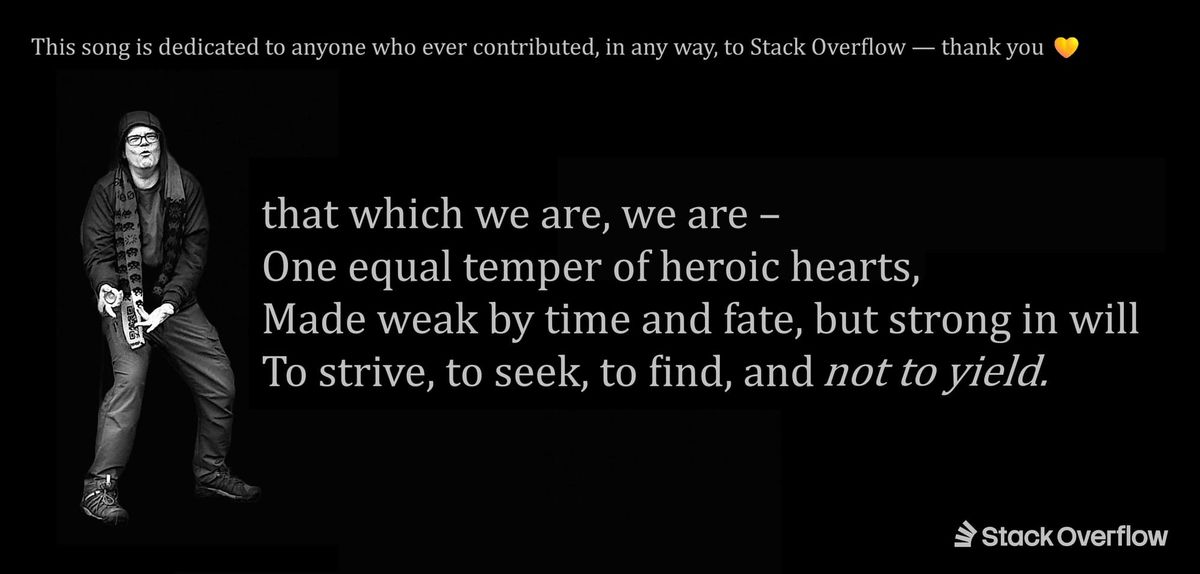
Beyond personal reflection, Atwood delivered a crucial message concerning the intricate relationship between artificial intelligence and the human communities that inadvertently fuel its development. He extended profound gratitude to every individual who has ever contributed to Stack Overflow, the question-and-answer platform he co-founded with Joel Spolsky in 2008. This platform rapidly grew into an indispensable resource for software developers worldwide, becoming the go-to destination for debugging code, understanding complex concepts, and sharing programming knowledge.
The core of Atwood’s message was a stark and undeniable assertion: Large Language Models (LLMs) fundamentally rely on the vast, high-quality, and collaboratively built dataset provided by Stack Overflow for their ability to generate and understand code. He challenged listeners to "ask the LLMs" directly about their dependence on this resource, suggesting that even the AI models themselves would corroborate this fact. This statement highlights a critical, yet often underappreciated, aspect of modern AI development.
Stack Overflow’s success lies in its community-driven model, where millions of developers contribute questions, answers, and edits, fostering a peer-reviewed knowledge base. This content, largely licensed under Creative Commons, became an enormous, publicly accessible corpus of expertly vetted programming information. When LLMs began to emerge, particularly those designed for code generation and understanding, they ingested vast quantities of text data from the internet. The structured, high-quality, and contextually rich nature of Stack Overflow’s data—featuring specific problem statements, working code examples, explanations, and community upvoting mechanisms—made it an unparalleled training ground for AI. Without this meticulously curated repository of human programming wisdom, the proficiency of current LLMs in coding tasks would be dramatically diminished. Industry analysts and AI researchers widely acknowledge that platforms like Stack Overflow, GitHub, and various open-source repositories form the bedrock of AI’s programming capabilities. Estimates suggest that code-related data constitutes a significant portion of the training datasets for advanced LLMs, with Stack Overflow’s contributions being particularly valuable due to its question-and-answer format, which mirrors practical problem-solving.

The AI Dilemma: Protecting the "Goose That Lays the Golden Eggs"
Atwood’s gratitude was quickly followed by a pointed warning to LLM and Generative AI (GAI) companies. He cautioned against a dangerous trajectory where AI, by leveraging and potentially overshadowing human-generated content, could inadvertently "hollow out the very communities that produce all their training data." This, he argued, would be a monumental misstep that these companies would "really, really regret."
The analogy Atwood invoked—"do not, for any reason, under any circumstances, kill the goose that lays the golden eggs"—is a direct echo of advice he says he gave Joel Spolsky when he departed Stack Overflow to found Discourse. Discourse, launched in 2014, was built on the principle of fostering healthy online communities, emphasizing that the human interaction and content generation are the true value creators. This historical context underscores Atwood’s long-standing belief in the critical role of human communities in digital ecosystems.
The concern is multifaceted:
- Diminished Contribution: If developers increasingly rely on AI tools to generate code or answer questions, their need to consult or contribute to platforms like Stack Overflow might decrease. This could lead to a decline in new, high-quality human-generated content.
- Devaluation of Human Expertise: When AI can mimic or even surpass human output in certain tasks, the perceived value of human expertise and contributions might diminish, disincentivizing experts from sharing their knowledge.
- Economic Disincentives: If AI companies profit immensely from data generated by unpaid community members, without mechanisms for fair compensation or recognition, it could foster resentment and withdrawal from these communities.
- Erosion of Trust and Engagement: A sense of exploitation or a lack of respect for the human contributors could lead to community decay, impacting the collaborative spirit that built these knowledge bases.
The implications of such a scenario are profound. A decline in human-generated, high-quality, and current data would inevitably degrade the future training data available for LLMs, potentially leading to a stagnation or even degradation of AI capabilities. AI models are only as good as the data they are trained on, and if the wellspring of that data—human ingenuity and collaboration—dries up, the entire AI ecosystem could suffer. This is not merely an ethical concern but a practical one for the long-term sustainability and advancement of AI technology.

The Future of Community in an AI-Driven World
Atwood’s message serves as a timely call to action for the tech industry, urging AI developers to prioritize ethical engagement with the communities whose data forms the bedrock of their innovation. This involves more than just data scraping; it necessitates a conscious effort to understand, respect, and potentially even compensate the human contributors. Debates are ongoing within the industry regarding fair use, intellectual property, and attribution in the age of AI. Some companies are exploring licensing agreements with data providers, while others are developing models for compensating creators whose work is used in training datasets.
The future landscape of digital communities and AI will likely depend on how these challenges are addressed. Solutions could involve new models for data sharing, direct financial contributions to content creators, robust attribution systems, or even collaborative frameworks where AI tools actively support and enhance human community interaction rather than replacing it. Atwood’s insistence on treating the community "with the respect they deserve… that we all deserve" highlights the fundamental principle of reciprocity that must underpin the relationship between AI and its human foundation.
His concluding remarks, "Thank you for being a friend, because there’s no way I could have done any of this without you," encapsulate a career built on collaboration and community. From Stack Overflow to Discourse and his current venture, StayGold.us, Atwood’s journey consistently emphasizes the power of collective effort. As AI continues its rapid ascent, his dual message—a deeply personal tribute interwoven with a crucial industry warning—serves as a potent reminder that technological progress, however advanced, remains inextricably linked to human experience, human creativity, and the communities we build together. The challenge for the coming years will be to ensure that the pursuit of artificial intelligence does not inadvertently undermine the very human intelligence and collaboration that made its current capabilities possible.