The AI Activation Paradox: Rapid Growth Meets Troubling Churn in the New SaaS Landscape

The landscape of Software-as-a-Service (SaaS) is undergoing a seismic shift, driven by the pervasive influence of artificial intelligence. Users are experiencing products and achieving value at unprecedented speeds, a phenomenon that has dramatically compressed the timeline from initial intent to tangible outcome. This acceleration, akin to the distribution revolution brought by mobile technology, is rendering traditional activation playbooks obsolete. However, a critical tension is emerging, as highlighted by recent research: while AI-native products are achieving hyper-growth, many are simultaneously experiencing significantly higher churn rates than their established counterparts. This paradox presents a profound challenge for SaaS companies, demanding a re-evaluation of what activation truly means in the age of AI.
The traditional SaaS activation challenge was largely centered on overcoming user friction during setup and onboarding. The objective was to guide users through a series of steps, often involving data imports, tool integrations, or workflow configurations, before they could experience the core value of the product. The prevailing strategy involved streamlining these processes—simplifying onboarding flows, reducing mandatory fields, and accelerating time-to-first-value. This approach proved effective for many years, enabling products to move users from initial signup to demonstrable utility.
AI has, in many respects, become the ultimate solution to this long-standing activation hurdle. Modern AI-powered products can now offer immediate value upon signup. Users can articulate their needs through natural language prompts and receive functional outputs within minutes, sometimes even seconds. The dreaded "empty-state problem," where users were confronted with a blank digital canvas, is rapidly diminishing. Products are now generating initial content, pre-populating environments, and guiding users through intuitive conversational interfaces rather than rigid, step-by-step tutorials. This rapid delivery of value is a significant advancement, fostering an immediate sense of accomplishment for the user.
However, this seemingly seamless experience masks a subtler, more insidious challenge. When AI automates the initial heavy lifting—the very tasks that previously required user effort and, crucially, understanding—it bypasses the process of building a user’s mental model of the product. This passive reception of value, while impressive, can lead to a disconnect. Users may be delighted by an AI’s output, even sharing it with colleagues, but they may not have deeply integrated the product into their daily workflows. Without this integration, the impetus to return when faced with a similar problem diminishes, as the product has not yet become an indispensable part of their operational toolkit.
This disconnect is increasingly being reflected in retention metrics. While AI-native products can achieve impressive early traction, with some reportedly reaching $1 million in Annual Recurring Revenue (ARR) within six months—a rate three times faster than traditional SaaS—their Net Revenue Retention (NRR) is often weaker. This disparity suggests that while initial activation is being achieved with remarkable efficiency, the long-term engagement and loyalty are lagging. The problem is not inherent to AI’s capability but rather a lag in how product teams are defining and measuring activation in response to AI’s transformative power.
Why Activation is Harder Than It Looks Right Now
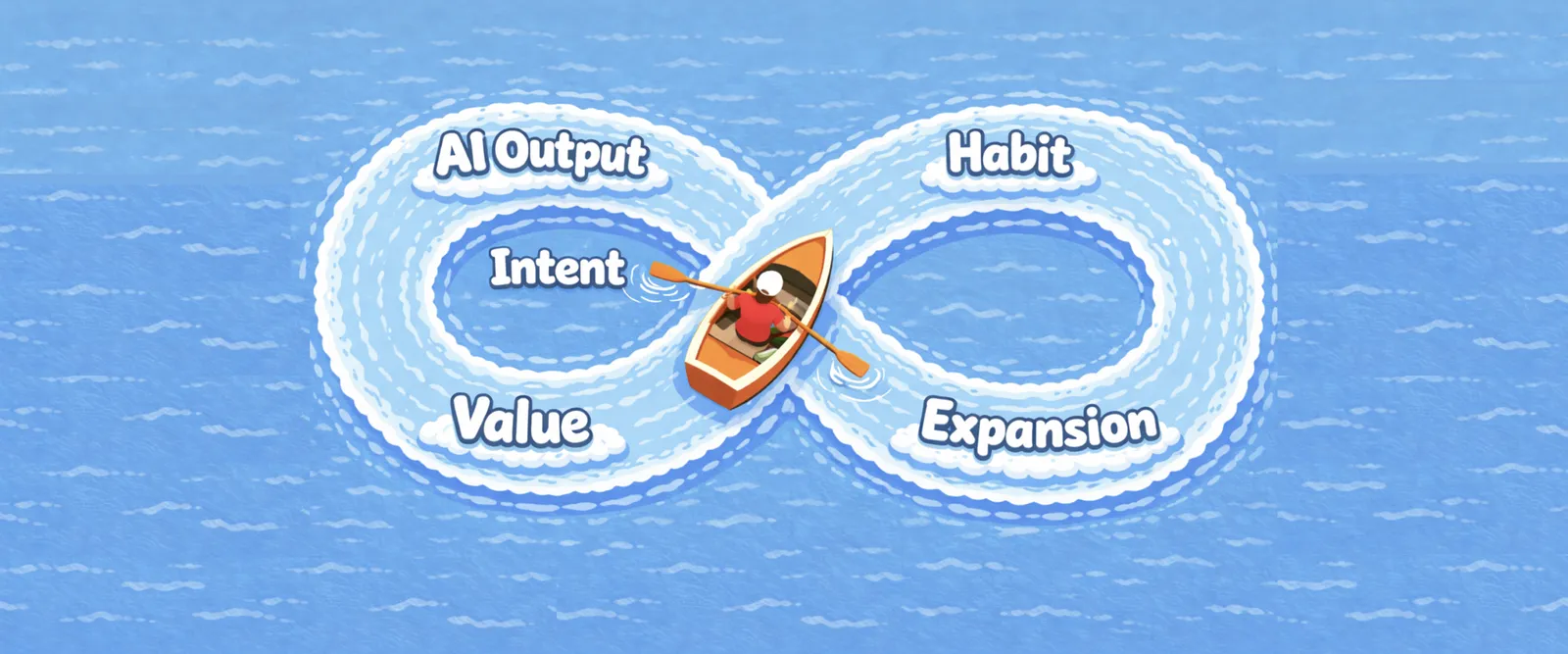
The fundamental shift lies in AI’s ability to abstract away the user’s initial labor. In the past, the friction of setup was a necessary evil, inadvertently fostering a deeper understanding of the product’s mechanics and capabilities. This effort built a cognitive foundation, creating a sense of ownership and investment that naturally encouraged repeat usage. AI, by eliminating this friction, provides a more direct path to perceived value. Users experience the "wow" moment without the accompanying learning curve, leading to a superficial engagement that does not necessarily translate into ingrained habits.
This phenomenon is particularly concerning because most activation dashboards are still calibrated to measure the success of overcoming the first activation hurdle—getting users to experience some value. The second, more critical challenge—ensuring that this initial value leads to sustained engagement—manifests much later, often appearing as churn weeks down the line. This temporal gap means that product teams may be celebrating successes that are not indicative of long-term product stickiness.
What the Best AI-Native Products Are Actually Doing
Leading AI-native products are not simply leveraging AI for speed; they are strategically re-architecting the user journey to foster deeper engagement. Four distinct patterns are emerging among those successfully navigating this new activation paradigm:
Pattern 1: AI-Generated First Outputs
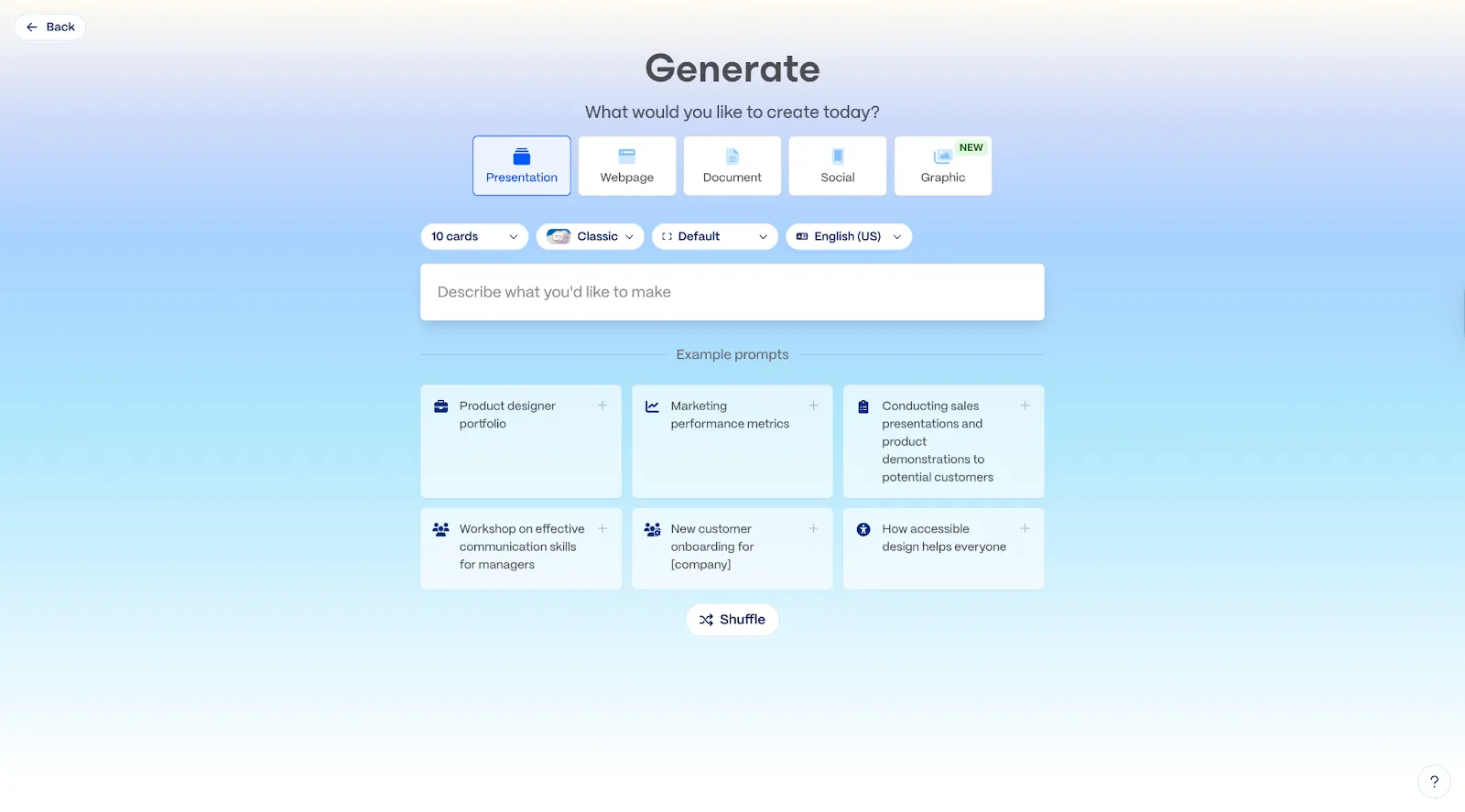
Instead of presenting users with an empty interface, the most effective AI products generate a tangible, working artifact from the outset. This could be a draft presentation, a pre-populated CRM pipeline, or an initial document draft. The user is not tasked with building from scratch but rather with refining and personalizing an AI-generated starting point. This approach, exemplified by tools like Gamma, which generates fully styled presentations within seconds based on user input, fundamentally alters the user’s perception of value. The immediate, tailored output creates a powerful psychological response: the user feels understood and is more inclined to engage further. The key differentiator here is specificity—an output that feels genuinely tailored, rather than templated, fosters a deeper sense of recognition and encourages continued interaction.
Pattern 2: AI-Assisted Setup
A significant bottleneck in traditional SaaS activation has been the configuration phase. Connecting external tools, importing data, and building intricate workflows often lead to user drop-off. AI is now dismantling this barrier. Companies like HubSpot utilize AI to generate CRM pipelines with minimal user input, while Intercom leverages AI to build help centers and chatbots from existing content. This AI-assisted setup transforms the onboarding process from a user-intensive task into an inference-driven one. The setup itself is not eliminated but rather shifted from user effort to model interpretation, allowing users to bypass complex configurations and directly access the product’s value.
Pattern 3: Conversational Onboarding
Traditional onboarding typically follows a rigid, linear path: Step 1, Step 2, Step 3. Conversational AI offers a more dynamic and adaptive alternative. By engaging users in real-time dialogue, products can understand genuine user intent—what they aim to achieve, for whom, and within what specific context. This adaptive approach transforms onboarding from a fixed script into an interactive feedback loop. Notion’s AI assistant, for instance, assists users as they work, responding to their immediate needs rather than guiding them through a predetermined curriculum. This deep understanding of context enhances the utility of every subsequent AI interaction.
Pattern 4: Context-Aware AI Inside the Workflow
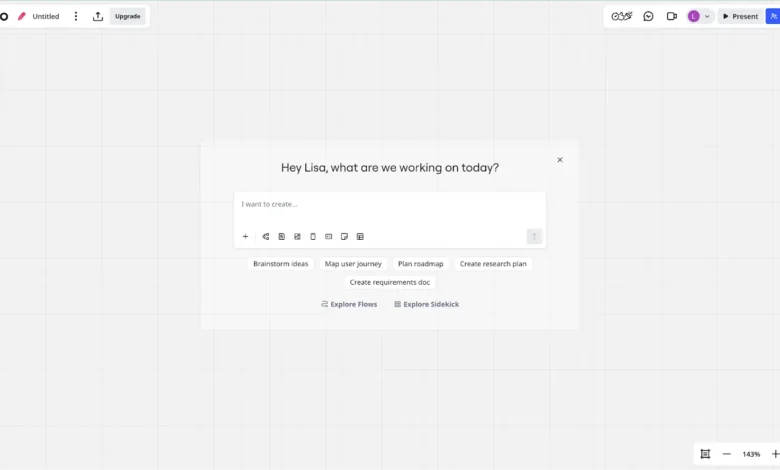
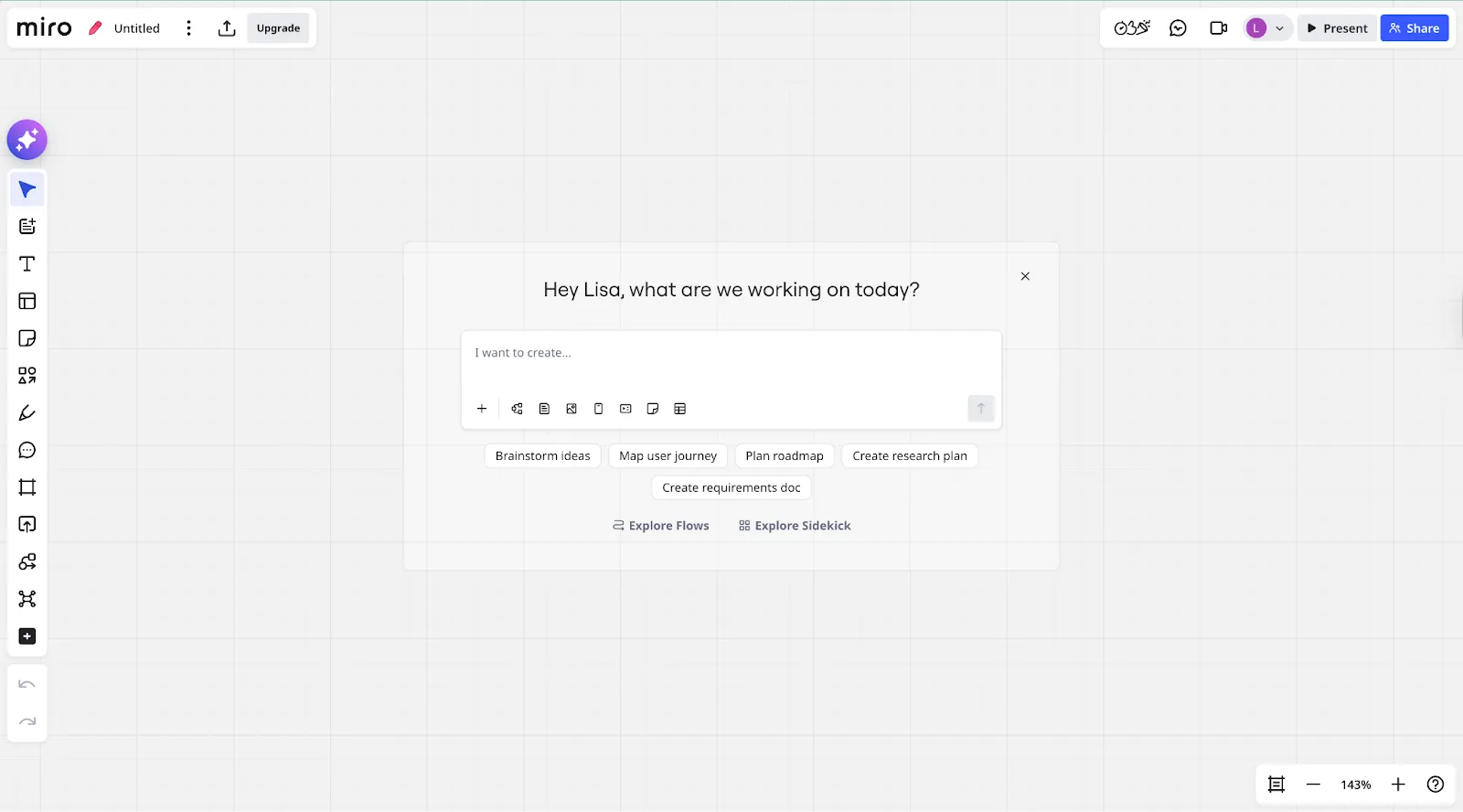
The most durable pattern for retention extends beyond the initial session and focuses on the product’s evolution over time. The most successful AI-native tools become increasingly valuable as users interact with them, accumulating context about their preferences, project history, and working styles. Miro’s AI, for example, operates within the existing canvas, summarizing, clustering, and generating content based on what is already present. The AI is not a standalone feature but an integrated element of the product’s core functionality. This continuous accumulation of context builds significant switching costs. As the product learns and adapts to the user, leaving becomes not just a matter of finding a new tool but of abandoning a personalized, context-rich environment.
The Gap Most Products Are Missing
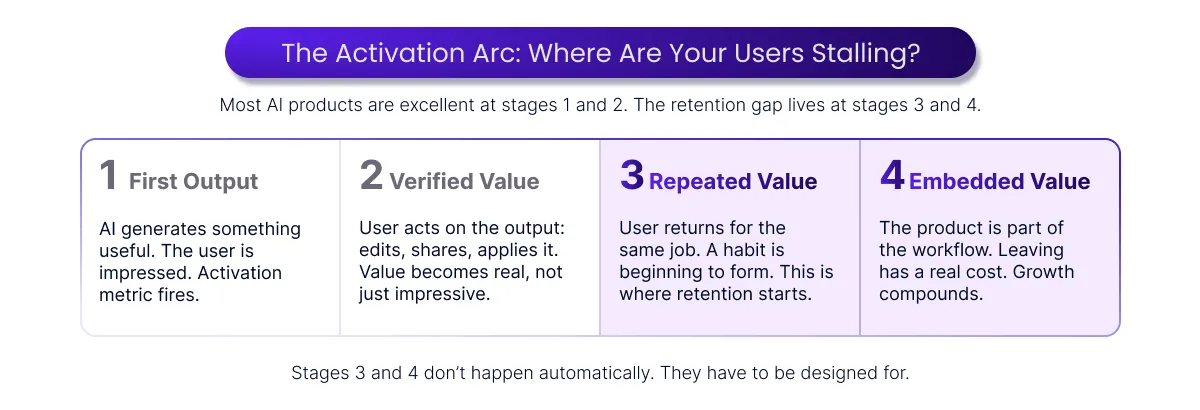
While these four patterns excel at creating an impressive first session and facilitating rapid initial value delivery, they do not automatically guarantee long-term engagement. The critical gap lies in the transition from passive reception to active utilization. A user who generates a presentation with AI and is impressed may close the tab, akin to experiencing a compelling demo. However, a user who generates that presentation, actively edits it, shares it with their team, and returns the following week to create another, has integrated the product into their workflow.
This distinction is crucial. Standard activation metrics often classify both users as "activated" because they reached a predefined milestone. However, only the latter user is likely to become a retained customer. The core difference lies in the user’s agency:
-
Acting on the Output: Users who edit, share, export, or apply AI-generated outputs have moved beyond passive consumption. They have made the AI’s work their own, transforming an impressive demonstration into a functional outcome. This transition from recipient to active participant is where perceived value solidifies into tangible utility.
-
Reason to Return: Designing explicit "return triggers" is paramount. This involves identifying specific, concrete events that will prompt a user to re-engage. For Loom, it was someone watching a video. For Slack, it was an incoming conversation. For Cursor, it’s the codebase residing within the product. These triggers are not passive benefits but actively built mechanisms that draw users back.
-
Accumulation of Context: Traditional SaaS products built switching costs through data—user files, contact lists, historical interactions. AI-native products must deliberately build a similar foundation. As the product gathers more information about user preferences, patterns, and team dynamics, its value increases, making it more costly and less desirable to switch to a less personalized alternative.
What This Means for Your Metrics
The current standard of measuring activation as a binary "milestone reached" is insufficient for the AI era. As the focus shifts from initial engagement to retention quality, metrics that offer deeper insights into the user journey are essential. Three key additions can provide a more accurate picture:
-
Downstream Action Rate: This metric tracks the percentage of users who take a specific, value-reinforcing action (e.g., editing, sharing, exporting) on their initial AI-generated output. It moves beyond mere generation to assess active utilization.
-
Return Trigger Engagement: This measures the frequency with which users engage with the designed return triggers (e.g., responding to notifications, initiating new projects based on previous work). It quantifies the effectiveness of mechanisms designed to foster habitual use.
-
Context Accumulation Depth: This metric assesses how much meaningful context the product has gathered about a user over time (e.g., preferences, project history, team collaboration patterns). It quantifies the development of personalized value and the associated switching costs.
These metrics, when analyzed in conjunction, tell a more complete story than activation rates alone, indicating not just whether users are reaching value but whether that value is enduring.
What to Do Differently Starting Now
Adapting to this new reality does not necessitate a complete product overhaul but rather a strategic refinement of focus:
-
Redefine Your Activation Event: If your current activation milestone is simply "onboarding completion" or "first output generation," you are measuring a precursor to value, not its confirmation. Incorporate downstream actions—editing, sharing, applying, or returning to the output—as part of your activation criteria. While this may initially lower your activation rate, the resulting cohort will be far more predictive of future retention.
-
Design the Return Trigger Explicitly: Before your next development sprint, ask: "What specific, concrete event will bring a user back to our product tomorrow?" Avoid vague answers like "because it’s useful." Instead, build concrete triggers such as notifications, collaboration pings, saved project reminders, or the arrival of new data.
-
Map Context Accumulation Points: Trace the user journey and identify where the product begins to gain meaningful insights about the user. If this accumulation of context is delayed or absent, it indicates a weakness in building the switching costs necessary for durable retention.
-
Separate Your Cohorts: Within your analytics platform, create distinct cohorts: users who took a downstream action on their first AI output versus those who did not. Analyzing the retention curves of these groups at 30, 60, and 90 days will reveal the true impact of active engagement and highlight the magnitude of your activation opportunity.
The New Activation Standard
AI has undeniably revolutionized the initial user experience, making rapid value delivery, automated setup, and adaptive onboarding the new baseline. Products that fail to embrace these advancements are already at a disadvantage. However, the companies that will achieve sustained, compounding growth in the coming years will not be those with the most sophisticated AI onboarding. They will be the ones that successfully transform early AI-driven value into ingrained workflow habits, aligning their metrics, product decisions, and growth strategies around this complete user journey.
The emerging data from sources like ChartMogul underscores this point: rapid early growth without strong Net Revenue Retention is not a sustainable growth story but an acquisition success plagued by a retention deficit. Bridging this gap begins with a fundamental redefinition of activation, recognizing that the fastest path to first value is not necessarily the shortest path to a durable habit. As the adage goes, "The fastest product to deliver value gets a foot in the door. The product that becomes part of the user’s workflow is the one that stays."
Lisa Heiss, a Product-Led Growth (PLG) and activation strategist and founder of UXELERATE, emphasizes this point. She works with B2B SaaS founders from Seed through Series B stages, focusing on building robust activation, conversion, and retention architectures. Her insights highlight the critical need for companies to move beyond superficial AI-driven engagement and cultivate genuine, long-term user integration.