The Ultimate 2026 Smartwatch Gift Guide: Choosing the Right Wearable for Every Ecosystem and Athlete

Selecting the ideal smartwatch as a gift has become an increasingly complex undertaking in 2026, driven by a crowded marketplace where manufacturers pitch an array of specialized health, fitness, and lifestyle features. Unlike standalone consumer electronics, smartwatches are fundamentally ecosystem-dependent, meaning their utility is largely dictated by the smartphone the recipient already carries in their pocket. For gift-givers navigating this diverse landscape, a strategic approach requires evaluating compatibility, use cases, and generational value rather than simply defaulting to the absolute newest—and often most expensive—model on the market.
Market Evolution and the Ecosystem Factor
The consumer wearable market has matured significantly over the past decade. What began as basic step-trackers and notification mirrors have evolved into sophisticated medical-grade health monitors, athletic performance hubs, and extensions of mobile operating systems. Major technology conglomerates—specifically Apple, Google, and Samsung—have tightly integrated their wearables into proprietary software suites, creating seamless experiences for users deeply embedded within their respective ecosystems. Meanwhile, specialized manufacturers like Garmin continue to dominate the dedicated fitness sector by prioritizing biometric accuracy and industry-leading battery longevity over superficial smart-home integrations.
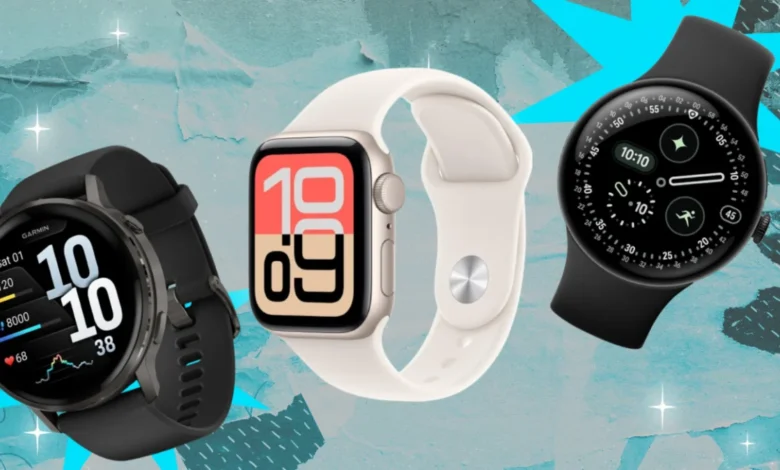
When analyzing smartwatch options for gifting, industry analysts emphasize that pairing a device with the wrong operating system severely diminishes its functionality. For instance, while a Garmin Venu 4 operates smoothly across both Android and iOS, iPhone users miss out on fundamental capabilities such as replying to text messages directly from the wrist. Conversely, Android users purchasing an Apple Watch will find the device completely incompatible during the initial pairing process. Consequently, the primary rule of smartwatch acquisition remains ecosystem alignment.
The Apple Ecosystem: Balancing Cost, Capability, and Extreme Performance
For recipients utilizing iPhones, the Apple Watch lineup dominates the market. However, the release of the Apple Watch Series 12 and the Apple Watch Ultra 4 has created distinct tiers for everyday users and high-performance athletes.
The Apple Watch SE 3: Best Value for Most Users
While technology enthusiasts are often drawn toward flagship models boasting cutting-edge architecture, the vast majority of consumers do not require bleeding-edge specifications for standard daily tasks. For individuals seeking reliable fitness tracking, sleep monitoring, and seamless notification management, the Apple Watch SE 3 emerges as the most sensible recommendation.
Priced as Apple’s entry-level offering, the SE 3 is available in 40mm and 44mm configurations and features an Always-On OLED display capable of reaching 1,000 nits of brightness. Although it omits the brand-new S11 chip found in the Series 12, it incorporates the robust S10 processor—only one generation behind—which fully supports Apple Intelligence and Siri AI features introduced in recent software iterations. The device delivers a dependable 18-hour battery life, which extends to 32 hours under Low Power Mode, alongside fast-charging capabilities that restore zero to eighty percent power in approximately 45 minutes. While it lacks high-end medical sensors such as an ECG, blood oxygen monitoring, and hypertension alerts, its comprehensive suite of heart-rate tracking, sleep analysis, and cycle tracking satisfies the everyday needs of most consumers.
The Apple Watch Ultra 4: Built for Extremes
For athletes, endurance runners, and individuals engaging in rigorous outdoor activities, standard smartwatches often fall short in durability and power longevity. The Apple Watch Ultra 4 addresses these demands with a ruggedized titanium build, an expansive OLED display capable of an impressive 3,000 nits, and water resistance up to 100 meters with an integrated depth gauge rated down to 40 meters.
While the Ultra 4 represents an incremental upgrade over its predecessor—introducing the S11 chip, an upgraded Health Sensing System, the new "Readiness" application, and an extended battery life of up to 50 hours—market availability heavily favors the newer iteration. Unopened units of the Ultra 3 have become scarce through standard retail channels, making the Ultra 4 the most reliable and future-proof gift choice for serious athletes within the Apple ecosystem. Furthermore, built-in cellular capabilities come standard on the Ultra line, allowing recipients to make calls and stream media independently of their iPhones.
The Android Landscape: Google Pixel and Samsung Galaxy Options

For consumers anchored in the Android ecosystem, hardware choices diverge primarily between Google’s Pixel hardware and Samsung’s Galaxy lineup. In both cases, market trends indicate that previous-generation models currently offer superior value compared to their newly released successors.
Google Pixel Watch 4: The Ideal Match for Pixel Owners
Google’s wearable strategy centers around deep integration with its Pixel smartphone line and the implementation of advanced artificial intelligence via Gemini. While the Pixel Watch 5 represents Google’s latest hardware release, the Pixel Watch 4 presents a compelling financial value without sacrificing core functionality.
Available in 41mm and 45mm sizes, the Pixel Watch 4 features a vibrant AMOLED display peaking at 3,000 nits, protected by robust water and dust resistance verified by an IP68 rating. Powered by the Snapdragon W5 Gen 2 chip paired with 2GB of RAM and 32GB of internal storage, the device delivers between 30 and 40 hours of battery life depending on the case size. Health and safety suites are particularly robust, encompassing a localized heart rate monitor, ECG, skin temperature sensors, emergency satellite connectivity, dual-band GPS, Google Health Coach, and Loss of Pulse Detection. Because recent software updates have retroactively brought many of the Pixel Watch 5’s software features—such as Workout Builder and Health Guardian—to the Pixel Watch 4, opting for the older model allows gift-givers to secure premium hardware at a reduced price point.
Samsung Galaxy Watch 8: The Standard for Galaxy Users
Similarly, Samsung Galaxy smartphone users derive the maximum benefit from pairing their devices with a Galaxy Watch. The Galaxy Watch 8, powered by the Exynos W1000 chip, mirrors many of the high-end display specifications of its competitors, featuring a 3,000-nit AMOLED screen available in 40mm, 44mm, and a 46mm Classic variant.
Samsung has positioned the Galaxy Watch 8 as a comprehensive wellness tracker, equipping it with sleep coaching, running analytics, sleep apnea detection, stress alerts, and an overarching "Energy Score" that calculates physical recovery readiness. With an IP68 dust and water resistance rating, emergency SOS, and fall detection, the watch serves as a reliable daily companion. While the Galaxy Watch 9 introduces minor processor bumps and exclusive software additions, the Galaxy Watch 8 provides essentially identical styling and operational capabilities at a more advantageous price point.
The Dedicated Fitness Contender: Garmin Venu 4
While Apple, Google, and Samsung approach smartwatches primarily as extensions of communication and lifestyle devices that happen to track health, Garmin approaches the category from the opposite direction: fitness instrumentation augmented by smart features. For dedicated runners, triathletes, and fitness enthusiasts who prioritize biometric depth and battery longevity over app ecosystems, Garmin remains the gold standard.
The Garmin Venu 4 breaks conventional smartwatch paradigms by offering battery life that is measured in weeks rather than hours. While utilizing an OLED display in 41mm or 45mm configurations, the device delivers up to four days of continuous use with the Always-On display enabled, and up to twelve days with the feature disabled.
Garmin’s tracking capabilities are exceptionally granular. The Venu 4 continuously monitors pulse metrics every second, provides advanced sleep coaching with nap detection, and generates daily suggested workouts tailored to specific athletic disciplines. Running-specific metrics include GPS-based distance tracking, stride length, ground contact time, running power, and real-time VO2 max updates. While cross-platform compatibility allows the watch to pair with both Android and iOS devices, Android users retain distinct advantages, such as direct text messaging and notification image viewing, which remain restricted on iPhones due to Apple’s closed software architecture.
Implications and Buying Strategy for Holiday Shoppers
As consumer technology prices continue to fluctuate, the decision to purchase a smartwatch as a gift ultimately hinges on a thorough assessment of the recipient’s daily habits and existing hardware dependencies. Analysts note that gifting a last-generation flagship device—such as the Pixel Watch 4 or Galaxy Watch 8—frequently yields a higher satisfaction-to-cost ratio than purchasing entry-level current-generation hardware, as these mature devices retain robust software support cycles while benefiting from retail price adjustments.
Conversely, for users requiring specialized durability, such as deep-sea divers or extreme endurance athletes, investing in top-tier specialized hardware like the Apple Watch Ultra 4 or a dedicated Garmin fitness watch ensures that the recipient’s specific performance requirements are met without compromise. By identifying the smartphone ecosystem first and aligning the wearable’s core strengths with the user’s primary activities—whether that is casual daily tracking, advanced athletic training, or medical-grade health monitoring—gift-givers can navigate the complex 2026 smartwatch market with confidence and precision.