Bridging the Data Divide: How Amazon Quick Unifies Structured and Unstructured Business Intelligence

Modern enterprises face a persistent technological paradox: while the volume of data generated by organizations is growing at an unprecedented rate, the ability to derive actionable insights from that data is frequently hampered by fragmentation. Data typically exists in two distinct silos. Structured data—the rows and columns of databases, spreadsheets, and CRM platforms—provides the "what" of business performance. Conversely, unstructured data—the dense, narrative-rich landscape of internal reports, white papers, strategy memos, and email threads—provides the "why." Traditionally, bridging these two worlds has required complex ETL (Extract, Transform, Load) pipelines, manual data correlation, and technical proficiency in multiple query languages. Amazon Quick, a recently evolved tool within the AWS ecosystem, seeks to dissolve these barriers by providing a unified conversational interface that allows users to interact with both structured and unstructured data through a single AI-driven agent.
The Evolution of the Data Silo Problem
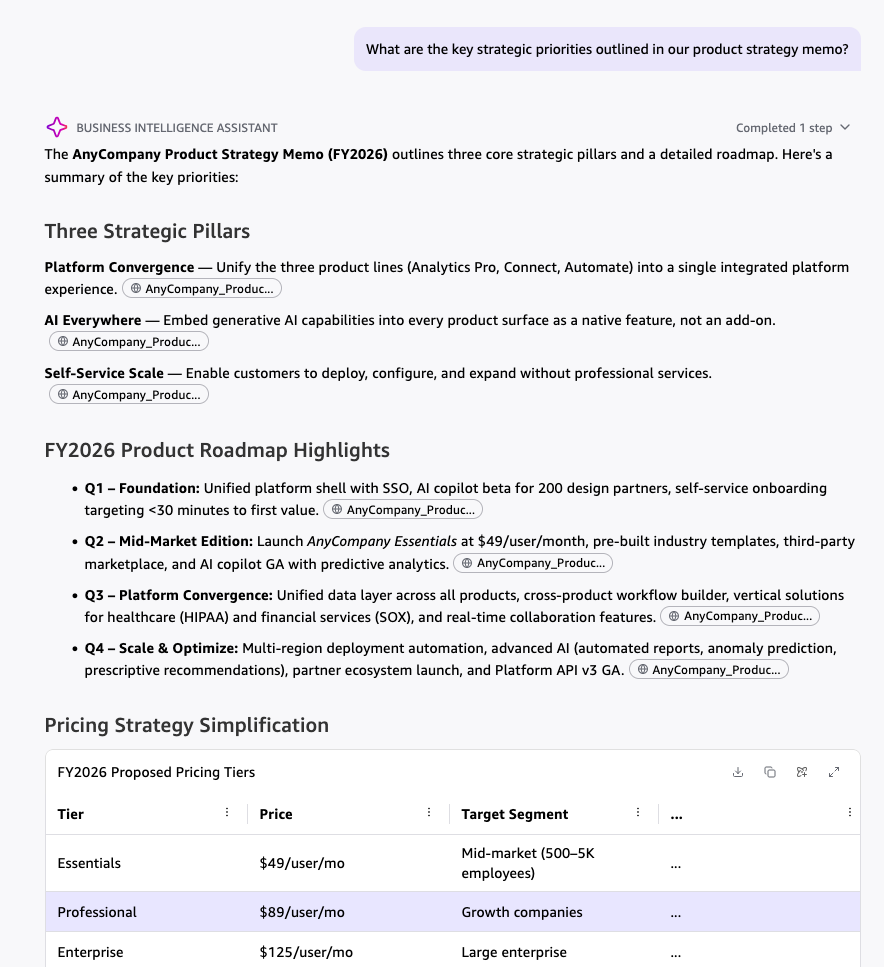
For decades, the standard approach to business intelligence (BI) involved building data warehouses designed exclusively for structured information. This worked well for retrospective reporting on sales figures or inventory levels. However, as organizations shifted toward AI-driven decision-making, the limitations of this model became apparent. According to industry research, approximately 80% of an enterprise’s data is unstructured. When a business leader asks a question such as, "How do our 2025 sales results align with the market trends identified in our analysis report?" the answer requires a synthesis of quantitative financial records and qualitative strategic documentation.
Previously, this required a human analyst to perform a "swivel-chair" operation: querying a database for the numbers, reading through a PDF report for the context, and manually synthesizing the two. The introduction of Amazon Quick represents a shift in this paradigm, moving from manual integration to agentic, AI-facilitated retrieval and reasoning.
Architectural Framework for Unified Intelligence
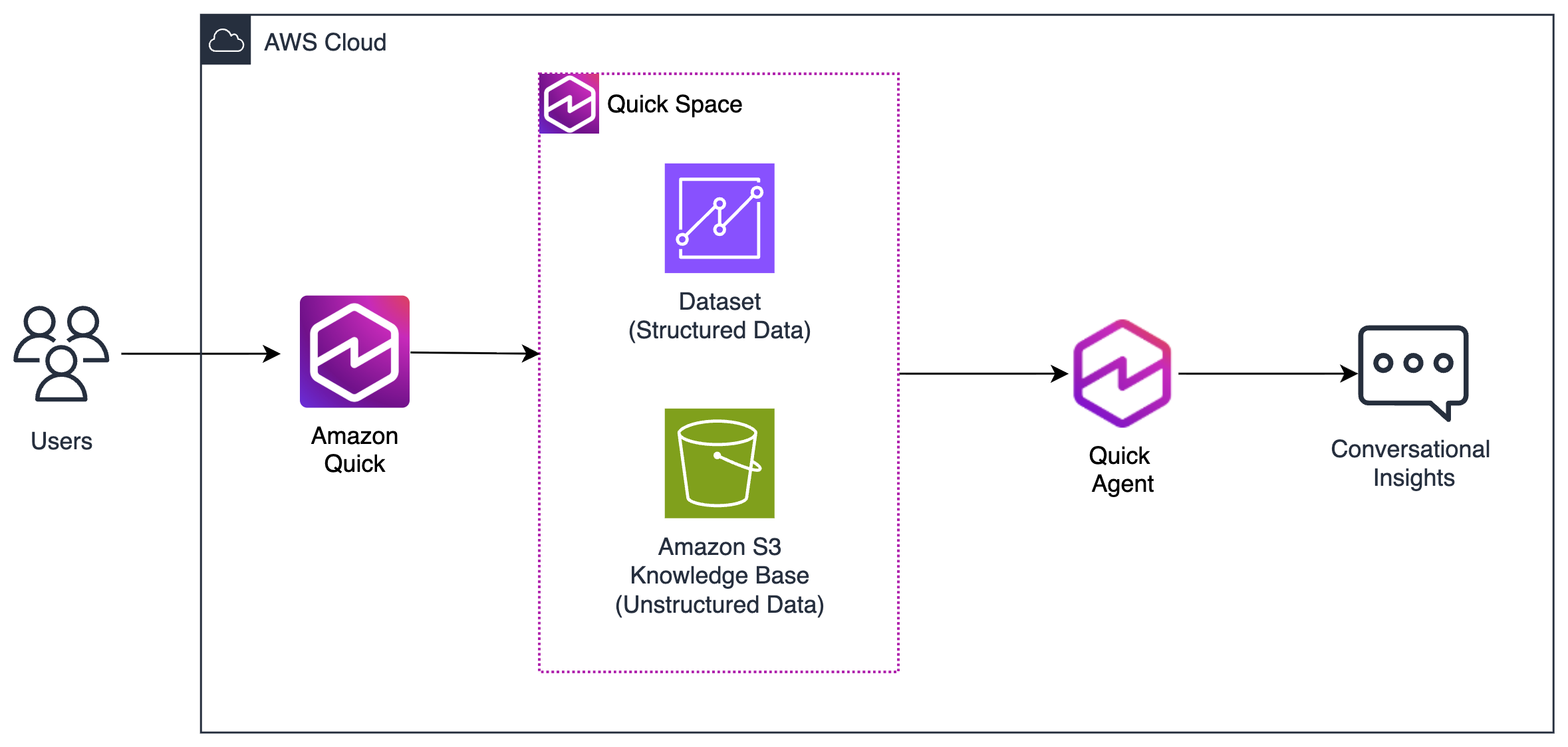
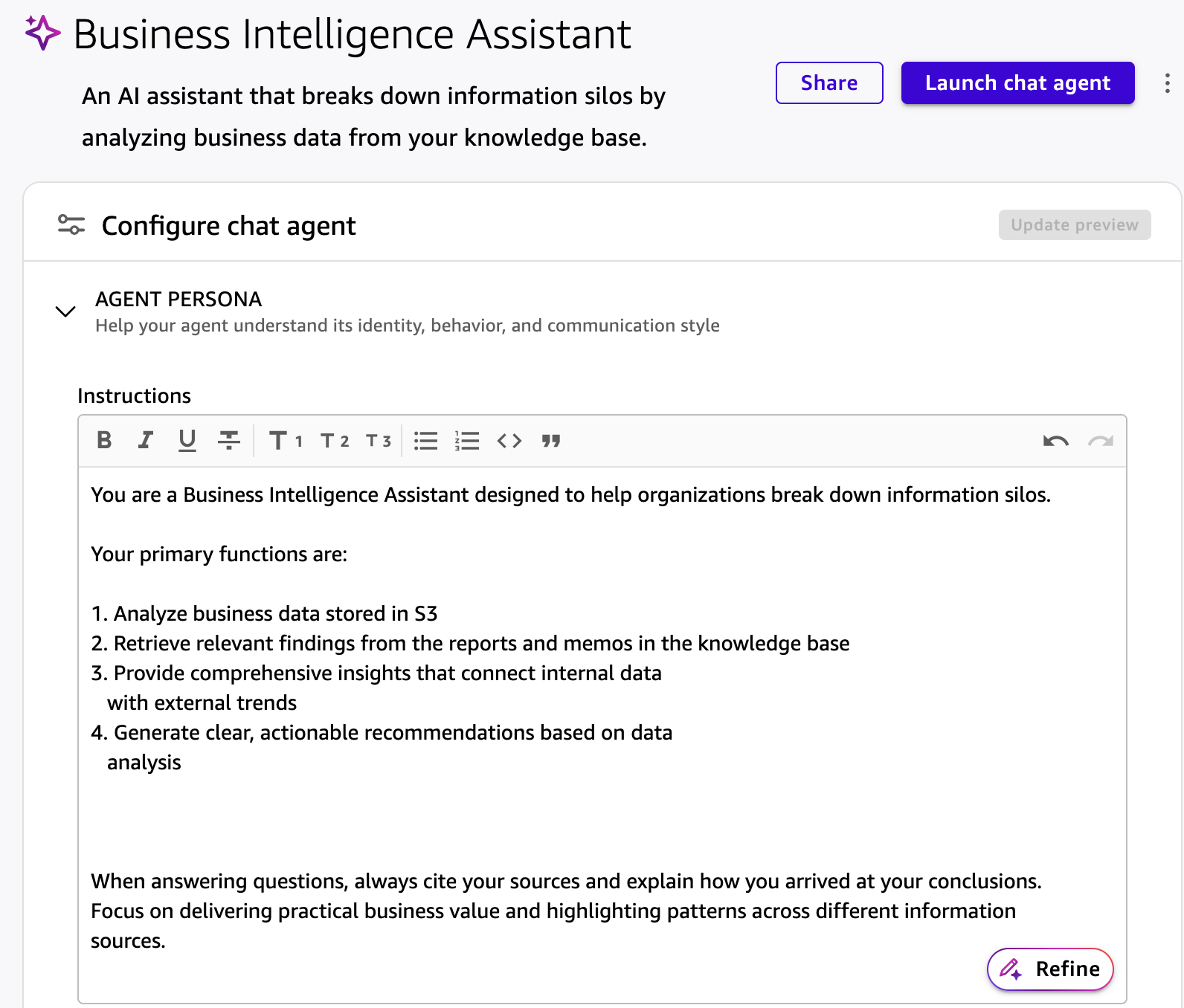
The architecture behind this solution is structured into three distinct layers: the data integration layer, the workspace (or "Space") layer, and the agentic intelligence layer.
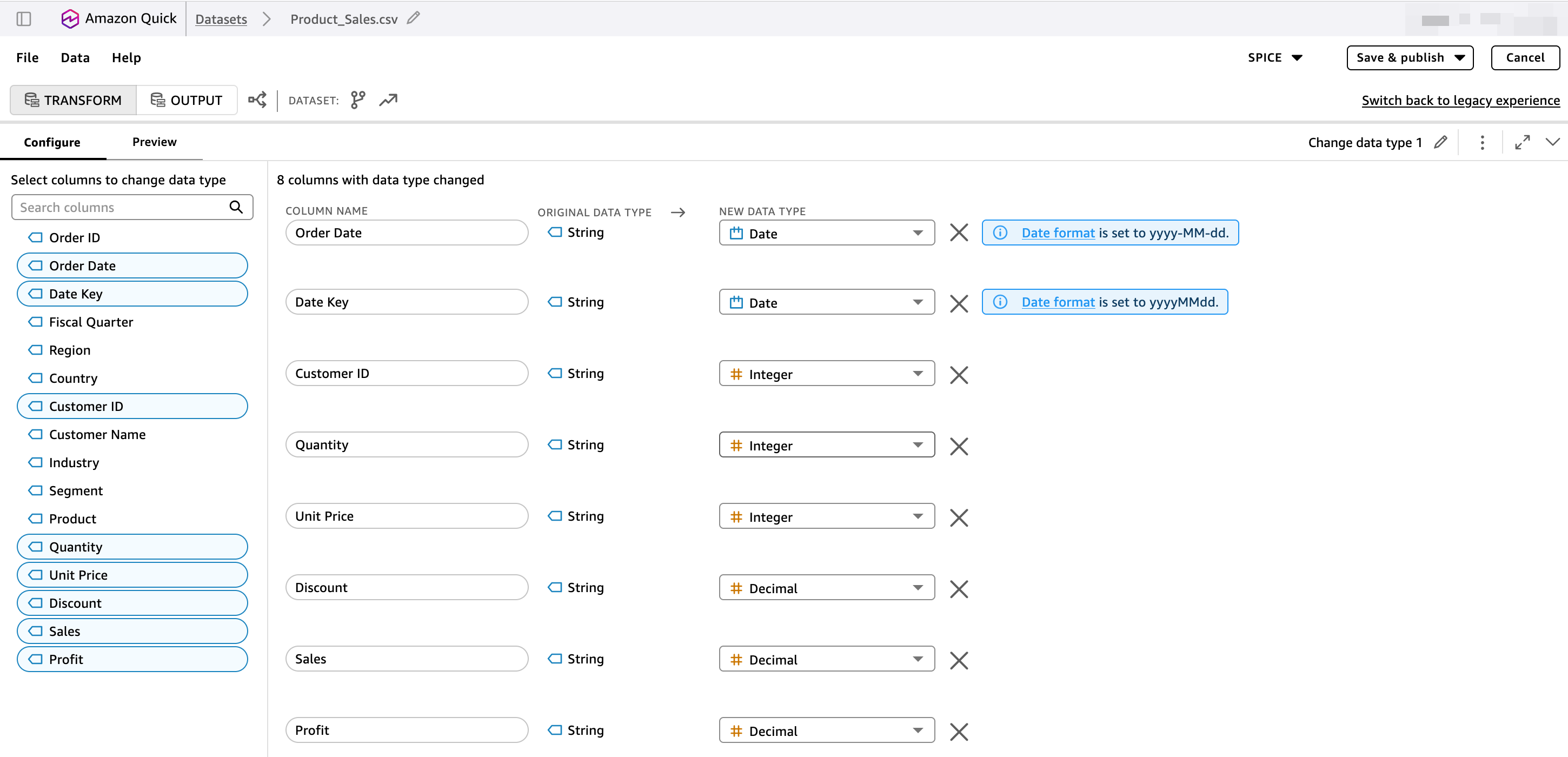
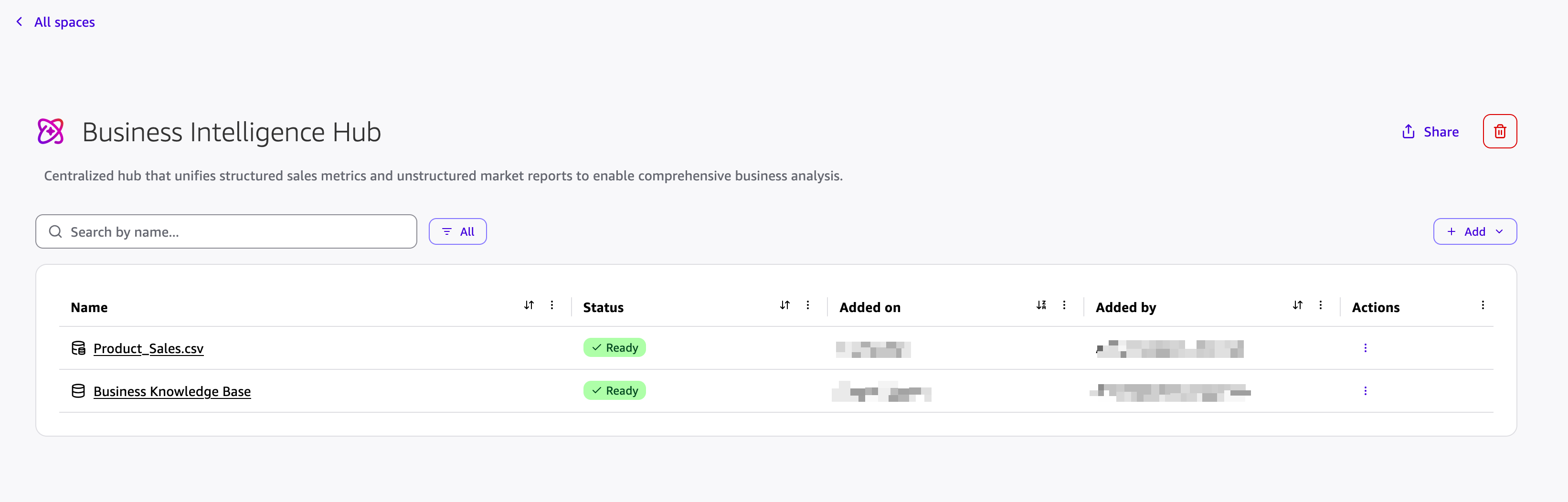
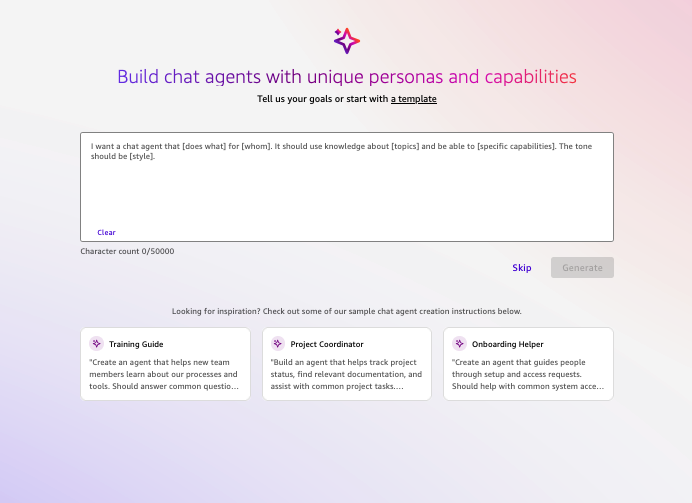
The data integration layer utilizes S3-backed knowledge bases for unstructured documents, allowing the system to index PDFs, text files, and HTML reports. Simultaneously, it uses enriched datasets to handle structured files, such as CSVs or database exports. These are consolidated within a "Space"—a logical boundary that acts as a secure container for these disparate assets. Finally, the agentic layer serves as the interface. By deploying a custom chat agent, users can issue natural language queries. The agent, powered by a large language model (LLM), determines whether the query requires a SQL-like lookup in the structured dataset or a semantic search across the knowledge base.
Implementing the Unified Workflow
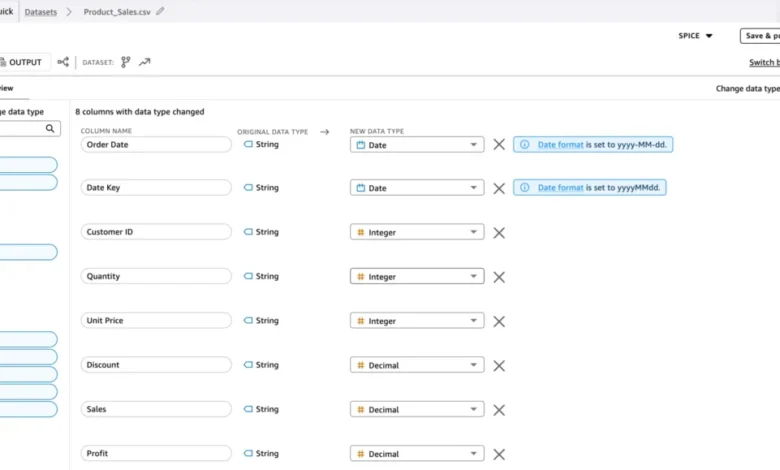
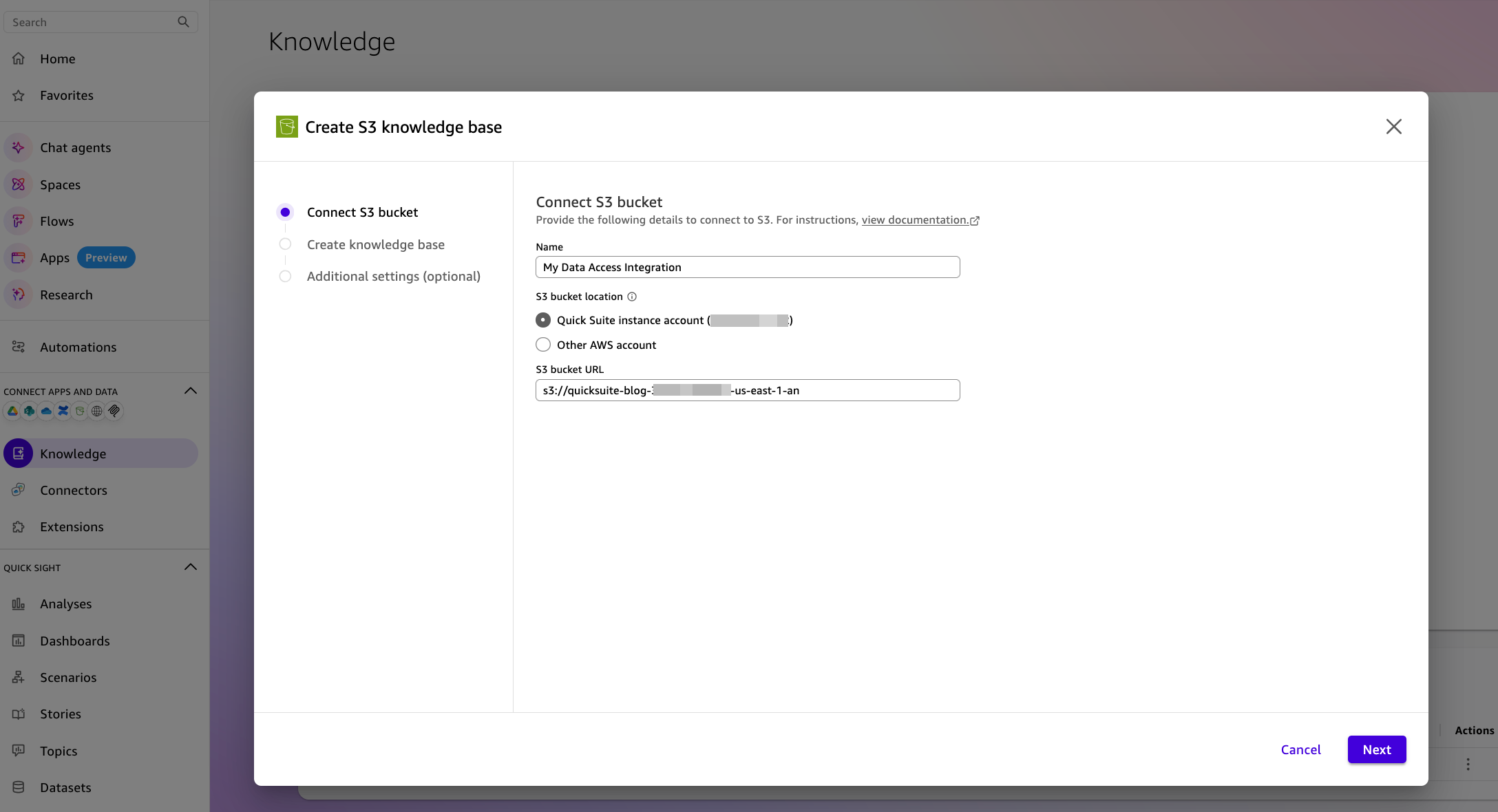
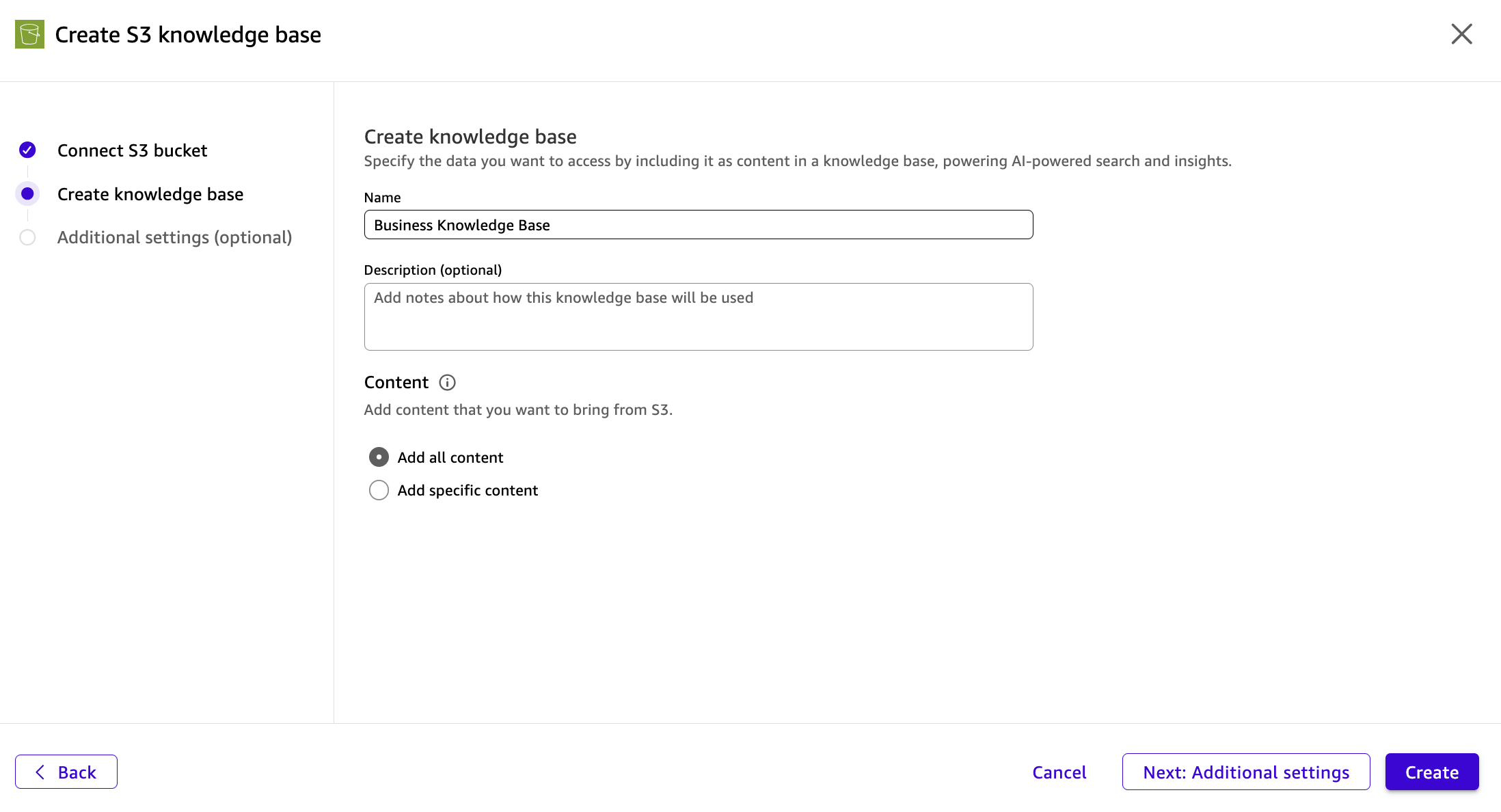
The practical application of this technology follows a systematic deployment process. Organizations start by connecting Amazon S3 buckets to the Amazon Quick console, where the system initiates an indexing process to make the unstructured content "searchable." Following this, structured data is uploaded into the platform’s in-memory calculation engine, SPICE.
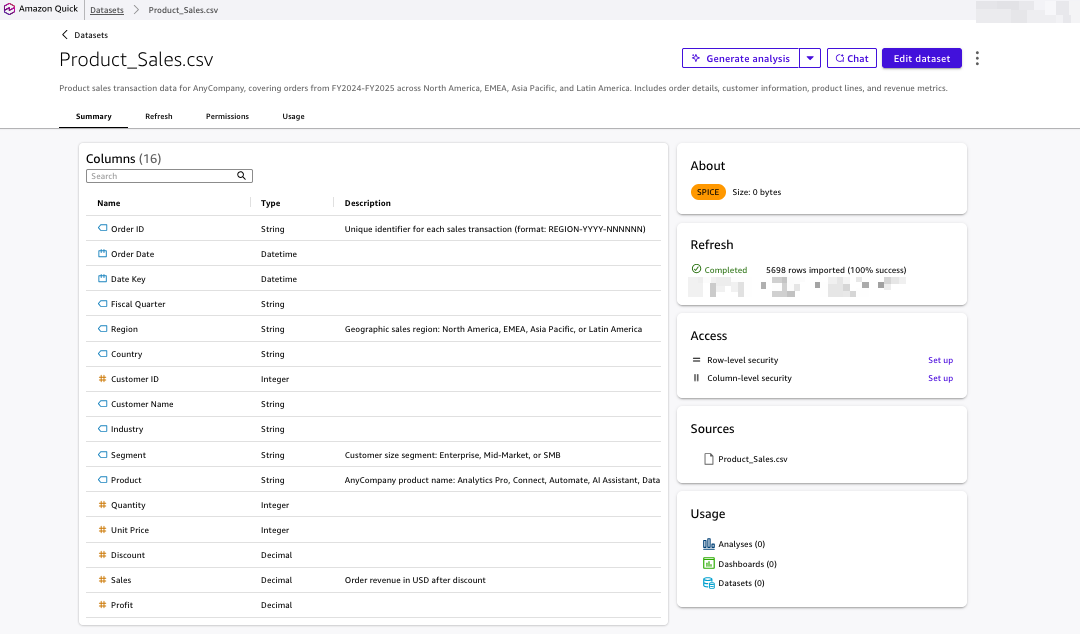
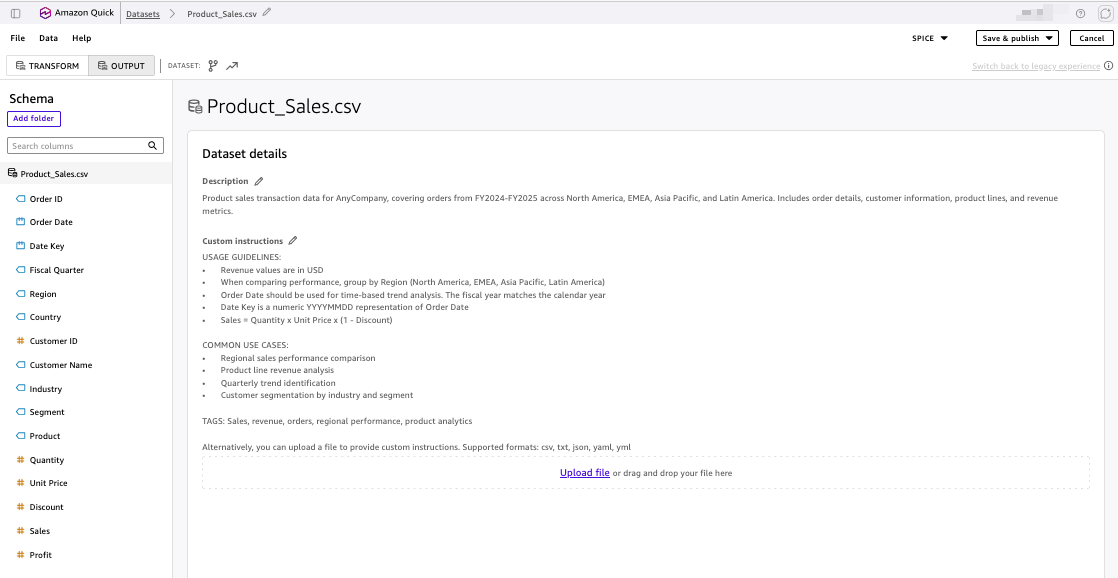
A critical component of this process is "enrichment." Simply uploading data is insufficient for high-fidelity AI performance. By adding metadata, semantic descriptions, and explicit usage guidelines—such as defining exactly how "revenue" is calculated or which regional segments are included in specific reports—the developer provides the agent with the necessary context to translate vague natural language into precise SQL queries. For instance, by tagging columns and providing custom instructions, an organization ensures the agent does not conflate different currency formats or misinterpret fiscal year cycles.
The Power of Conversational BI
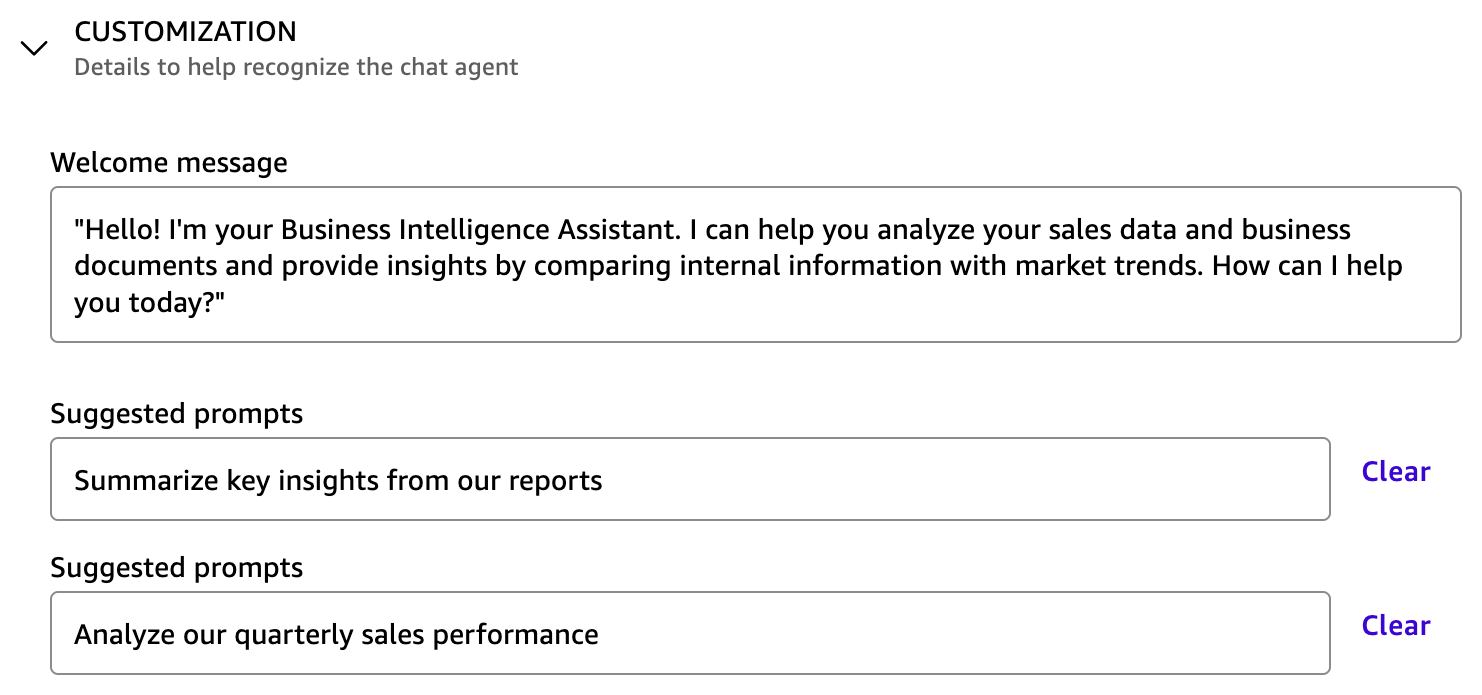
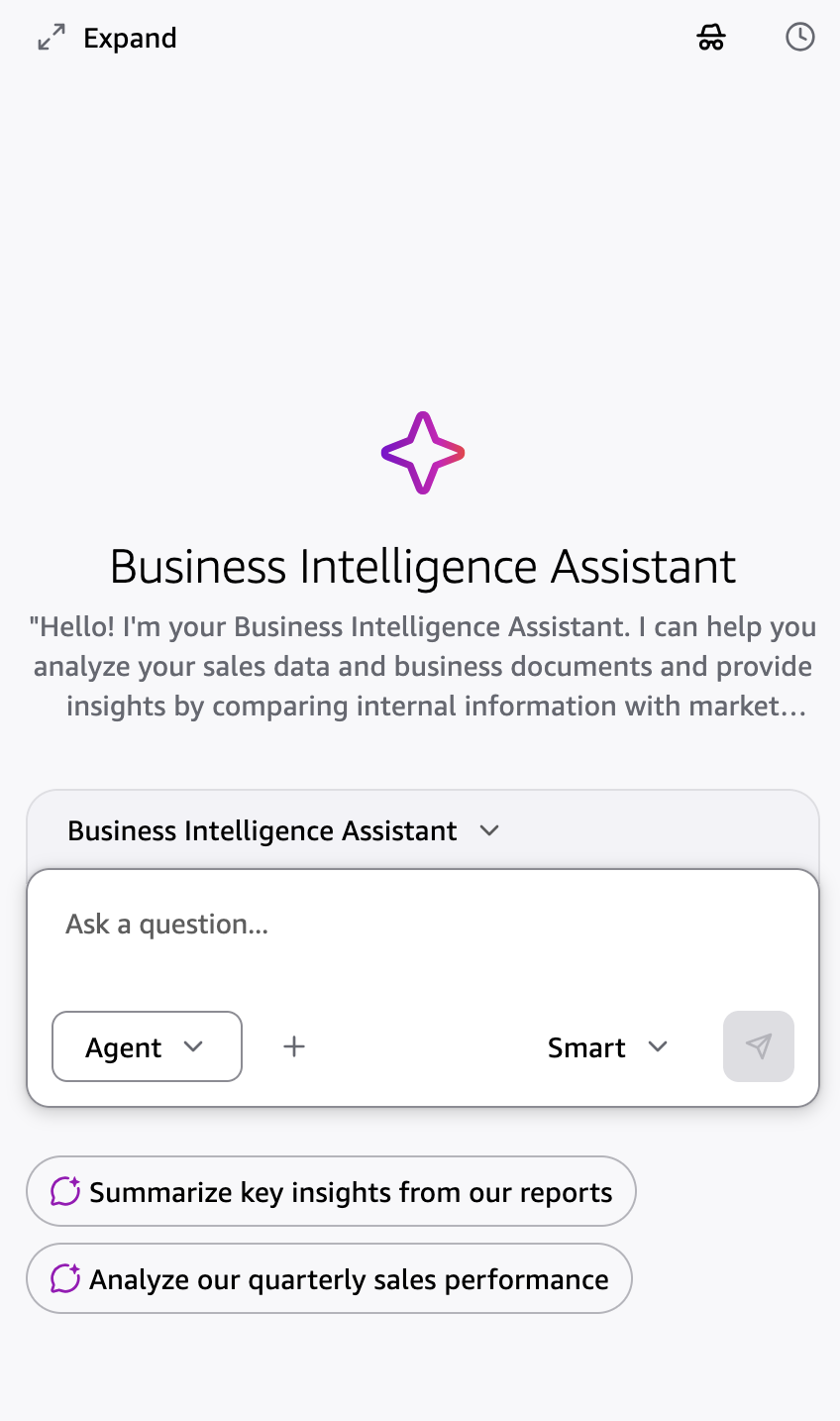
Once the infrastructure is established, the user experience changes fundamentally. Instead of navigating dashboards or building custom charts, a user can interact with the system via a chat interface. The agent acts as a mediator, performing complex data operations in the background.
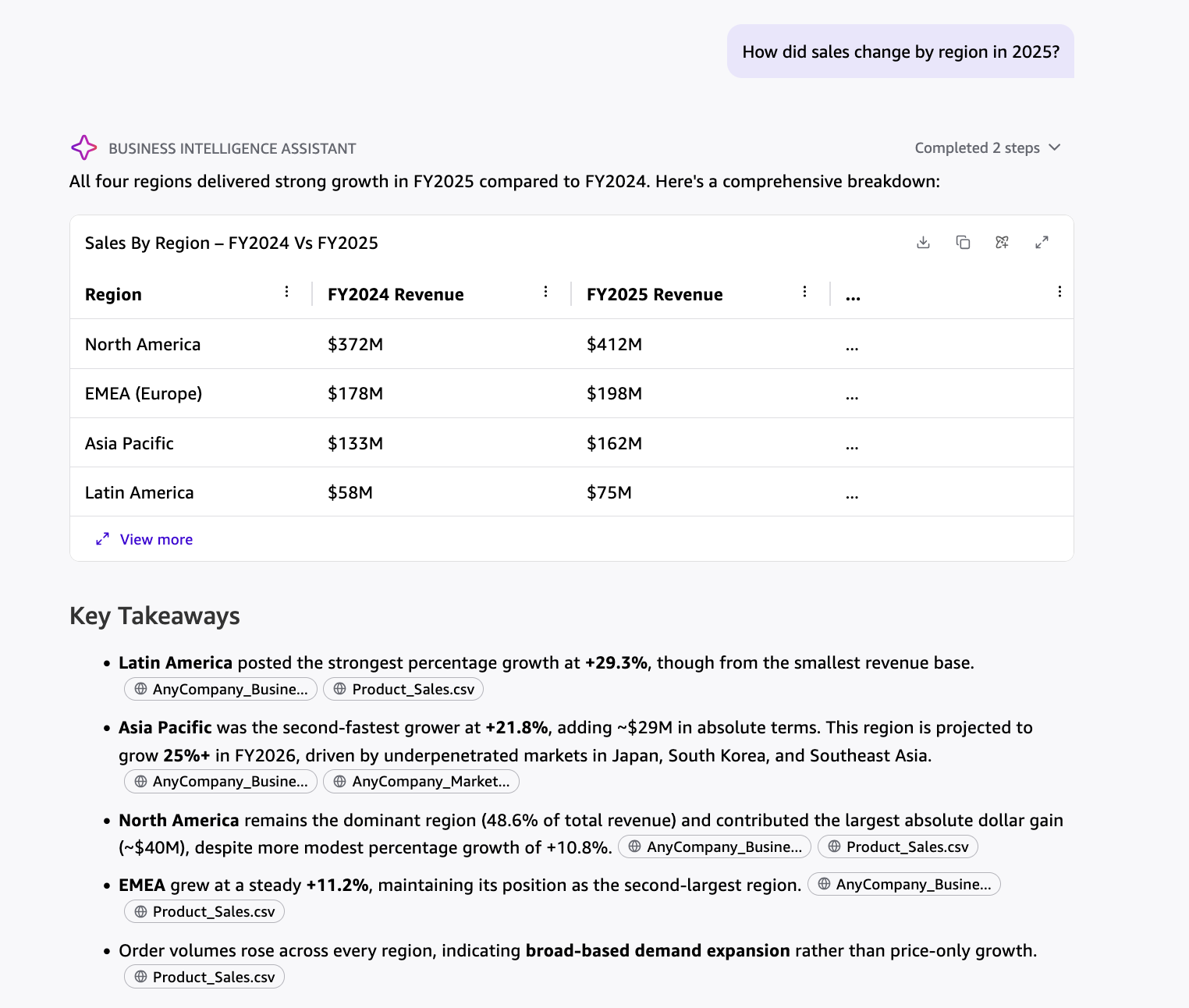
When a user asks, "How did sales change by region in 2025?", the system does not simply return a number. It executes a text-to-SQL transformation, retrieves the relevant figures from the structured dataset, and cross-references them with any qualitative analysis found in the S3 knowledge base. The output is a comprehensive response that includes both the quantitative result and the context behind the numbers, complete with source citations. This transparency is vital for corporate accountability, as it allows users to verify the agent’s reasoning by clicking through to the specific documents or raw data points used to generate the answer.
Generating Artifacts and Scaling Insights
The utility of this system extends beyond mere analysis. The AI agent can be instructed to synthesize its findings into professional-grade artifacts, such as PowerPoint presentations or Excel-formatted reports. This capability effectively collapses the time between insight and execution. A department head can request a "Q4 2025 Sales Performance Review," and the system will produce an eight-slide presentation deck complete with the relevant data charts and summary narratives.
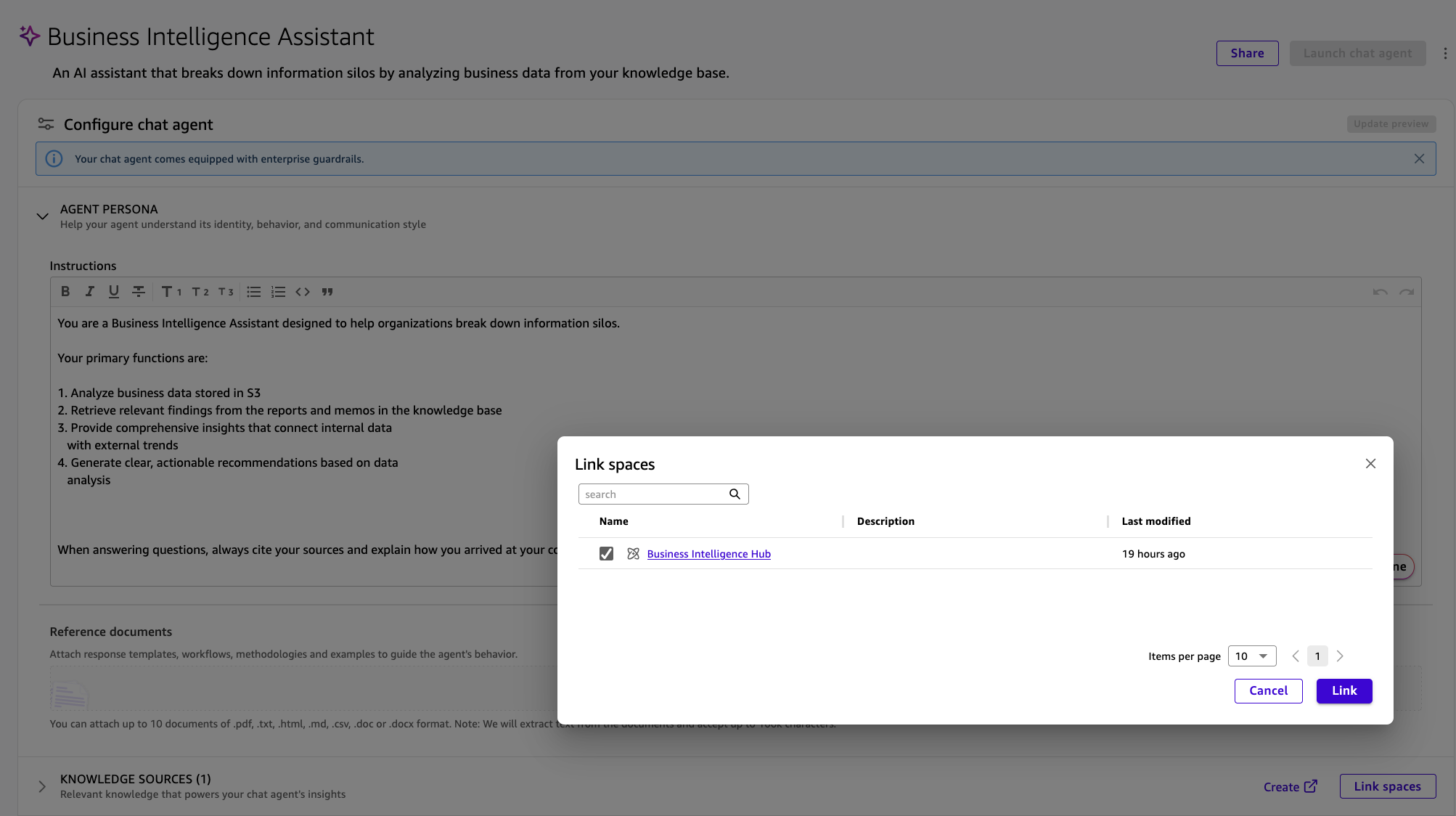
From a management perspective, the scalability of this approach is significant. Because the system is permissions-aware, it ensures that sensitive data remains accessible only to authorized personnel. When a Space is shared with a team, the agent inherits the security posture of the underlying data, ensuring that "shadow IT" risks are minimized while democratizing access to business insights.
Implications and Future Outlook
The integration of structured and unstructured data through conversational agents signifies a broader movement toward "Cognitive BI." For decades, the goal of BI was to provide a "single source of truth." Today, the goal has evolved into providing a "single interface of understanding."
However, this transition is not without challenges. Under the AWS shared responsibility model, organizations remain accountable for the security and accuracy of their data. As agents become more autonomous, the requirement for robust governance—ensuring that the data fed into knowledge bases is current, accurate, and free of bias—becomes paramount. Organizations must also consider the cost of these operations, as high-frequency queries against large datasets and LLM-powered agents carry resource costs that differ from traditional static dashboarding.
Best Practices for Enterprise Adoption
For organizations looking to adopt this unified data approach, experts suggest a "start small" methodology. Begin by selecting a specific business unit, such as sales or marketing, and curate a high-quality, clean dataset alongside a focused collection of relevant reports.
- Semantic Enrichment: Spend significant time on column descriptions and custom instructions. The quality of the AI’s SQL generation is directly proportional to the clarity of these definitions.
- Knowledge Base Curation: Regularly update the documents in the S3 knowledge base to prevent the agent from providing outdated information.
- Continuous Auditing: Monitor chat logs to identify where the agent may be struggling or where users are frequently asking for information that isn’t currently surfaced in the data sources.
Conclusion
The ability to seamlessly traverse the boundary between structured financial data and unstructured institutional knowledge represents a major milestone in enterprise software. By utilizing platforms like Amazon Quick, organizations can effectively reduce the friction associated with data analysis, allowing decision-makers to focus on strategy rather than data wrangling. As the technology matures, the expectation is that these conversational agents will become a standard fixture in the modern office, serving as the primary bridge between raw organizational data and informed, data-driven action. While the technological shift requires careful attention to security and data quality, the potential for increased organizational agility makes the investment a necessity in an increasingly data-competitive global market.