Beyond Opening Files: Mastering Python Context Managers for Robust Software Engineering

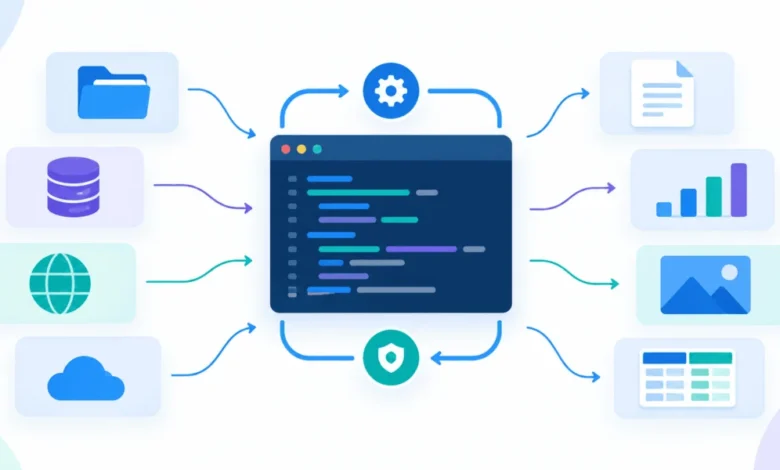
Python context managers are frequently introduced to novices through the simple with open(path) as f syntax, a pattern that guarantees file handles are closed regardless of whether a block of code completes successfully or terminates due to an error. However, restricting this powerful feature to basic I/O operations ignores its true potential as a robust mechanism for resource lifecycle management. In complex software environments, particularly those involving data engineering, machine learning pipelines, and high-performance computing, context managers serve as the critical boundary between stable systems and "zombie" processes that consume memory, leave behind temporary artifacts, or alter global states in ways that jeopardize subsequent operations.
The Problem of Brittle Housekeeping
The necessity for sophisticated resource management is most visible in automated evaluation scripts. In a typical machine learning workflow, a script might initialize a temporary scratch directory, reconfigure global logging levels, adjust environment variables to point to high-performance caches, and initiate high-resolution timers. When the script executes without issue, the corresponding "cleanup" code—deleting the directory, resetting logs, and restoring environmental variables—runs as expected.
The failure occurs during the "unhappy path." If a malformed data record causes the evaluation function to raise an exception, the remaining lines of the script are skipped entirely. The consequences are non-trivial: the server remains cluttered with gigabytes of extracted test data, the logging level remains suppressed, potentially masking critical warnings for future processes, and the environment variables remain modified, leading to silent, difficult-to-debug failures in subsequent tasks. This pattern—where cleanup is manually placed at the end of a file—is a fundamental flaw in production engineering.
Architecture of the With Statement
At its core, the with statement is a structural boundary. It relies on the context manager protocol, which dictates that Python must execute the __enter__() method upon entry and the __exit__() method upon departure. The power of this design lies in the fact that __exit__() is guaranteed to run even if an exception propagates out of the block.
When a developer uses the with statement, Python handles the setup and teardown logic implicitly. The __exit__() method receives three arguments containing details about any exception encountered. This allows developers to explicitly decide whether to suppress an error or allow it to propagate—a design choice that separates clean code from error-prone scripts. If __exit__() returns a truthy value, the exception is swallowed, effectively silencing the error. In production, this must be handled with extreme caution; generally, unless specifically designing a silent handler, __exit__() should return False to ensure that critical errors are not suppressed.
Engineering a Reliable Timer
To illustrate the shift toward professional-grade resource management, consider the implementation of a performance timer. Rather than manually calling time.perf_counter() at the beginning and end of a function, a class-based context manager can automate the capture of elapsed time.
By defining a Timer class, the logic for starting the clock is encapsulated in __enter__, while the logic for stopping the clock and printing the duration is housed in __exit__. This ensures that even if a function crashes, the developer receives a report indicating exactly how long the process ran before the failure occurred. This level of instrumentation is invaluable in identifying bottlenecks in long-running batch processing jobs. Using time.perf_counter() is essential here, as it provides the highest available resolution for measuring short-duration intervals, independent of system clock adjustments.
Simplification via @contextmanager
While class-based managers are ideal for maintaining internal state, the contextlib module provides a decorator, @contextmanager, which simplifies the creation of context managers for simpler tasks. By turning a function into a generator that uses the yield statement, developers can define setup code before the yield and cleanup code within a finally block afterward.
This is particularly effective for managing logging configurations. Instead of manually changing a logger’s level and remembering to reset it, a quiet() context manager can handle the transition. The finally block ensures that the original logging level is restored regardless of whether the code block succeeded or crashed, maintaining the integrity of the application’s global configuration.
Automating Cleanup with TemporaryDirectory
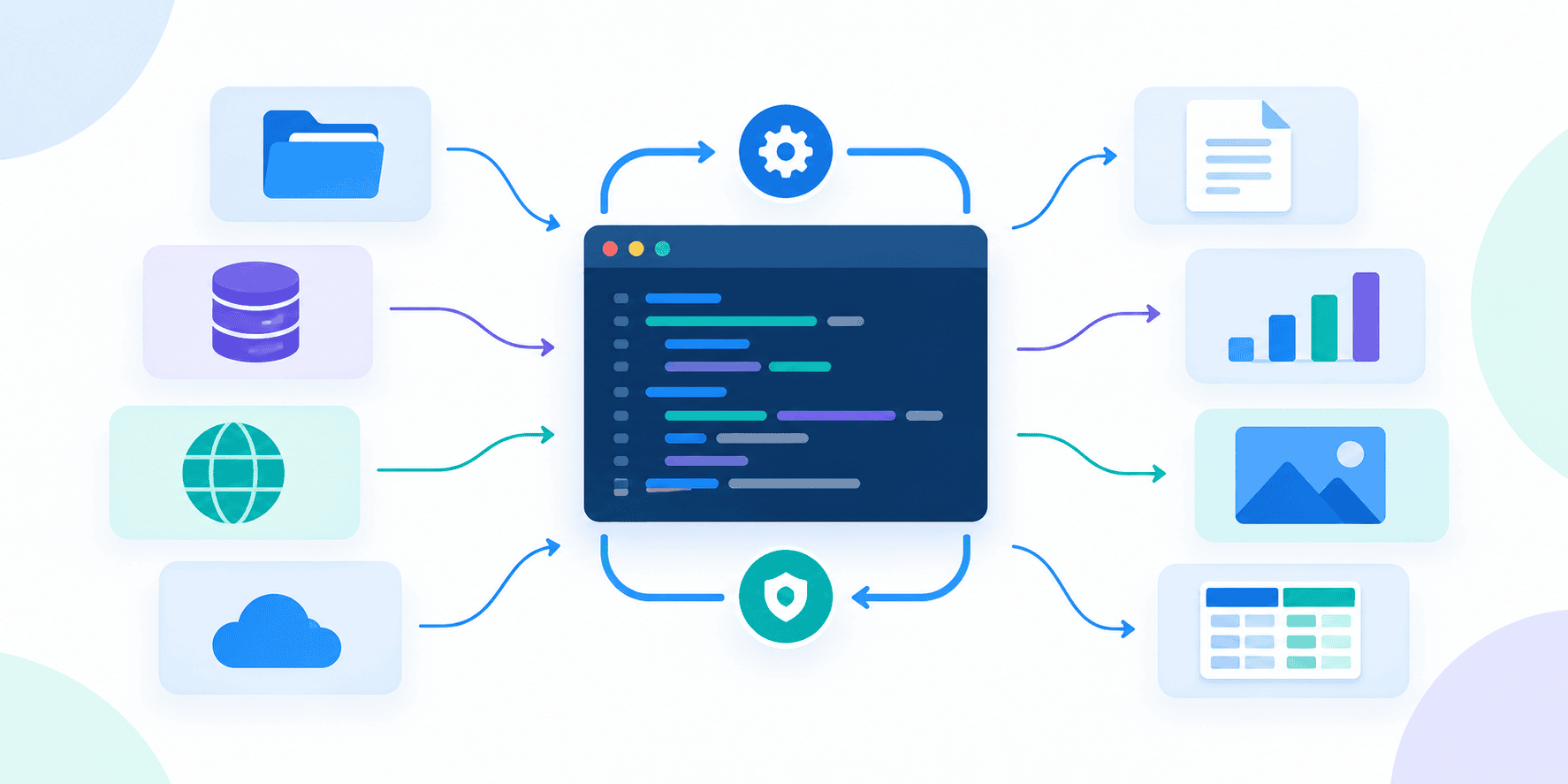
The standard library’s tempfile.TemporaryDirectory is a quintessential example of how context managers prevent "leaky" code. Rather than relying on a hardcoded path and manual deletion, TemporaryDirectory creates a unique, ephemeral workspace that is automatically purged upon exiting the with block.
This approach resolves several common issues in CI/CD pipelines. First, it eliminates name collisions between parallel test runs. Second, it ensures that if a process fails, the temporary files are removed, preventing the accumulation of "junk" files that could eventually exhaust disk space. For scenarios where artifacts must be inspected after a failure, newer versions of Python allow for granular control over this behavior, but the default "safe-by-default" approach remains the gold standard for robust development.
Scaling Resource Management with ExitStack
For more complex scenarios where the number of resources—such as file handles or network sockets—is not known until runtime, contextlib.ExitStack provides a programmatic interface to manage multiple lifecycles.
ExitStack allows developers to register any number of context managers or arbitrary cleanup functions. It manages these in a stack-like structure, ensuring that resources are closed in the exact reverse order of their acquisition. This is mathematically similar to nested with statements but significantly cleaner and easier to maintain. By utilizing enter_context() and callback(), an engineer can ensure that even if a system must open fifty separate data shards, every single handle will be closed correctly, even if the processing of the forty-ninth shard results in a fatal error.
Reversible State Changes and Configuration
Reversible state changes, such as modifying environment variables or configuration dictionaries, are a frequent source of "spooky action at a distance." When one module changes a global variable, it can cause unpredictable behavior in unrelated modules. Using unittest.mock.patch.dict or similar patterns allows developers to create a temporary scope for these changes.
When the block terminates, the dictionary or environment variable is restored to its original state. This is vital for testing or for temporarily overriding configuration settings for specific tasks. However, it must be noted that this approach is process-wide; in multi-threaded or asynchronous environments, such global state changes must be handled with extreme care, as they will affect all threads simultaneously.
Implications for Production Engineering
The move toward using context managers for non-I/O tasks is not merely about aesthetic cleanliness; it is a fundamental shift toward defensive programming. By moving cleanup logic from the bottom of a file to the point of resource acquisition, developers create code that is inherently self-cleaning.
The broader impact of this methodology is seen in system reliability. When cleanup is coupled with the resource, the "happy path" and "error path" converge. In high-stakes environments—such as production machine learning model deployment or large-scale data ingestion—this ensures that system state remains consistent, memory leaks are minimized, and debugging is simplified by ensuring that logs and environments are always in a predictable state.
Ultimately, context managers are a testament to the Python philosophy of explicit over implicit. By making the lifetime of a resource visible and controlled, developers can build systems that are not only easier to read but also resilient to the inevitable failures that occur in production environments. As systems grow in complexity, the discipline of wrapping resources in these protected blocks becomes the difference between a system that requires constant manual maintenance and one that is truly autonomous.