ChartMogul Launches AI-Powered Subscription Analytics Analyst and Makes CRM Core Features Free for All Users

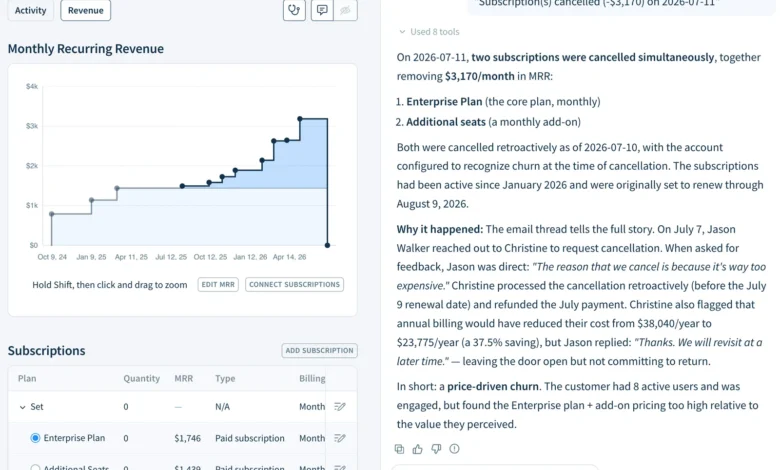
Subscription analytics platform ChartMogul has officially introduced ChartMogul AI, a native analytical tool designed to investigate raw subscription data, trace metric fluctuations back to specific customer accounts, and decode complex billing movements. Announced by CEO Nick Franklin, the release marks a significant shift in how recurring-revenue businesses interpret headline financial metrics. Alongside the artificial intelligence launch, the company announced that its CRM capabilities will now be integrated into the core platform at no additional cost, removing paid user restrictions for email integrations and customer context tracking.
For over a decade, subscription businesses have grappled with the inherent complexities of recurring-revenue data models. Managing multi-component subscriptions, refunds, mid-cycle upgrades, downgrades, complex tier migrations, reactivations, and currency conversions requires meticulous logic. While ChartMogul built its reputation over the past twelve years on translating these diverse billing scenarios into unified metrics, interpreting the catalysts behind shifting numbers has traditionally demanded substantial time, technical expertise, and deep familiarity with database schemas. Consequently, deep-dive investigations into metric anomalies have historically been reserved for high-stakes corporate milestones, such as fundraising rounds, board meetings, or major pricing overhauls. Day-to-day operations typically relied on surface-level dashboard reviews.
To bridge this gap, the newly launched intelligence engine operates directly within the platform interface, providing a multi-step investigative workflow. Rather than serving as a superficial chatbot overlay that merely reiterates visual chart data, the system possesses the capability to independently isolate relevant metrics, formulate precise data filters, construct segmented audience cohorts, evaluate individual customer trajectories, and synthesize qualitative unstructured data. By bridging quantitative financial metrics with qualitative insights derived from customer emails, service logs, and account notes, the platform aims to answer not only what financial changes occurred, but why those fluctuations materialized.

A cornerstone of the product rollout is the complete elimination of paid CRM seats across the platform. To function effectively, automated revenue analytics systems require comprehensive contextual data inputs regarding each account. Historically, linking external email accounts and utilizing full-suite customer relationship management tools necessitated upgraded, paid subscription tiers. Effective immediately, ChartMogul has dismantled these paywalls, allowing all platform users to connect their inboxes and utilize comprehensive CRM functionalities natively. By democratizing access to customer relationship data, the company aims to feed its newly minted intelligence engine with richer datasets, thereby generating more accurate and context-aware analytical outputs.
The technical architecture behind the release relies heavily on specialized internal routing mechanisms designed to mitigate common generative intelligence pitfalls, such as tool misselection or superficial data querying. According to engineering leads at the company, the system utilizes specialized procedural workflows—termed "skills"—to guide step-by-step investigations for specific subscription-related inquiries. Furthermore, the architecture decouples filter generation by deploying dedicated sub-agents that cross-reference real-time plan configurations and account tags before generating queries in ChartMogul Filter Language (CFL). While the platform currently leverages state-of-the-art foundational models from Anthropic, leadership emphasizes that the primary competitive advantage stems from embedding over a decade of domain-specific recurring-revenue expertise directly into the system’s operational logic.
This native product integration arrives just months after the June release of an expansive Model Context Protocol (MCP) server, which provided more than 80 verified developer tools and integrations within major third-party artificial intelligence ecosystems such as Anthropic’s Claude and OpenAI’s ChatGPT. While MCP solutions cater to developers and data teams seeking to query revenue data across external general-purpose interfaces, the newly introduced native platform experience provides tight coupling with proprietary data models and specialized subscription analytics workflows.
Despite its robust capabilities, the initial release of the system operates strictly in a read-only capacity. Current limitations preclude the execution of automated write actions, direct CRM modifications, or the creation of automated multi-system administrative tasks. Company roadmap projections indicate that write capabilities and extended administrative integrations will be introduced in subsequent development phases.
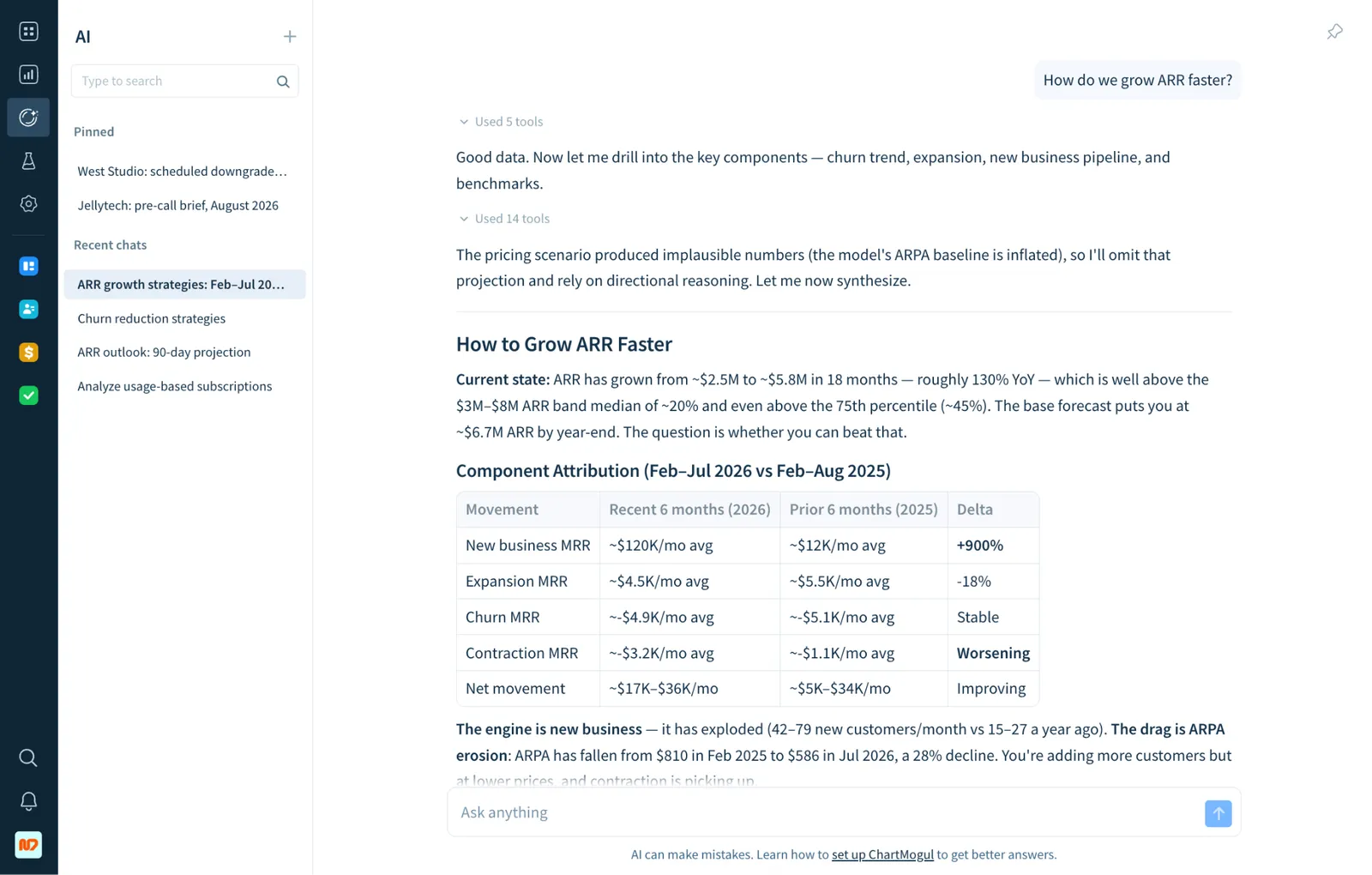
The broader industry implications of this product launch point toward a fundamental transformation in software user interfaces. Software executives suggest that natural language processing interfaces are poised to become the primary mechanism for advanced data interaction, gradually displacing traditional static dashboards and manual filter configurations. While visual charts and reporting interfaces will retain functional utility, the operational burden of navigating complex database controls is increasingly shifting toward automated assistant layers.
ChartMogul AI is immediately available to all existing and new platform subscribers. The company encourages organizations to test the capabilities against historical data discrepancies, unexpected churn events, or long-pending analytical projects to evaluate the system’s diagnostic efficacy in real-world operational environments.