Customer Success 2.0: The New Strategic Operating Model for Sustainable Business Growth

Customer Success 2.0 represents a fundamental shift in how modern enterprises structure their operations, moving away from legacy, reactive support models toward a holistic, organization-wide framework that aligns talent, funding, and analytics with measurable client outcomes. Originating from research by McKinsey & Company, this framework posits that in the current subscription-based economy, revenue growth is no longer merely a byproduct of sales; it is a deliberate output of long-term, outcome-based customer value.
For years, the SaaS industry operated under a Customer Success 1.0 paradigm. This model was characterized by "firefighting"—a heavy reliance on labor-intensive, reactive processes triggered only when a customer filed a complaint, encountered a support bottleneck, or flagged a renewal risk. While this approach often maintained temporary customer satisfaction, it frequently failed to move the needle on actual customer success, which is defined by the achievement of specific, long-term business goals.
The Evolution of the Operating Model
The transition to Customer Success 2.0 requires a departure from siloed departmental functions. In the 1.0 model, sales, product, and customer success teams often operated as disjointed units. When a customer faced a hurdle, the burden of resolution fell solely on the success manager, often with limited visibility into product roadmaps or commercial history.
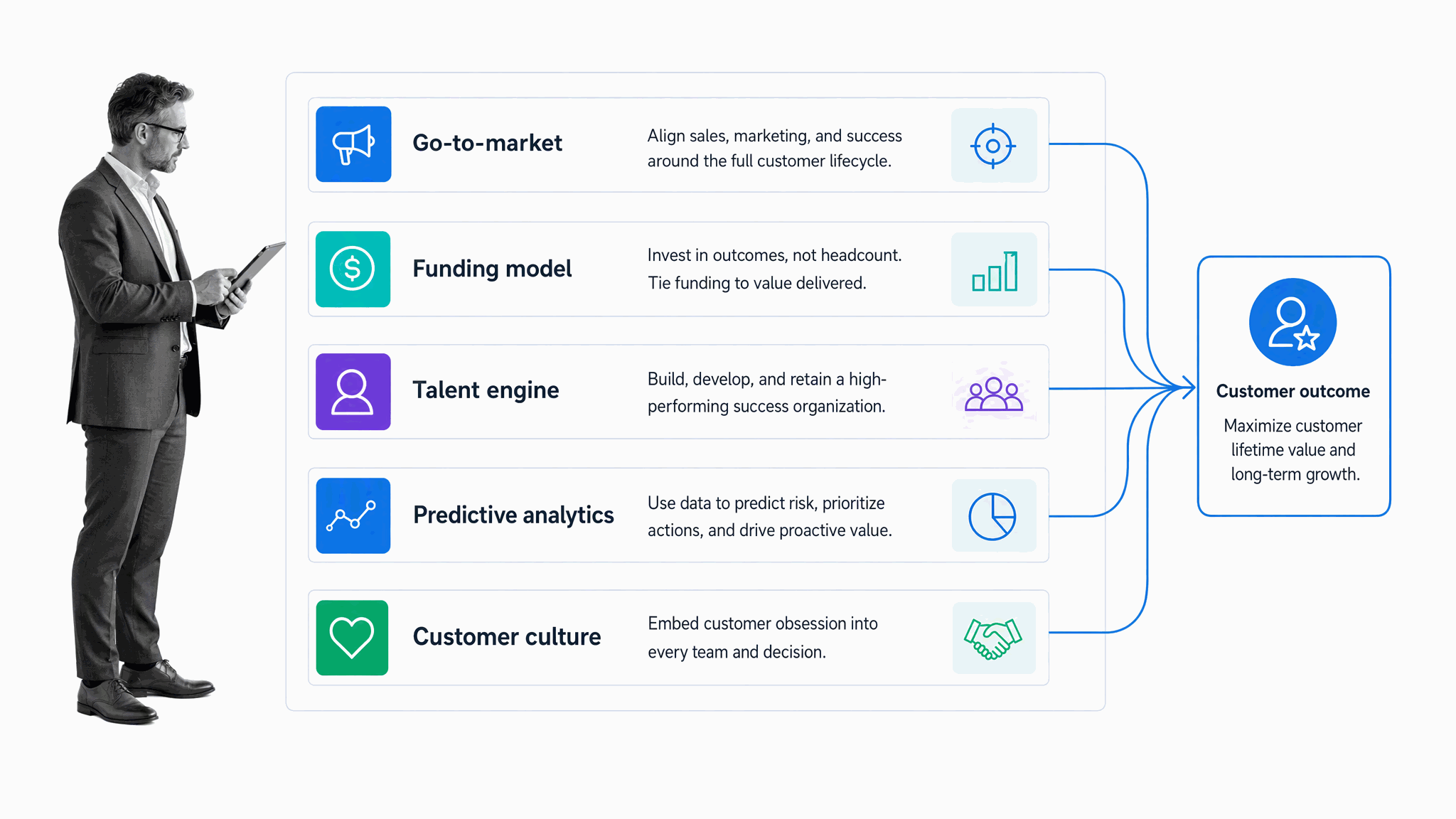
McKinsey’s framework identifies five critical pillars that organizations must adopt to transition into a 2.0 state: a unified go-to-market model, a sustainable funding strategy, a high-performance talent engine, advanced predictive analytics, and an embedded culture of customer-centricity. Research indicates that for many high-growth startups and established technology firms, existing customers account for between 33% and 50% of total revenue growth. By failing to systematize the post-sales journey, companies risk leaving significant capital on the table.
Implementing the Five-Part Framework
To execute the McKinsey model effectively, organizations are increasingly turning to a specialized software stack that bridges the gap between strategic intent and daily execution.
1. Unified Go-to-Market Execution via Process Street
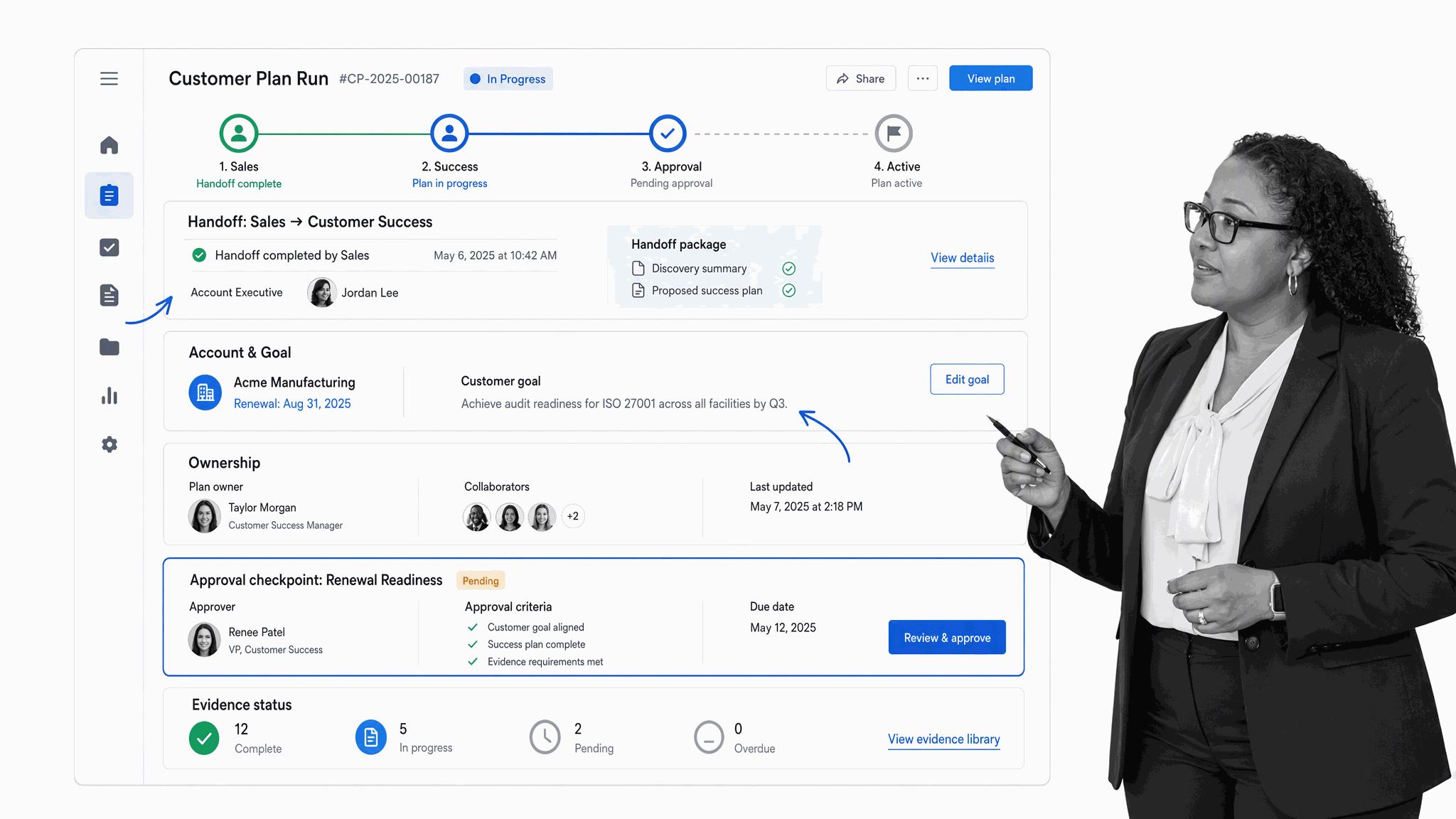
A unified go-to-market strategy relies on transparency and accountability. Process Street functions as the governance layer in this stack. By transforming customer success playbooks into executable workflows, the platform ensures that handoffs between sales and success are not lost in documentation. Through the use of automated triggers, AI-assisted workflow creation, and audit trails, organizations can ensure that every team member knows their specific role in a customer’s lifecycle. This replaces ad-hoc email chains with governed, repeatable processes that protect sensitive account data while ensuring consistent service delivery.
2. Sustainable Funding Models via Gainsight
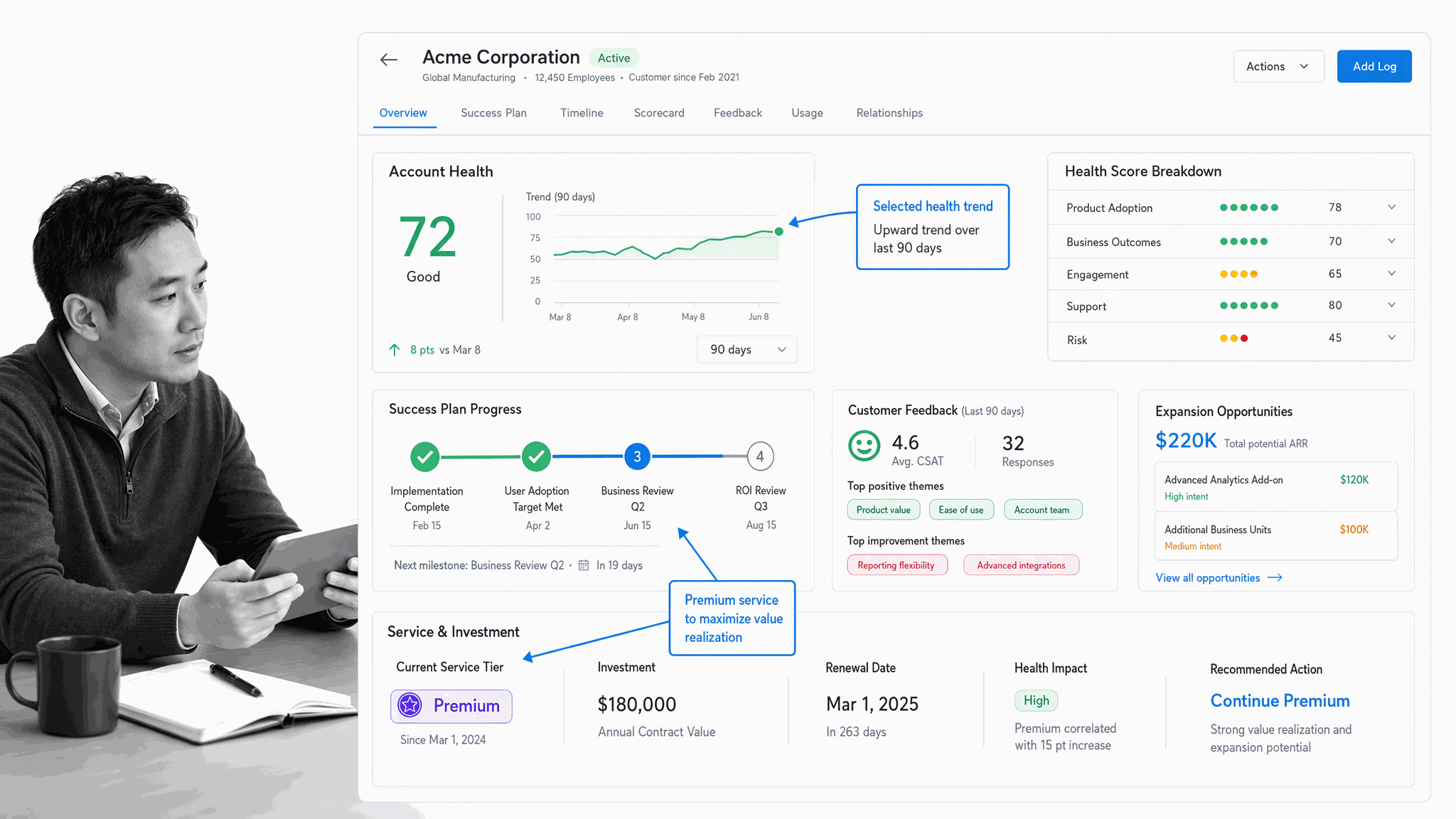
Funding customer success requires more than just budget allocation; it requires data-backed investment cases. Gainsight provides the analytical surface necessary to map customer pain points to high-value success activities. By aggregating account health signals, survey data, and usage metrics, firms can perform quantitative analyses to determine which interventions yield the highest ROI. This data-driven approach allows leadership to prioritize service investments where they have the greatest impact on net revenue retention (NRR).
3. Building a Robust Talent Engine
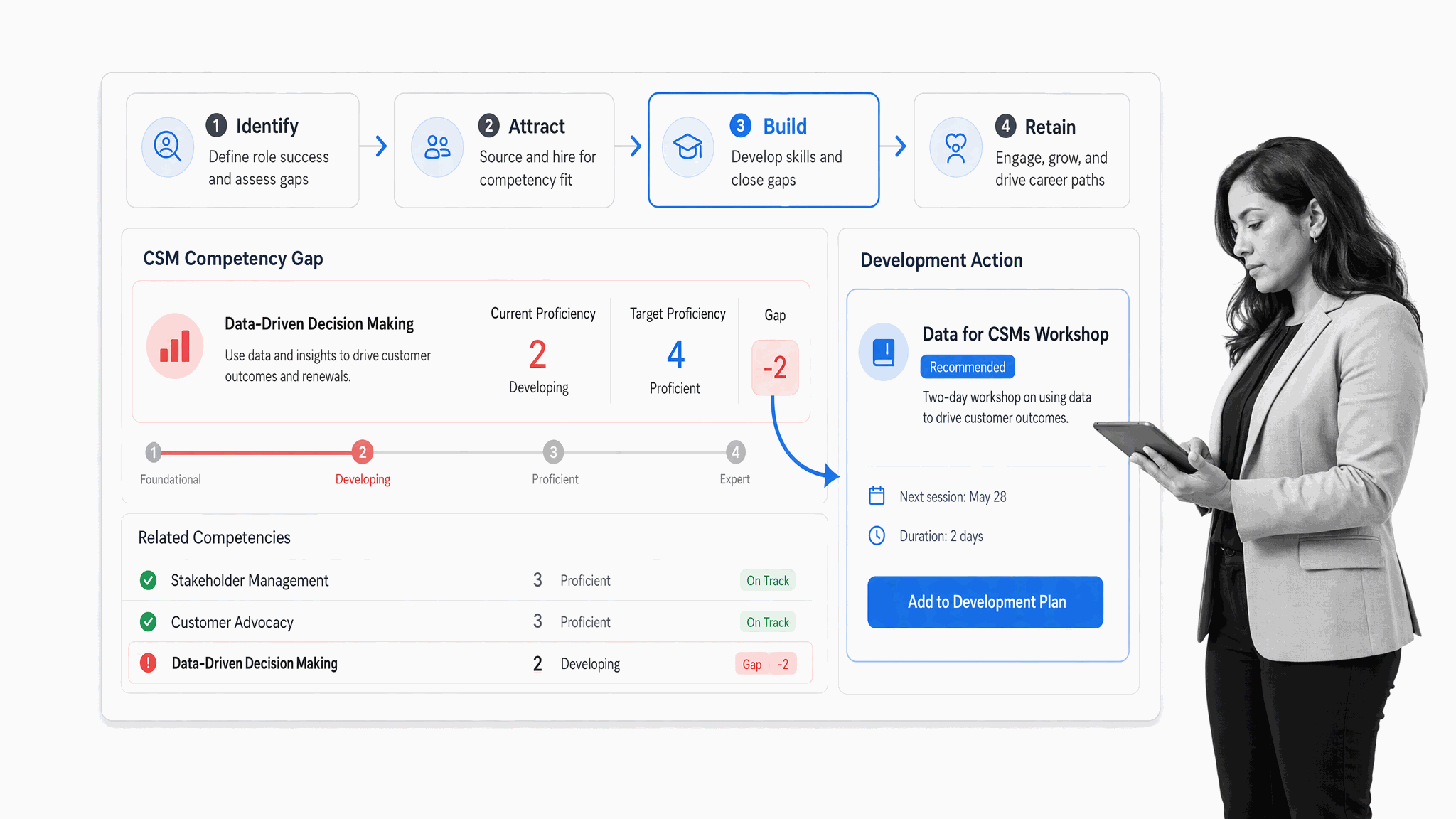
The human element remains the most significant variable in success delivery. A 2.0 talent engine must move beyond simple recruitment. Modern HR platforms must now integrate with performance management tools to track competency development. According to industry best practices, the most successful firms map employee development actions directly to customer outcomes. By identifying skill gaps in real-time, organizations can provide targeted training that empowers success managers to act as strategic consultants rather than mere support agents.
4. Predictive Analytics and Segmentation with ChurnZero
Reactive models are inherently limited by their inability to see risks before they manifest. ChurnZero facilitates a move toward predictive analytics by turning usage signals into proactive plays. If a customer’s product engagement dips—a leading indicator of churn—the platform can automatically trigger a workflow in the broader stack. This allows teams to intervene before a renewal risk becomes an escalation, effectively shifting the focus from defense to growth.
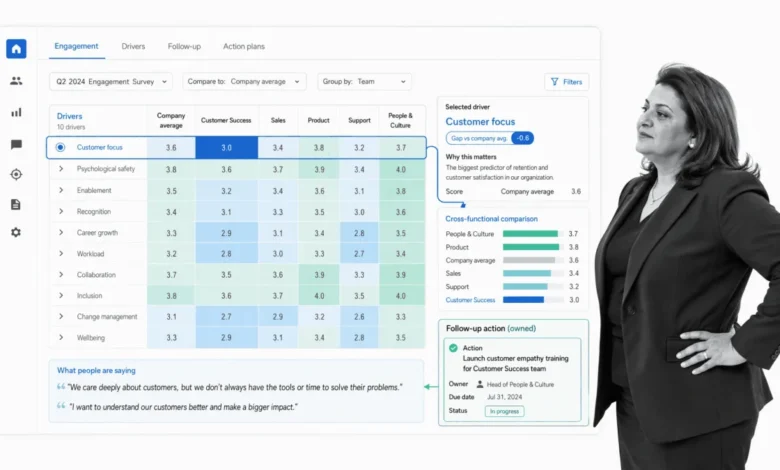
5. Embedding a Culture of Success via Culture Amp
Culture is the invisible framework upon which all other processes rest. Many organizations fail because they treat customer success as a department rather than a corporate philosophy. Culture Amp allows leadership to engage in continuous listening. By surveying employees on their perception of the customer experience and the effectiveness of internal cross-functional collaboration, firms can identify cultural friction points. This continuous feedback loop ensures that the entire organization—from product developers to marketing leads—is aligned with the customer’s ultimate goals.
Comparative Analysis: Reactive vs. Value-Led Success
The practical implications of this shift are profound. In a reactive 1.0 environment, the primary metric is often ticket volume or response time. In a value-led 2.0 environment, the metrics are tied to the achievement of customer-defined milestones.
For example, when a client’s product adoption lags, the 1.0 approach is to "check in" via an email. The 2.0 approach is to treat the usage gap as a business event: it automatically triggers a cross-functional review, assigns a product owner to address specific barriers, and documents the recovery path in a shared success plan. This converts a potential churn event into an opportunity for deepening the partnership.
Broader Impact and Market Implications
The adoption of Customer Success 2.0 signals a maturing of the SaaS and subscription markets. As market saturation increases and customer acquisition costs (CAC) climb, the ability to maximize the lifetime value (LTV) of existing clients has become a primary differentiator for market leaders.
Industry analysts observe that companies utilizing this 2.0 framework report higher NRR and lower customer attrition. However, the barrier to entry remains high. The model requires an initial investment in technology integration and a willingness to dismantle traditional departmental silos. Companies that resist this change are increasingly finding themselves at a competitive disadvantage, struggling to provide the personalized, outcome-based experience that today’s B2B buyers demand.
Furthermore, the integration of Artificial Intelligence (AI) is accelerating the adoption of this model. AI agents can now synthesize vast amounts of account context, draft preliminary success plans, and monitor for anomalies that a human might overlook. While these tools provide the speed and scale required for 2.0, the final decision-making remains with the human operator, ensuring that the "human touch" of account management is not lost, but rather enhanced by data-driven precision.
Conclusion
Customer Success 2.0 is more than a trendy management buzzword; it is a rigorous, evidence-based operating model. By aligning technology, talent, and culture around the singular goal of customer growth, organizations can transform their post-sales functions from cost centers into primary engines of enterprise value. As the digital economy continues to prioritize recurring relationships over transactional sales, the ability to execute this 2.0 framework will likely determine which firms survive the next decade of market volatility. The transition requires patience, a commitment to data integrity, and, above all, the willingness to prioritize the customer’s success above the company’s internal convenience.