JFrog Unveils DevGovOps for the AI-era at SwampIUP 2026 to Bridge the Compliance Gap in Automated Software Development

The landscape of software engineering is undergoing a tectonic shift as autonomous AI agents transition from experimental tools to core contributors within enterprise development teams. Recognizing that this surge in machine-driven velocity has rendered traditional, human-centric compliance models obsolete, JFrog, a leader in software supply chain management, officially launched its "DevGovOps for the AI-era" initiative at the SwampIUP 2026 conference in New York City. This new suite of capabilities, integrated into the JFrog AppTrust platform, is designed to automate governance across the entire software development lifecycle, ensuring that security and regulatory adherence keep pace with the rapid output of autonomous systems.
The Crisis of Velocity in the Age of AI
For modern enterprises, the "AI factory" is no longer a futuristic concept but an operational reality. Development teams are increasingly leveraging Large Language Models (LLMs) and autonomous agents capable of writing, testing, and deploying code in a fraction of the time required by human developers. While this shift promises unprecedented productivity gains, it creates a dangerous bottleneck: governance.
Manual audits, spreadsheet-based tracking, and quarterly compliance reviews are fundamentally incompatible with a continuous integration/continuous deployment (CI/CD) environment where code is pushed to production at machine speed. Organizations that rely on legacy governance methods risk falling into a state of "compliance debt," where the speed of development outstrips the ability of security and legal teams to verify the integrity and safety of the software.
The Regulatory Landscape and the Cost of Non-Compliance
The urgency of the JFrog announcement is underscored by a rapidly tightening global regulatory environment. Governments and international bodies are no longer viewing software supply chain security as an optional best practice, but as a mandatory operational requirement.
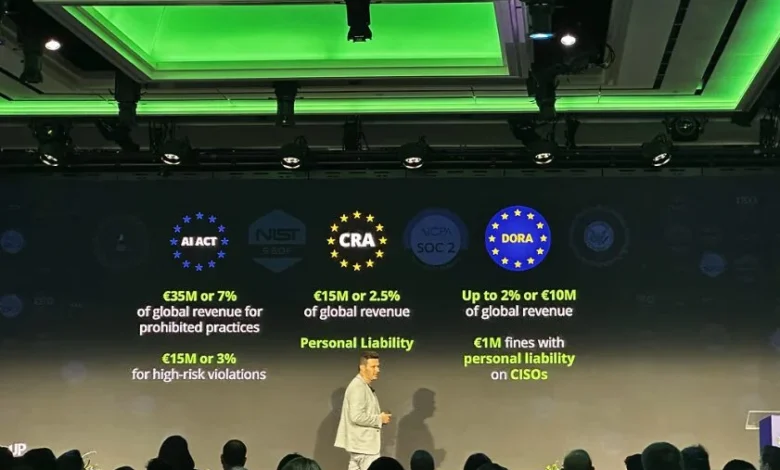
Recent legislative efforts, such as the European Union’s Cyber Resilience Act (CRA) and the NIS2 Directive, have introduced stringent requirements for software manufacturers. The financial stakes are significant: under the CRA, companies found in violation of security and reporting mandates face administrative fines reaching up to €15 million or 2.5% of their global annual turnover. Perhaps more alarmingly, the NIS2 Directive introduces the concept of personal accountability for management bodies. Executives now face the risk of temporary bans from managerial roles should their organizations fail to maintain the rigorous cybersecurity standards mandated by law.
Beyond the EU, the United States has also escalated its focus on software integrity. The NIST Secure Software Development Framework (SSDF) and the requirements associated with FedRAMP continue to set the bar for organizations looking to engage with government entities or handle critical infrastructure data. For these firms, proving compliance for every individual software version is not merely a bureaucratic hurdle; it is a legal prerequisite for doing business.
JFrog’s Strategic Pivot: Introducing DevGovOps
At the heart of the SwampIUP 2026 announcement is the evolution of "DevGovOps"—a framework that embeds compliance directly into the software supply chain. Shlomi Ben Haim, co-founder and CEO of JFrog, emphasized during his keynote that the era of "after-the-fact" governance has ended.
"AI is changing how software gets built and shipped," Ben Haim stated. "Autonomous agents are now first-class members of our customers’ development teams, committing code and shipping releases at machine speed. The challenge is that governance and compliance still run on human timelines. Governance cannot be something you do after the fact, in a spreadsheet or a quarterly audit; it must be built into the release itself."
The JFrog AppTrust platform aims to solve this by making compliance enforcement an automatic, always-on property of the infrastructure. By treating governance as a technical requirement rather than a policy document, JFrog intends to enable organizations to maintain their velocity without sacrificing the security posture required by global regulators.

The Four Pillars of DevGovOps
To achieve this level of integration, JFrog has categorized its new capabilities into four core dimensions. These pillars function as a continuous loop, ensuring that compliance is verified at every stage of the development process:
- Codify: This involves translating regulatory requirements and organizational security policies into machine-readable code. By codifying compliance, organizations can ensure that every policy is enforced programmatically, removing the ambiguity of manual interpretation.
- Attest: In an era where code is often generated by AI agents, verifying the provenance of that code is critical. Attestation provides a verifiable trail of evidence, proving that the software was built, tested, and secured in accordance with established standards.
- Enforce: This is the operational engine of the framework. It prevents non-compliant code from moving through the pipeline. If a piece of code does not meet the predefined security criteria, the system automatically halts the deployment, preventing potential vulnerabilities from reaching production.
- Monitor: Continuous oversight ensures that compliance is not a static state. As new vulnerabilities are discovered or regulatory standards evolve, the system provides real-time visibility into the compliance posture of the entire software portfolio.
Industry Implications and Market Analysis
The introduction of DevGovOps comes at a pivotal moment for the DevOps industry. For years, the focus of the industry was almost exclusively on speed—how to ship features faster. Security was often bolted on as an afterthought, leading to the rise of "DevSecOps." However, as AI agents take over more complex coding tasks, the potential for automated errors or "shadow" security risks grows exponentially.
Industry analysts suggest that JFrog’s approach could set a new standard for the "AI-first" enterprise. By automating the evidence-collection process, companies can significantly reduce the cost of audits. Instead of spending weeks preparing documentation for a third-party auditor, companies can generate real-time, tamper-proof compliance reports directly from their JFrog environment.
Furthermore, this move positions JFrog to address the "trust gap" in AI. As enterprises adopt more AI-generated code, they are increasingly concerned about potential licensing violations, security vulnerabilities, or even the injection of malicious code by unauthorized agents. By providing a platform that validates the entire lifecycle, JFrog is positioning itself as the "trust layer" for the AI-enabled enterprise.
A Chronology of Supply Chain Security
The launch at SwampIUP 2026 is the culmination of a multi-year trend in software development. A brief look at the recent timeline reveals why this shift was inevitable:
- 2020-2021: High-profile supply chain attacks, such as the SolarWinds incident, bring global attention to the vulnerabilities inherent in software build processes.
- 2022-2023: Governments begin codifying security requirements. The US Executive Order on Cybersecurity and the emergence of frameworks like SLSA (Supply-chain Levels for Software Artifacts) gain traction.
- 2024-2025: The rapid adoption of generative AI in coding workflows begins to outpace existing manual compliance tools, leading to a surge in security concerns regarding AI-generated code.
- 2026: JFrog launches DevGovOps at SwampIUP, signaling a transition from manual, reactive security to proactive, machine-driven governance.
Moving Forward: The Path to Q3 2026
The new DevGovOps at-scale capabilities are scheduled to roll out to the broader JFrog platform customer base in Q3 2026. This staggered release allows JFrog to refine the integration with various AI development toolchains, ensuring that the platform remains compatible with the rapidly shifting ecosystem of AI coding assistants and autonomous agent frameworks.
For organizations currently struggling to balance the competing demands of innovation and compliance, the transition to a DevGovOps model will be a significant undertaking. It requires a shift in culture, moving security responsibilities closer to the development team, and a shift in tooling, replacing manual checks with automated gates.
To assist in this transition, JFrog is hosting a series of educational initiatives, including a dedicated webinar titled "Regain Control Over Compliance," scheduled for October 1, 2026. This session is intended to provide a hands-on look at how the new AppTrust features function in a real-world enterprise environment.
As we look toward the latter half of the decade, the success of the DevGovOps model will likely be measured by how effectively it can reconcile the seemingly contradictory goals of infinite developer velocity and rigid regulatory compliance. If JFrog’s vision holds true, the future of software development will be one where governance is invisible, instantaneous, and—most importantly—absolute.