The Evolution of Semantic Layers: Forging a New Foundation for Trustworthy Enterprise AI

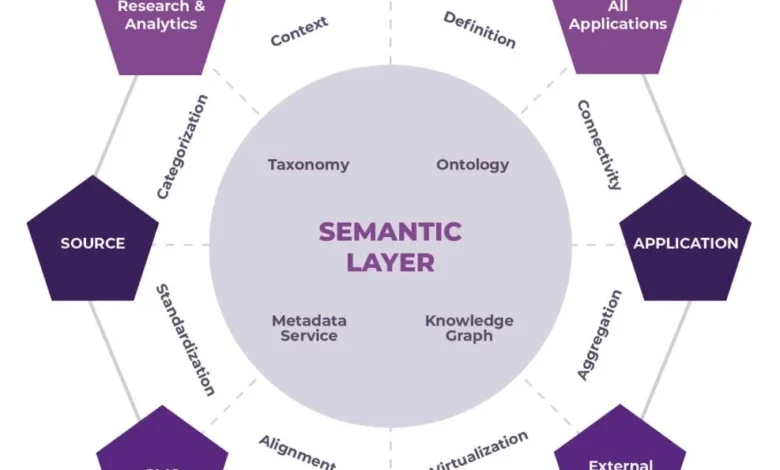
When semantic layers first emerged as a critical component of enterprise data architecture, their primary mandate was to furnish business users with a unified, consistent, and governed view of data across disparate Business Intelligence (BI) tools and dashboards. This foundational technology played an instrumental role in standardizing key metrics, ensuring departmental alignment on critical definitions, empowering analysts to query complex datasets without requiring intimate knowledge of underlying schemas, and rigorously enforcing access controls for sensitive information. For an era predominantly defined by human-driven data analysis and reporting, these capabilities proved immensely effective and transformative, laying the groundwork for data-driven decision-making across countless organizations.
However, the efficacy of these traditional semantic layers was predicated on a fundamental assumption: that a human agent would always be the one posing the questions and interpreting the outputs. This design philosophy, while robust for its time, did not anticipate the paradigm shift heralded by the advent of autonomous agents and sophisticated AI systems. As enterprise AI transcends the experimental phase and begins its inexorable integration into core operational processes, a crucial question arises: can the existing semantic layer infrastructure adequately support the exacting demands of AI agents, enabling them to operate with unparalleled accuracy, stringent control, and optimal cost efficiency? The consensus among data architects and AI strategists is increasingly leaning towards a resounding "no," necessitating a re-evaluation and significant evolution of how semantic layers are conceived and deployed.
The Foundational Disconnect: Why Traditional Semantic Layers Falter in the AI Era
To fully grasp the limitations of conventional semantic layers in the context of advanced AI, it is imperative to dissect how AI systems, particularly Large Language Models (LLMs) and autonomous agents, interact with and process enterprise data. Unlike human analysts who bring inherent domain knowledge and contextual understanding to their queries, AI agents operate on a different plane. While they can effortlessly comprehend the structural elements of a raw data schema – identifying tables, columns, and basic relationships – their understanding often stops at the superficial.
Consider a scenario where an AI agent is tasked with analyzing "revenue." Without a deeply embedded, AI-consumable semantic context, the agent might interpret "revenue" as booked revenue, recognized revenue, gross revenue, or even a specific version redefined by the finance department just three months prior for a particular reporting period. The agent, lacking the nuanced business meaning, is compelled to infer and speculate, often defaulting to the most structurally obvious or statistically probable interpretation. The outputs generated from such inferences can appear remarkably convincing on the surface, mimicking human-like reasoning. Yet, the underlying logic is frequently flawed, leading to conclusions that, while syntactically correct, are semantically inaccurate and potentially misleading.
The core issue extends beyond mere label identification. An agent might correctly identify the "revenue" column in the appropriate table. However, what it crucially lacks is the comprehensive understanding of the relationships between different departmental versions of "revenue" – for instance, sales’ perspective versus finance’s perspective – and how each fits into the overarching business ontology of revenue recognition, accounting principles, and temporal validity. Even if a basic definition instructs the agent what to compute, preventing it from inventing its own meaning, a correct label on a single field does not equate to a trustworthy answer. Enterprise-level questions are rarely confined to isolated data points; they invariably involve intricate aggregations, comparisons, and causal analyses across multiple, interconnected business dimensions.
Traditional semantic layers were simply not engineered to bridge this sophisticated gap. Their design principles revolved around serving human analysts and BI tools, abstracting technical complexities for manual interpretation. They do not intrinsically expose the rich tapestry of relationships, the accumulated organizational knowledge, or the meticulously governed business logic that AI systems demand to reason consistently, accurately, and contextually across vast enterprise datasets. As organizations increasingly delegate significant decision-making power to AI agents – from optimizing supply chains to personalizing customer experiences and automating financial analyses – the imperative for a dedicated, AI-native semantic layer capable of governing these autonomous machines becomes not merely beneficial, but absolutely critical for operational integrity and strategic success.
A Brief Chronology of Data Governance and AI Integration
The journey towards AI-ready semantic layers can be contextualized within a broader timeline of data management evolution:
- Early 2000s – Mid-2010s: The Rise of BI and Traditional Semantic Layers: This period saw the proliferation of data warehouses and the widespread adoption of BI tools like Cognos, BusinessObjects, MicroStrategy, and later Tableau and Power BI. Semantic layers became essential to abstract complex SQL queries, define consistent metrics, and provide a user-friendly interface for business users. The focus was on human-readable reports and dashboards.
- Mid-2010s – Early 2020s: The Dawn of Machine Learning and Data Science: While traditional semantic layers continued to serve BI, the emergence of advanced machine learning and data science brought new demands. Data scientists often bypassed semantic layers, preferring direct access to raw data for model training, focusing on features rather than pre-defined business metrics. The gap between BI’s governed metrics and ML’s raw data exploration began to widen.
- Late 2022 – Present: The Generative AI Explosion: The public release of powerful LLMs and the rapid development of autonomous AI agents fundamentally changed the landscape. These agents, designed to interact with data in a more natural, human-like way, suddenly highlighted the limitations of existing semantic structures. The need for AI to understand context, not just process data, became paramount. This period marks the urgent call for a new generation of semantic layers specifically designed for AI.
The Pillars of an AI-Ready Semantic Layer: A Deep Dive into Non-Negotiables
For AI systems to operate reliably and effectively at enterprise scale, they require a unified semantic foundation characterized by several non-negotiable attributes: trusted business context, token efficiency, consistent governance, and robust enterprise-grade performance.
1. Business Context Beyond Metric Definitions:
A certified definition, such as explicitly stating what "margin" or "revenue" precisely means, is a crucial first step. It prevents an AI from fabricating its own interpretations, ensuring foundational consistency. However, as previously highlighted, enterprise questions rarely revolve around a singular metric. Take, for instance, the complex query: "Why did margin fall in the Northeast last quarter?" Answering this question accurately requires the AI to synthesize information across disparate entities: specific products, geographical regions, sales channels, and distinct time periods. Crucially, it must also apply the correct business rules and organizational ontologies, which include, but are not limited to, fiscal calendars, currency conversion rates, and the appropriate level of data aggregation.

Even if an AI successfully retrieves every individual metric correctly, it can still arrive at a profoundly incorrect conclusion if it joins data at an inappropriate granularity, applies a business rule where it does not belong (e.g., using a specific regional tax rate globally), or inadvertently counts the same data multiple times. The accuracy of individual metric definitions becomes moot if the AI lacks an understanding of the intricate business semantics – the relationships that connect different data points, the hierarchical structures that organize knowledge (ontologies), and the contextual rules that govern their application. An AI-ready semantic layer is engineered to solve this by providing this high-fidelity, interconnected business context directly to AI systems, moving beyond simple definitions to a holistic understanding of the business domain. This often involves leveraging knowledge graphs and sophisticated metadata management to represent relationships and rules explicitly.
2. In-Built and Pervasive Governance:
In the era of autonomous AI, governance cannot be an afterthought; it must be intrinsically woven into the very fabric of the business context served to AI. All AI systems must operate within the identical governance framework that applies to human enterprise users. This means that governed business logic, granular access controls, comprehensive data lineage, and immutable audit trails must be consistently enforced across every single AI interaction. This ensures that AI outputs remain traceable, explainable, compliant with regulatory mandates (such as GDPR, CCPA, HIPAA, SOX, etc.), and accountable. Without such ingrained governance, AI decisions could lead to regulatory breaches, erroneous financial reporting, or the unauthorized exposure of sensitive data, posing significant reputational and financial risks.
3. Optimized Token Economics:
Token efficiency is not merely a technical detail; it carries substantial economic implications, particularly with the escalating usage of LLMs. Without an AI-ready semantic layer, autonomous agents are forced to reconstruct the necessary business context for each individual query from the ground up. This arduous process begins with parsing raw metadata, analyzing schema structures, and interpreting verbose prompt instructions. Consequently, businesses end up incurring costs to repeatedly generate the same underlying logic, leading to redundant computation and inflated API costs. A specialized semantic layer circumvents this inefficiency by providing the comprehensive business context upfront and in an optimized format. This proactive provisioning dramatically improves first-response accuracy for AI agents and substantially lowers token consumption as AI usage scales across the enterprise, offering tangible cost savings. Industry estimates suggest that effective semantic layering can reduce token usage for complex queries by 30-50% by eliminating redundant context generation.
4. Enterprise-Scale Performance and Resilience:
The fundamental way AI agents consume enterprise data represents a radical departure from traditional BI workloads. While reasoning correctly is paramount, it only constitutes half of the requirement. An AI-ready semantic layer must also be engineered to sustain enterprise-scale performance under the unique demands of AI – specifically, continuous, high-volume, and highly concurrent workloads. Unlike periodic human queries, AI agents often operate in a persistent, iterative fashion, generating a deluge of requests. This necessitates an architecture that can handle immense throughput, maintain low latency, and scale elastically while preserving cloud efficiency as AI adoption accelerates. This often means offloading query processing from expensive cloud data warehouses to a dedicated, optimized semantic layer that can leverage in-memory computing, intelligent caching, and distributed processing capabilities.
5. One Interoperable Semantic Foundation:
In the BI era, it was somewhat tolerable for different tools or departments to maintain their own slightly varied metric definitions and business logic. Human analysts, equipped with intuition and communication, could manually reconcile these inconsistencies or flag discrepancies. AI agents, however, lack this human capacity for discernment; they do not question conflicting definitions. Instead, they simply select one of the available definitions and proceed to act upon it, potentially leading to inconsistent reasoning and compounding errors across the enterprise.
As organizations strategically deploy AI across diverse applications, maintaining separate semantic models for each consumer – be it various AI agents, different LLMs, traditional BI tools, custom applications, or APIs – will inevitably result in a fragmented, unreliable, and ultimately untrustworthy AI landscape. AI systems unequivocally require a single, authoritative semantic foundation that seamlessly integrates between the raw enterprise data and every conceivable consumer. This unified layer also provides a crucial degree of future-proofing as AI technology continues its rapid evolution. New models, frameworks, and applications will perpetually emerge, but the underlying, immutable business logic and definitions should not require constant re-engineering. An AI-ready semantic layer offers a stable foundation, enabling organizations to adopt cutting-edge AI technologies without the prohibitive cost and complexity of rebuilding their entire data stack each time.
Distinguishing AI-Ready from Traditional Semantic Layer Offerings
It is critical for enterprises to understand that not all semantic layers are created equal, particularly when viewed through the lens of enterprise AI requirements. Many traditional semantic layer vendors were purpose-built to solve specific, albeit important, problems within the BI landscape. For instance, solutions like AtScale excel at federated queries, enabling users to access data across multiple sources seamlessly. Cube offers a developer-friendly API layer, simplifying data access for application builders. dbtLabs is renowned for its robust capabilities in ensuring metric consistency across complex data pipelines. While these platforms deliver significant value in their respective niches, none of them comprehensively addresses the multifaceted requirements of enterprise AI.
A key limitation across many of these traditional offerings is the varying depth of business context they expose. While they provide definitions and structure, AI systems often still need to reconstruct a deeper business understanding from raw metadata and schemas. This iterative "rebuilding" process directly contributes to higher token usage and diminished operational efficiency for AI agents.
Furthermore, the execution architecture of many semantic layers significantly impacts their suitability for enterprise AI. A common pattern involves relying heavily on the underlying cloud data warehouse to process every single query. As AI usage expands rapidly across a growing number of users and applications, this dependency inevitably leads to increased contention for valuable warehouse resources, introduces undesirable response latency, and drives up cloud compute costs exponentially. The continuous, high-frequency nature of AI agent queries can quickly overwhelm such architectures.
The optimal AI-ready semantic layer must therefore embody a fundamentally different architectural approach. It must integrate profound business context, deliver enterprise-scale performance capabilities, and ensure AI token efficiency, all within a singular, unified semantic foundation. This holistic approach ensures that AI agents are not just operating on data, but operating with a deep, trusted understanding of what that data truly means in the context of the business.
In the rapidly unfolding era of enterprise AI, the organizations that will truly thrive and navigate its complexities will not be those defined by the sheer speed of their AI tool adoption. Rather, their ultimate success will be determined by a more fundamental criterion: the unwavering trustworthiness of the data upon which those AI tools operate. That indispensable foundation, providing accuracy, control, and efficiency, unequivocally begins and ends with an advanced, AI-ready semantic layer. Data leaders and C-suite executives are increasingly recognizing this strategic imperative, understanding that investing in a robust semantic layer is not merely a technical upgrade, but a critical enabler for realizing the full, trustworthy potential of enterprise AI. The future of intelligent automation hinges on this semantic evolution.