The Global Robotaxi Market Accelerates Toward 400 Billion By 2035 Driven By Physical AI And NVIDIA Cloud-To-Car Computing Infrastructure

The global autonomous vehicle sector is undergoing a profound paradigm shift, transitioning from localized, experimental testing phases to aggressive, global commercial deployment. Industry projections indicate that the worldwide robotaxi market—heralded as the premier commercial breakthrough for physical artificial intelligence—is on a steep trajectory to reach a valuation of $400 billion by 2035. According to recent market analysis, this multi-billion-dollar expansion will be underpinned by an estimated active fleet of more than six million commercial autonomous vehicles. Today, these driverless fleets are already navigating some of the planet’s most densely populated, highly unpredictable, and architecturally complex urban environments.
However, moving from the conceptual deployment of a single pilot vehicle to scaling a robust, profitable, and reliable commercial fleet introduces a massive engineering hurdle. Fleet scaling is fundamentally a high-performance computing challenge. It demands the consistent execution of safe, reliable driving maneuvers across thousands of distinct vehicles operating simultaneously under variable environmental, weather, and traffic conditions. Satisfying these stringent performance and safety thresholds requires an unprecedented magnitude of computational power spanning the entire autonomous vehicle development lifecycle. This lifecycle encompasses everything from large-scale data ingestion and generative AI model training to rigorous physics-based simulation, comprehensive safety validation, and ultra-low-latency real-time processing directly within the vehicle cabin.
To address these demands, technology leaders and mobility providers are increasingly relying on unified computing ecosystems. Among them, NVIDIA has established itself as a foundational pillar, supplying an open, modular platform dedicated to AI training, synthetic simulation, and functional safety validation. By offering an expansive suite of software development kits, specialized libraries, pre-built models, and scalable workflows, the company provides developers with the underlying infrastructure needed to build autonomous systems atop their proprietary technology stacks. Consequently, nearly every major robotaxi program currently operating at commercial scale utilizes some combination of NVIDIA’s modular architecture—spanning backend AI training, immersive simulation environments, and in-vehicle edge computing.
Decoding the Modern Robotaxi Technology Stack
To comprehend how autonomous driving companies achieve scalable operations, industry analysts look to the robotaxi technology stack. This term defines the comprehensive, end-to-end ecosystem of software and hardware tools utilized by engineers to design, validate, test, and deploy autonomous vehicles. Historically, disparate components were cobbled together from various suppliers, leading to latency issues, integration friction, and validation bottlenecks.
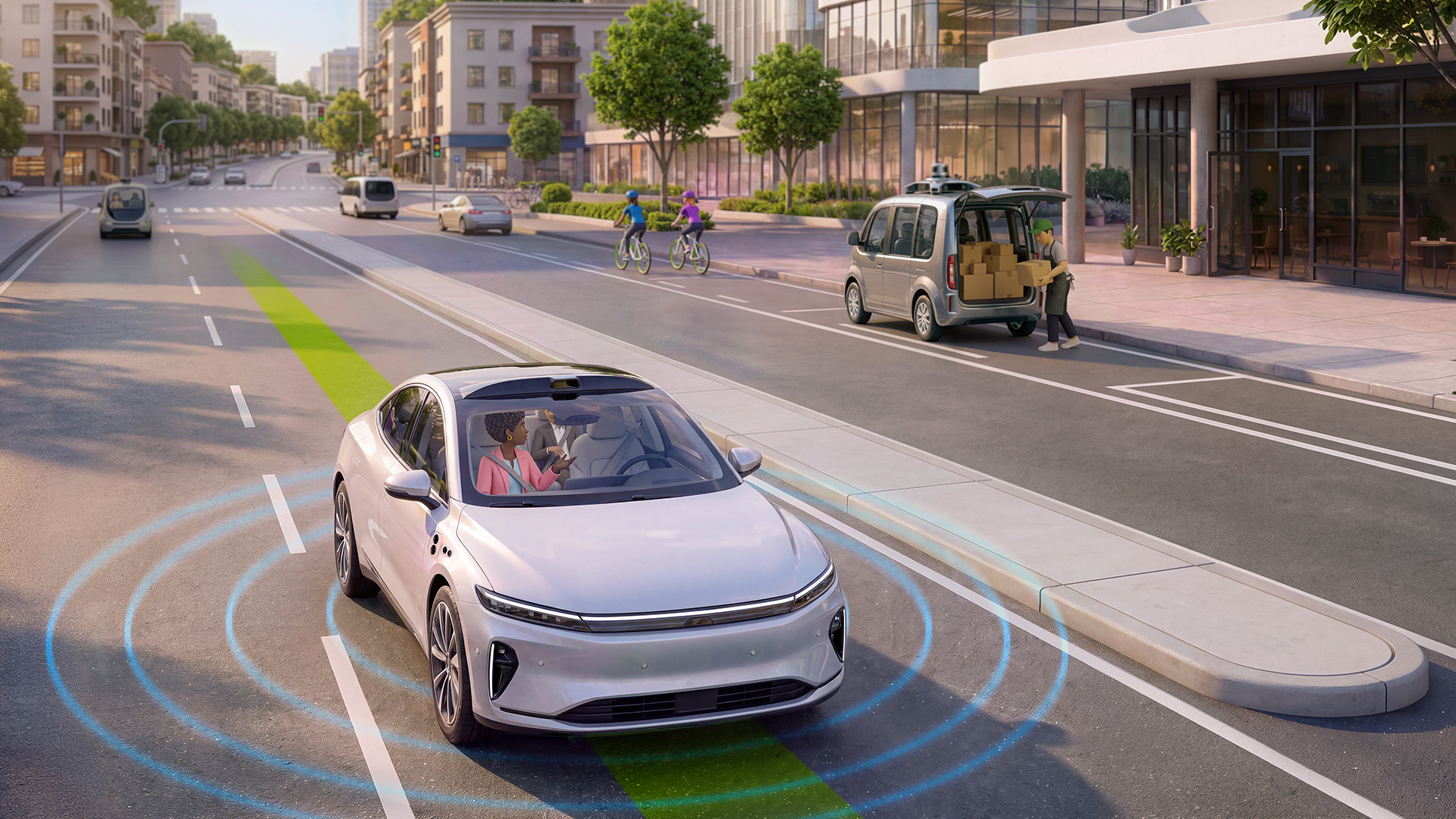
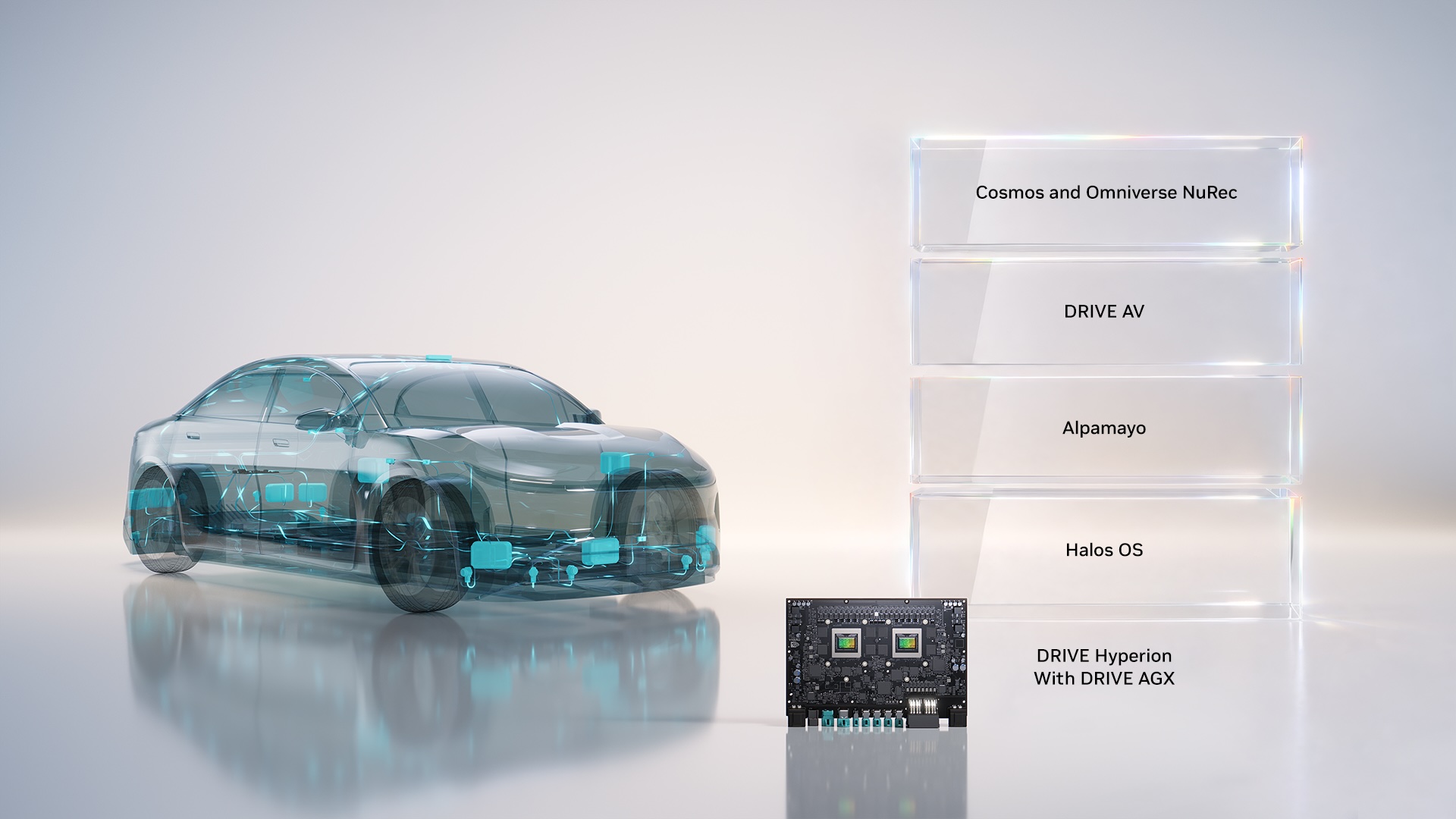
Modern architectures, by contrast, streamline this pipeline into a cohesive, multi-tiered framework. NVIDIA’s platform exemplifies this integrated approach by consolidating the development lifecycle into a tripartite computing paradigm: the central model training computer, the advanced simulation and validation computer, and the high-performance in-vehicle computer. Each tier addresses distinct engineering hurdles, collectively bridging the gap between raw data collection in the real world and flawless execution on public asphalt.
The Foundation of Intelligence: AI Model Training via NVIDIA DGX
The intelligence of a robotaxi fleet is intrinsically tied to its ability to ingest, process, and learn from exponentially growing volumes of fleet-generated data. As autonomous vehicles accumulate millions of miles on public roads, they encounter edge cases, anomalous driver behaviors, and complex spatial configurations that must be translated into improved algorithmic decision-making. These advanced driving models are primarily trained on centralized enterprise infrastructure powered by NVIDIA DGX systems.
A central component of this training apparatus is the NVIDIA Alpamayo portfolio, an open ecosystem comprising reasoning vision-language-action (VLA) models, specialized simulation frameworks, and extensive physical AI datasets. These resources offer developers foundational building blocks that can be customized and fine-tuned using proprietary corporate data and distinct technology stacks.
One of the most persistent bottlenecks in autonomous driving development has been the "long-tail" problem—the occurrence of rare, highly complex, or bizarre driving scenarios that rule-based systems struggle to interpret. NVIDIA’s reasoning models combat this challenge by breaking intricate driving situations down into sequential, manageable steps. The system reasons through each individual step before selecting the safest, most efficient trajectory for the vehicle.
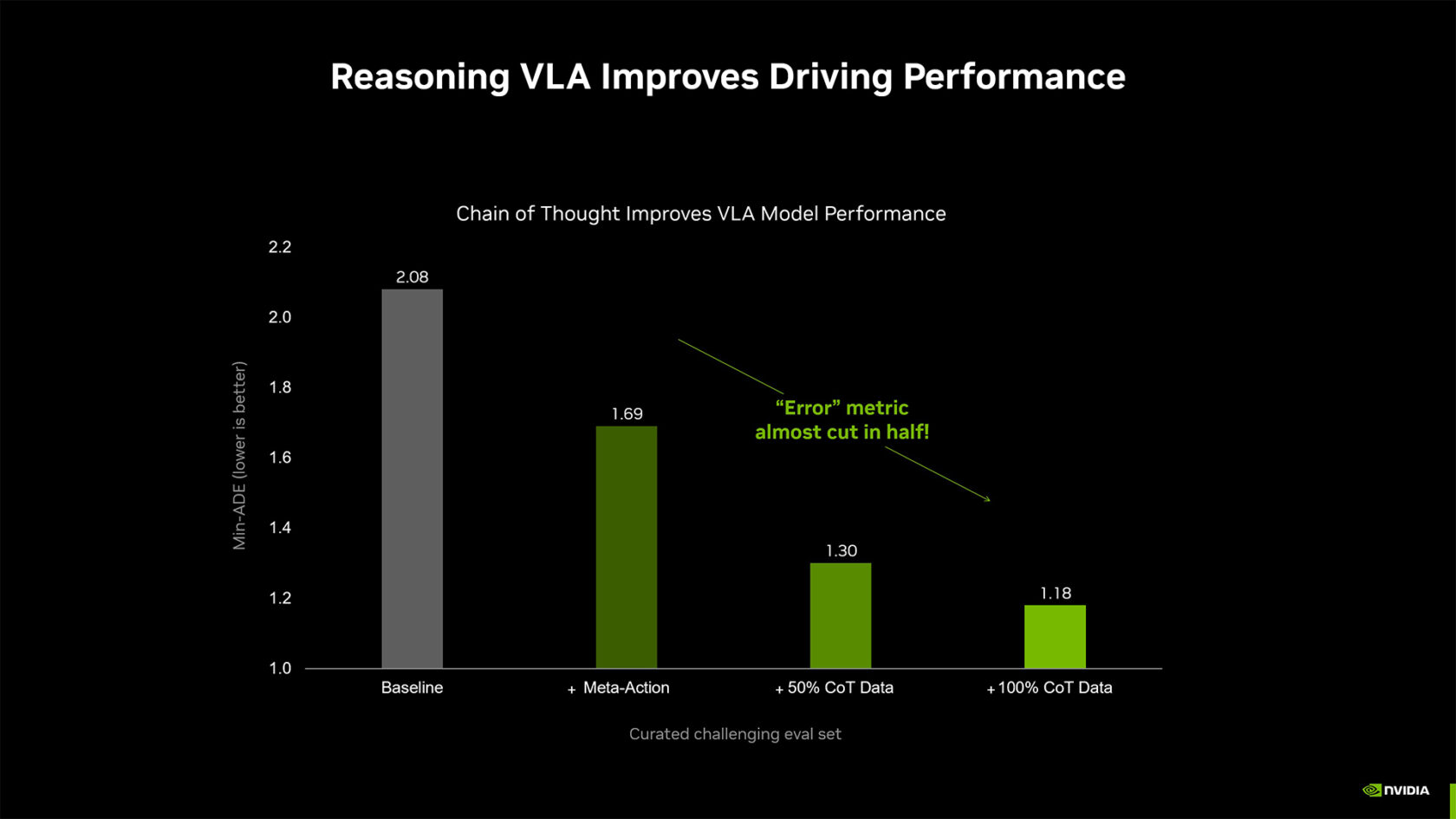
Furthermore, NVIDIA provides foundational physical AI datasets, reinforcement learning blueprints, and specialized recipes for model post-training and distillation. These tools enable software engineers to compress and optimize massive neural networks, tailoring them for efficient deployment onto specific target vehicle architectures without sacrificing cognitive capability or safety margins. Empirical evaluations underscore the efficacy of this approach: integrating meta-action and chain-of-thought reasoning data into advanced VLA models has been shown to improve trajectory prediction accuracy significantly. Specifically, this methodology reduces the minimum average displacement error—defined as the predicted path’s average deviation from the actual reference route—by an impressive 43 percent, dropping from 2.08 down to 1.18.
Synthetic Reality: Simulation and Validation with Omniverse and Cosmos
Relying exclusively on physical road testing to capture rare, long-tail driving events is both economically prohibitive and fundamentally unscalable. Testing a vehicle over billions of miles is required to prove statistical safety, yet physical testing exposes the public to untested edge cases. To bypass this limitation, modern robotaxi developers depend heavily on high-fidelity simulation environments running on dedicated hardware.
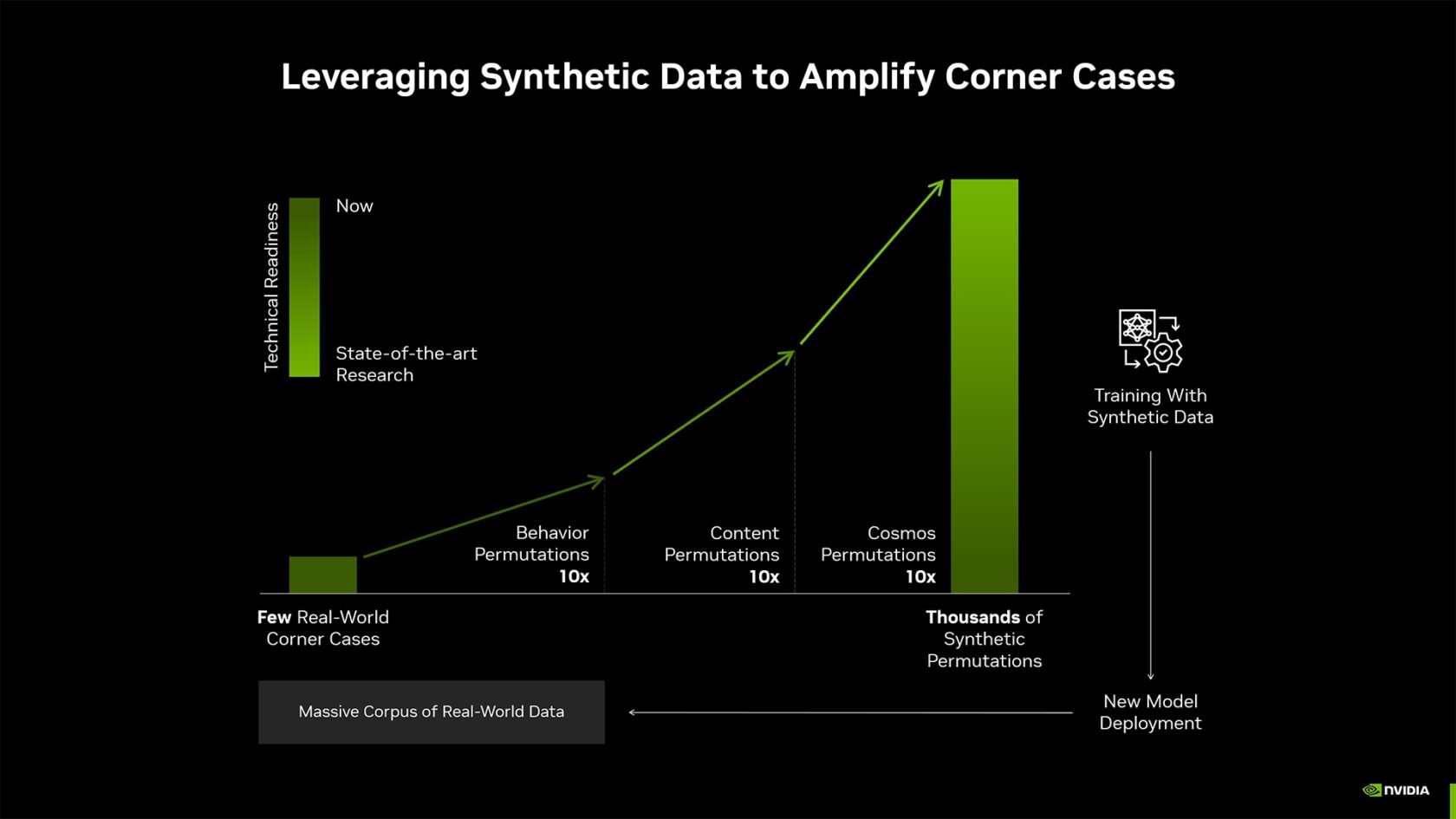
NVIDIA Omniverse NuRec models play a vital role here by accurately reconstructing real-world driving scenarios directly from raw sensor logs. Coupled with NVIDIA Cosmos world foundation models, these systems can generate physically accurate variations of real-world scenarios. This capability transforms a few thousand captured real-world corner cases into millions of synthetic permutations. Developers can manipulate variables such as traffic patterns, pedestrian behavior, adverse weather conditions, dynamic lighting, and sensor degradation to test the limits of their autonomous software.
Operating on high-performance NVIDIA RTX PRO Servers, Omniverse and Cosmos facilitate comprehensive closed-loop simulation and validation. The NVIDIA AlpaSim simulation framework further extends this workflow, providing a dedicated environment for training and evaluating reasoning-based autonomous driving models. By identifying algorithmic weaknesses in a virtual environment long before a vehicle touches public roads, developers can drastically accelerate their deployment timelines while upholding rigorous safety standards.
The Edge of Autonomy: In-Vehicle Computing and Sensor Architecture
While cloud-based training and simulation form the cognitive backbone of autonomous fleets, real-time execution relies entirely on robust in-vehicle hardware and sensor suites. NVIDIA DRIVE Hyperion serves as the company’s modular in-vehicle compute and sensor reference architecture designed explicitly for Level 4-ready robotaxis—vehicles capable of operating without human intervention within designated operational design domains.
The flagship DRIVE Hyperion 10 architecture pairs dual NVIDIA DRIVE AGX Thor systems-on-a-chip—built upon the advanced NVIDIA Blackwell platform—with an exhaustive sensor array comprising 14 high-definition cameras, 9 radars, 3 lidars, and 12 ultrasonic sensors. This configuration enables real-time, 360-degree sensor fusion, ensuring that the vehicle maintains a comprehensive, overlapping understanding of its immediate environment. Crucially, the architecture incorporates redundant compute and sensing designs, ensuring fail-operational capabilities. If an individual sensor or primary compute component encounters a fault, secondary systems immediately assume control, allowing the vehicle to execute a safe stop or safely navigate to the roadside.
The dual DRIVE AGX Thor configuration is specifically engineered to process modern, resource-intensive AI workloads simultaneously. This includes running complex VLA models dedicated to environmental perception, dynamic reasoning, path planning, and real-time driving actuation.
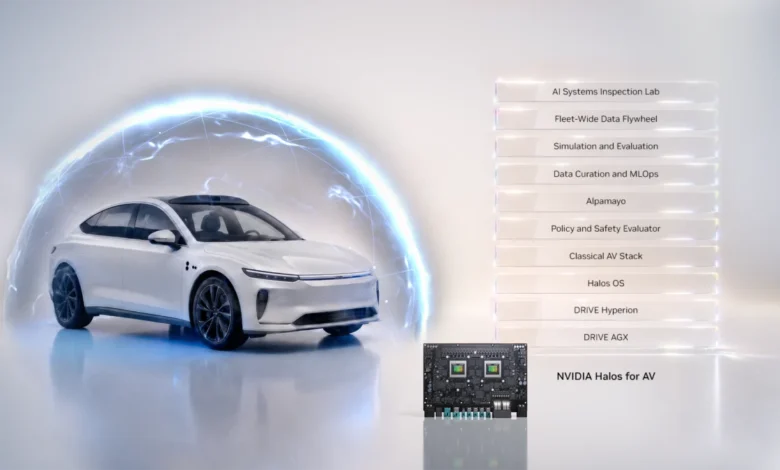
To ensure these complex software-hardware integration layers meet regulatory and public safety expectations, NVIDIA Halos provides a production-ready safety foundation. This includes Halos OS alongside a comprehensive validation and certification framework. Halos spans independent third-party engineering inspection, rigorous system validation, large-scale virtual simulation, and continuous testing methodologies that bridge the gap from cloud-based servers directly to the vehicle edge.
Global Adoption and Market Momentum
The commercial viability of this comprehensive, three-computer architecture is evidenced by its rapid, widespread adoption among industry leaders. NVIDIA’s robotaxi ecosystem currently spans every major geographic market where commercial autonomous services are emerging, including North America, Europe, the Middle East, and Asia. Across these varied jurisdictions, prominent mobility providers, specialized AV developers, and traditional automotive manufacturers are integrating NVIDIA’s accelerated computing platforms to train their foundational AI models, simulate complex urban behaviors, and scale their vehicle operations.
As these autonomous systems transition out of protracted research and development phases and into full-scale commercial production, the automotive industry is undergoing a structural realignment. Automakers are no longer viewing autonomous technology as a peripheral experimental division; instead, it is rapidly becoming a core component of future product portfolios. By leveraging unified computing stacks from cloud training facilities down to in-vehicle silicon, the global transportation sector is systematically resolving the computational bottlenecks that have historically impeded the realization of true autonomous mobility.
Economic Implications and Industry Outlook
The projection that the robotaxi market will reach $400 billion by 2035 reflects more than just a lucrative commercial opportunity for technology providers and fleet operators; it signals a fundamental restructuring of urban mobility, logistics, and real estate. Analysts point out that widespread adoption of autonomous fleets could drastically reduce the total cost of urban transport, alleviate urban parking pressures by shifting consumer behavior from vehicle ownership to on-demand mobility services, and dramatically improve traffic safety by eliminating human error—the leading cause of traffic fatalities worldwide.
However, scaling this infrastructure is not without ongoing challenges. Regulatory frameworks remain fragmented across different countries, states, and municipalities, requiring developers to navigate a complex labyrinth of compliance certifications before deploying fleets commercially. Furthermore, maintaining public trust in the safety and cybersecurity of autonomous systems remains paramount. Incidents involving unpredictable driving behavior, even if rare, can trigger intense regulatory scrutiny and temporary service suspensions.
To mitigate these risks, industry stakeholders are placing heightened emphasis on rigorous validation protocols, transparent safety reporting, and continuous learning loops powered by advanced simulation tools like those provided by NVIDIA Omniverse and Cosmos. By simulating billions of virtual miles and subjecting models to exhaustive algorithmic stress tests before public release, developers can demonstrate a level of statistical safety that far exceeds human driving baselines.
Ultimately, the maturation of the robotaxi market represents the triumph of accelerated computing over one of engineering’s most formidable challenges. As foundational AI models continue to evolve, and as in-vehicle architectures become increasingly powerful and redundant, the vision of ubiquitous, safe, and efficient driverless transportation is rapidly shifting from science fiction into an everyday global reality. With nearly every layer of the autonomous stack being forged on accelerated computing infrastructure, the next decade will likely determine the ultimate winners and losers in the race to conquer the future of movement.