AWS Quick Transforms Enterprise Workflow With New AI-Powered Collaborative Capabilities and Process Automation

The landscape of professional productivity is undergoing a significant shift as AWS today announced a series of major updates to its AI-native workspace platform, AWS Quick. Designed specifically for the complexities of modern corporate environments, these enhancements focus on transitioning individual AI efficiencies into standardized team processes, streamlining web-based workflows, and introducing multi-agent orchestration. By enabling organizations to convert conversational instructions into repeatable, automated flows, AWS is positioning the platform as a foundational tool for operational consistency, moving beyond simple individual task assistance toward integrated team intelligence.
The announcement arrives at a pivotal moment in the enterprise software market, where businesses are increasingly looking to move past the "pilot phase" of generative AI. While early adoption was characterized by individual employees using chatbots to write emails or summarize documents, the current demand is for systems that can integrate into existing technical stacks, respect data governance, and function as reliable, reproducible business processes.
Bridging the Gap Between Individual Productivity and Institutional Process
A persistent challenge in the adoption of AI agents has been the "siloing" of expertise. When a high-performing analyst develops a unique method for generating monthly financial reports, that knowledge often remains trapped within their personal workflow. If that employee is absent or leaves the organization, the process—frequently undocumented or reliant on a series of ad-hoc tools—must be reinvented by their successor, leading to inconsistency and lost time.
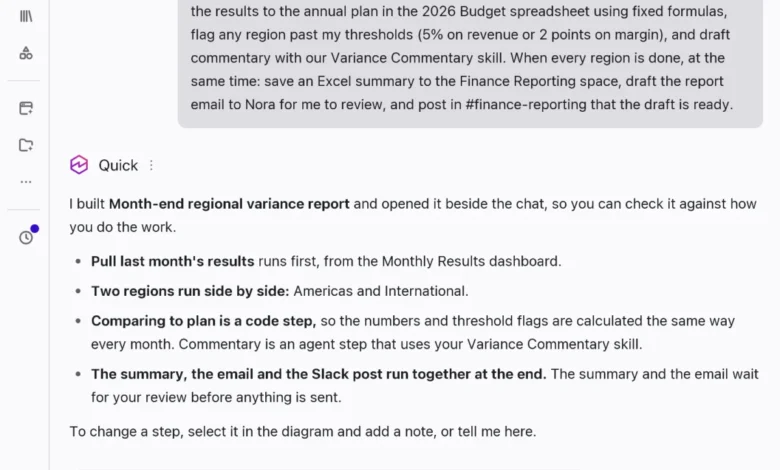
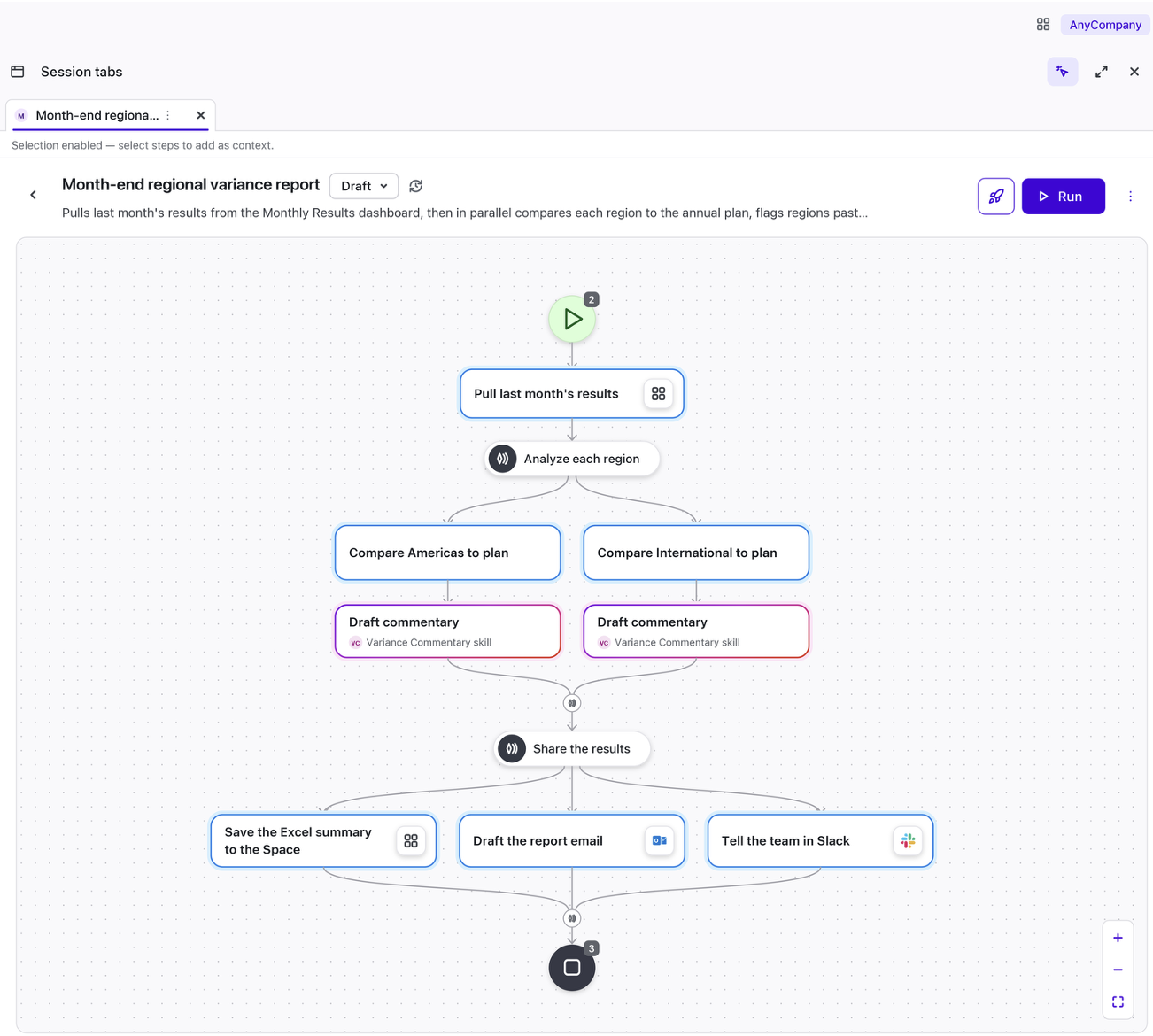
AWS Quick addresses this by enabling users to build, execute, and refine automated flows directly within the chat interface. By describing a complex task—such as comparing regional financial results against a baseline plan, flagging anomalies, and drafting executive summaries—a user can guide the AI to construct a formal, repeatable workflow. The platform provides a real-time, visual diagram of these steps, allowing the user to verify the logic before publishing it for wider team use.
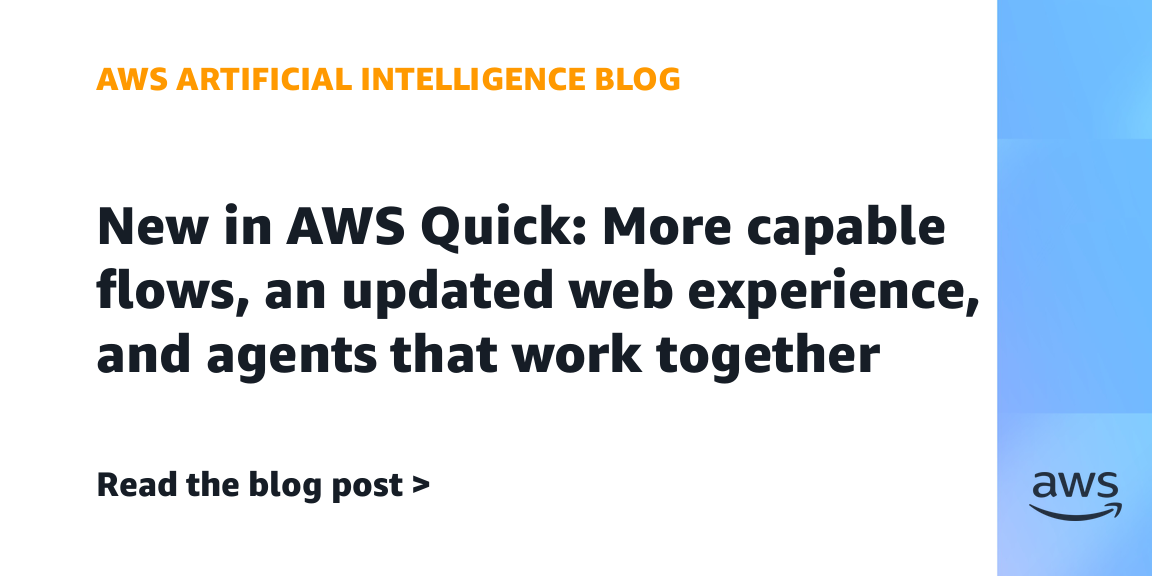
This shift transforms the AI agent from a personal assistant into a decentralized business unit. Once a flow is published, any team member with the appropriate permissions can trigger the process, utilizing their own local data sources while adhering to the standardized logic defined by the original creator. This ensures that the output remains consistent, regardless of who initiates the task.
Multi-Agent Orchestration and the Evolution of Expert Systems
Perhaps the most sophisticated component of this release is the introduction of multi-agent orchestration. In many real-world scenarios, a single AI agent lacks the comprehensive domain knowledge required to solve multifaceted problems. A query regarding a sudden rise in shipping costs, for instance, might require inputs from both a supply chain forecasting module and a procurement contract database.
With the new update, a primary agent acts as a conductor, delegating sub-tasks to specialized agents. Each of these sub-agents operates under its own set of instructions, knowledge base, and access constraints. The primary agent then synthesizes these disparate outputs into a single, cohesive response for the user. This architecture preserves the integrity of specialized data while allowing for a holistic view of the organization’s operations. By maintaining strict silos between the agents’ knowledge bases, AWS ensures that sensitive contract data remains accessible only to the relevant procurement agents, maintaining robust security protocols.
Expanded Connectivity and Data Integration
The utility of any AI workspace is bounded by the systems to which it has access. Recognizing this, AWS has expanded the platform’s connectivity by integrating new support for Meta’s advertising platforms and Amplitude’s product analytics. These connectors leverage the Model Context Protocol (MCP), a standard designed to streamline how AI agents interact with external data sources and tools.
For marketing teams, the Meta ads connector allows for the management and analysis of campaigns through natural language, with a critical security "human-in-the-loop" requirement: the system must request explicit permission before executing any write actions, such as budget adjustments or campaign modifications. Similarly, the integration with Amplitude provides product and marketing teams with the ability to query behavioral insights directly within their workspace, facilitating data-driven decision-making without the need to switch contexts between multiple browser tabs and applications.
Operational Impact and Industry Context
The implications of these developments are significant for data-driven organizations. According to recent industry benchmarks, companies that successfully automate routine business processes report a 20% to 30% increase in capacity for strategic, high-impact work. The case of Pomelo, a Latin American fintech provider, serves as a practical bellwether for this transformation. By democratizing access to data and automation, Pomelo reported that the number of employees actively working with data increased fourfold, while a single automated use case resulted in an 80-hour monthly time saving for their staff.
This cultural shift—moving from a model where a central data team serves the entire company to one where every department can build its own workflows—is a stated objective for AWS. The platform’s "governed environment" ensures that while employees have the autonomy to experiment and innovate, the organization retains central control over security, access rights, and data privacy.
Chronology of the Quick Platform Evolution
The release marks a continuation of the platform’s iterative development cycle:
- Initial Launch: Introduced as an AI-native workspace focused on individual productivity and document synthesis.
- Intermediate Phase: Integration of basic workflows and data connectors to bridge the gap between static documents and dynamic business systems.
- Current Release: Introduction of conversational flow-building, multi-agent orchestration, and advanced enterprise-grade connectors, signaling a move toward enterprise-wide process automation.
Commitment to Data Sovereignty and Security
A primary concern for enterprise clients remains the privacy of their proprietary data. AWS has reiterated that data processed within the Quick workspace is not used to train the base models of third parties or AWS itself. The principle of "every decision stays yours" remains the core architectural tenet. By keeping data within the organization’s environment and requiring human approval for all write-actions, AWS aims to mitigate the risks associated with autonomous AI agents.
Broader Implications for the Future of Work
The integration of these features into a unified web and desktop application suggests that AWS is betting on a future where the browser and the chat interface serve as the primary operating system for the modern knowledge worker. By surfacing urgent messages and relevant tasks immediately upon login, the updated web interface seeks to reduce the "context-switching tax"—the mental energy lost when toggling between email, project management software, and analytical tools.
As enterprises continue to navigate the complexities of digital transformation, the success of platforms like AWS Quick will likely depend on their ability to balance sophisticated, "black-box" AI capabilities with the transparency and control required by corporate compliance departments. The transition from "chatting with an AI" to "collaborating with an automated process" represents a maturation of the technology, moving it closer to the vision of a fully integrated, intelligent enterprise.
For organizations looking to deploy these capabilities, the updated platform is available across all AWS regions where Quick is supported. The rollout includes a tiered approach, allowing smaller teams to trial the service with limited access, while larger enterprises can engage with AWS account teams to architect deployments tailored to their specific operational requirements. As the market continues to evolve, the ability to turn individual knowledge into institutional process will likely emerge as the defining competitive advantage for companies in the next decade.
Related posts: