Graph-RAG for Enterprise Documents: Building a Knowledge Graph from PDFs, Wikis, and Databases

In the modern enterprise environment, artificial intelligence assistants are increasingly relied upon to serve as the single source of truth for technical operations. However, the efficacy of these tools is often undermined by the fragmented nature of corporate data. Information regarding service ownership, on-call rotations, and technical specifications is rarely centralized; instead, it is scattered across live SQL databases, static wiki pages, and unstructured PDF documentation. When an AI assistant attempts to synthesize this data, it often treats all sources as equally credible, leading to high hallucination rates and conflicting information that can cause significant operational friction.
A new architectural approach, known as 3-Tiered Graph-RAG (Retrieval-Augmented Generation), has emerged as a solution to this challenge. By implementing a hierarchical, deterministic retrieval system, engineers can ensure that live, structured data always overrides stale or secondary documentation, thereby providing accurate, actionable responses in mission-critical environments.
The Problem of Stale Information in AI Retrieval
The failure modes of standard vector-only RAG systems are well-documented. In traditional setups, documents are embedded into a vector space where semantic similarity governs retrieval. While this works for finding broad topics, it struggles with precise, time-sensitive queries. For instance, an engineer requesting the contact information for an on-call rotation might receive an answer based on a four-month-old wiki entry rather than the live service registry.
According to an IDC study sponsored by Neo4j, organizations that ground their generative AI in graph-based context can reduce hallucination rates by an average of 44 percent. In specific sectors, such as life sciences, organizations have reported successful reductions in error rates from a range of 20 to 40 percent down to a stable 2 to 5 percent. This significant delta underscores the necessity of moving beyond simple vector similarity toward systems that prioritize the provenance and validity of data.
Architectural Framework: A Three-Tiered Hierarchy
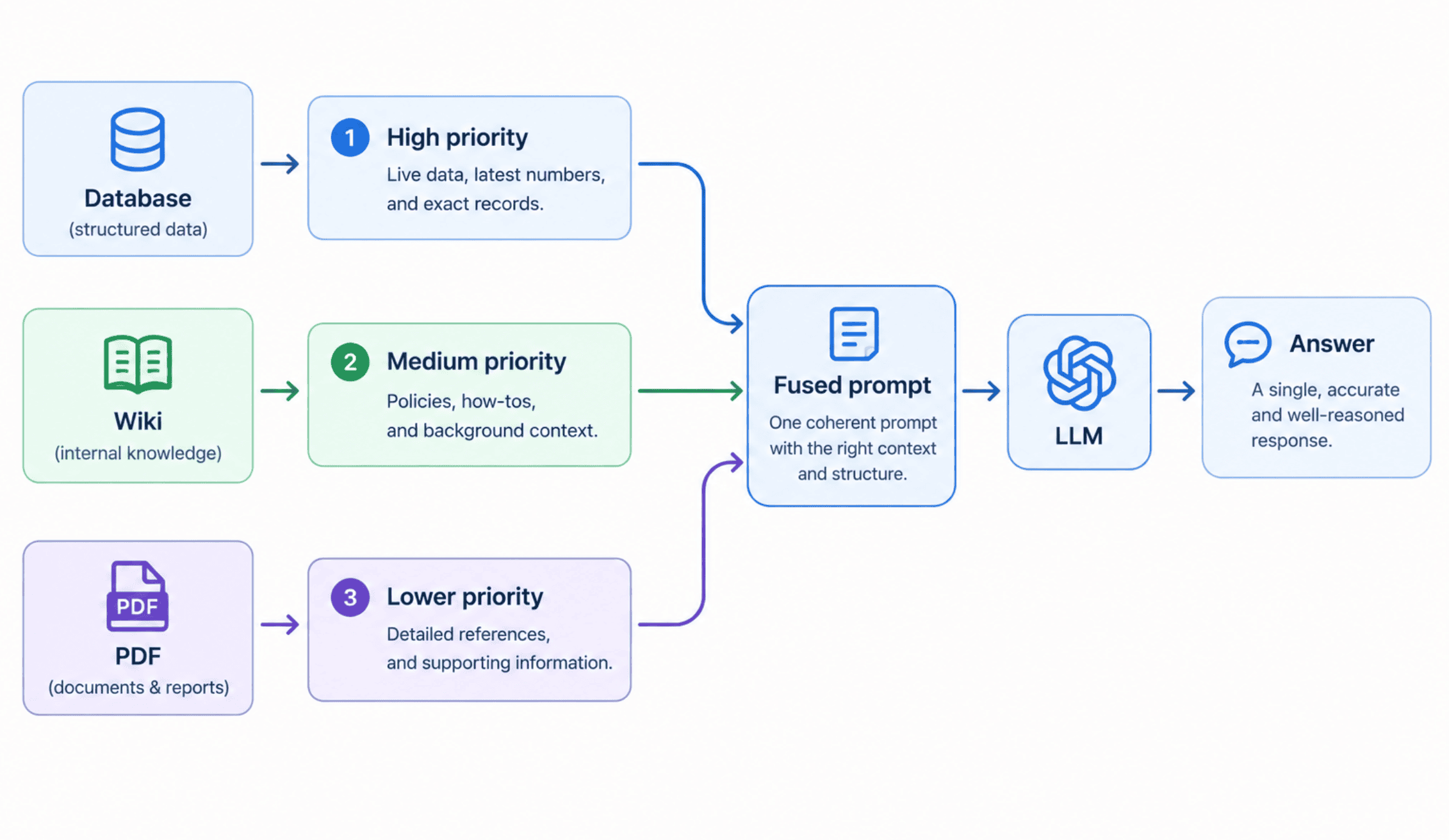
To solve these discrepancies, developers are turning to a three-tiered architecture that separates facts by their reliability and structure. This model relies on three distinct layers of retrieval:
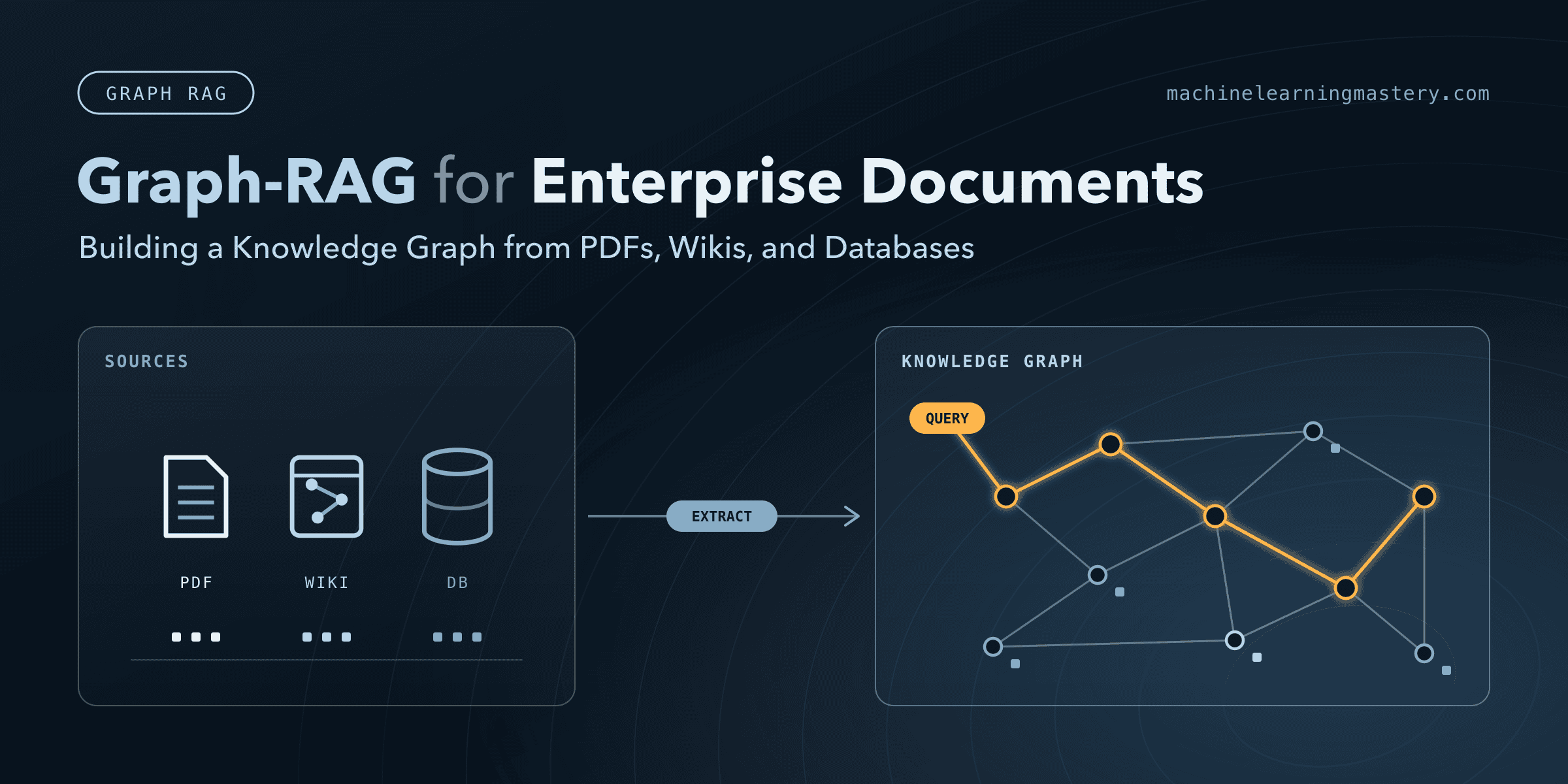
- Priority 1: The Absolute-Facts Graph (CMDB/Live Database): This layer acts as the primary source of truth. By connecting the AI assistant to a live Configuration Management Database (CMDB), the system retrieves the most current state of services, such as on-call engineer names, current software versions, and service statuses. Because this data is pulled in real-time, it is prioritized over all other sources.
- Priority 2: The Contextual Wiki Graph: This layer contains procedural knowledge, such as runbooks and troubleshooting guides. While these documents are thorough, they are prone to "drift," where the information becomes outdated as personnel change or services evolve. This tier is queried only when the Priority 1 layer does not provide a definitive answer.
- Priority 3: The Vector Fallback (PDFs and Narrative Docs): This layer encompasses unstructured data, such as incident postmortems, SLA documentation, and architecture whitepapers. These documents provide the "narrative" necessary to understand the "why" behind a service, but they lack the structured reliability of a database. They are treated as the final resort for information.
Engineering the Deterministic System
Building this system requires a departure from standard RAG pipelines. Developers must implement a Subject-Predicate-Object-Context (SPOC) quad store to manage the first two tiers. By tagging every piece of information with its source context (e.g., "cmdb," "wiki," or "pdf"), the system can enforce logic-based priority rules during the final synthesis phase.
For example, when a user asks, "Who is on-call for the payments service?" the system first polls the CMDB. If it finds a match, that result is passed to the LLM with a strict directive: "Priority 1 comes from the live CMDB and is always current. If it answers the question, use ONLY that answer." This ensures that even if the vector-based retrieval or the wiki layer contains a different, outdated name, the model is instructed to suppress that information entirely.
This approach shifts the burden of accuracy from the model’s internal weights to the system’s prompt engineering and retrieval pipeline. By explicitly defining the hierarchy within the system prompt, developers effectively force the AI to act as a deterministic retrieval agent rather than a creative, conversational chatbot.
Implementation and Technical Prerequisites
To construct such a system, developers typically utilize a combination of Python-based tools. For local development and testing, researchers suggest using Python 3.10+, along with Ollama for running open-source models like Llama 3.2. Essential libraries for this architecture include chromadb for the vector-based Priority 3 tier, spacy for named entity recognition (to identify which services a user is asking about), and pdfplumber for high-fidelity text extraction from technical documents.
The setup of the QuadStore is minimal, requiring only a few lines of code to create a storage object capable of querying by subject, predicate, object, or context. This simplicity is intentional; by avoiding complex, high-latency middleware, the system remains transparent and easy to debug. If a conflict occurs, an engineer can trace the erroneous information back to its specific source document or database row, providing a level of auditability that is essential for enterprise governance.
Broader Implications for Enterprise AI
The shift toward 3-tiered Graph-RAG represents a broader trend in enterprise computing: the professionalization of AI. In the early stages of the generative AI boom, companies focused on "proof of concept" tools that were often fragile and inaccurate. As these tools move into production environments, the focus has shifted toward "deterministic AI"—systems that can be relied upon for mission-critical tasks like incident response and infrastructure management.
The implications for the workforce are substantial. By offloading technical queries to a reliable, graph-backed assistant, organizations can significantly reduce the "cognitive load" on their engineering teams. Instead of manually searching through disparate folders, wikis, and databases, engineers can rely on a single, synthesized response. However, this relies on the fundamental assumption that the underlying data hygiene is maintained. If the CMDB is not updated or the wiki is allowed to rot, the graph-based system will reflect those gaps, albeit with more precision.
Challenges and Future Considerations
Despite the advantages, the system is not without challenges. One of the most significant is the "refresh cadence." While the CMDB is often updated in real-time, wiki pages and PDF documentation require maintenance. If an organization does not have robust processes for updating its runbooks, the Priority 2 tier will eventually become a liability.
Furthermore, as the size of the enterprise grows, the complexity of the knowledge graph increases. A small team with three services can easily manage a manual quad store, but a global corporation with thousands of services will require specialized graph databases like Neo4j or ArangoDB to maintain performance.
Finally, security and access control remain paramount. In a tiered system, information must be filtered before it reaches the prompt. It is insufficient to tell an AI not to disclose restricted information; the retrieval pipeline must be configured to only surface data that the user has the credentials to view. As this technology matures, integration with enterprise identity and access management (IAM) systems will be the next major hurdle for developers.
Conclusion
The 3-tiered Graph-RAG system offers a compelling path forward for enterprise AI. By prioritizing structured, real-time data while utilizing unstructured documentation as a secondary resource, developers can create tools that are not only helpful but also trustworthy. The core strength of this architecture lies in its predictability; by providing the model with clear instructions and a ranked hierarchy of sources, organizations can mitigate the risks associated with hallucination. For a company, the cost of a few extra tokens in a prompt is negligible compared to the operational cost of an AI assistant that confidently provides the wrong information during a production outage. As the industry continues to refine these methods, the era of the "unreliable AI" may soon give way to a new standard of deterministic, enterprise-grade intelligence.