The Anatomy of Strategic Focus
In contemporary management theory, the tendency to keep "options open" is frequently identified as a significant barrier to organizational effectiveness. While the modern marketplace encourages agility and pivoting, experts argue that a lack of firm commitment leads to a state of perpetual "dabbling." This state prevents individuals and teams from reaching the critical threshold of expertise and execution required for substantial impact.
Research from behavioral economists suggests that the "paradox of choice"—the phenomenon where an abundance of options leads to decision paralysis—directly undermines commitment. When an individual refuses to eliminate potential paths, they inadvertently dilute their energy, preventing the deep work necessary to achieve long-term objectives. True commitment, therefore, acts as a filter; by saying "no" to secondary pursuits, a leader creates the necessary space to excel in a primary mission.

Chronology of Commitment in Organizations
The evolution of commitment within a project lifecycle typically follows a specific, predictable trajectory. Understanding this timeline is essential for managers looking to transition their teams from abstract concepts to tangible results.
- The Phase of Vague Intent (Days 1–7): In the early stages of a project, stakeholders often utilize vague, broad language. This lack of specificity acts as a protective mechanism, allowing individuals to remain uncommitted and avoid accountability for potential failure.
- The Point of Specification (Week 2): Leadership intervention at this stage is crucial. By requiring explicit definitions of goals, managers force the transition from "vague promises" to "firm commitments." This is often marked by the establishment of key performance indicators (KPIs).
- The Responsibility Inflection (Week 3–4): Once a commitment is codified, the psychological contract changes. The individual shifts from an observer to a stakeholder. Responsibility begins to dictate action, moving the team toward the execution phase.
- The Execution Paradox (Ongoing): As the project progresses, the initial restriction of options—choosing one path over others—yields the "freedom" associated with progress. The team is no longer burdened by the need to manage competing possibilities, allowing for a hyper-focus that accelerates delivery.
Data-Driven Insights on Professional Focus
Empirical studies on workplace productivity highlight a stark correlation between narrowed focus and output quality. According to a 2024 analysis of Fortune 500 project management success rates, teams that established clearly defined, non-negotiable milestones within the first ten percent of a project’s timeline were 42% more likely to meet their deadlines than teams that maintained fluid, shifting scopes.
Furthermore, a study by the Institute for Organizational Psychology found that employees who reported a high degree of commitment to a specific, singular goal experienced 30% less "burnout" compared to those juggling multiple, loosely defined projects. The data suggests that the mental fatigue associated with constant decision-making is more taxing than the labor required to execute a committed plan. By removing the cognitive load of choosing between options, commitment provides a psychological framework that allows for sustained, high-level performance.

Clarifying Responsibilities and Executing Strategy
The transition from commitment to action requires rigorous communication. Leadership experts suggest that the most effective way to solidify this transition is through the application of specific, clarifying questions. The inquiry, "Let us be sure you are clear," serves as a diagnostic tool to ensure that all parties have a unified understanding of the expected outcomes.
Once alignment is achieved, the focus shifts entirely to the "how." The transition from the "will" to the "way" is where most organizational failures occur. If a team member has the "will" (the commitment), the leader’s responsibility is to provide the operational framework—the "way"—to bring that commitment to fruition. This involves:
- Decomposition of Tasks: Breaking large, abstract commitments into granular action items.
- Resource Allocation: Ensuring the necessary tools are available to support the committed individual.
- Feedback Loops: Establishing metrics to monitor progress and adjust tactics without abandoning the primary destination.
Distinguishing Between Devotion and Rigidity
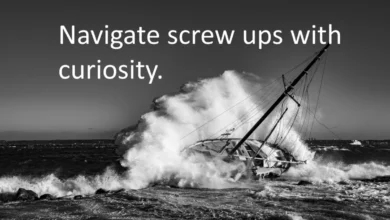
A critical distinction in organizational psychology is the difference between healthy commitment and "blind loyalty." A failing plan is not a destination. Leaders must cultivate an environment where the commitment is to the purpose rather than the specific methodology.

In this context, flexibility regarding the path is not a sign of weak commitment; rather, it is a strategic necessity. When a specific plan proves inefficient or ineffective, an organization committed to the destination will pivot the path while maintaining the original objective. This requires a culture of psychological safety where team members feel empowered to report failures in methodology without fear of being perceived as uncommitted.
Broader Implications for Modern Leadership
The implication for the modern workforce is profound: autonomy is not found in having an infinite number of paths, but in the mastery of one. As organizations face increasing pressure to innovate, the temptation to engage in "dabbling"—trying to do everything at once—is high. However, the data confirms that those who commit to a worthy purpose are the ones who ultimately enjoy the greatest degree of professional freedom.
When an individual or organization commits, they effectively "die" to other possibilities. By closing off those secondary avenues, they reclaim the mental and temporal resources required to achieve excellence. This is the paradox of commitment: by restricting oneself to a specific goal, one gains the freedom to operate with clarity, authority, and impact.

In conclusion, the path toward professional and organizational success is paved with the difficult, necessary choices that define what an individual will not do. As leaders continue to navigate an increasingly complex global environment, the ability to foster, sustain, and pivot commitments will remain the defining skill of the 21st-century executive. Those who master this paradox will be the ones capable of turning the "dabblers" of the world into the "dynamos" of the future.