Eunice Wang Bridges Creative Experimentation and Consumer Tech as CES 2027 Judge and What Now Studios Founder

LOS ANGELES — As the consumer technology landscape prepares for a new wave of hardware integration, industry leaders are increasingly tasked with defining what separates a fleeting technological novelty from an indispensable daily tool. Eunice Wang, founder of the Los Angeles-based branding and product strategy firm WHAT NOW STUDIOS, has officially concluded her service as a judge for the prestigious CES Innovation Awards 2027 program. Her tenure on the judging panel coincides with a critical inflection point in the consumer electronics sector, characterized by an influx of artificial intelligence-driven devices seeking to carve out permanent spaces in consumers’ daily routines.
Wang’s vantage point—honed through evaluating cutting-edge submissions for the world’s leading technology showcase and steering go-to-market strategies for emerging brands—offers a clear forecast for the trajectory of AI hardware. According to Wang, the upcoming generation of consumer technology must transcend generalized capabilities to offer hyper-specific utility. In an ecosystem saturated with multi-purpose screens and ambient computing concepts, a new device must radically improve a distinct, real-world experience if it is to justify its physical footprint alongside legacy technology.
The Evolution of AI Hardware: Purpose Over Proliferation
For years, the consumer technology market has operated under the assumption that more features equate to higher value. However, Wang’s strategic framework challenges this paradigm, particularly within rapidly evolving categories such as wearables, audio technology, and fashion-tech hybrids. Whether a device is designed to streamline electronic music production, offer new mediums of personal expression, or provide context-aware support for individuals navigating urban environments, its success hinges on deliberate design choices.
Wang emphasizes that physical form and software capabilities must exist in symbiotic harmony. Reducing a device’s feature set is not enough; the user experience must provide an undeniable, intuitive reason for adoption. This philosophy directly influences how WHAT NOW STUDIOS approaches product positioning, differentiating between gadgets that solve genuine behavioral friction and those that merely digitize existing tasks without adding friction-free value.
Case Studies in Tangible Positioning: MARK and Blinkko
To understand how these strategic principles translate into marketplace execution, one must examine WHAT NOW STUDIOS’ recent work with pioneering hardware startups.
Earlier in the development cycle, the studio partnered with MARK, an innovative AI-powered bookmark designed specifically for physical books. In an era dominated by digital reading formats and screen fatigue, MARK addresses the tactile experience of reading print media while utilizing AI to capture, synthesize, and revisit physical annotations and ideas. To introduce the product to culturally literate consumers, WHAT NOW STUDIOS orchestrated targeted experiential gatherings in Los Angeles and New York. These events bypassed traditional advertising channels, instead curating physical spaces where authors, avid readers, and cultural influencers could interact organically with the hardware, establishing an authentic emotional and intellectual connection to the device.
Similarly, the studio executed a high-profile launch partnership for Blinkko, a wearable AI companion engineered to assist users in daily exploration and interpersonal engagement. At a September launch event in San Francisco, WHAT NOW STUDIOS designed interactive discovery stations that allowed prospective users to stress-test the device in real-time scenarios. By prioritizing hands-on engagement over abstract marketing claims, the studio enabled consumers to experience firsthand how the wearable could seamlessly integrate into their social routines without causing technological intrusion.

These divergent campaigns highlight Wang’s methodology: every product demands a bespoke positioning strategy rooted in its unique operational environment, target demographic, and physical interface.
Creative Experiments as Early Signals for Consumer Tech
Beyond corporate product rollouts, Wang maintains an active pulse on the avant-garde art and design communities, viewing underground creative experimentation as an invaluable testing ground for future consumer electronics. Her research and curation interests span advanced AI-assisted creative workflows, digitally fabricated physical objects, sustainable 3D-printed apparel, and experimental sculpture.
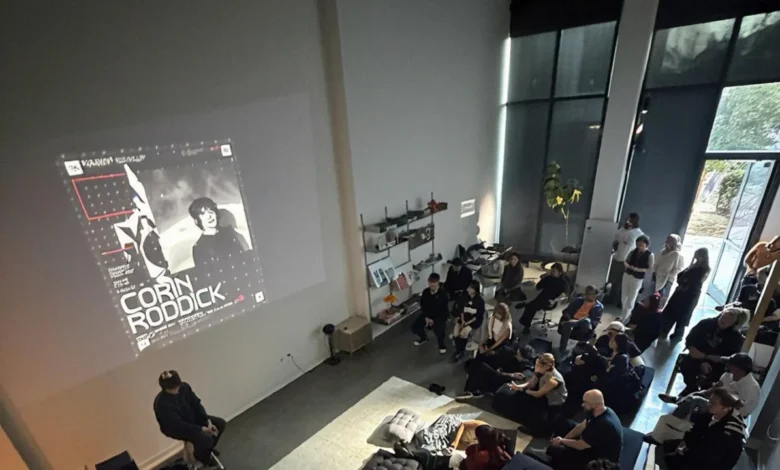
This cross-disciplinary philosophy was on full display during the studio’s November 14 Creators Connect Artist Salon in Los Angeles. Centered around the theme "Showing Process," the salon convened leading practitioners from diverse fields—including photography, contemporary dance, interdisciplinary visual arts, and electronic music production—to dissect the mechanics of creation. Notably, the program featured Corin Roddick of the acclaimed electronic music duo Purity Ring, who provided an intimate look into his unique music production and hardware integration processes.
Wang views these intimate creative exchanges not merely as artistic salons, but as vital incubators for consumer empathy and material innovation. By engaging directly with artists who push the boundaries of sound, tactile materials, and spatial interaction, Wang extracts qualitative data and behavioral insights that inform future commercial product strategies. While an experimental art project may prioritize pure expression over commercial viability, the underlying user interactions often signal where consumer expectations are heading next.
Broader Industry Implications and the Road to CES 2027
As the technology sector looks ahead to the formal exhibitions and announcements of CES 2027, the insights gathered by Innovation Awards judges like Wang carry significant weight. The consumer electronics market is experiencing a post-hype sobriety regarding artificial intelligence. Consumers and enterprise buyers alike are increasingly skeptical of software-first solutions shoehorned into inadequate hardware casings.
Industry analysts note that the winners of the CES Innovation Awards—and the brands poised for sustainable market penetration—will be those that solve genuine human problems with elegance, durability, and restraint. Wang’s post-judging agenda directly mirrors this macroeconomic shift. Through ongoing client engagements at WHAT NOW STUDIOS and continued community-building initiatives like the Creators Connect salons, she remains dedicated to rigorous product testing and intentional design.
For technology founders entering the market, Wang’s overarching thesis serves as both a roadmap and a cautionary tale: long-term relevance cannot be achieved through algorithmic novelty alone. It requires a clearly defined activity to support, a physical form factor optimized for that specific purpose, and an experiential loop compelling enough to earn a permanent place in the user’s daily life.