The Intersection of Financial Volatility and Personal Health Challenges During Holiday Transitions


The convergence of sudden market corrections and acute health crises presents a dual challenge that tests the structural integrity of household financial planning. Over the past 45 days, public equity markets have experienced a sharp contraction, with major indices recording a decline of approximately 15% from their recent cycle peaks. This period of financial volatility, compounded by the seasonal onset of respiratory illnesses, highlights the vulnerability of early retirement strategies that lack sufficient liquid buffers or professional contingency plans. For many individuals who have exited the traditional workforce, the simultaneous erosion of net worth and physical vitality serves as a critical stress test for long-term wealth management models.
Chronology of the Recent Market Correction
The current economic landscape has been defined by a rapid adjustment in investor sentiment. For much of the third quarter, market participants enjoyed a period of relative stability, bolstered by expectations of shifting monetary policy. However, the outlook darkened in mid-October as 10-year Treasury yields sustained levels near 5%, creating a higher discount rate environment that pressured equity valuations.
By early November, the market began a systematic repricing. Investors, particularly those with higher-than-average exposure to growth and technology sectors, faced significant margin pressure. For households that had allowed their equity allocations to drift—some moving from conservative 25–35% ranges to upwards of 45%—the decline resulted in a disproportionate impact on liquid assets. This correction has effectively erased an estimated three years of planned living expenses for some retirees, forcing a sudden reassessment of spending habits and risk management strategies.
The Vulnerability of Early Retirement Models
The FIRE (Financial Independence, Retire Early) movement has long emphasized the importance of capital accumulation, yet the current market environment exposes the risks inherent in premature exits from the labor force. Financial analysts note that the absence of a "second earner" or an active salary during periods of market instability removes a vital hedge against inflationary pressure.
When health complications coincide with a market downturn, the lack of employer-subsidized benefits, such as comprehensive health insurance and disability coverage, can create an immediate liquidity crisis. According to wealth management data, households relying exclusively on portfolio withdrawals are significantly more exposed to "sequence of returns" risk. If significant drawdowns occur during the early years of retirement, the long-term sustainability of the portfolio is statistically compromised. Experts suggest that maintaining a diversified asset mix, including fixed-income instruments and cash equivalents, is the most effective defense against the need to liquidate equities at a cyclical low.
Broader Economic Implications and AI Regulation
The market’s recent performance is not occurring in a vacuum. A growing concern among institutional investors is the potential for increased regulatory oversight of artificial intelligence and high-growth technology firms. As Congress contemplates legislative frameworks to govern AI development, investors are pricing in the uncertainty of future earnings reports for the tech sector, which has been a primary engine of market growth for the past decade.
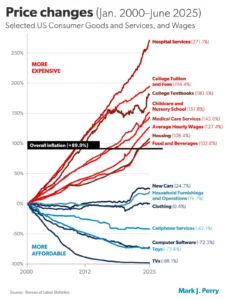
This legislative uncertainty, paired with persistent inflationary pressures, has created a "double-squeeze" on households: the cost of living remains elevated due to inflation, while the value of household assets is simultaneously contracting. This environment necessitates a return to fundamental portfolio management, where asset allocation is governed by age-appropriate risk tolerance rather than speculative momentum.

The Role of Psychological Resilience in Financial Management
Behavioral economists suggest that the most dangerous decisions in finance are made under duress. The physiological impact of illness—such as chronic fatigue, respiratory distress, and cognitive impairment—often correlates with a decrease in the ability to make rational financial decisions. Financial counselors advise that periods of health crises are the least appropriate times to perform "wholesale" reallocations or liquidations of a portfolio.
The tendency to "panic sell" in response to a 15% correction is a documented behavioral bias. Historical data indicates that market corrections, while painful in the short term, are typical features of long-term economic cycles. By resisting the urge to lock in losses, investors allow their portfolios the necessary time to recover alongside the broader economy. Maintaining a "cooling-off period" is often cited as a best practice for individuals undergoing personal or health-related stress.
Historical Context and Institutional Lessons
A visit to historical sites, such as the Alcatraz Federal Penitentiary, serves as a poignant, if non-traditional, reminder of the value of freedom—both physical and financial. The contrast between the rigid, controlled environment of a correctional facility and the autonomy sought by early retirees provides a framework for evaluating personal decision-making.
Just as the inmates of Alcatraz were subject to the whims of the penal system, retail investors are subject to the volatility of the global economy. The key difference lies in the ability to adapt. For families, the lesson is clear: financial independence is not merely about the absence of work; it is about the presence of resilience. Building a portfolio that can survive a 60% market contraction is a theoretical requirement for those who truly wish to be immune to market forces.
Practical Strategies for Navigating Volatility
For those currently navigating the dual pressures of market instability and personal health, financial experts recommend a structured approach to recovery:
- Prioritize Health as the Primary Asset: Without the physical capacity to manage one’s life, the value of a portfolio is significantly diminished. Prioritizing rest and recovery is, in itself, a long-term financial strategy.
- Time-Based Loss Assessment: Rather than focusing on dollar-denominated losses, which can induce panic, investors should assess how far back the current decline sets their timeline. Often, a 15% dip represents a regression of only 12 to 24 months, which is well within the acceptable variance for long-term investment horizons.
- The "Leg-In" Approach: If an investor feels that their current asset allocation is too aggressive, they should adjust positions incrementally. Selling large portions of a portfolio at a market low is almost universally regarded as a mistake in hindsight.
- Control the Controllables: While global economic policy, market movements, and viral outbreaks are outside the scope of individual control, personal spending, asset allocation, and physical health are not. Focusing energy on these manageable variables provides a sense of agency that is crucial for mental health.
Conclusion: A Foundation for Future Stability
As the economy enters the final stretch of the year, the combination of market volatility and health challenges offers a sobering perspective on the nature of wealth. True financial security is not solely determined by the balance of a brokerage account, but by the robustness of one’s contingency planning and the ability to maintain a long-term perspective during periods of acute stress.
For the vast majority of investors, the current market correction is a temporary, albeit uncomfortable, phase of a larger cycle. By practicing patience, adhering to disciplined asset allocation, and focusing on the non-financial pillars of life—such as family, health, and personal growth—individuals can position themselves to not only recover from current setbacks but to emerge with a more resilient financial framework for the years ahead. As history has shown, market cycles inevitably turn, and the capacity to "try again" remains one of the most valuable assets in any investor’s toolkit.