Anthropic IPO Valuation and the San Francisco Real Estate Dilemma: A Wealth Allocation Analysis

The recent initial public offering of AI powerhouse Anthropic at a staggering $1.5 trillion valuation has triggered a profound shift in the financial landscape of San Francisco, forcing a generation of tech employees and early investors to confront a unique, high-stakes capital allocation decision. As equity compensation vests and lockup periods loom, many are weighing the immediate utility of luxury real estate against the potential for continued, albeit volatile, exponential growth in artificial intelligence sector assets. This crossroads highlights the tension between liquid paper wealth and the acquisition of tangible, income-producing, or utility-providing assets in an era of rapid technological disruption.

The Anatomy of the IPO Windfall
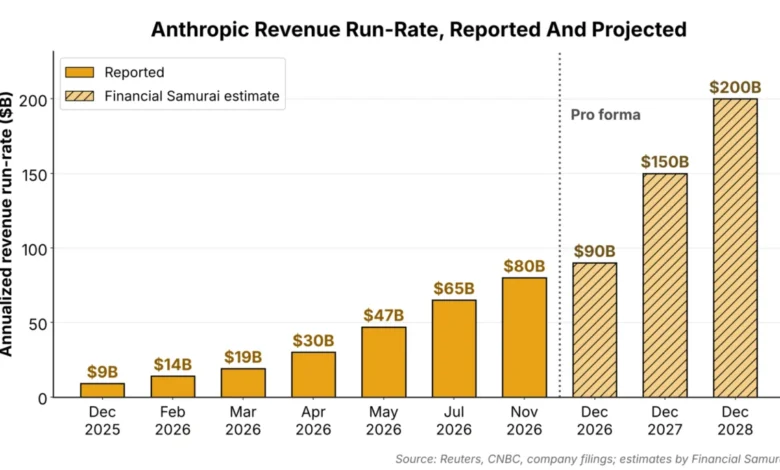
The valuation of Anthropic reflects the broader, aggressive growth trajectory of the artificial intelligence sector. With annualized revenue run rates reaching approximately $80 billion by late 2026—a significant jump from $9 billion at the close of 2025—the company has achieved a scale that few, if any, technology firms have reached in such a condensed timeframe. Following its pivot to positive adjusted operating income, the company has signaled to the market that it is transitioning from a capital-burning startup to a mature, scaling enterprise.
For employees holding equity, the IPO presents a choice between two distinct asset classes: the $7.5 million luxury single-family home or an $8.5 million allocation in pre-IPO equity, currently subject to a mandatory six-month lockup period. While the $8.5 million stock position appears mathematically superior at face value, financial analysts note that the "tax haircut" significantly erodes this advantage. In California, where combined federal, state, and investment income taxes can exceed 37%, the conversion of stock into real estate requires a substantial premium to account for tax liabilities. When treating restricted stock units (RSUs) as ordinary income, the capital required to achieve the same purchasing power as a $7.5 million home can reach nearly $16 million in gross equity value.

Chronology of the AI Market Expansion
The current environment is the culmination of years of rapid development in Large Language Models (LLMs). Since 2021, Anthropic and its competitors have consistently pushed the boundaries of computational infrastructure. The journey from initial seed rounds to a trillion-dollar IPO follows a clear acceleration path:
- 2021–2022: Initial formation and foundational research. Small-scale equity grants provided to early employees.
- 2023–2024: Commercialization phase. Massive compute buildouts and early enterprise adoption lead to significant revenue growth.
- 2025: Revenue run rates hit $9 billion as market demand for AI-driven enterprise solutions surges.
- 2026: Mid-year, revenue projections explode toward $80 billion, leading to the current $1.5 trillion IPO valuation.
- Late 2026–2027: The post-IPO period, characterized by market price discovery and the expiration of lockup periods for early stakeholders.
Real Estate as a Defensive Asset Class
While equity markets remain volatile—often influenced by macroeconomic factors, interest rate adjustments, and sector-specific sentiment—the San Francisco real estate market has demonstrated a resilient, if not aggressive, upward trend. Data from the first half of 2026 shows that 136 single-family homes sold for $5 million or more, doubling the volume of the previous year. This "melt-up" is directly correlated with the influx of liquidity from AI-related IPOs and liquidity events.

The case for the $7.5 million home is rooted in utility and tax efficiency. Unlike equity, which is subject to market fluctuation and capital gains tax upon sale, a primary residence offers immediate shelter, potential for tax-advantaged appreciation, and, in the case of California, the benefits of Proposition 13, which caps property tax increases. Furthermore, the $500,000 capital gains exclusion for married couples provides a structural advantage that brokerage accounts cannot replicate.
Comparative Financial Analysis: The Four-Year Horizon
To determine the viability of waiting for the stock to appreciate, one must consider the opportunity cost of capital. A $7.5 million home, if left to appreciate at a conservative 5% annually, would be valued at approximately $9.1 million in four years. Simultaneously, the costs of renting a comparable property during that period—estimated at $25,000 per month—would amount to roughly $1.27 million in "burned" capital.

Therefore, for an investor to favor the $8.5 million stock position, the asset must outperform the home by a margin that accounts for both the initial tax burden and the lost appreciation of the real estate market. Calculations suggest that for the stock to be the objectively superior choice, it would need to nearly double in value within four years, requiring a compound annual growth rate of approximately 18.1%. This assumes the market continues to value the company at a premium multiple of 9 to 10 times sales. If the company is re-rated as a more "mature" software entity, the valuation required to break even becomes increasingly dependent on sustained, aggressive revenue growth rather than speculative market sentiment.
Market Implications and Sector Constraints
The broader economic implication of this trend is the physical limitation of the AI boom. While digital assets scale with code, the infrastructure required to support them—data centers, power grids, and specialized hardware—requires physical land and resources. As the "AI gold rush" continues to manifest in record-breaking real estate transactions, the cost of entry for prime residential property in key tech hubs is rising, potentially pricing out non-tech professionals and creating a highly concentrated wealth demographic.
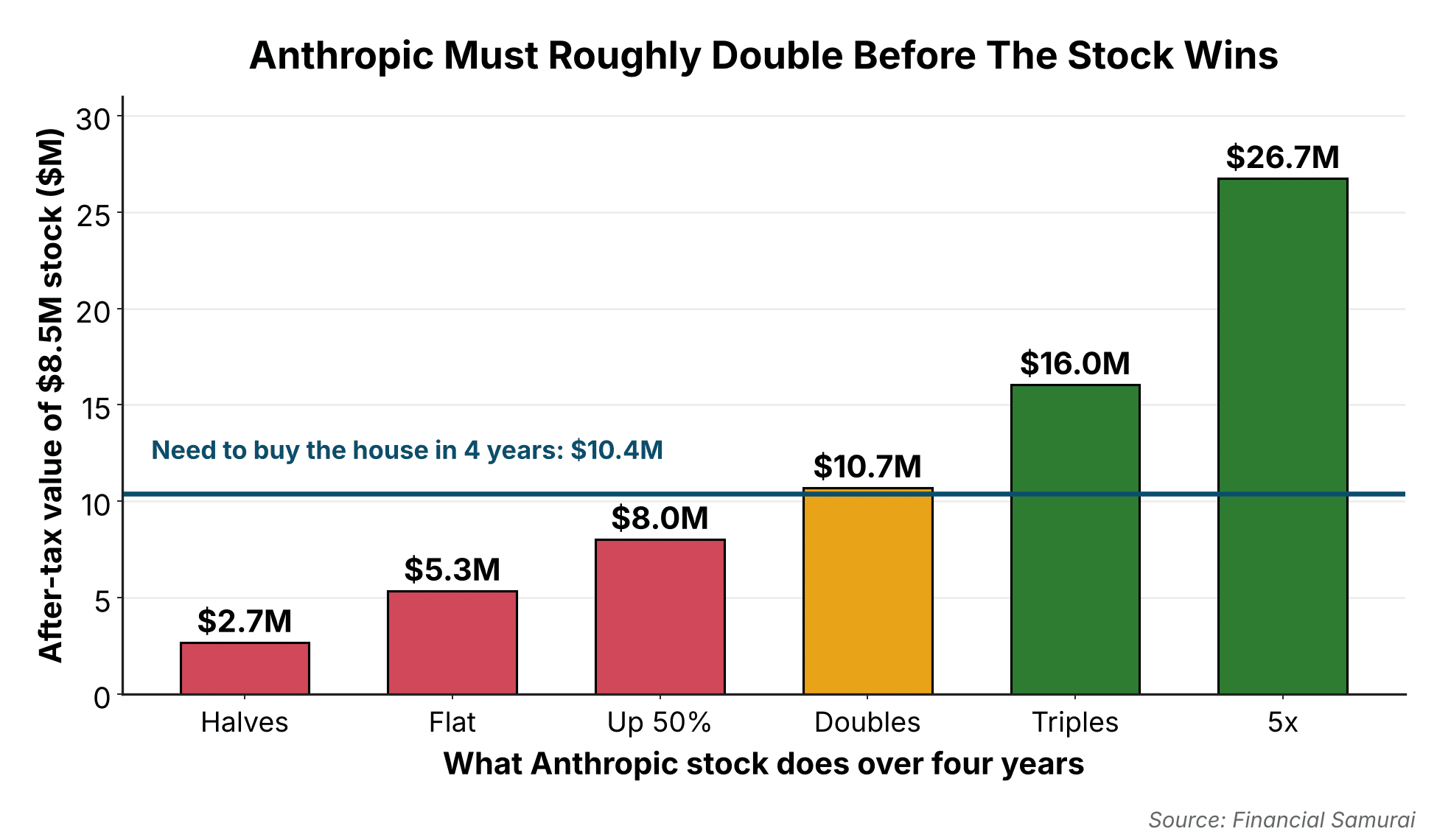
Institutional observers note that the "lockup" period is a critical factor in this dynamic. By forcing stakeholders to wait six months before selling, the market prevents immediate liquidations, but it also exposes employees to the potential for significant volatility. If the stock performs like other recent major technology IPOs, early shareholders may find that their exit price is substantially lower than the IPO valuation, further narrowing the gap between the "dream home" scenario and the "investment" scenario.
Strategic Considerations for Stakeholders
The decision faced by San Francisco’s new millionaires is ultimately a philosophical one regarding the definition of wealth. Is wealth the preservation of maximum liquidity, or is it the conversion of volatile assets into a stable, high-utility environment for one’s family?
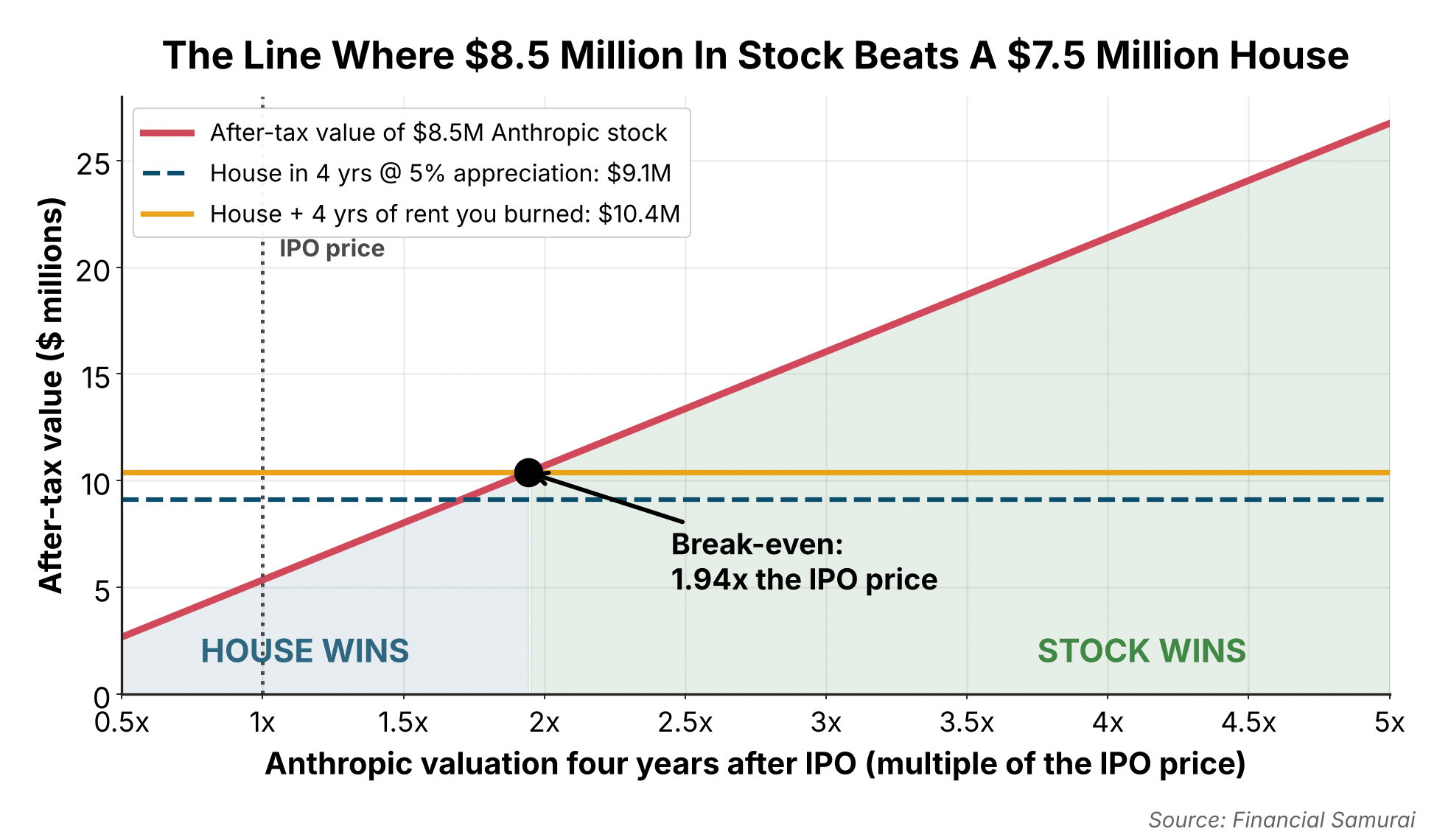
Market analysts suggest that those opting for the house are choosing a "bird in the hand," effectively hedging against the inherent risk of the technology sector. Conversely, those holding the stock are betting on the long-term dominance of Anthropic as a utility-like infrastructure provider for the global economy. As the company moves past its IPO and into the next phase of its lifecycle, the market will dictate the outcome of this experiment. However, the current trend suggests that for many, the uncertainty of the equity market is beginning to outweigh the allure of potential future gains, leading to a scramble for tangible assets that are increasingly scarce in the Bay Area’s competitive landscape.