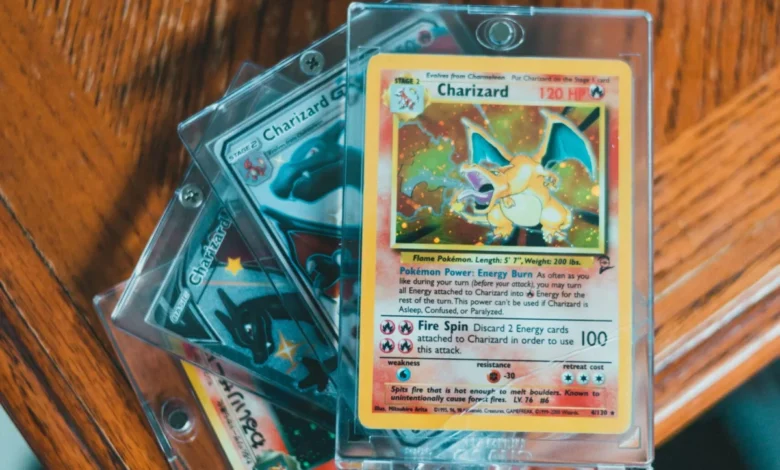
The global market for collectible trading cards has undergone a profound transformation over the last five years, evolving from a niche hobby into a sophisticated asset class. As the Pokémon franchise approaches its 30th anniversary, long-time collectors and those rediscovering childhood binders are frequently confronted with the challenge of determining the true market value of their holdings. Distinguishing between a common reprint and a high-value vintage rarity requires a methodical approach that accounts for printing history, linguistic variants, and technical condition grading.

The Evolution of the Pokémon TCG Market
Since its debut in Japan in 1996 and subsequent international release in 1999, the Pokémon Trading Card Game (TCG) has seen billions of cards produced. The market surged during the 2020 pandemic, which triggered a massive influx of capital into the hobby. During this period, record-breaking sales—such as the $369,000 sale of a 1st Edition Shadowless Charizard—cemented the status of vintage Pokémon cards as speculative investment vehicles.
However, the volatility that followed this boom has necessitated a more disciplined approach to valuation. For the average collector, the primary hurdle is identifying the specific "fingerprint" of a card. Each card contains three critical markers: the set name, the collector number, and the edition stamp. Without precise documentation of these three variables, accurate valuation is impossible.

Deciphering Edition and Print History
The value of a vintage card is fundamentally tied to its scarcity, which is dictated by its printing run. In the English-language market, particularly regarding the original 1999 Base Set, there are three primary iterations that determine price:
- 1st Edition: Identified by a small, black "1st Edition" stamp located on the left-hand side of the card, just below the illustration window. These cards represent the absolute first printing and consistently command the highest market premiums.
- Shadowless: These cards were printed after the 1st Edition run but before the addition of the "drop shadow" effect to the right side of the illustration box. They are distinct due to their flatter visual appearance and are highly sought after by completionists.
- Unlimited: These cards represent the mass-market production run that followed, characterized by the inclusion of a shadow on the right side of the art box. These are the most common versions and typically trade at a significantly lower valuation than their counterparts.
This hierarchy of scarcity is not limited to the Base Set. Collectors must apply similar logic to early expansion sets, including Jungle, Fossil, and Team Rocket. Understanding these nuances is critical, as a "shadowless" Charizard in near-mint condition can command prices exponentially higher than its "unlimited" counterpart.

The Divergence of Markets: Japanese vs. English
A common misconception among casual collectors is that language does not impact value. In reality, the Japanese and English card markets operate within distinct ecosystems. Japanese cards were produced with different technical specifications, including alternative card backs and, in some cases, unique artwork.
Japanese cards are often printed in smaller quantities for specific local sets, which can lead to high volatility. Furthermore, the grading standards favored by Japanese collectors often differ from those in the West. While major grading companies like Professional Sports Authenticator (PSA) serve both markets, some collectors prefer domestic Japanese grading services. When assessing a collection, it is vital to check market databases that distinguish between these regions, as an arbitrage gap often exists—where a card may be undervalued in one market and highly sought after in another.

Analytical Valuation via Market Data
To avoid the pitfalls of subjective pricing, collectors should utilize objective data platforms such as Hoshino. Unlike consumer-facing platforms that display "asking prices," these tools analyze historical transaction data. By examining "sold" listings rather than "listed" prices, collectors can see what buyers have actually paid for specific cards in specific conditions.
This data-driven approach highlights the importance of liquidity. High-value cards may have fewer transactions, making their price points more speculative, while common cards have high velocity, providing a clearer picture of current market trends.

The Role of Professional Grading
The transition from a "raw" card (ungraded) to a "slabbed" card (professionally graded) is the most significant factor in potential value appreciation. Grading companies—including PSA, CGC, and Beckett—evaluate cards based on four criteria: surface quality, centering, corners, and edges.
Professional grading provides an objective, tamper-proof record of condition, ranging from 1 (Poor) to 10 (Gem Mint). The economic logic of grading is simple: the cost of the service (typically $25 to $50 per card) must be offset by the increase in value. For a card that is already heavily damaged or creased, the cost of professional grading will almost always exceed the value of the final slabbed product. Conversely, for a vintage card in pristine condition, the jump from a "raw" state to a "PSA 10" can represent an increase in value by a factor of ten or more.

Strategic Market Selection
Once a card’s value and condition are established, selecting the correct sales channel is the final step in the liquidation process.
- eBay: Remains the standard for raw, individual cards. Utilizing the "Sold Listings" filter allows sellers to mirror current market trends.
- TCGPlayer: Primarily utilized by competitive players for current tournament-legal cards. It is less effective for the vintage collector market.
- Specialized Auction Houses: Platforms such as PWCC are better suited for high-value, graded collectibles where the objective is to reach high-end investors rather than casual hobbyists.
- Local Card Shops: While these venues offer the fastest liquidation, they function on a wholesale model. Sellers should expect to receive only a fraction of the market value, as the shop must account for their own profit margins and overhead costs.
Summary Checklist for Collectors
Before listing any item, collectors should adhere to a strict verification protocol:

- Verification: Confirm the card’s set, number, and edition.
- Condition Assessment: Use a macro lens to inspect for "whitening" on the edges or microscopic surface scratches.
- Market Comparison: Compare prices on multiple platforms to identify the true median market value.
- Grading Analysis: Determine if the card’s potential grade justifies the submission fee and wait time.
- Channel Selection: Choose a platform that matches the value and rarity of the asset.
The current state of the Pokémon card market is one of professionalized maturity. While the nostalgia of the 1990s continues to drive demand, the financial reality of the market is governed by technical precision. By conducting thorough research and approaching the collection as a tangible asset, owners can ensure they receive fair market value for their items, effectively turning their childhood binders into a verified financial portfolio.
Related posts: